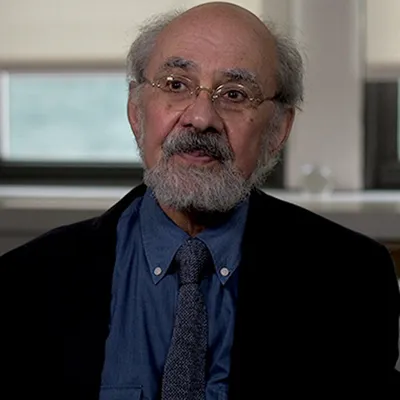
Iranian thinker
Ervand Abrahamian
Ervand AbrahamianContemporary Iranian HistoryIranian-Americanb. 1940
Life and Thought
Ervand Abrahamian is an Iranian-American historian and one of the foremost scholars of contemporary Iranian history. He is Distinguished Professor Emeritus of History at Baruch College, City University of New York, and his works, particularly Iran Between Two Revolutions and A History of Modern Iran, are considered essential sources for understanding politics, society, and revolution in modern Iran.
Ervand Abrahamian was born in 1940 in Tehran to an Armenian family. He later went to Britain and then the United States for further studies and became recognized as a historian of modern Iran. Abrahamian taught for many years at Baruch College, City University of New York, attaining the rank of Distinguished Professor of History.
His renown stems primarily from his research on the political and social history of Iran in the twentieth century. Iran Between Two Revolutions is among his most important works, examining developments in Iran from the Constitutional Revolution to the 1979 Revolution with a focus on social forces, classes, political parties, the state, and ideologies. His other works include A History of Modern Iran, The Coup, Khomeinism, Radical Islam: The Iranian Mojahedin, and Tortured Confessions.
In Abrahamian's works, the history of modern Iran is not merely a narrative of political elites or governments; he has sought to analyze the roles of social classes, intellectuals, workers, religious forces, nationalists, and the intervention of foreign powers in conjunction with one another. It is this social and structural approach that has made his works essential sources for understanding revolution, the modern state, oil, the coup, the Islamic Republic, and power relations in Iran.