Why this book?
- Freud was the first to present dreams scientifically as wish-fulfillment and a path to the unconscious.
- Reading it shows the classical foundations of psychoanalysis and the concept of the unconscious directly from the source.
- The book thoroughly examines the historical background of dream analysis before presenting Freud’s own theory.
- It is essential for understanding Freud’s influence on psychology, literature, cultural criticism, and even the idea of modernity.
- The book’s prose and reasoning exemplify precise scholarly work and respect for earlier researchers.
About the book
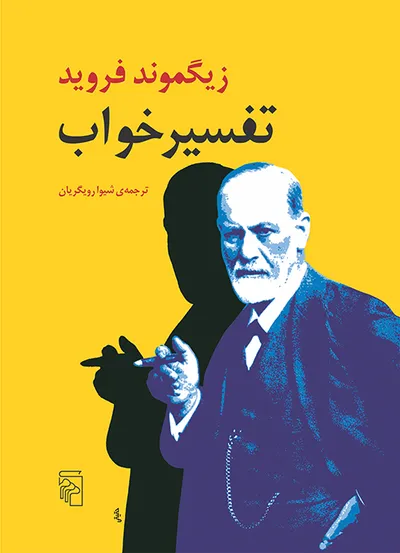
The Interpretation of Dreams (1900) is Sigmund Freud’s most important and famous work. In it he took dreams out of the realm of popular speculation and treated them as meaningful psychological phenomena that represent the fulfillment of wishes. Before presenting his own theory, Freud carefully reviewed the scientific history of dream analysis and then, through examples such as the “Irma injection dream,” showed that dreams are neither nonsense nor mere reflections of daytime events.
The book introduces the structure of the unconscious: a realm without temporal logic or contradiction where impulses move freely. Freud later extended this insight to explain slips of the tongue, jokes, artistic creation, and social institutions. He regarded dreams as the royal road to the unconscious, an idea that became the cornerstone of psychoanalysis and many forms of psychotherapy.
The Interpretation of Dreams is a foundational text for students of psychology, readers interested in the history of ideas, and anyone who wants to encounter Freud’s classical concepts (the unconscious, wish-fulfillment, dream censorship) at the source. Shiva Roygarian’s translation published by Nashr-e Markaz is one of the respected and widely read Persian versions of the work.