Why this book?
- To understand the relationship between political ideas and social structures in contemporary Iran.
- To understand how the concepts of East and West became political and ideological discourses.
- To examine the role of the petite bourgeoisie in Iran’s intellectual and political transformations.
- To become familiar with the author’s sociological analysis of intellectual and political currents in contemporary Iran.
About the book
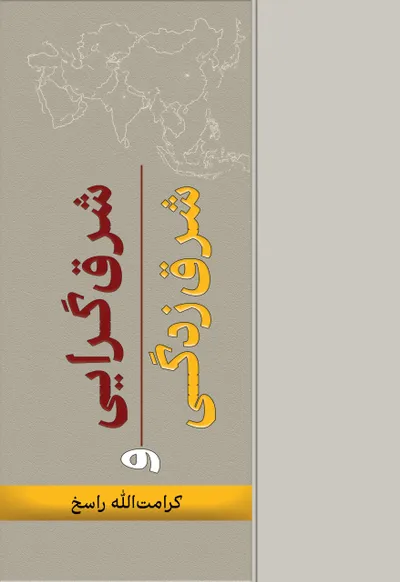
The book "Orientalism and Orientalism-inclination" is an attempt to provide a sociological and political analysis of two concepts that have played an important role in modern Iranian history. Karamatollah Rasekh shows how East and West moved beyond their geographical meanings and became concepts for interpreting identity, politics, and social conflicts.
The author focuses on the role of the petite bourgeoisie in developing societies, particularly Iran, and examines public intellectuals and religious figures as social representatives of this class. From his perspective, Iran’s political transformations in the second half of the twentieth century cannot be understood without considering the position of these social groups.
The book is organized into two sections, "Orientalism" and "Orientalism-inclination", and consists of seventeen chapters. The first section examines the concept of the East and different forms of Orientalism, while the second explores the political and ideological uses of Orientalism-inclination through cases such as Jalal Al-e Ahmad, Dariush Shayegan, and Ehsan Naraghi.
This book is suitable for readers interested in political sociology, contemporary Iranian intellectual history, and the relationship between tradition, modernity, and cultural identity.