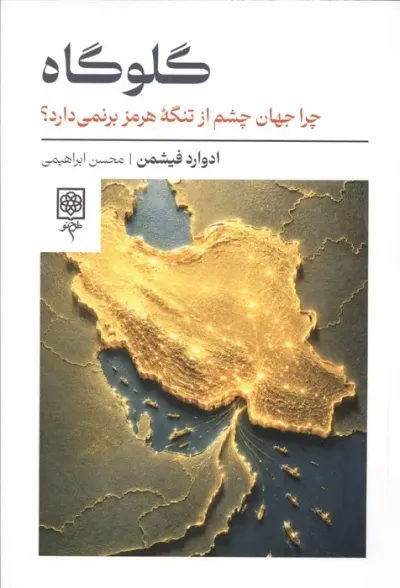
Why this book?
- It shows how power in the twenty-first century has shifted from armies to financial, technological and trade networks.
- It is an account from inside Washington, written by an author who helped design American sanctions policy.
- It sets the case studies of Iran, Russia and China side by side under a single logic.
- It also weighs the costs and long-term consequences of economic warfare, including rivals' efforts to bypass chokepoints.
- It helps the reader grasp the place of Iran and the Strait of Hormuz in the equations of global power.
About the book
The central idea of "Chokepoints" is that a country's power in the twenty-first century depends less on the size of its army or even its economy than on its position in the global economic network. The title is borrowed from strategic straits such as Hormuz, Suez and the Bosporus, passages through which a large share of world trade must pass. Fishman extends this logic to the modern economy and points to less visible chokepoints: the dollar and the international financial system, the network of banks and payments, capital markets, the supply chain for advanced chips, critical minerals, insurance and maritime shipping.
In the author's view, globalization has not only connected economies but also created intense dependencies among them. Any country that controls one of these points can use it as pressure without resorting to military force. A foreign bank that deals with a sanctioned entity may be forced to choose between that deal and access to the American market and financial system. Such pressure can take the form of sanctions, banking restrictions, asset freezes, export controls or cutting off access to technology.