Philosophy
Enlightenment and Kant's Philosophy: A Lecture Series by Dr. Soroush Dabbagh
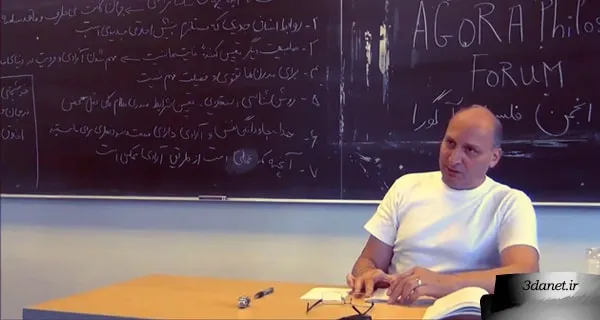
A lecture course on Kant's philosophy by Dr. Soroush Dabbagh examines the backdrop of the Enlightenment and the transition from mythical to rational understanding. The influence of Newton's methodological paradigm and the extension of the analytical method from physics to philosophy are central themes of this course.
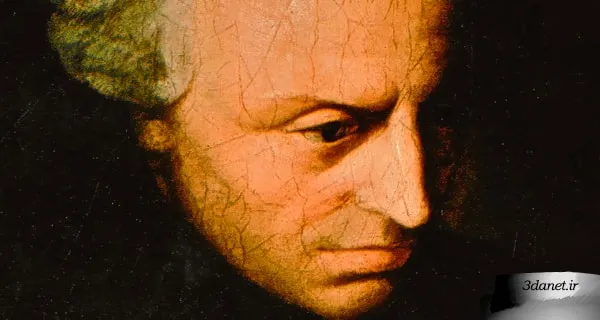
The lecture series on Kant's philosophy undertakes a discussion of the context and era in which the works of Immanuel Kant, the most important philosopher of the Enlightenment, took shape. In the first six sessions, the developments in the West that paved the way for the emergence of the Enlightenment are explained, drawing on the account of Ernst Cassirer and several other historians. Subsequently, the main themes of the three books "Critique of Pure Reason," "Critique of Practical Reason," and "Critique of the Power of Judgment"—Kant's famous and epoch-making trilogy—are discussed in detail.
?It can be said that the first session, "The Enlightenment and Kant's Philosophy," revolved around two topics. One was the retreat from mythical insight to rational insight, and the other was the Newtonian methodological paradigm shift.
✅1) The Age of Enlightenment bears an affinity with Greek culture, which pertains to 400 to 500 years before Christ. In that era too, Greek culture was intertwined with rationalism and had taken steps to critique and negate superstitions. It has been said that one of the achievements of the ancient Greek Enlightenment was the victory of rational insight over mythical insight. Specifically in the field of medicine, one can name Hippocrates. Unlike many of his contemporaries who believed that illness arose from an evil spirit entering the patient's body, he spoke of a causal explanation for how diseases emerge. In this sense, it has been said that mythical insight was overthrown. The era of ancient Greece and the Enlightenment of the eighteenth century (despite a gap of twenty-two centuries) share an affinity. These affinities include the turn of thought toward the inner nature of the perceiving soul, giving priority to the genetic and empirical investigation of human psychological life, inquiry into the possibility of scientific knowledge and its limitations, a passionate interest in discussing issues of individual and social life, as well as the entry of philosophy into public culture and the combination of the scientific movement with the literary movement. The foundation of the eighteenth-century Enlightenment is a this-worldly (secular) view of life, which took shape during the Renaissance in art, religion, politics, and natural science. ✅2) One of the prophets of the Enlightenment is Newton. And the philosophers, historians, and sociologists of the eighteenth century have recounted the immense extent of his influence. Such that Kant, too, was influenced by him. The approach he chose is a mixture of the analytical and empirical approaches. This approach was contrary to that of his predecessors. For Newton's method is not a purely deductive method but an analytical one. He does not begin by presenting a number of postulates, general concepts, or axioms to pave the way, based on abstract deduction, for the cognition of the particular or the "actual fact." Newton's method of inquiry moves in precisely the opposite direction; that is, his phenomena are empirical findings, and the goal of his inquiry is to find principles. So, the Newtonian way is not to begin from concepts and postulates to arrive at phenomena, but conversely, one must begin from phenomena and, after studying the phenomena, extract the concepts and principles. Therefore, observation generates the findings of science, and finding principles and laws becomes the subject of scientific inquiry. In this way, a new methodology is the distinguishing feature of eighteenth-century thought (the Enlightenment). Here, the method of scientific concepts is both analytical and synthetic. Here, an interaction is established between thought and experience. If we wish to clarify this with an example, we can cite Galileo. Galileo provides the classic example of this process of analysis and synthesis in the discovery of the parabolic path of projectiles. The shape of the path of a thrown object cannot be described by direct observation; for such a path cannot be obtained merely through numerous observations. It is certain that through observing the motion of projectiles, some general characteristics can be obtained. For instance, one can see that a cannonball, after being fired, first has an ascending trajectory and then a descending one. But mere observation falls short of precisely determining the path of the cannonball. We achieve a truly mathematical understanding of a phenomenon when we trace the occurrence of that phenomenon back to its initial conditions; that is, when we succeed in separating each of the sets of conditions that simultaneously influence the occurrence of that phenomenon from one another, and then examine each set of conditions separately, taking their laws into account. The philosophy of the Enlightenment adopts the methodology of Galilean and Newtonian physics and immediately begins to generalize it. Eighteenth-century thought is not content to consider the analytical method merely as an intellectual tool of mathematical physics, but rather recognizes the analytical method as a necessary and essential instrument for any kind of thinking in general.
.
14 Sessions of the Lecture Series on Kant's Philosophy by Dr. Soroush Dabbagh
Lecture dates: From 23 May 2015 to 5 September 2015
Lecture venue: Suhrawardi Foundation, Toronto, Canada
.
.
Audio of the Kant lecture series by Soroush Dabbagh
.
Sessions 1 to 4 of the Kant Philosophy Lecture Series
Size: approx. 55 MB Download
.
Sessions 5 to 8 of the Kant Philosophy Lecture Series
Size: approx. 55 MB Download
.
Sessions 9 to 12 of the Kant Philosophy Lecture Series
Size: approx. 55 MB Download
.
Sessions 13 and 14 of the Kant Philosophy Lecture Series
Size: approx. 30 MB Download
.



Discussion3 comments
همین درسگفتارهای به زعمشما خاطره، برای علاقمندان مبتدی بسیار مفید و راهگشا است. در این برهوتی که به سر می بریم غنیمتی بزرگ است.
متاسفانه باید بگم که بسیار بد بود. بیشتر این به اصطلاح درسگفتار فقط خاطره گویی بود. و بدتر از ان تکرارمکررات. به طوری که یک مطلبی چندین و چندبار مدام تکرار میشد. اقای دباغ بیشتر بدرد فن بیان و خاطره گویی میخورد تا فلسفه.
من هم با نظر این دوست گرامی موافق هستم. حاشیه بسیار پررنگ تر از متن بود.