Philosophy
Rag-e Harf 8: Back to the Roots
The idea of a 'return to roots' is dangerous if it means seeking everything in the past, for a golden past is often an imaginary construct. History follows a linear path, and the present cannot be remade in the image of the past; drawing inspiration from origins is what proves fruitful.
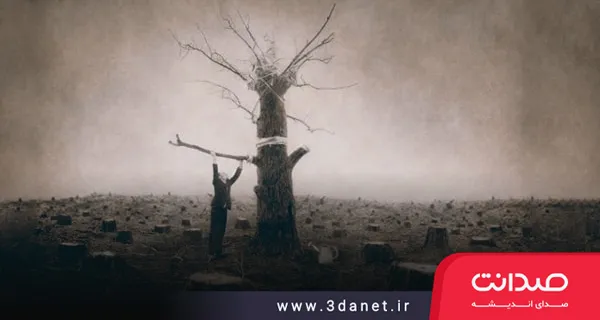
Ah, the good old days …
Why “Back to the Roots” Is Dangerous
You may have heard the saying: “The original of anything is better.” In advertising a product, emphasis is usually placed on its being original. For instance, a certain television is advertised as “original Korean” to boost sales. In the cultural sphere, the idea of “back to the roots”—though no longer under that name—remains prevalent. A sociologist friend recently wrote on his Facebook that to master sociology, reading the views of the discipline’s founders, such as Max Weber and Durkheim, is sufficient, and there is no need to read later thinkers. This time, I want to take aim at the vein of “back to the roots” and explain why this idea can be extremely dangerous.
Two Meanings of “Back to the Roots”
Right at the outset, I must distinguish between two different meanings of “back to the roots.” In the cultural sphere, “back to the roots” is sometimes used to mean “drawing inspiration from the sources” and sometimes to mean “seeking everything from the sources.” Back to the roots in the first sense is not necessarily dangerous; indeed, it can be very beneficial. Ancient schools, figures, and books can still be a source of artistic and literary creativity and a means of inner cultivation, and in fact, for some people, this is practically the case. Andrea Bauer, a German composer and cellist, has an instrumental album titled Songs of Silence, a piece from which was also used in the closing credits of Asghar Farhadi’s film About Elly. According to her own account, Ms. Bauer was influenced by the works of Rumi in creating this album, which one can hardly listen to without being filled with emotion. This, too, might be considered a kind of return to the roots, but even if it is a return to the roots, it is only in the sense of drawing inspiration from the past, and nothing more. The second type of back to the roots, however, seeks to find everything in a “golden and lost” past. In this type of back to the roots, the present is “corruption and decline,” and there existed a “golden” past that has vanished, but our duty is to strive at any cost to restore the present to that “golden” past. The adherents of back to the roots in this sense are nostalgic for the past and are taking revenge on the present. They do not, in fact, draw inspiration from the past; they take revenge on the present.
The Past Is Past …
What is wrong with back to the roots in the sense of seeking everything in the sources, and why is it dangerous? The first problem is that usually—if not always—the past that the seekers of roots aim to recreate is an imaginary and constructed past that does not withstand historical scrutiny. Their past is not really the past; rather, it is the unattained desires of the present projected onto the past. A clear example of this kind of imaginary past is the ethereal and dreamlike image of ancient Iran, which has nothing to do with historical ancient Iran but is a construct of certain nineteenth-century Iranian intellectuals aimed at shaping Iranian nationalism in the face of foreign exploitation and domestic backwardness. But even if it were to turn out that, hypothetically, some corners of the “golden” past (whether a secular or a religious “golden” past) were indeed brilliant, back to the roots (in the sense of reshaping the present in the image of the past) is still indefensible. If we accept that history follows a linear path and not a circular one, why should we return to the past, even a supposedly “golden” past? By a linear rather than circular path of history, I mean that history has no focal, perfect point from which any distance is decline and any approach is redemption and salvation; rather, history is in flux, with its ups and downs, and neither is the past necessarily better than the present, nor is the present necessarily worse than the past (or vice versa). One can draw inspiration from the past and enrich the present, but the present cannot be reshaped into the image of the past. Looking at history, we also find that those who seek to improve the present by returning to the roots have ruined both the roots and the present.
For an example of the portrayal of a nostalgic mood toward the past and the impossible, dangerous attempt to return to it, see the Iranian film Hamoun by Dariush Mehrjui (1989). According to Mehrjui, he made this film under the influence of Sadegh Hedayat's The Blind Owl.





Discussion0 comments
No comments yet; let yours be the first voice.