Philosophy
Rag-e Harf: A Collection of Engaging Essays by Yaser Mirdamadi
In a collection titled 'The Vein of Words'—inspired by a line from Sohrab Sepehri—Yaser Mirdamadi's fifteen essays examine plagiarism, forgiveness, and dialogue with adversaries, challenging widely held assumptions.
Rag-e Harf is a collection of engaging essays by Yaser Mirdamadi, whose title is taken from a poem by Sohrab Sepehri (1928–1980), the Iranian poet, writer, and painter.
And sometimes one must pitch a tent in the vein of a word...
.
Rag-e Harf
.
Rag-e Harf 1, Hey! A Word Is Not Thin Air
It is clear and evident to all that in this world there are words worth pausing over and reflecting upon, just as there are words that are nonsense, drivel, and rubbish, not even worth hearing or uttering once...
.
Rag-e Harf 2, The Child, the Donkey, and the Wolf
You may have heard the saying: "Let your inner child come out and play sometimes." By "inner child" is meant that innocent, untainted aspect of every adult that may have been preserved into adulthood...
.
Rag-e Harf 3, How to Commit Plagiarism Without Leaving a Trace?
I am referring to that familiar concept of "plagiarism" of ours; that key to solving all problems, that thing from which we all have fond memories from our student days. The one that required a simple internet search and a simple laser printout...
.
Rag-e Harf 4, Does "Being Ordinary" Lead to "Fascism"?
The storm was first stirred up by Yousofali Abazari, a sociology professor at the University of Tehran. Reacting to the massive funeral of pop singer Morteza Pashaei, he, in fiery remarks, called Pashaei's music "vulgar" and labeled those who listen to this type of music "idiots." But in my opinion, none of these parts of his speech, which provoked many reactions, captured the essence of Abazari's point...
.
Rag-e Harf 5, Does Forgiving Require Forgetting?
You have probably heard the famous saying, "Forgive but do not forget." This time, I want to pitch a tent in the vein of "forgiveness" and dwell specifically on the relationship between "forgiveness" and "forgetting": what is wrong with a forgiveness that is accompanied by forgetting? Is a forgiveness that is accompanied by not forgetting truly forgiveness?
.
Rag-e Harf 6, How Not to Avoid Dialogue Through Dialogue?
It may have happened to you that when you enter into a dialogue with someone, the other person immediately slaps labels like "your discussion is not deep" or "you haven't understood these things" onto the conversation...
.
Rag-e Harf 7, Can One Not Dialogue with a Radical Opponent?
Saadi relates an anecdote in Golestan to the effect that a Muslim scholar debated with an atheist and then abandoned the debate. They asked him why he did not continue. The scholar replied: "My knowledge is the Quran, Hadith, and the sayings of the elders, and he does not believe in these things nor does he listen. What use is it to me to hear his disbelief?" Saadi then supports that scholar, saying: "The one whom you cannot rescue through the Quran and tradition / The answer to him is to give him no answer"...
.
Rag-e Harf 8, Why Is the "Return to Roots" Dangerous?
You may have heard it said: "Everything's original is better." In advertising a product, its originality is usually emphasized. For instance, a certain type of television is advertised as "original Korean" to sell better. In the cultural sphere, the idea of a "return to roots"—though no longer under this name—remains prevalent...
.
Rag-e Harf 9, Is Criticizing Someone Who Cannot Defend Themselves Always Unjust?
You may have heard it said: "Criticize someone who has the opportunity to respond," or in other words, "In a situation where an individual or a movement lacks the opportunity to respond to criticism (especially due to 'censorship' and the individual or movement being 'banned from writing'), then criticizing that individual or movement is not morally permissible"...
.
Rag-e Harf 10, Is a Change of Opinion Always Undesirable?
You have surely heard, when someone is being disparaged, that "So-and-so lacks consistency," or "What's-his-name has changed his mind ten times." These kinds of criticisms suggest that when a person's opinion or lifestyle changes, that person is no longer trustworthy or admirable, and conversely, if someone remains steadfast and unwavering in their opinion and lifestyle over many years, they are trustworthy and admirable...
.
Rag-e Harf 11, Is Showing Forbearance Toward Friends Always a Sign of Morality?
Preachers and scholars of ethics have repeatedly cautioned that one must refrain from judging others. This is, in general, sound advice. In principle, unless it becomes necessary, it is better to avoid judging others, whether positively or negatively. But suppose you want to marry in the traditional way. In such a case, it is necessary to investigate the person who has come to propose to you or intends to, or the person you have proposed to or intend to. Here, moral judgment is entirely permissible...
.
Rag-e Harf 12, Is Every Disgusting Thing Bad?
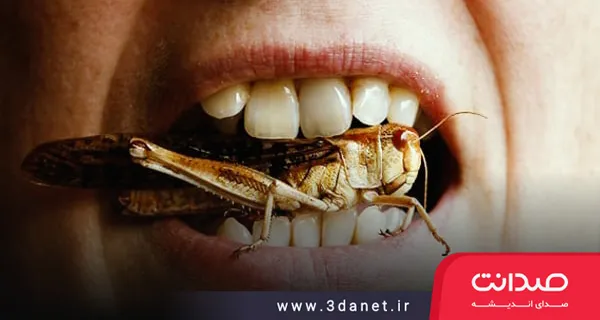
We usually tend to consider things that seem disgusting to us as fundamentally bad. For this reason, we might look upon Chinese food culture, in which eating worms is a common and ancient tradition, as a base or at least bizarre culture...
.
Rag-e Harf 13, How Can We Avoid Calling Others Fools?
These days, especially with the expansion of virtual space, people can more easily express their opinions or, for instance, invite their followers to a "bog-boghoo" gathering. On the other hand, the market for judging others' opinions and behaviors is also booming. In these judgments, there is a strong tendency to call others fools. This time, I want to delve into the vein of these common judgments that label others as fools and argue that the strong inclination to call others fools is not a defensible tendency...
.
Rag-e Harf 14, What Does the Speaker's Location Have to Do with the Truth or Falsity of Their Statement?
Consider a semi-closed country where a large number of its members live outside that country. Let's call this hypothetical country "Niran" (rhyming with "Shiran"). Niran, by virtue of being semi-closed, is such that the virtual communication path between Niranians inside the country and those abroad is not completely blocked...
.
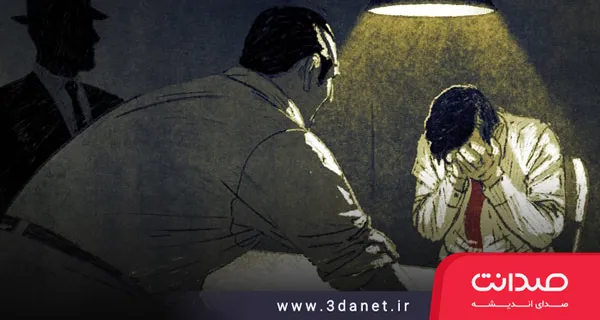
Rag-e Harf 15, Why and How Is 'Self-Incrimination' Invalid?
This time, I want to delve into the vein of "self-incrimination" and show just how invalid self-incrimination is, unless proven otherwise in certain cases...




Discussion0 comments
No comments yet; let yours be the first voice.