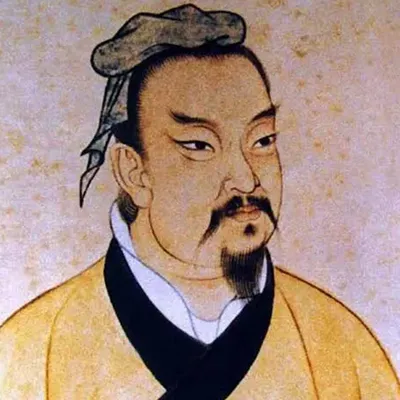
Foreign thinker
Sun Tzu
Sun TzuPhilosophy of war, strategy, and politicsChinese544–496 BCE
The greatest victory is to defeat the enemy without military confrontation.


Life and Thought
Sun Tzu was a great strategist, military commander, and philosopher of ancient China during the Spring and Autumn period. He was the author of the influential The Art of War, regarded as one of the oldest and foremost military treatises on strategy in world history. His ideas extended far beyond warfare, profoundly influencing management philosophy, politics, psychology, and conflict resolution.
Sun Tzu was a prominent strategist, philosopher, and military commander in ancient China who, according to historical accounts, lived in the fifth century BCE during the Spring and Autumn period. He is best known for serving as a general in the state of Wu and for his successive military victories, but his enduring global reputation rests on the compilation of a seminal work on warfare and strategic thought.
His unrivaled masterpiece, The Art of War, consists of 13 chapters, each devoted to an aspect of strategy, tactics, the psychology of battle, deception, espionage, and resource management. A fundamental principle of Sun Tzu’s thought is victory without war: he believed that the greatest victory is to defeat the enemy without military confrontation, through sound judgment, analysis of circumstances, intelligent deception, and the weakening of morale.
Sun Tzu’s ideas have had a profound influence on Eastern and Western philosophy and strategy. The principles set out in The Art of War have found broad application beyond the battlefield in fields including modern management, diplomacy, business, law, and the analysis of human behavior, and the work continues to be taught as one of the earliest classics of strategic thought.