Philosophy
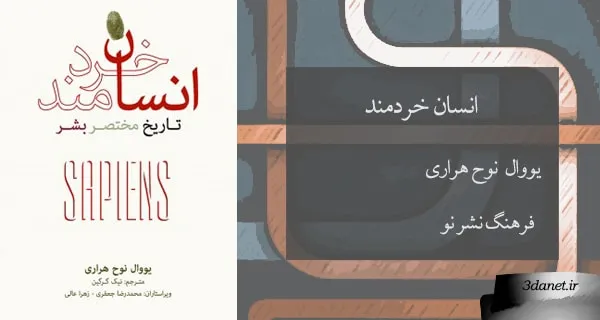
A Review and Critique of the Translation of Sapiens: A Brief History of Humankind
Yuval Noah Harari's Sapiens, a work of big history, is praised for its eloquent prose yet criticized for oversimplification and chronological imprecision—including ambiguity regarding the origins of the Cognitive Revolution and the book's central protagonist.

The book Sapiens: A Brief History of Humankind is among the works classified globally under the rubric of Big History. The aforementioned book was authored by Yuval Noah Harari, a scholar from the intellectual tradition of Jared Diamond. Throughout the book's four major chapters, titled The Cognitive Revolution, The Agricultural Revolution, The Unification of Humankind, and The Scientific Revolution, the author endeavors to narrate the vicissitudes of the story of human evolution from around one hundred thousand years ago up to the advent of the modern age. Although the author, translator, and editors all possess eloquent and engaging prose, certain substantive flaws have led to widespread criticism of the author's scientific approach. Perhaps the most significant critique leveled against the book is its excessive oversimplification and a lack of rigor in presenting models and histories. Nowhere in the book does the author explain why he sets the starting point of the Cognitive Revolution at seventy thousand years ago, rather than fifty thousand years ago as most researchers do. Furthermore, he leaves the reader somewhat bewildered regarding the book's main character (the wise human). It is never made clear whether the author means archaic Homo sapiens or Homo sapiens sapiens.
.
.
Author: Hamed Vahdati Nasab
Source: Critical Research Journal of Humanities Texts and Programs, Year 19, July 2019, No. 4 (Serial 68)
Download the PDF of this article
.
.





Discussion0 comments
No comments yet; let yours be the first voice.