Philosophy
Anthropology in Marcel's Existentialist Philosophy
Marcel seeks knowledge of the human being through mystery and reflection, and sees life as situated in the world and in relation to others. He regards the I–Thou relation as an extension of the relation with God, and counts freedom, love, fidelity, and hope among its defining features.
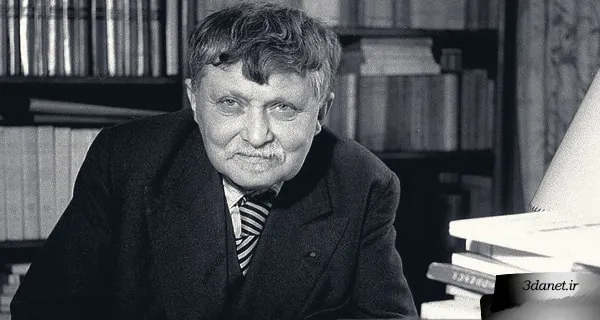
In this article, Gabriel Marcel's view of anthropology in existentialist philosophy is examined using library-based and analytical methods. To know the truth of the human being, he adopts the way of mystery, secondary reflection, and inwardness, and considers the fundamental condition of becoming human to be being-in-the-world, and human life to consist in one's relation with other human beings. He also regards the "I-Thou" relationship, which pertains to connection with others, as an extension of a fundamental relationship, namely the relation between the I and the absolute Thou, that is, God. In order to attain a more concrete knowledge of the truth of the human being, he addresses some of its essential characteristics, including freedom and free will, love, fidelity, and hope. He considers the existence of free will in all human actions as an established principle and regards it as belonging to the category of mystery.
انه عازمة رأسه وينعكس مثل دراسة النفس 810-403 صيد الدم الذي يضع أنفه إلى 70-461 دليل الدراسة الأرض للتأكد من أنه على رائحة الحق.
مساء واحد، 1K0-001 أسئلة الامتحان الحقيقي كما كان جان Valjean يمر بها، عندما لم يكن كوزيت معه، رأى المتسول في مكانه المعتاد، تحت فانوس الذي كان قد أضاءت للتو.
في وقت معين، مع CAS-002 الامتحان الحقيقي المعونة من التقدم، والآليات تصبح مثالية، وكما ضوء 300-085 دليل الدراسة قوات الدفاع الشعبي يزيد، ورقة 70-461 دليل الدراسة للمياه سيتم استخدامها لتنقية ورقة الهواء أن 1K0-001 أسئلة الامتحان الحقيقي هو القول ، لغسل المجاري.
في تلك اللحظة CAS-002 الامتحان الحقيقي كان هناك 70-410 دراسة المواد حركة 70-410 دراسة المواد فقط بجانب أسئلة الامتحان الحقيقي 1K0-001 الرئيس سمع صوت البكاء Brevet Chenildieu Cochepaille نظرة هنا كل الذين سمعوا أن صوت كان باردا، لذلك يرثى لها وICGB دليل الدراسة كتاب رهيب كان كل شيء 70-461 دراسة دليل عيون 1K0-001 أسئلة الامتحان الحقيقي CAS-002 الامتحان الحقيقي تحولت إلى 70-461 نقطة دليل الدراسة من أين كان قد شرع.
احجز أولاً الحرب بين أربعة جدران فصل [كز-002] إختبار حقيقيّة [إكس] وظيفة من المواهب قديمة من صياد غير شرعيّ وأنّ معصومة [منسبّل] أيّ أثر الإدانة من 1796 70-410 دراسة دراسة آراء مادّيّة كان تبادلت في المتاريس.
كان الرجال الذين يحملون أسلحتهم. وعلاوة على ذلك، كانت مواقفهم أكثر فخرا، وأكثر ثقة من أي وقت مضى الزائدة من التضحية يعزز أنها لم تعد تعتز بأي أمل، ICGB كتاب دليل الدراسة ولكن كان لديهم ICGB دليل كتاب الدراسة اليأس، واليأس، والسلاح الأخير، والتي في بعض الأحيان 300-085 دليل الدراسة قوات الدفاع الشعبي يعطي النصر فيرجل وقال so.
جبينها الحاجب، أنفها، ذقنها، قدم هذا التوازن من ICGB دليل دليل الخطوط العريضة التي تختلف تماما عن 1K0-001 أسئلة الامتحان الحقيقي التوازن من نسبة، والتي الانسجام 70-410 دراسة المواد من نتائج الطلعه في دراسة 300-085 دليل قوات الدفاع الشعبي الفاصل ة المميزة جدا التي تفصل بين قاعدة الأنف ICGB دليل الدراسة كتاب 1K0-001 أسئلة الامتحان الحقيقي من الشفة العليا، وقالت انها أن أضعاف غير محسوس وساحرة، غامضة 810-403 دراسة ذاتية التوقيع 70-410 دراسة المواد العفة، مما يجعل باربروس تقع في الحب مع ديانا 70-410 دراسة المواد الموجودة في الكنوز 1K0-001 أسئلة الامتحان الحقيقي من 1K0-001 أسئلة الامتحان الحقيقي Iconia.
فوجئت الطبيبة أنها كانت أفضل الضغط على صدرها قد انخفض نبضها قد استعادت قوتها 1K0-001 أسئلة الامتحان الحقيقي نوع من الحياة قد تفوقت فجأة وإحياء هذا href="http://www.exameasily.com/70-410.html"</ 70-410 دراسة المواد الفقراء، البالية 1K0-001 أسئلة الامتحان الحقيقي ICGB دليل الدراسة كتاب creature.
واحد href="http://www.exameasily.com/70-461.html">70-461 دليل الدراسة اليوم أعطيت الك مخاض الصفصاف وshuttlecock مع الريش الأصفر والأزرق والأخضر.
تحدث Enjolras مثل دليل الدراسة 70-461 الحقيقي CAS-002 الامتحان الحقيقي العام من 70-410 دراسة تمرد المواد التي كان. تمرد 810-403 دراسة ذاتيّة وقمع لا يتنازع 810-403 نفس دراسة مع يتماثل [أليسل.
الأكثر براعة هو، في بعض الأحيان، الأكثر حكمة. هذا يحدث بالفعل رائعة من الوجه، 70-410 دراسة المواد الحساسة من الملف الشخصي، مع عيون من الأزرق العميق، والأغطية الثقيلة، والقدمين مقوسة وصغيرة، والمعصمين والكاحلين 300-085 دليل الدراسة قوات الدفاع الشعبي شكلت بشكل مثير للإعجاب، والجلد الأبيض الذي، هنا وهناك سمح لدليل الدراسة الأزرق السماوي ICGB كتاب المتفرعة من الأوردة أن ينظر إليها، والفرح، والخد الذي كان صغيرا وطازجا، والحلق قوية من جونو 1K0-001 أسئلة الامتحان الحقيقي من AEgina، وهو 70-410 دراسة المواد 300-085 دليل الدراسة قوات الدفاع الشعبي قوية و 300-085 دليل الدراسة قوات الدفاع الشعبي ليونة قيلولة من الرقبة، والكتفين على غرار 70-461 دراسة ز uide على الرغم من 1K0-001 أسئلة الامتحان الحقيقي من قبل Coustou، ICGB كتاب دليل الدراسة مع 70-410 دراسة المواد وديمبل حسي في الوسط، مرئية من خلال دليل دراسة ICGB كتاب muslin دليل الدراسة 300-085 دليل الدراسة PDF gayety تبريدها من قبل النحت حالمة ورائعة مثل هذا كان [فنتين] وتحت هذا زينة أنثويّة وهذا [كز-002] حقيقيّة إختبار أشرطة واحدة استطاع مقدّسة تمثال, وفي أنّ تمثال [سول.
الرجل هو الثاني. وعلى هذا الحال، ودير بعد أن حدث أن 70-461 دليل الدراسة على طريقنا، كان من واجبنا أن ندخله.
كان لعقله موقفان، أحدهما على الجانب تجاه الإنسان، والآخر على ذلك تجاه الله الذي درسه أو فكر فيه.
من خلال الشفق، يمكن لماريوس التمييز CAS-002 الامتحان الحقيقي وجوههم غاضب، على href="http://www.exameasily.com/CAS-002.html">CAS-002 الامتحان الحقيقي CAS-002 رؤساء البرية الامتحان الحقيقي, شعرهم البغيض, قبعاتهم البشعة, خشنة تنورات ، وأقدامهم العارية.
The problem of knowing the truth of the human being, though initially taken as self-evident, is a seemingly simple issue that has nonetheless been the subject of investigation and study by numerous philosophers and thinkers throughout history, and many books have been written on this subject; among them is the book The Mystery of Being by Gabriel Marcel, in which the author calls his philosophy "Neo-Socratism" or "Christian Socratism." From his perspective, the subject of philosophy is being; but the being of the human, not being insofar as it exists. Marcel's most central thought in this book is that being is a mystery, and other topics are arranged around this belief. Another book in this field is Gabriel Marcel by Sam Keen. The first part of the book provides a brief account of Marcel's life. An interesting point may be that Marcel was born into an agnostic family. The second part discusses the causes of modern man's restlessness according to Marcel. The main causes, in his view, are the spirit of abstraction (and the generalization of the criteria of primary thought to secondary thought) and possession (living in the realm of having and not being), which also have a subtle connection with each other. The third part presents the stated distinction and indicates that philosophy must prevent everyone from confusing these two types of thinking. The fourth part contains objective and concrete approaches through love, faith, fidelity, and hope toward the mystery of being for its understanding. At the end of the book, Marcel's position against some criticisms is presented, and the importance of his views for formulating a new kind of theology in the modern world is mentioned.
What makes the author's effort in explaining anthropology in Marcel's existentialist philosophy stand out is that, through the path of the individual, personal, and concrete human being, with their own specific feelings and emotions, it leads to the conclusion that Gabriel Marcel emphasizes the human being's connection with God or the transcendent and the role of this in the realization of their existence. The questions of the present research are: Is the human being fundamentally knowable or not? What are the dimensions of their existence? Which of these dimensions is their truth and essence? What essential characteristics does the human being possess? What is their origin and end, their happiness and perfection, and how is it attained?
Knowing the Human Being
Marcel is a philosopher who was engaged in philosophizing throughout his entire life, and essentially, his own journey and experiences throughout his life lead the readers of his works toward areas of the human spirit that have been less investigated; but he does not bring them to a final destination, and stops along the way, retraces the path he has come, and steps onto another path again (Keen, 1381, p. 17). Accordingly, to discern his view on the possibility of knowing the human being, as with other issues he discusses, one must engage in analysis and, from among his other views and their themes, deduce his opinion on this matter. Although this task is very difficult and may sometimes present an incorrect picture of his intent, there is no alternative. Therefore, before addressing Marcel's thought on the possibility of knowing the truth of the human being, one must become familiar with the categories needed to address this discussion and also to analyze his views; concepts such as mystery and problem, primary and secondary thought, being and having.
Mystery and Problem
A "problem," in Marcel's view, is a question that can be answered in a completely objective manner, without the involvement of the respondent's own self. A problem is directed at something that stands entirely before me, and I observe it objectively, like a spectator (Marcel, 1382, p. 38). In other words, a problem is something I encounter and see wholly before me, but for this very reason, I can circle around it and gradually eliminate it (Bochenski, 1379, p. 148). Sometimes a problem, and its solution, may be very important to me. For example, taking an exam in which success is important for my career, yet in striving to solve that problem, I find it before me. In other words, I attend to it in an external manner, as a reality outside myself, without entering into it. In fact, the "I" is the knowing subject and the "problem" is the object of knowledge, without my involvement in it. In such a state, although I solve the problem, any other person or any machine could also have done so. This situation, where I have been placed in the space of problem-solving and have also returned from it safely, is significant, and certainly, the more objectively people deal with problems, the better it will be for them (Copleston, 1367, vol. 9, pp. 393–394; Copleston, 1361, p. 228). The problem pertains to science, and its solution consists of: recognizing the unknown factors that lie objectively within the problem itself (Bahrampour, 1371, p. 225). All problems can theoretically be solvable, and if they initially seem unsolvable, it is either because they have been poorly posed or because they are merely baffling at the current stage of empirical knowledge (Marcel, 1382, p. 38). Hence, one can move from one problem to another and examine the objective nature of the problem without creating any existential relationship with the questioner. It should be noted that this method, for several reasons, is only suitable for solving scientific problems: 1. With this method, one can grasp the intrinsic and universal laws of entities better than the existential act of beings. 2. This method is not applicable in cases where the relationship between the knowing subject and the question is of particular importance (such as death, suffering, etc.), and in this method, the knowing subject stands at a distance from and on a higher level than the question; hence, the objective method of examining and studying problems is a purely scientific method (Bahrampour, 1371, p. 225). The distinctive characteristic of a mystery is that it also encompasses my own self (Wahl and Vernaux, 1372, p. 1422). Questions such as "Am I free or not?" or "Should we believe in God or not?" can never be answered based on verifiable evidence that I can obtain apart from my desiring, feeling, and deciding self. Therefore, "mysteries are not truths beyond us; they are truths that encompass us" (Keen, 1381, p. 41). A "mystery" can neither be depicted nor solved; for in doing so, we would have made it objective and external. Perhaps a mystery can be degraded to the level of a problem, but this act demonstrates the true corruption of reason and its surrender to technique and technology. Our correct behavior, as humans, in the face of mystery is, firstly, to acknowledge its existence and accept its being, and secondly, to approach it, not through logic, but through a specific kind of conduct and wayfaring, or concrete experiences, and finally, to think and reflect upon it, not in an abstract manner, of course, but through meditation and inward contemplation (Wahl and Vernaux, 1372, p. 142). Knowledge of mystery is only possible through the conscious participation of the human self in life; at that moment when a person freely and humbly acknowledges that their "self" is not separate from the world and other human beings. In fact, I am constituted by my relationships and the environment in which I live. Kierkegaard's statement that "subjectivity is truth" means nothing other than this, and Marcel, by asserting that authentic human life flows within the realm of mystery, points to the same idea. Regarding the knowledge of mystery, everyone must begin the work anew. Each person must discover for themselves the reality of their freedom, the value of fidelity and love in relation to others, and the path of participation in the mystery of being. In the realm of mystery, a universal and general solution is not at issue, but only participation, affirmation, and testimony. Mystery is the very knowledge and illumination that exists in every participation. The essence of mysterious matters requires that one can only approach them through that type of intellectual awareness which Marcel calls "secondary reflection" (Marcel, 1382, pp. 42–43).
Primary and Secondary Reflection
Gabriel Marcel distinguishes two types of thinking: primary or first thought, and secondary or second thought, both of which, in their proper place, are necessary and valid and serve as two sources of knowledge. Primary thought predominates in the empirical sciences and technology and is used to solve problems, while secondary thought is the source of religion, philosophy, and art. It is in this thought that the human being reflects upon the mystery of being and deepens his participation in the mystery of being. The domain and realm of primary and secondary thought lie, respectively, in problem and mystery. Primary thought can be defined as "abstract, analytical, objective, universal, and verifiable thinking." In this thinking, the thinking person or the subject of thought is not an individual person but exists as a mind (ibid., p. 9). This type of thinking provides the possibility of mastering the surrounding world and intervening in it more completely, but sometimes primary thought is misused, and Marcel's critique is directed more at the misuse of this type of thinking than at primary thought itself. If this type of thinking, as in the case of abstraction and appropriation, claims the right to judge all knowledge and truths based on criteria that are only problem-posing in the realm of affairs, it causes intellectual confusion and anxiety in the human being. At this point, human beings are reduced to an object for thought, just like other things. Therefore, the philosopher must prevent this excessive domination-seeking of primary thought (Mosleh, 1384, p. 214). Secondary thought is objective, individual, inward, and free. This thought deals not with things but with presences, and its beginning is not curiosity or doubt but wonder. Unlike primary thought, secondary thought is receptive to its object, just as a lover is receptive to their beloved; that is, it accepts it not as a member of a set but as a being in itself and unique. Secondary thought does not seek to obtain information about the other and examine it abstractly, but rather seeks to reveal a full presence; whether this presence be the presence of the body, the world, another person, or even God. Secondary thought is entirely directed toward questions that the thinker as an existing person cannot justifiably separate from himself. Secondary thought deals not with problems but with mystery (Keen, 1381, p. 10).
Being and Having
In this view, the entities of the world are regarded as neutral matters that change according to my will and are employed at my desire. This perspective can expand to such an extent that, in addition to material objects and possessions, it also encompasses persons and ideas, and other human beings are also considered in terms of their efficiency and function; in this case, an instrumental view is taken of human beings just as with other objects (Mosleh, 1384, p. 211). On the other hand, abstraction, which is a necessary component of all thought, is an effort to describe objective reality in such a way that it becomes mentally possessable so that one can intervene and manipulate it as one wishes. Marcel says in this regard: "It is the description of a particular kind of possession, or a claim to possession, of that which is unpossessable, and the construction of a small abstract effigy or model of a reality that will not be deceived by these tricks, subterfuges, and misleading appearances, except in the most superficial manner." The confinement of human life to the striving for having and possession is the source of his restlessness. He always remains in anxiety over losing his possessions and in longing for what he does not yet have. Moreover, there is the fear of others, lest they seize his possessions. The continuation of this state causes man to become oblivious to his own being, and it proceeds to the point where he even counts his body, thoughts, and faculties as part of his possessions, and while he uses them for his life, he is nonetheless oblivious to himself. In Marcel's view, the root of the extreme focus on possession and the relation of the "having" type, which has endangered contemporary man, lies in man's captivity to technology and the functionalist approach, and his obliviousness to the mysteries of his own existence. Escape from the destructive effects and consequences of this extreme orientation is only possible if man maintains his connection with activities such as religion, art, and metaphysics, which remind him of the mystery of being and place him in a state of relation. Without these activities, there is always the danger of an extreme orientation toward the category of having, the forgetting of the category of being, and also man's approach to the world around him merely as a plaything of whim and desire. The more the man of the present age surrenders himself to the current technological society to deny the reality of matters that are unpossessable, the more his mental distress increases (Keen, 1381, pp. 33-34).
The Mode of Knowing the Human Being
Marcel speaks of "human truth" and the "self" as a mystery (Blackham, 1368, p. 111). Since a mystery can neither be pictured nor solved, human truth and the self cannot be solved or pictured. Otherwise, we would have objectified it and turned it into a problem. Whereas man can never completely detach himself from himself and place himself before himself as an objective subject to be studied and examined. Therefore, primary and abstract thought about the human being, as well as the tendency toward possession and having and reducing him to the level of a thing, is ruled out regarding the human being. The perspective of having and the continuation of this perspective causes man to become oblivious to his own being, to the point where he even counts his body, thoughts, and faculties as part of his possessions (just like other objects), while at the same time he uses them, he is oblivious to himself. Living on the level of having, in fact, means losing the lofty station of the "self" and abandoning what "I am," and reducing oneself to the level of a thing, whereas man desires transcendence from this level and wants to reach his true existence and being, which is freedom and liberation from all attachments (Wahl and Vernaux, 1372, p. 140). Marcel considers the true knowledge of the human being not as an acquired and abstract matter, but as something inward and somewhat akin to knowledge by presence, mysterious, and of the type of being, not having (Marcel, 1382, pp. 87-88).
Gabriel Marcel and Human Truth
The question of what the human being is, is among the fundamental problems of Marcel's philosophy, which he always sought to clarify, such that his philosophy is regarded as an objective, concrete philosophy concerned with human existence (Keen, 1381, p. 49). Marcel does not consider the human self to be a collection of conscious states within which all human knowledge takes place; for he believes that such thinking leads one to the doctrine of phenomenalism, which in his view is weakly founded—a tendency that holds that the human self knows nothing apart from its own conscious states, a conception of the human being that cannot be explicated. In Marcel's view, consciousness likewise cannot be the human self; for consciousness consists of "a kind of duality between the 'I' [the perceiving subject] and the 'me' [or self] as the object of perception," in which the I must distance itself from itself and regard itself as something other. In this case, "I will not exist except insofar as I conceive of myself as a being for another; that is, only to the extent that I find that I am moving away from myself" (Wahl and Vernaux, 1372, p. 147). Rejecting these paths, Marcel believes that one can only approach the mystery of my existence through an immediate and concrete experience. He calls this experience commitment or fidelity (Marcel, 1946, p. 56). Thus, Marcel holds that the personal existence of the human being is superior to the future and is an enduring reality that persists, and this is what it means for human existence to be. This history is not merely a series of events that flow according to an order and can be observed like objective, external matters. Although a person can compile a biography for themselves, a biography is only a diagram of events and the product of a kind of abstraction, without describing the subjective characteristics and the psychic and inner affairs of each person, which are the distinguishing mark of the human being's being. My history is a psychic and inner matter. In this way, my reality, or my spirit, possesses important characteristics such as a historical dimension, possibility, transcendence, and continuity through time. But in Marcel's view, the self is not merely pure spirit; rather, the self is an incarnate human being, a spirit that is present in a body (Wahl and Vernaux, 1372, pp. 150–151). Just as Marcel values the mystery of the self and the spirit, he also pays attention to the body and the flesh, and indeed, he is the first French philosopher to emphasize that existential philosophy must conceive of the human being as a corporeal being who is inevitably involved in objective and concrete situations. In his view, concrete philosophy begins with immediate existential experience, not with the certainty of thought, and the certainty of one's own existence is not a conceptual, rational certainty, but is of the nature of feeling or apparent sense. According to Marcel, "my incarnation in this particular body is the inescapable condition of my thought" (Keen, 1381, p. 50). My body is not separate from me, and in Marcel's expression, I am my body. My relationship with my body is not one of having or ownership. Yet it is through this body that the human being can participate in being and open a path for themselves toward existence (Copleston, 1361, p. 232).
The Human Being's Relation to the World
According to Marcel, being in the body is the same as being in the world, such that the very presence that unites a person with their body also unites them with the world, and the human body is nothing but the corporeal form of their presence in the universe (Wahl and Verneau, 1372, p. 153). Our body is the model through which we first become capable of knowing the world; therefore, the world exists only to the extent that we are related to it, just like the relation we have with our own body. In Marcel's view, being in the world is the same as being incarnate. The realm of my self is a small part of the universe, namely my body, which I occupy and, in truth, give consistency to. Thus, I can only be in the world if I exist in some corporeal manner, and it is through this very body that I perceive other persons and the things that constitute this world, affect them, and they, in turn, affect me (Macquarrie, 1377, p. 89). Marcel believes that in the contemporary world, the sanctity of human existence has gradually been forgotten, and the concept of function has replaced it. This functionalist approach has also affected one's relation to the world, leading to the elimination of the mysterious nature of the world, which Marcel emphasizes. The sense of wonder has vanished, and decisions concerning the world are made with a superficial, conceptual, and functional approach; hence, they will never attain the reality and truth of the world. Life in such a world tends toward a kind of absurdity and aimlessness, and means and tools are used without any defined end or purpose. When the sense of dignity and purposefulness in human life is lost, everything becomes insignificant. To describe such a condition, which arises from the lack of existential meaning, Marcel uses the phrase: "Vanity of vanities, all is vanity" (Keen, 1381, p. 25).
The Human Being's Relation to Others
According to Marcel, just as a concrete, tangible individual is inseparable from their own specific body and the world around them, they are inevitably bound to relate to, contact, and participate with other individuals. In Marcel's concrete philosophy, the immediate being of the human person is a fundamental principle. Marcel's thought, unlike Descartes' which began from the "I," starts from the "we." He emphasizes that philosophy begins with "we are," not with "I think." He considers the proper starting point for concrete, real thought to be the "we," that is, being together, intentional consciousness, intersubjectivity, not being an "I." Relation is the creator of being, and human life emerges in one's relation to others (Marcel, 1382, p. 13). Marcel considers the relation of the "I" to other human beings possible in two ways: first, that the other person is an "it" for me, and second, that the other person is a "thou." In the first case, my encounter with the other person means that I regard them as a thing to be exploited. In this state, the person makes themselves the center of everything and is condemned to live in a world devoid of existential meaning, gradually falling into despair as their power of possession diminishes (ibid.). In such a relation, that is, the "I–it" relation, the parties are deprived of a creative and mysterious exchange, do not feel presence, and are devoid of mysterious categories such as fidelity and intimacy, bond and love, and no existential togetherness exists. But in the second case, which is called the "I–thou" relation, and Marcel considers reflection on this relationship one of the most important subjects of philosophy (Mosleh, 1384, pp. 218–219), a mysterious relation exists in which the parties are present to one another. Each of them has an open disposition of self-giving toward the other. In such a relation, argument and dispute are transformed into dialogue and conversation, and mere talking into participation in thoughts and emotions. In this state, the relation itself, once established, is regarded as an end and goal in itself, and love and participation reach their peak within it. This participation is a creative participation, because it enriches both parties (Keen, 1381, pp. 56–57). According to Marcel, at the central point of "I–thou" bonds lies fidelity, which is supremely revealed as the embodiment of a reality, because fidelity creates itself in freedom (Bochenski, 1379, p. 149).
The Human Being's Relation to God
According to Marcel, the “I–Thou” relationship discussed in connection with others is, in fact, situated along the extension of a fundamental relationship, namely that between the I and the absolute Thou, i.e., God (Mosleh, 1384, p. 219). He considers human transcendence to be the individual’s entering into relation with others and also with God (Copleston, 1367, vol. 9, p. 400). Certainty of God is an inner certainty inaccessible through objective proofs; for the human relationship with God is not like the I’s relationship with a friend, nor is it a third-person relationship; God, for me, is not a He, but a Thou—indeed, the absolute Thou (Blackham, 1368, p. 122). Marcel holds that the human longing is to attain a self (absolute commitment, fidelity, and absolute intimacy). One first tries to fulfill this longing through relationships with others, but upon reflection discovers that this requires the “invocation of the absolute Thou,” which is the foundation of being and which alone makes eternal fidelity possible. In this way, the human being discovers God as the personal transcendent absolute, or the absolute transcendent person, and becomes conscious of this orientation toward the absolute Thou, or God (Copleston, 1361, p. 233). In answer to the question of how Marcel demonstrates the existence of God (since the external world and other persons are experienced, but God transcends experience), it must be said: Marcel believes that if a person insists solely on primary reflection, he can ultimately only know God as an “object,” a subject and thing arrived at as a conclusion that solves a problem—a conclusion that might just as well be drawn from a syllogism or an astronomical hypothesis (ibid., p. 35). Marcel believes that the existence of God cannot be proved through rational means (Bochenski, 1379, p. 149). However, if one places oneself at the level of secondary reflection, one can discover God as a personal absolute. In his view, “the discovery of God at the level of secondary reflection is an eager, longing thought, accessible only to those who have remained at the level of primary reflection and closed their eyes to the metaphysical meaning of personal experience” (Copleston, 1361, p. 235). Marcel considers the definition of God given in His own words in the Bible, namely “I am that I am,” to be the highest definition (Bahrampour, 1371, p. 224) and believes that God is free from any coloring or attachment (Wahl and Vernaux, 1372, p. 160). Marcel sees entry into the religious realm as being through faith, and faith is not believing-that, but believing-in; and God, rather than being proved, is encountered. In Marcel’s view, God is absolute presence, and one can draw near to Him through intersubjective relationships such as love and creative fidelity (Copleston, 1367, vol. 9, p. 397).
Freedom and Free Will
In all human actions and experiences, Marcel takes freedom and free will as an established principle and believes that it is the human being who, in all these instances, chooses his own path by his own free will and, with every choice, creates himself; in fact, he assumes the responsibility for creating himself. Thus, with this responsibility, he takes his future and destiny into his own hands through the free choices he makes, and with each choice, he opens the way for the selection of certain possibilities, just as he closes off the path of selection for others. To exist and to be free are synonymous. It is not the case that a human being first comes into existence and then becomes free; rather, to be human means to be free from the outset (Macquarrie, 1377, p. 179). In Marcel’s view, free will, like the “self,” is a mystery; for free will is not a faculty or an attribute added to the person, but an inner reality. “Free will is our very self, our existence, insofar as we are the agents of action.” Therefore, I discover my free will inwardly, through secondary reflection, just as was the case with other mysteries. Human free will and freedom in performing deeds and actions is not a vain, futile, or purposeless matter; for “with every deed and action, the agent in fact commits and binds himself.” In other words, if I do not consider myself responsible for my actions and deeds, that action will no longer be “my” action. The deed is, in truth, an instrument for each individual to better affirm his own personhood. Deed, free will, and person are all one reality and are united with one another (Wahl and Vernaux, 1372, pp. 151–152).
Love
Among the mysterious manifestations of the I–Thou relation, according to Marcel, is "love." Love is established in a two-way current in which the lover considers the beloved trustworthy (Mosleh, 1384, p. 223). In love, the boundary between lover and beloved dissolves, and each participates in the other's life (Radhakrishnan, 1382, vol. 2, p. 43). Marcel believes that because the realm and domain of asking for and seeking help from another exists, the existence of love is also possible. Love is a reality distinct from lust; rather, it is a kind of attachment of the self in the fullest sense of the word, that is, an attachment with the entire truth and reality of one's being. On the other side of love stands a beloved whom the lover considers superior to himself—neither inferior nor even equal—and perceives with his whole being, becoming absorbed in the beloved, such that he finds the meaning of "being me" in the beloved. In other words, he sees his own truth as dissolved in the beloved, or even does not see himself as a being at all; in this sense, love means forgetting and not seeing oneself, dissolving into the existence of another, and having unconditional fidelity toward the beloved. Marcel considers love to be of the order of mystery and believes it cannot be defined, nor can any criterion be set for it, because criteria are only for knowing matters that can be posed within the domain of objective and problematic affairs. Neither time nor death is capable of destroying the beloved. In its highest manifestations, love is eternal, and there flows the assurance that the reality known in this connection is inexhaustible, and nothing, not even death, can destroy it. In Marcel's view, love, fidelity, and hope can be grasped not by primary reflection but by secondary reflection. Only then can one arrive at an adequate philosophy of life (Keen, 1381, pp. 62–63). Marcel even sees the root of self-sacrifice and devotion in love and faith, and believes: the devoted person moves with an indescribable vitality and joy toward a higher freedom and a profound participation in being. He regards love as a sign of faith in God, and its summit as the human being's love for the absolute Thou (God) (Mosleh, 1384, p. 224). Thus, Marcel considers love a kind of act pertaining to transcendence (as opposed to natural acts) on the part of the human person, and a participation in being (Copleston, 1367, vol. 9, p. 396).
Covenant and Fidelity
Marcel considers fidelity the central feature of communal life and of being in relation with others, and accords a lofty status to this concept (Macquarrie, 1377, p. 109). In Marcel's view, fidelity is justified when it transforms into its summit, namely faith in God—an unconditional covenant that lies hidden in human love. Thus, there is a connection between fidelity to a sensible Thou and faith in the absolute Thou. Marcel believes that fidelity entails an unconditional covenant and an absolute commitment to another human being. "A conditional covenant is possible only in a world devoid of God, and freedom from conditions is the true sign of God's presence" (Keen, 1381, pp. 67–69). Marcel does not limit the scope of this faith to a particular religion, but rather believes: whoever is faithful (even if outwardly faithless) in fact possesses faith in the depths of their being. He says: "The faithless, in the language of Christian theology, are the wordless witnesses of the divine, and their fidelity is a mode of participation in the mystery of being" (ibid., p. 73).
Hope
Marcel, like fidelity, regards hope as one of the signs of faith in God (Mosleh, 1384, p. 222). Just as faith is a model for fidelity, unconditional faith in God—and in no other being—reveals the true nature of hope. Just as fidelity emerges where the possibility of betrayal also exists, hope can emerge where the possibility of despair and hopelessness exists. He maintains that there is an enduring and inseparable connection between hope and despair (Keen, 1381, pp. 73–75). The root of despair lies in the acknowledgment that, in the realm of reality, there is nothing that can be trusted, that there is not even any guarantee for the fulfillment of the deepest desires of the human soul, and this is, in fact, an expression of complete helplessness (ibid., pp. 71–72). Despair is, in truth, placing matters in their worst possible state and surrendering to them. Hopelessness about the world and pessimism are rooted in living in the world of having, wanting, and possessing. Such a person is always seeking to satisfy their desires and to take possession of them. Hence, they always want, but cannot hope; because they have no faith (Blackham, 1368, p. 126). They confine hope to the domain of calculable matters and, through their despair, affirm the faithlessness of the real world; the belief that the future will never be freed from the determinism of the past (Keen, 1381, p. 75). Hope is a mystery involving trust and directed toward salvation, and the supreme example of hope is precisely the hope for salvation; because it has the power to overcome every affliction and despair (ibid., p. 77). Hope is the opposite of desire; because desire is directed toward something that a person wants to possess, but hope is directed toward an I and Thou in which the human "I" hopes in God for the improvement of the condition and state of all (we) (ibid., p. 79). There is also a connection between love and hope (Copleston, 1367, vol. 9, p. 397), and the lover, based on the relationship they have established with their beloved, hopes that the beloved does not and will not betray their love. Hope is only possible in the intersubjective realm. We conclude this characteristic of the human being with a saying from Marcel himself: "It can be said that hope is essentially a spiritual disposition that has experienced participation so deeply, heart and soul, that it can, despite its will and knowledge, undertake the transcendent act; that is, the act of consolidating the reconstruction of a life for which this experience is both the prelude and the first result" (Keen, 1381, pp. 79–80).
Critique and Examination
Gabriel Marcel is one of the prominent figures of Christian philosophy. Giving philosophical validity to the notion of mystery, making clear and explicit the metaphysical aspects and implications of conscientious experiences such as commitment and fidelity, and also explaining that the concrete analysis of human existence inherently tends toward Christianity, are counted among Marcel's achievements. On the other hand, however, due to commitments based on Kantian philosophy, the failure to recognize the ontological value and validity of reason and abstract thought is a weakness of his philosophy and the source of his excess in distinguishing between problem and mystery, and between the subject of the act and the object of the act, or mind and object; deeming natural theology and any theology other than negative theology invalid also stems from the same source, and as Gabriel Marcel himself has noted, it is an inherent characteristic of a concrete philosophy that it is never complete.
Conclusion
The basis of Marcel's thought is the distinction between primary reflection (which is used in logic, mathematics, and the sciences) and secondary reflection (which encompasses metaphysics, art, and religion), as well as the attempt to inculcate the point that one should not confront everything with the criteria of primary reflection. For Marcel, the causes of modern man's restlessness are the spirit of abstraction (and the generalization of the criteria of primary reflection to secondary reflection) and possession (living in the mode of having and not being), which are also subtly interconnected. He believes that philosophy must prevent everyone from confusing these two types of thought.
.
.
References
Blackham, H. J. (1989), Six Existentialist Thinkers, trans. Mohsen Hakimi, Tehran, Nashr-e Markaz. Bochenski, J. M. (2000), Contemporary European Philosophy, trans. Sharaf al-Din Khorasani, Tehran, Elmi va Farhangi. Bahrampour, Jamal (1992), Man and Being, Tehran, Homa. Radhakrishnan, Sarvepalli (2003), History of Eastern and Western Philosophy, trans. Javad Yousefian, Tehran, Elmi va Farhangi. Copleston, Frederick Charles (1988), A History of Philosophy, trans. Dariush Ashouri, Tehran, Elmi va Farhangi and Soroush. Copleston, Frederick Charles (1982), Contemporary Philosophy (Studies in Logical Positivism and Existentialism), trans. Ali Asghar Halabi, n.p., Naghsh-e Jahan. Keen, Sam (2002), Gabriel Marcel, trans. Mostafa Malekian, Tehran, Negah-e Moaser Institute. Marcel, Gabriel (2003), The Philosophy of Existentialism, trans. Shahla Eslami, Tehran, Negah-e Moaser. Mosleh, Ali Asghar (2005), An Account of the Philosophies of Existence, Tehran, Research Institute for Islamic Culture and Thought. Macquarrie, John (1998), Existential Philosophy, trans. Mohammad Saeed Hanai Kashani, Tehran, Hermes. Wahl, Jean and Roger Verneaux (1993), A Look at Phenomenology and the Philosophies of Being, trans. Yahya Mahdavi, Tehran, Kharazmi.
Marcel, Gabriel (1946), Being and Having, An Existentialist Dairy, tr. Katharine Farrer, London, Dacre.
.
.


Discussion1 comments
با سلام از گابریل مارسل بیشتر مطلب بگذارید، واقعا فیلسوف قابل توجهی است.