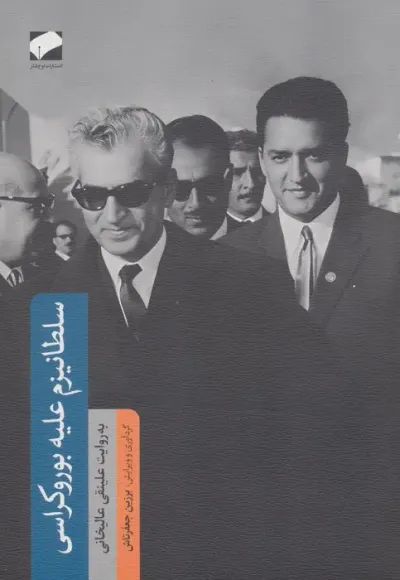
Why this book?
- To understand Iran's economic development experience in the 1960s and the factors behind its successes and failures.
- To become acquainted with the perspective of a senior economic manager on the decision-making mechanism in the second Pahlavi government.
- To examine the relationship between technocratic institutions, political power, and the centralization of decision-making.
- To understand the historical challenges of modern bureaucracy in the face of personal power structures.
About the book
"Sultanism Against Bureaucracy" is a collection of memoirs and analyses by Ali-Naqi Alikhani, compiled and edited by Barzin Jafartash. Through Alikhani's conversations, articles, speeches, and supplementary documents, this work reconstructs the experience of one of Iran's most important pre-revolution economic managers.
The book's main subject is the examination of the tension between bureaucratic and technocratic structures and a decision-making system based on individual will and the concentration of power. Alikhani speaks from his experience in the Ministry of Economy, industrial planning, the University of Tehran, and his confrontation with political limitations, showing how economic reforms faced difficulties when encountering institutional obstacles.
In addition to a first-hand account of economic policymaking, this book addresses important issues such as the role of oil revenues, industrial development, regional justice, inflation, imports, and the weakness of independent institutions. Reading it is beneficial for those interested in the contemporary history of Iran, political economy, public administration, and development studies.