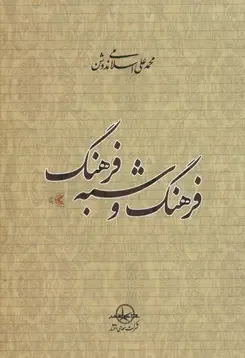
Why this book?
- It explains, with a clear and critical eye, the distinction between authentic culture and pseudo-culture.
- It shows what follows for thought, creativity and cultural life when appearance prevails over meaning.
- It offers the critical view of one of contemporary Iran's prominent writers on cultural identity.
- It keeps the relation between tradition, modernity and global culture a question worth reflecting on.
About the book
"Culture and Pseudo-Culture" is a collection of essays and notes by Mohammad-Ali Eslami Nodushan on the concept of culture, the cultural condition of Iranian society, and the consequences of drifting away from cultural roots. The book's first essay is titled "To Be or Not to Be of Culture," which places the question of culture's meaning and standing at the centre of the discussion from the outset.
The book has two parts: one made up of essays previously published on culture, and one of notes appearing in print for the first time in this volume. In the prefaces to its various editions, the author also returns to the background of these writings and to the concerns that drew him to the subject. He regards culture as the guiding force of a society and as the viewpoint through which the world is seen.
In this work Eslami Nodushan distinguishes authentic culture from what he calls "pseudo-culture," and warns of the danger that the appearance of culture may replace thought, creativity and cultural life. The book's central concern is to preserve a society's bond with its cultural heritage while engaging the changes of the modern world with open eyes. The author treats this bond not as nostalgia for the past but as a condition for knowing and choosing consciously in an age of transformation.
The book suits readers interested in the sociology of culture, the history of contemporary Iranian thought, literature and studies of cultural identity.