Philosophy
Café Philo Conversation Series: 'Coaching from Another Perspective'
Coaching is a nascent profession with ancient roots. In its series of conversations, 'Coaching from Another Perspective,' Café Philo explores its philosophical foundations, its distinction from counseling and psychotherapy, and the necessity of understanding its theoretical approaches with six experts.
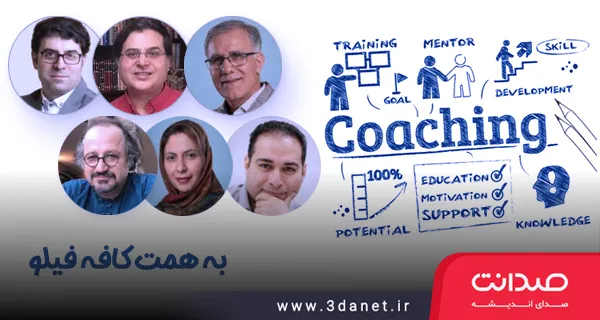
Coaching as a profession is nascent, but it has ancient roots that can assist us in the path of personal and organizational development. Coaching has been around in the world for about 30 years, and in Iran, it has been introduced in the form of business coaching, life coaching, etc., for a few years now, with a number of people working in this profession. The International Coaching Federation (ICF), aiming to better introduce it to the global community, has designated May 17–23 (Ordibehesht 27–Khordad 2, 1400) as International Coaching Week. During this week, various educational programs, gatherings, and conversations are held around the world. In Iran, too, practitioners in this field organized various programs. "Café Philo" also decided to approach this helping skill from another window, and in this regard, convened conversations with six professors and experts in the fields of coaching and philosophy. Our primary goal in these sessions is to become acquainted with the intellectual-philosophical roots and the theoretical supporting approaches of coaching, in order to articulate its antiquity and importance alongside its sensitivities for coaches and audiences.
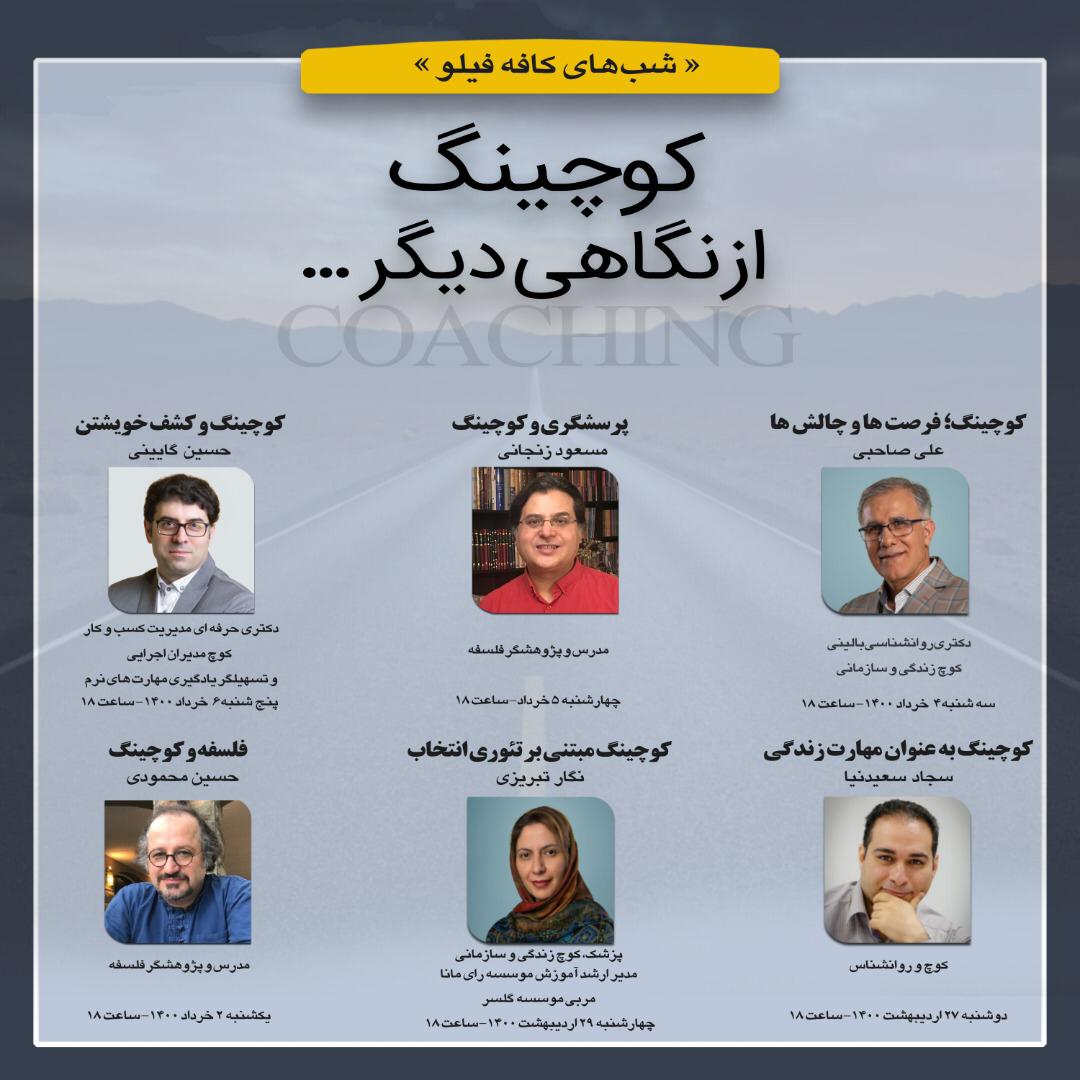
In these conversations, each guest addressed this profession from their own specialized perspective:
- The Scope of Coaching; Opportunities and Challenges – Dr. Ali Sahebi - Philosophy and Coaching – Dr. Hossein Mahmoudi - Inquiry and Coaching – Masoud Zanjani - Coaching as a Life Skill – Sajjad Saeednia - Coaching Based on Choice Theory – Dr. Negar Tabrizi - Coaching and Self-Discovery (Search) – Dr. Hossein Gayini
What becomes clear to us after these sessions is that although coaching, in the form of a profession, is an emerging service, its antiquity dates back to Socrates and the method he chose to challenge the youth of Athens. Furthermore, many thinkers, philosophers, and great figures of literature and thought have dedicated themselves to serving humanity with this approach. Another goal of holding these sessions is to familiarize audiences with this service. The experience of having a coach in life is a different experience from having a teacher, trainer, consultant, psychotherapist, and mentor. According to the competencies of the International Coaching Federation, coaches are committed, in sessions, to being in a position of parity with the client, attending to their wholeness and integrity, and using the tools of inquiry and dialogue to assist them on their path toward recognizing limiting beliefs, cognitive errors, and discovering and creating new paths for problem-solving.
Some of the questions that can be answered during these conversations include:
- What is coaching and who is a coach? How does coaching differ from other helping services such as teaching, mentoring, consulting, and psychotherapy?
- What is the necessity for coaches to become familiar with the intellectual and theoretical approaches of coaching?
- When is using coaching services beneficial for us, and how can benefiting from it assist us on our life path and in re-examining presuppositions?
- How can understanding Socrates and Socratic questioning serve us in solving problems and recognizing the issue?
- What is the necessity of having a philosophical and psychological approach in coaching? It is hoped that in this series of conversations, we have taken a step, however small, toward a better and deeper introduction of coaching and its philosophy for Persian speakers.
.
.
Coaching from Another Perspective
By Café Philo
.
- The Scope of Coaching; Opportunities and Challenges – Dr. Ali Sahebi
Watch on YouTube | Watch on Aparat
. - Philosophy and Coaching – Dr. Hossein Mahmoudi
Watch on YouTube | Watch on Aparat
.
- Questioning and Coaching - Masoud Zanjani
Watch on YouTube | Watch on Aparat
.
- Coaching as a Life Skill - Sajjad Saeednia
Watch on YouTube | Watch on Aparat
.
- Coaching Based on Choice Theory - Dr. Negar Tabrizi
Watch on YouTube | Watch on Aparat
.
- Coaching and the Discovery (Search) of the Self - Dr. Hossein Gayini
Watch on YouTube | Watch on Aparat
.
.


Discussion0 comments
No comments yet; let yours be the first voice.