Philosophy
“Philosophy” as the Capacity for “Doubt” and Its Connection to “Peace” and “Youth”
Masoud Zanjani sees philosophy as the capacity for doubt—a hallmark of youth and a peace-supporting outlook. On this basis, skepticism is the antidote to dogmatism and war, and world peace requires skeptical statesmen who, like Socrates, care for the truth.
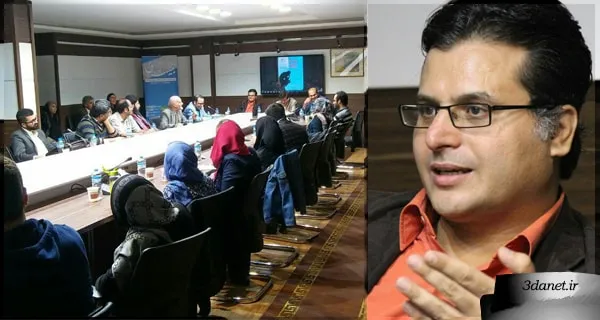
“Joy and Youth in Ancient Philosophy” and “The Connection Between Philosophy and Peace” are the titles of two lectures (totaling 60 minutes) by Masoud Zanjani, delivered respectively in Aban of last year on the occasion of World Philosophy Day, and on the twentieth of Farvardin of this year at the “System of the Culture of Peace” workshop at the UNESCO National Commission. These two lectures — as emphasized at the beginning of the second lecture — are interconnected. In fact, the second talk begins as a continuation of the concluding discussion of the first talk, with reference to the concept of “nazar-bāzi” (amorous playfulness) in the poetry and thought of Hafez. The short note below is written by him on the occasion of the release of the audio files of these two lectures on Sedanet.
“Nazar-bāzi” can be philosophically interpreted as “perspectivism,” which itself is rooted in “scepticism.” On this basis, “scepticism” can, in one philosophical analysis, be considered the measure and criterion of youth (first lecture); just as in another analysis, it can be seen as an attitude that supports and carries peace. (second lecture) Within this same analytical framework and interpretive horizon, alongside the “art of doubt,” one can and must also speak of the “virtue of fear” in connection with the culture of peace. (end of the second lecture)
But by recalling that “scepticism” is a component of “critical thinking” or “philosophical thinking,” the inner connection between “youth,” “peace,” and “philosophy” can then be revealed. From this perspective, peace is the capacity of the young, that is, the young-minded, (the nazar-bāz / the sceptics); it is the capacity of people like Socrates, who even in the final hours of their lives cared for the truth and doubted their most central beliefs — such as the belief in life after death — and sat in dialogue with dissenting thinkers in search of the truth. It can be said that Socrates, by the grace of philosophy (the capacity for doubt), was forever young, and in this sense, bid farewell to life at the peak of youth. (Plato’s Phaedo dialogue)
On the other hand, war is, always, the product of the old, that is, the rigid-minded, (the claimants / the dogmatists); people like Creon who lack the ability to recognize differences and contradictions, and in the words of his son Haemon, cannot accept that two people (two groups / two cultures) might simultaneously be right and possess a share of the truth. But history tells us that the Creons, who are captives of ignorance and self-conceit, have a transient inner state and must ultimately rule over a desert and wasteland. (Sophocles’ tragedy Antigone)
If we look closely, the most important obstacle to peace, friendship, and tolerance in our world is nothing but dogmatism. History tells us that it is dogmatism and various forms of rigidity and prejudice that have always inflamed the fire of war and violence in the world. And it also tells us that scepticism is the only antidote to dogmatism, for the fire of stagnation and dogmatism is not extinguished except by the rain of doubt and questioning.
The rightness and necessity of philosophy for our world also lies in its effective role in aiding peaceful coexistence through cultivating the capacity for doubt and living despite doubt. Philosophy is the “love of wisdom,” but only those will be worthy of this love who first have the capacity to doubt their own “knowledge.” Indeed, doubt is a characteristic of wise and honorable human beings. The precious courage and valuable audacity of great human beings are rooted in their capacity for doubt and their fear of the truth. Hence, it must be said: “World peace, more than and before anything else, needs doubt-prone strategists.”
These heavenly bodies that are the inhabitants of this portico
Are the means of perplexity for the wise
Beware, lest you lose the thread of wisdom
For those who are strategists are themselves bewildered
.
.
Footnote:
Yes, more than twenty thousand soldiers were sentenced to death in courts-martial. I am referring to German deserters who are still remembered as cowardly and faint-hearted individuals. Were they not the true heroes of the war? They had the courage not to let themselves be turned into vile human beings. They displayed their integrity in the form of “fear.” They did not submit to blind obedience. Their defiance and insubordination were a testament to their honesty and righteousness. And for this reason, those who said “no” in those days can and should be rehabilitated, even after a fifty-year delay. Setting aside the ceremonial events (the ceremonies marking the fiftieth anniversary of the war's end) now underway in our countries and yours, the situation has not, in fact, improved much. As a young survivor of the war, the memories of the final weeks of the war never leave my mind. When the Soviet army broke through the Oder front and began the battle to conquer Berlin, I saw with my own eyes the victims of the German wartime courts: the hanged corpses on an endless row of tree branches along the main street of every village, which was typically named “Adolf Hitler” Street. Among them were both seasoned front-line soldiers and boys my own age who had been sentenced to death in summary courts. On the chest of every single one, a paper placard was affixed bearing the title: “I am a coward!” ... I want to say this: fifty years have passed since those days, yet it feels like only yesterday. If one does not try to bury one's head in the sand, memories are etched into the mind like stone. Our profession demands that we do not bury our heads in the sand and that we shoulder the burden of responsibility. This is our charter. I know well, and it seems unlikely, that our governments and yours will once again rehabilitate these defiant human beings, people who courageously said “no.” But it must be said: they, the deserters who were tried in summary wartime courts and immediately shot or hanged, hold a place in the hearts of all guardians of peace.
With cordial greetings, Günter Grass
Eight Letters (Günter Grass - Kenzaburō Ōe), translated by Ali Shafiei, Cheshmeh Publications, 1999, pages 24 and 25.
.
.
Audio of the Lectures:
.
Joy and Youth in Ancient Philosophy
On the occasion of World Philosophy Day
UNESCO National Commission
November 2016
.
The Link Between Philosophy and Peace
Workshop on the System of a Culture of Peace
UNESCO National Commission
April 2017
.
“Philosophy” as the Capacity for “Doubt” and Its Connection to “Peace” and “Youth”
Speaker: Masoud Zanjani
Source: Long Live Philosophy Channel
.
.
Discussion0 comments
No comments yet; let yours be the first voice.