Philosophy
Farewell to the “Father of Animal Rights”
Tom Regan, philosopher and father of animal rights, has died at 78. Taking a deontological approach, he sought to establish natural rights for animals and, contrary to utilitarian views, held that animals possess rights.
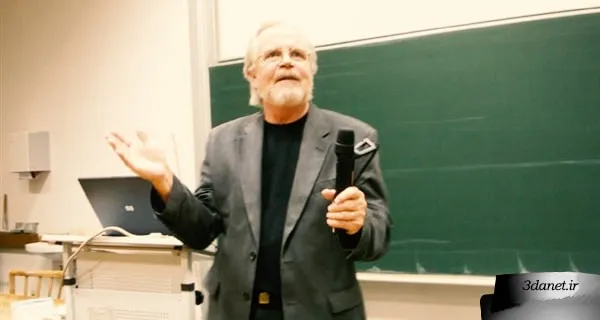
There are many people whose death, when I hear the news, saddens me deeply. Saddened that these individuals did not live as long as ordinary people. I wish I could at least add some of my own years to theirs, for their existence was surely more blessed and fruitful for this world than mine, just as it had been until their death. Today, my dear and generous friend, the altruistic Zuhair Bagheri, sent me news that was deeply distressing. The news of the death of a great philosopher, the “Father of Animal Rights,” Tom Regan, an American philosopher of Irish origin. In the obituary of this great philosopher, it is written: “Tom Regan, the American moral philosopher who pioneered animal rights, passed away on Friday, February 17, 2017, at the age of 78, due to complications from Parkinson’s disease, which he had bravely battled for many years.” Tom Regan, full name Tom Howard Regan, published his most famous work, The Case for Animal Rights, in 1983, which earned him worldwide renown in the field of animal ethics. Regan’s distinction lies in his attempt to include animals within the sphere of rights and to prove that animals, like humans, possess rights. While Peter Singer, the animal liberation advocate, had raised the necessity of moral consideration for animals from a utilitarian perspective much earlier than Regan, Regan’s prominence, as mentioned, is because he represents the “natural rights” view, which seeks to establish “rights” for animals—something Singer, as a representative of the utilitarian view, does not attempt and never uses the language of rights. Regan, who grew up in a culture where meat-eating was an integral part, eventually became a vegan, by his own account, due to several events. These events were, in order: first, the death of their beloved dog, Gleco, which both saddened him and made him wonder why he and his family felt sorrow over the death of a dog but did not feel the same way about the death of the cows and pigs that were the source of their meat. It was here that the question arose for Regan: if the animals raised for food are also “subjects-of-a-life” and have lives, should we not respect them in the same way we respect our companion animals, namely dogs and cats? The second event relates to the time when Regan, during the Vietnam War, joined the ranks of war opponents with his students, guided by Gandhi’s philosophy of nonviolence. It was this activity in the 1960s that drew him toward pacifism and veganism. He came to believe that we are mistaken in assuming we are justified in using animals as means to our ends. And finally, the third event relates to his meeting with the philosopher Peter Singer in 1973 and the eventual publication of a joint, anthology-like work on ethics titled Animal Rights and Human Obligations. Regan considered Singer’s utilitarian and consequentialist view of animals to be indefensible, and for this reason sought to defend a different position from a deontological perspective, and this is what established him as the father of animal “rights.” In his view, rights are natural for humans and animals alike. It is not we who grant them these rights; rather, we discover their rights. Regan devoted his entire life to overthrowing all practices that in some way violated animal rights. A professor of philosophy at North Carolina State University for more than thirty years, he authored or edited more than thirty works in the field of animal ethics and rights. In 2000, North Carolina State University awarded him its highest medal, the William Quarles Holladay Medal. Upon his retirement in 2001, the university library established the Tom Regan Animal Rights Archive in his honor, the first of its kind in the world. Regan did not confine himself to academic activity and, together with his wife Nancy, founded the Culture and Animals Foundation [www.cultureandanimals.org]. He had two children and four grandchildren. Currently, the book Animal Rights, Human
Wrongs] is being translated into Persian by the author of this article..
.
Farewell to the “Father of Animal Rights”
Behnam Khodapanah
.
.

Discussion0 comments
No comments yet; let yours be the first voice.