Philosophy
Animal Liberation: Obstacles and Progress
The cheap-meat production system rewards unethical treatment of animals, but whistleblowing and animal-rights activism have driven public awareness and legal change—from bans on battery cages to a decline in animal testing in Europe and the United States.

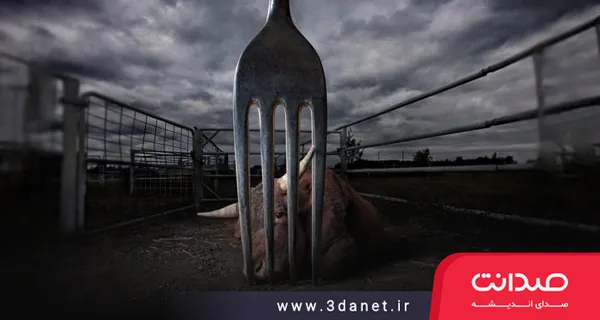
In 2008, tens of millions of Americans watched with horror and disbelief on the evening news a clandestine video of severely ill cows being beaten to make them move, shocked with electric prods, struck in the eyes with a baton, and shoved around with a forklift until they were close enough to the “kill box” to be slaughtered and turned into meat. The video was recorded at the Westland/Hallmark slaughterhouse in Chino, California—a large, seemingly modern facility and a major supplier to the National School Lunch Program, located not in some remote rural backwater but just thirty miles from downtown Los Angeles. Because eating meat from cows that cannot walk is a health catastrophe, the video led to the largest meat recall in United States history.
These revelations provided striking confirmation of the central idea of Animal Liberation. Daniel Ugarte Navarro, the manager of the pens shown in the film, who electrically shocked the sick cows, beat them, and used a forklift to move them, said he had done nothing wrong and was “just doing his job.” It is an excuse we have heard before, and it is not without a grain of uncomfortable truth. Apart from the odiousness of Ugarte’s acts, there is something far more fundamentally wrong with the ethics, and the law, that governs how we treat animals. If humans want to eat sentient beings and there is competition to produce meat at the lowest possible price, then the system will reward those who meet that demand. In that sense, Ugarte was just doing his job. But as “bad luck” would have it—for him and for Westland/Hallmark—an investigator from the Humane Society of the United States was secretly filming him as he was, in effect, maximizing his employers’ profits.
The widespread revulsion triggered by this video and other undercover videos of animal abuse suggests that it is ignorance, not indifference toward animals, that sustains the massive institutionalized cruelty toward them in the United States. Now that the media are taking animal issues more seriously, that ignorance is crumbling. But it has been a long struggle to reach this point. Since this book was first published in 1975, the hard work of countless animal rights activists has borne fruit, not only in greater public awareness of animal abuse but also in tangible benefits for them. In the 1980s, under pressure from the animal movement, cosmetics companies began investing in finding alternatives to testing their products. Progress in testing methods that do not involve animals is now accelerating in the scientific community and is partly responsible for the decline in the number of animals used in this field. Despite the fur industry’s claim that “fur is back,” furriers have still not been able to reach the sales levels they had in the 1980s, when the animal movement began targeting them. Pet owners have also become more educated and responsible, and the number of unwanted and stray animals killed in shelters, while still far too high, has declined dramatically.
But the overwhelming majority of animals abused by humans are farm animals. While the number of animals used in research in the United States, at around twenty-five million, is roughly equivalent to the population of the state of Texas, the number of birds and mammals killed for food—again, in the United States alone—is about ten billion annually, or one and a half times the population of the entire world. (This figure does not include fish or other aquatic animals.) Because most of these animals are raised on factory farms, their suffering lasts for the entirety of their lives.
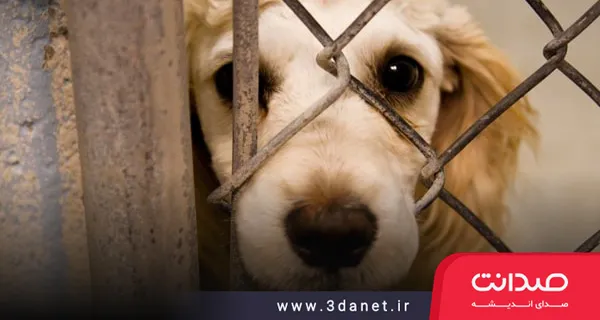
The first advance for farm animals occurred in Europe. In Switzerland, the battery cage system for egg production was declared illegal at the end of 1991. Instead of cramming their hens into wire cages so small that the birds could not stretch their wings, Swiss egg producers moved the birds into sheds where they could scratch at ground covered with straw or other organic material and lay their eggs in secure nest-boxes with soft bedding. Once Switzerland showed that change was possible, opposition to battery cages gathered strength across Europe, and the European Union, with twenty-seven member states and a population of nearly 500 million, has now agreed to phase out the conventional bare wire cage by 2012, providing hens with more space, access to a perch, and a nest-box in which to lay their eggs.
Further steps, all driven by broad public support and the backing of the European Union’s leading scientific and veterinary experts, followed. Veal calves raised in intensive systems, deliberately kept anemic, deprived of straw for bedding, and confined in individual crates so narrow they cannot even turn around, are among the most miserable of all farm animals. This system of housing calves had already been banned by the time I was revising the text of Animal Liberation for the 1990 edition. Today, the crates in which veal calves were kept are prohibited not only in Britain but throughout the European Union. Conditions have also improved for pregnant sows in the pig industry. Confining pregnant sows in individual stalls was banned in Britain in 1998, and from 2013 it will be prohibited across Europe as well, except for the first four weeks of a sow’s pregnancy.
While Europe was debating and legislating these changes, there seemed to be no prospect of any similar law making it through the U.S. Congress, or indeed anywhere else in America. The first sign of change came with a 2002 ballot initiative by animal welfare groups that put a proposal to ban gestation crates for pregnant sows to a public vote in the state of Florida. Florida was hardly a progressive state on animal welfare issues, but the proposal passed with a majority vote. Four years later, the same issue arose in Arizona, where a ban on veal crates was added to the proposal. And once again, voters passed the measure by an overwhelming majority.
The Arizona vote sent a message to producers. Just one month later, two of the largest veal producers in the United States pledged to phase out veal crates within two to three years. Then the largest pork producers in the United States and Canada announced that they would phase out gestation crates over the next ten years. In explaining the move, the American producer, Smithfield, pointed to the views of its customers, the largest of which is McDonald’s. McDonald’s, which welcomed the decision, had been in discussions with animal activists for many years about reducing the suffering of the animals from which its products were made. Other major pork producers soon followed this path. In 2007, Oregon became the first state to enact a ban on gestation crates as legislation rather than putting it to a public vote, and the following year, a ban on gestation crates and veal crates became law in Colorado. The American Veal Association, after decades of resisting criticism, resolved to recommend that its members transition to group housing more compatible with animal welfare by 2017.
Many leading American chefs, food retailers, and food suppliers are likewise moving away from the worst forms of animal confinement. Wolfgang Puck is ending his use of pork from sows kept in crates, as well as eggs produced by caged hens. Major chain stores including Burger King, Hardee’s, and Carl’s Jr. have begun purchasing their pork and eggs from producers who avoid gestation crates and battery cages. Hundreds of universities across the United States now avoid using eggs from caged hens, and in 2007 the Compass Group, the world’s largest food service provider, announced that in the future all of its eggs would come from producers who do not use cages.
But the most important victory came on November 4, 2008, a day memorable not only for the election of Senator Barack Obama as the first African-American president of the United States but also because the people of California, by a large majority of 63 to 37, voted in favor of a measure requiring that all farm animals in their state have access to space to stretch their limbs and turn around without touching other animals or the sides of their enclosures. By 2015, not only veal crates and gestation crates but also the conventional battery cage will be illegal in the state of California, and nineteen million hens will have more space to walk around and spread their wings. The egg industry spent 9 million dollars to fight the measure, but ultimately found itself aligned with a coalition of animal organizations, led by the Humane Society of the United States, the nation’s largest animal welfare organization, an organization that under the presidency of Wayne Pacelle has turned its attention with remarkable success to farm animals.
The California vote, and the subsequent votes in Florida and Arizona, show that when Americans are given the opportunity, they reject the conventional animal husbandry practices that supply their pork, veal, and eggs. The animal movement in America, with public opinion solidly behind it, is on the verge of transforming the conditions in which tens of millions of farm animals are kept.
All of these changes are the realization of what was said long ago by animal advocates. In 1971, when I was organizing small demonstrations against factory farming, it seemed as though we were grappling with a giant industry that would sweep aside all its opponents. Fortunately, ideas and compassion have shown that they possess sufficient power to change the systems in which tens of millions of animals live and die.
The position defended by the book Animal Liberation goes beyond these advances, however important they may be, in animal welfare. We need a far more fundamental change in the way we think about animals. The first sign that this could even happen came in 2008, in the form of a historic vote by a committee of the Spanish parliament that declared that an animal could be granted the legal status of a rights-bearing person. This move took the form of support for the Great Ape Project, an organization that seeks basic rights—the right to life, liberty, and protection from torture—for our closest nonhuman relatives: chimpanzees, bonobos, gorillas, and orangutans. The resolution directs the Spanish government to promote a similar declaration at the European Union level and also calls on the government to adopt legislation to prohibit potentially harmful experiments on great apes [hominids, with the scientific name Hominidae, a taxonomic family that includes the four extant genera of chimpanzees, gorillas, humans, and orangutans]. Keeping great apes in captivity will be permitted only for conservation purposes, and under strictly controlled conditions to provide the best possible conditions for the apes. Furthermore, the resolution recommends that Spain take steps in international forums and organizations to ensure that great apes are protected from maltreatment, slavery, torture, and being killed.
Compared to changes in the conditions in which farm animals are kept, the Spanish resolution is significant, not for the number of animals it directly affects, but because it removes a previously insurmountable barrier that we have erected between ourselves, as beings with rights and dignity, and nonhumans, as mere objects. When we look at our closest nonhuman relatives, as Jane Goodall and Dian Fossey have helped us to do, we will see that the differences between us and animals are, in important respects, a matter of degree and not of kind. The Spanish resolution represents the first official acknowledgment of the ethical and legal implications of recognizing the similarities between us and at least some nonhuman animals. Perhaps the most striking part of it is the use of the term “slavery” for something that it is wrong to inflict on animals, for until now it has been assumed that animals were rightly our slaves, to be used as we wish, whether for pulling our carts, modeling human diseases for research, or using their eggs, milk, or flesh for our food. Such a recognition by a national parliament that enslaving animals is wrong is an important step toward animal liberation.
Peter Singer
New York, November 2008
.
.
Animal Liberation: Obstacles and Progress
Peter Singer
Translation: Behnam Khodapanah
This article is a translation of the 2009 preface to the book Animal Liberation, which appears in the electronic edition of the work with the following details:
"Animal Liberation," By: Peter Singer. Open Road Integrated Media, Inc. (2015), 484 pages.
.
The book Animal Liberation, translated by Behnam Khodapanah, is being prepared for publication by Qoqnoos Publishing.
.
.



Discussion0 comments
No comments yet; let yours be the first voice.