Philosophy
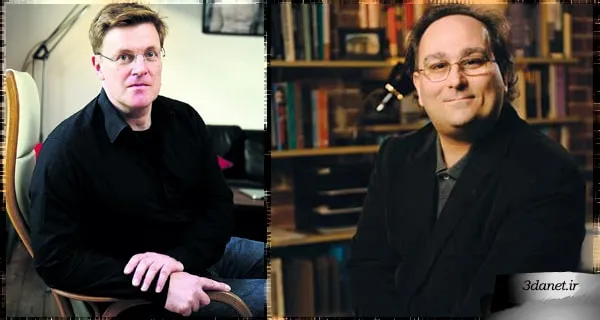
Nigel Warburton in Conversation with Peter Singer on Animals
In conversation with Warburton, Singer examines the distinction between 'person' and 'human', grounding morality in the capacity to suffer. He equates speciesism with racism and condemns the infliction of unnecessary suffering on animals for food.

David Edmonds: The book Animal Liberation was published in 1975. In retrospect, it is an important philosophical work that gave rise to the animal rights movement in its modern sense. Of course, the author of the book did not speak directly of [animal] rights, but rather, as a utilitarian, he spoke of maximizing interests or satisfaction. The Australian author of the book is now at Princeton University and can arguably be called the most famous philosopher in the world. He holds that some animals possess a higher moral status compared to some humans, and that our disregard for animal suffering is a reprehensible moral failing. He also has controversial views on euthanasia, abortion, infanticide, civil disobedience—and also on the extent to which we ought to donate to charity. But we are speaking with Peter Singer solely about how humans should treat animals.
Nigel Warburton: Our topic is the ethics of using animals, whether as food or in research. But before we begin the discussion, it might be more fitting for you to clarify what you mean by “person.” Because you distinguish between “person” and “human being”.
Peter Singer: A “person” is someone who is aware of their own existence over time. They have enough awareness in this regard to know that they are the same individual who has lived before, and they expect their life to continue into the future. So many human beings are considered “persons,” but we are not “persons” when we are born. Newborn infants are not “persons.” And [conversely,] some animals are considered “persons.” And of course, not all animals are persons.
N.W.: By these descriptions, which kind of animals can be “persons”? P.S.: Chimpanzees, for example, are probably aware of their own existence over time. So I think there is good reason to consider chimpanzees as “persons.”
N.W.: What is your view on adult humans who suffer from mental disabilities and cannot reflect on their past as part of their own experiences? That is, do you think they are not “persons”?
P.S.: I think they are no longer “persons.” Perhaps they were “persons” at some point in the past. And we can respect their wishes from when they were “persons.” But there comes a time when you are no longer a “person.” Especially if your mental capacities deteriorate but your body continues to live on, and this vegetative life continues such that you lose your grasp of your past and do not even know that you are going to have a future.
N.W.: Someone who reads these statements of yours and is not a philosopher might say, “Well, you have defined ‘person.’ You have defined ‘human being.’ But so what?”
P.S.: That is certainly a correct reaction. Definitions do not say which action is right and which is wrong. But consider a being who can think about its future and imagine it. In my view, such a being is morally significant. Because if you make a comparison between killing a being who is capable of having some anticipations about its future, some desires for the future, perhaps even projects it wants to complete in the future, and you murder such a being who wants to continue its life, you have committed a wrong against that person. But if you do the same thing to a being who is not fully a person and has no desires or hopes for the future that killing them would thwart, your action would be different. So the concept of “person” points to something that can be significant when discussing the rightness or wrongness of killing.
N.W.: In my view, the most important issue regarding animals is whether they suffer or not. All kinds of animals have the capacity to suffer, even if they have no conception of the continuity of their life [in the past and future].
P.S.: I completely agree. It was you who brought up the discussion of persons, not me. The main issue regarding animals and how we treat them is that they can suffer. I am not arguing that the main issue concerning animals is that killing them is wrong.
N.W.: The interesting point here is that many of your critics focus on describing a situation where you place a human who is less than a “person” against an animal who is a “person.”
P.S.: I think this is a trick, and with some audiences, it is a trick that works. Critics draw a distorted picture of my views and say that I argue animals deserve more consideration than humans. Well, I think this is generally not true, although it is true that in some rare situations—that is, when a human is intellectually disabled or lacks the capacity to understand things—I would prefer non-human animals; provided, of course, that all other things are equal. In such situations, animals have a greater interest in continuing their lives or not suffering. But this really has no relevance to the majority of cases where we interfere in the [normal and conventional] course of animals' lives, for instance, when we raise them in factory farms to provide our food. So it is by no means necessary for me to say that they have a status similar to humans—and, a fortiori, superior to humans. I simply need to point out the fact that we inflict unnecessary suffering on them. This is enough to prove that what we do is wrong, because we do not do this to save human lives, but simply because we like to eat a particular kind of food.
N.W.: Another concept that holds an important place in your work is “speciesism”; that is, the view that if we treat other animals—non-human animals—in a way we would not be willing to treat humans, this behavior of ours is on a par with racism.
P.S.: The issue is not simply that we treat animals in a way we would not be willing to treat humans. This is unproblematic in some cases. Because they have different needs and different capacities. Sometimes we should treat them differently. Exactly as we sometimes—and rightly—treat children in a way that differs from how we treat adults. What the concept of speciesism points to is that we give less weight to the needs of beings who are not members of our species, simply because they are not members of our species. We do not pay attention to their individual characteristics or their capabilities; or to what is good or bad for them. We very simply say: “Well, they are not members of the species Homo sapiens/[humans]. So we can use them to achieve our ends and desires. We do not have to treat them as if their ends also matter.” This is while, when dealing with a human—whatever that human's intellectual level may be—we say that human life has sanctity and dignity. He is an end in himself. We must respect that human's dignity, and so on. This is speciesism. That is, the mere type of species determines what a being's moral status should be.
N.W.: But perhaps this is a good general rule. When you look at another human, you generally think that they develop over time, are aware of their own existence, and can feel pain. But consider a fish, for example, a trout. It has none of these capabilities.
P.S.: Well, the first point is that we are not dealing only with animals like trout. Another point is that I agree with the first part of what you said, that humans probably have more self-awareness than animals and are more aware of their own existence over time. But I am really not sure that humans also have a greater capacity for suffering. We know that some animals' senses are sharper than humans'. For instance, eagles have better eyesight; dogs have a stronger sense of smell; and so on. So it is by no means impossible that animals—since it is necessary for them to live in full contact with the world—have a capacity for perceiving pain as good as ours, and perhaps even better. We should not accept it as a general rule that humans always suffer more than animals. And likewise, we must strictly avoid the belief that human suffering matters more, which is precisely the point that speciesism highlights.
N.W.: These days we exploit animals in two major ways: the first is for food, and the second is in certain experiments; perhaps for scientific research, perhaps for research into cosmetics and toiletries. You are a utilitarian; that is, you seek to maximize the satisfaction [and contentment] or interests of sentient beings. And based on this general rule, you say what is right and what is wrong.
P.S.: Yes. That is correct. Utilitarianism means that, taking everything into account and in the long run, you do what is best for the interests of all sentient beings—or what best fulfills their preferences.
N.W.: But doesn't this just complicate everything? Most of us, most of the time, are most interested in other humans. If you add all kinds of animals to this circle, how can you decide what to do? P.S.: Yes, this certainly complicates matters. Just as it would complicate matters if you were a white European living in the eighteenth century and wanted to take the interests of Africans into account. It conflicts with your profitable business; that is, buying and selling slaves. But despite things becoming more complicated, it is something we must still carry on with. Well, it is true that we can by no means make a precise calculation of sufferings and benefits, but in some situations we can make rough comparisons, and sometimes it is quite clear that the suffering we inflict [on animals] is far greater than what the resulting benefit can justify. One of these situations is what we witness in factory farms. On factory farms, we confine animals in conditions that make them incapacitated and miserable for their entire lives. They cannot fulfill their basic needs. Physically, they cannot move around, exercise and play, or make a warm and comfortable place to sleep. Socially and psychologically, they cannot join a proper social group suitable for their species. Laying hens may spend their entire lives in suffering. Breeding sows live for most of their lives in very narrow, tight rows that do not even allow them to turn around, let alone walk. We must ask ourselves this question: What do we gain in return for this suffering? Well, we can produce our food a little more cheaply. But we are not starving, and we can afford to pay a little more for our food. I think if we value the suffering of chickens and pigs as much as we value human suffering, then this extra cost can be justified.
N.W.: But isn't this simply an argument condemning meat from factory farming in favor of meat from non-industrial farming?
P.S.: This is an argument that says factory farming is a completely clear example of the wrongs we commit against animals. You asked how we can make complex comparisons and calculations between different species [regarding the ratio of suffering inflicted to benefits gained], and I answered that factory farming is something we can say with certainty is unjustifiable. That does not mean other types of animal farming are beyond reproach and that everything done in them is acceptable. But the reasons against factory farming are definite and certain, unlike other forms of raising animals.
N.W.: And if you consider the matter of hunting; I mean animals that live in the wild and are killed very quickly, perhaps with a gunshot. Presumably, this should be more morally acceptable than eating the meat of animals raised on non-industrial farms and slaughtered in abattoirs?
P.S.: I think that is generally correct. Specific conditions affect this general rule, including how confidently you can shoot an animal in the head and kill it instantly rather than wounding it so that it flees moaning and suffering. But if you are a good marksman and hunt in an area that is ecologically sustainable and capable of replenishing the hunted animals, it is better to obtain the meat you need through hunting than to buy it from a supermarket.
N.W.: What I like about your statements is that they are very well-reasoned. Each piece coheres with the others. You seek an argument that creates distinctions. But these distinctions are not based merely on your feelings about killing animals or causing them suffering; rather, their foundation is on the rational consequences and outcomes that can be drawn from these feelings. Many vegetarians I have met deeply abhor eating animal meat, or harming them, but perhaps cannot justify this practice using rational principles. So could it be said that perhaps they are not vegetarians from a moral standpoint?
P.S.: Perhaps some of them are vegetarians from an aesthetic standpoint: that is, killing animals seems to them an utterly repugnant act. And I agree that there is something in this that certainly disgusts me. Even if I have convinced myself, with the help of rational argument, that only under certain specific conditions is shooting an animal—a deer, for example—an acceptable act, I still have no desire to watch the scene of a beautiful animal suddenly falling to the ground and dying, turning into a dead carcass and ending up in meat-packing plants. But I am speaking here as a moral philosopher, so I must know whether this is merely a feeling of disgust that we might also have towards other phenomena—phenomena that are completely defensible or justifiable—or whether there is a strong moral reason for prohibiting it.
N.W.: So you think we should all adopt vegetarianism? P.S.: I would answer, almost all. Of course, if there is someone whose life is primitive and traditional; whether an Eskimo who must hunt fish to survive, or an Australian Aborigine who still lives in the traditional way and this lifestyle requires killing an animal from time to time, I would not tell them that they must abandon this way of life and come to the city, where they can earn money and get their food from supermarkets. Their situation is different from ours.
N.W.: So in a sense, those who are not vegetarians are to some degree immoral. But how can eating meat be immoral?
P.S.: Compared to what? Yes, ordinarily such an act is morally wrong. Of course, we are far from moral perfection. I am not claiming that everything I do is flawless. But I think part of the moral life is to be aware of the consequences of your actions. This includes being mindful of the animals whose lives your actions affect. On this basis, one could say that many people in developed countries would be living more morally commendable lives if they adopted vegetarianism. Because they have a wide range of nutritious foods available to them and can easily meet their dietary needs without eating meat.
N.W.: To me, this is a very classical conception of philosophy; that is, instead of merely thinking philosophically, you try to live philosophically.
P.S.: Without a doubt. If I thought moral philosophy was merely a theoretical game, I wouldn't have continued with it until now. When I was a teenager, I was interested in chess, and I spent a lot of time grappling with chess puzzles; problems like "White to move and mate in two." It was interesting and got the mind working, but I didn't want to spend my whole life on it. There are things that matter more. And sometimes I think that people who engage in philosophy almost reduce it to the level of solving chess puzzles.
N.W.: I live in Oxford. There is a large building there that was recently built solely for animal research. This is another way we often use animals and cause them suffering. But one can defend this practice based on the results obtained. If you are a vegetarian, there are other ways to survive. But how can you conduct your medical research without experimenting on animals? P.S.: There is a vast amount of medical research conducted without animal experimentation. A large part of medical research is done on humans, and we have also greatly expanded research using cell cultures (growing animal tissues or cells outside living organisms), computer simulations, and numerous other alternatives to animals. This area of research on animals has grown over the last thirty years, partly due to pressure from animal rights movements, and this is a very good thing. But of course, I don't want to say that we cannot learn anything from animal research.
N.W.: So you are not an absolutist and think there are situations where it is morally acceptable to use animals for human benefit? P.S.: Yes, it is possible. I certainly cannot rule it out as a theoretical possibility. But I have set very high hurdles that you must initially clear before proceeding with such an action. And one of the reasons I have set these high hurdles is that I think the entire project of animal research is based on that prejudice of specialists I mentioned earlier: namely, that animals don't really count, or at least don't count for much. And that is why many medical researchers casually say, "Give me 50 mice," or "Bring me 20 dogs." This is why I do not want to justify animal experimentation in general, and I certainly do not want to defend or justify what happens in the building you mentioned—a building I know is the subject of much verbal warfare in Oxford. Because I know the sky is the same color there as everywhere else, and the scientists in that building follow the same path as other scientists; they by no means give the same weight and value to the interests and needs of animals as they do to the interests and needs of humans with similar mental capacities.
NW: When you started writing about animal suffering, speciesism, and such topics, it was a very radical position. Things have changed a great deal since then. The number of people who sympathize with your arguments has grown considerably. In your view, will there come a time in the future when people look back and say, “I can’t believe they once ate meat. I can’t believe humans performed experiments on animals”? PS: I hope so. At the very least, I am quite certain they will say: “I can’t believe they confined animals in factory farms, to the point where those animals couldn’t turn around or move about.” And I truly hope they will say: “I can’t believe they did those things to chimpanzees.” In fact, we have already reached that point regarding the treatment of chimpanzees. You look back — at things that happened in the recent past, twenty or thirty years ago — and people are genuinely horrified that such experiments were conducted. So we are making progress. I am very hopeful that we will continue to make moral progress.
.
.
Nigel Warburton in Conversation with Peter Singer on Animals
* (Selected from the book Philosophy Bites)
Translator: Rouhollah Mahmoudi
Source: Din Online
.
.


Discussion0 comments
No comments yet; let yours be the first voice.