Environment
Religion and Animals, an Entry from the Encyclopedia of Animal Rights and Welfare
Religion shapes human-animal relations in three ways: from perceptions that deny animals a soul to values that treat them as mere instruments. In contrast, Eastern religions forge a bond among all beings through concepts such as samsara and ahimsa.
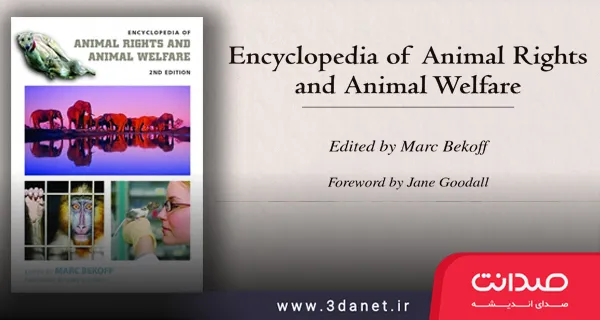
Religion and Animals, an Entry from the Encyclopedia of Animal Rights and Welfare
Translators:
Zeinab Baniasad (PhD in Religions and Mysticism, izad210@gmail.com)
Ali Baniasad (Independent Researcher)
This text is a translation of the entry on Religion and Animals by Andrew Linzey, published in the Encyclopedia of Animal Rights and Welfare. Andrew Linzey is the director of the Oxford Centre for Animal Ethics, an Honorary Research Fellow at St Stephen's House, University of Oxford, and a member of the Faculty of Theology at the same university. He is a Visiting Professor of Animal Theology at the University of Winchester, and a Professor of Animal Ethics at the Graduate Theological Foundation in India. He is the author or co-editor of more than twenty books on animals, including Animal Theology (1994), Why Animal Suffering Matters (2009), and The Global Guide to Animal Protection (2013). In 2001, he received the Divinity Degree from the Archbishop of Canterbury in recognition of his pioneering, monumental, and unique scholarly work in the theology of creation, with special reference to the rights and welfare of God's sentient creatures. This is the highest award the Archbishop can bestow upon a theologian.
Religion affects our understanding of human-animal relations in three fundamental ways. First, there is the contribution that religion makes to our perception. People sometimes speak of religious insight, by which they mean attitudes deeply rooted in our religious traditions that can enrich our perspective. How we view the world is indebted to a range of factors, and religion is one of them.
What are these religious perceptions? When the relationship between animals and humans is raised, these perceptions are both positive and negative. The negative part relates to the tendency in some religions to magnify human power over animals and to overlook establishing a friendly relationship with them. Perhaps the strongest of these tendencies can be found in the writings of Thomas Aquinas, who considered friendship with animals impossible because they are not rational beings. Since Aquinas believed that establishing friendship was exclusive to rational beings, he deemed animals incapable of "fellowship with man in rational life" (Summa theologiae, Part 1, Question 65.3). This insistent emphasis on rationality—which, in Western religious traditions, animals do not share—has often led, in various ways, to a perception of them as lacking mind or an immortal soul and being incapable of relating to God.
Although in the Jewish, Christian, and Islamic religions animals are considered God's creatures, meaning their lives belong to God, and even that God loves his creations, the notion that animals hold a lower status compared to humans remains firmly in place. In religious texts, there is scant evidence specifically advocating for relationships with animals. Relationships with animals were mainly recognized and celebrated in the biographies of saints[1] and apocryphal books[2]. An obvious example is Saint Francis of Assisi. Of course, many Christian saints from East and West, such as Saint David García, Saint Catherine, Saint Anthony of Padua, Saint Catherine of Siena, Saint Werburgh, Saint Guthlac of Crowland, Saint Columba, and Saint Chad, had befriended animals and had friendly relationships with them. Saint Francis's idea that animals are our brothers and sisters has had great symbolic power in Christianity, but it seems to have had little practical effect. In Islam, animals and birds are each considered communities in their own right[3] and glorify God[4], but they clearly have a lower status compared to humans. Their meat and skin are used for food and clothing. Nevertheless, the Prophet of Islam asked his followers to show mercy when slaughtering them. The Prophet said: "Kindness to every living being will be rewarded."
The relationship between humans and animals in the traditions of Eastern religions is considered much stronger, as Jainism, Hinduism, and Buddhism all offer cosmologies in which a clear link is established between humans and animals. One of the most fundamental animal-inclusive concepts is the idea of samsara[5], or the cycle of birth and death, which expresses a fundamental continuity among all living beings. All lives are like links in a chain, and all are connected to one another. In this view, animals and humans are not created but are subjects. The whole of life is in a state of progression and regression determined by karma—simply put, a moral law based on cause and effect. Thus, humans and animals are clearly thought to be related; each soul has not only a biography but also a lineage.
The second role that religion plays [in our understanding of human-animal relations] concerns values. The dominant Western view of animals is that their existence is for the purpose of serving human interests. The founder of this view, or at least its earliest philosophical representative, was Aristotle (384-322 BCE). "If then nature makes nothing without purpose or in vain, it must be concluded that she has made all animals for the sake of man."[6]
Although this view of Aristotle was not specifically a religious one, it had a significant influence on religious thinkers after him, including Augustine, Aquinas, Luther, and Calvin, and their interpretation of the place of animals.
In fact, Aristotle's view regarding the purpose or final cause of the creation of animals was later transformed in Jewish and Christian thought into their divinely ordained purpose as well. Consequently, even Hebrew and Christian religious texts were interpreted with this instrumentalist model in mind. Thus, for example, the concept of dominion[7] in the Book of Genesis (1:28)[8] was seen as God's seal of approval on human superiority. Dominion, or radah[9], in its original context, incidentally, had a completely different meaning: God's command to humankind to care for other creatures. Evidence for the correctness of this reading appears in the following verse[10]. There, humans, like animals, were given a vegetarian diet, a situation that changed only after the Fall and the Flood [of Noah] (Genesis 9:3).[11] Therefore, God's original will in the first part of Genesis was a peaceful, non-violent creation. But the attitude of animals being created for our use, whether through the lens of the laws governing nature or through divine providence, became so pervasive that in Western societies, animals are still fundamentally considered as tools, machines, commodities, and resources for human use.
The belief in ahimsa in Eastern religions, meaning non-violence or non-harming, has a long history. It can be strongly argued that it was Jainism that taught the concept of non-violence to the world; its influence on Hinduism and Buddhism is certain, and its reach may even extend beyond that. Many believe that ahimsa is the noblest of Indian ethical principles. In the unique expression of the venerable Mahavira[12], it is stated: "For death lays hold of everything. All beings are fond of life, hate pain, love pleasure, and shun destruction and annihilation. Life is dear to all." (Acharanga Sutra).
These sentences are the result of a simple but profound spiritual discovery: all life is dignified, sacred, or divinely given. Consequently, life has intrinsic value, and all those who live wish to live. Of course, one cannot conclude from this that all lives have equal value. Samsara is not an egalitarian[13] principle. On the contrary, those who have performed unworthy deeds, or, in other words, have bad karma, return to life in a lower form. [According to this belief,] while life is an interconnected chain, the human being still represents the apex of the moral hierarchy.
The third contribution religion makes to our understanding of human-animal relations is its influence on actions. People's worldviews clearly affect their actions. Religious actions, therefore, can be seen as the physical embodiment of human-animal relationships. The ritual of sacrifice is a prime example of this. It has been said that the most common representation of animals in Hebrew religious texts defines them around the axis of the sacrificial ritual. But in reality, a range of definitions exists for them. Just three examples are: creatures, covenant partners, possessors of a soul[14] or God-given life. Yet it is also true that animals and birds in Hebrew religious texts are most often depicted as sacrificial offerings.
The meaning and concept of this ritual is not easily grasped. As one would expect of any ritual over a thousand years old, it lends itself to various interpretations. On the negative side, sacrifice in its most common form was a ransom for human sins or a means of appeasing the wrath of the gods.
It is worth noting that this understanding is only one of several existing interpretations. Another interpretation, for example, sees sacrifice as the return of the animal creation to its Creator. Consequently, there is a great difference between sacrificing an animal and the wanton destruction of a creature, and this act paradoxically entails its liberation and union with God. Whichever interpretation we choose, the noteworthy point is that within the Hebrew scriptures themselves we encounter criticisms of this ritual, emphasizing its irrelevance or immorality. Psalms 50, verses 6 to 15, says God is opposed to sacrifice because all creatures belong to Him: "Gather to me my faithful ones, who made a covenant with me by sacrifice. The heavens declare his righteousness, for God himself is judge. Hear, O my people, and I will speak; O Israel, I will testify against you. I am God, your God. Not for your sacrifices do I rebuke you; your burnt offerings are continually before me. I will not accept a bull from your house, or goats from your folds. For every beast of the forest is mine, the cattle on a thousand hills. I know all the birds of the air, and all that moves in the field is mine."
The logic of this objection seems to be that humans should not take for themselves what belongs to God. Not only does everything belong to Him, but He knows and cares for each one individually.
Nevertheless, Eastern religions have firmly opposed animal sacrifice, although Islam has retained the tradition of sacrifice on major holidays. Judaism and Islam have, of course, preserved the practice of animal slaughter under the names shechita[15] and halal. Again, it was Jainism that first rejected animal sacrifice and commanded a peaceful life with all non-human creatures. In Mahayana Buddhism[16], the Bodhisattva[17] postpones his own enlightenment to save all sentient beings from the cycle of misery and death:
"I have taken a vow to save all living beings... I must save them from the terror of birth, old age, sickness, death, and rebirth... I must lead them across the stream of Samsara... I will help all beings to their liberation." (The Bodhisattva's Vow of Universal Salvation)
This conception of the human being who uses their power for the salvation of other beings and does so self-sacrificially is a defining characteristic of Jain and Buddhist thought, which seeks moksha[18] or liberation for all. Such a view, of course, can also be found in other religious traditions. In Christianity, the redemptive effects of Christ's death encompass all beings. An example is seen in the Epistle to the Colossians, where Christ is referred to as the "firstborn of all creation." Through him, God "reconciled all things to himself, and through the blood of Christ shed on the cross, established peace and friendship between God and everything in heaven and on earth" (1:15-20).[19] In Judaism, a future image of paradise on earth is presented, where the lion and the kid rest together, a place of universal peace where "there will be no evil or harm on God's holy mountain." (Isaiah 11:6-9)[20]
Strangely, there is no religious rite in Eastern religions that links concern for animals and humans together or specifically celebrates the interconnectedness of humans and animals. Perhaps this is because ahimsa was such an accepted practice that no specific rite was deemed necessary. By the same token, Western traditions also lack any specific rite for it, except for the Catholic tradition, which has always deemed the blessing of animals fitting, likely mirroring God's own blessing of his creatures in the Book of Genesis (1:22-20). The above instances are observed in the Rituale Romanum[21], written in 1614 and remaining virtually unchanged until 1952, which made the blessing of animals, and later services for animal welfare and well-being, possible in Western Christian congregations.
Such services are usually held on the Feast of St. Francis, October 4th, which has been designated World Animal Day, and the first Sunday of every October is designated as Animal Welfare Sunday. One of the newer, informal rites specifically honors the relationship between humans and companion animals.[22] This service involves bringing the animal before the church, where its human companion publicly promises to be faithful in caring for and loving that animal, essentially reflecting God's promise of care in the Old Testament as found in Genesis. The priest then says: "May the God of the new covenant, Jesus Christ, grant you grace in keeping your covenant and showing mercy to other creatures" (Animal Rites, 1999).
These commemorations and blessings are held in many cathedrals in Britain and the United States. Resources for celebrating the human-animal bond exist in almost all of the world's religious traditions. It must be added, of course, that many of those more positive attitudes are overshadowed by instrumentalist elements that portray animals as entirely separate from humans or presuppose their existence is solely for our service. Many believe that religious traditions need to respond creatively to the new voices calling for ethical consideration of animals, especially now that such voices are increasingly heard in Western societies. A re-evaluation of human-animal relations, from one based on harsh domination to one of respect and friendship, lies at the heart of this concern. Interestingly, although religion is often considered a force against progress due to its social conservatism, it possesses minor traditions that propose precisely this kind of filial relationship with animals [the very concerns of today's progressive thinkers for including other animals in our moral circle]. The Baptist preacher, Charles Spurgeon,[23] once recounted Rowland Hill's[24] view that a person "is not a true Christian if their dog or cat is not better off because of them," and said: "That saying is true" (First Things First, 1885).
Many believe that all the world's religions should adopt this same approach.
.
.
PDF file of the Encyclopedia of Animal Rights and Welfare (English)
.
.
[1] Hagiography
[2] Apocrypha is a term for ancient books with Jewish and Christian content that some groups within Judaism, Catholicism, Orthodoxy, and Protestantism have called semi-canonical. The Septuagint includes the Apocrypha of the Old Testament in addition to the canonical texts. Catholics and Orthodox consider these books to be deuterocanonical writings, but Jews and Protestants do not hold this belief. Apocrypha is the title Protestants have given to this collection of texts. In contrast, Catholics have chosen the title Deuterocanonical for this collection, which refers to their canonicity, albeit in the second rank. The books in the Hebrew version have also been called the Protocanonical books.
[3] "There is not an animal on the earth, nor a bird that flies on its two wings, but they are communities like yourselves." (Quran 6:38)
[4] "Do you not know that to God prostrates whoever is in the heavens and whoever is on the earth, and the sun, the moon, the stars, the mountains, the trees, the animals, and many of mankind?" (Quran 24:41)
[5] Samsara (saṃsāra) in Hinduism refers to the cycle of death and life and the transmigration of the soul from a dead body to a new form. According to Hinduism, this cycle continues until the soul is purified of impurities, negligence, and ignorance. The philosophy of belief in samsara, in the view of Hindus, goes back to karma or the "law of retribution."
[6] Politics, Aristotle, translated by Hamid Enayat, Pocket Books Joint Stock Company, p. 20.
[7] Dominion
[8] He blessed them and said, "Be fruitful and multiply, fill the earth and subdue it, and have dominion over the fish of the sea and over the birds of the heavens and over every living thing that moves on the earth."
[9] Radah is one of the less common Hebrew words in the Bible. Compared to other words close to this meaning, it signifies an authority without force, compulsion, or violence. Whereas, for example, mashal refers to oppressive suppression. In this regard, it should be noted that "subjugation" or "domination" are not accurate translations.
[10] "I have given you every seed-bearing plant and every fruit tree for food." Followers of the Seventh-day Adventist Church, citing this very verse, are mostly vegetarian, and numerous studies by nutrition researchers and doctors have been conducted on this statistical community in Loma Linda, California, which have revealed the health benefits of vegetarianism.
[11] "The fear and dread of you will fall on all the beasts of the earth, and on all the birds in the sky, on every creature that moves along the ground, and on all the fish in the sea; they are given into your hands. Everything that lives and moves about will be food for you. Just as I gave you the green plants, I now give you everything."
[12] According to Jain belief, the founder of this religion is called Mahavira, meaning the great hero. His original name was Nataputta Vardhamana (599-540 BC).
[13] Egalitarian
[14] nephesh signifies a being that has received the breath of life.
[15] The method of slaughtering an animal in the Jewish religion is called shehita. Meat is only halal or kosher if it is slaughtered in this manner.
[16] One of the two main sects of Buddhism, whose principles include compassion and helping all beings on the path to liberation from suffering.
[17] Mahayanists believe that those who have realized the boundless ocean of truth must, before liberating themselves, strive to draw other beings toward salvation and truth. In Buddhist literature, such awakening figures are called Bodhisattva. The Awakened Ones do this out of compassion for all beings. That is, they see all as manifestations of truth, love all, and strive to draw others, like themselves, toward salvation and Nirvana. Such themes are also present in Persian literature:
A man of heart came to the school from the monastery, breaking his covenant with the people of the Path.
I asked, "What difference is there between the scholar and the worshipper, that you chose this faction over that?"
He said, "That one pulls his own cloak out of the wave, while this one strives to seize the drowning man."
(Saadi)
[18] Moksha
[19] "The Son is the image of the invisible God, the firstborn over all creation. For in him all things were created: things in heaven and on earth, visible and invisible, whether thrones or powers or rulers or authorities; all things have been created through him and for him. He is before all things, and in him all things hold together. And he is the head of the body, the church; he is the beginning and the firstborn from among the dead, so that in everything he might have the supremacy. For God was pleased to have all his fullness dwell in him."
[20] "The wolf will live with the lamb, the leopard will lie down with the goat, the calf and the lion and the yearling together; and a little child will lead them. The cow will feed with the bear, their young will lie down together, and the lion will eat straw like the ox. The infant will play near the cobra’s den, and the young child will put its hand into the viper’s nest. They will neither harm nor destroy on all my holy mountain, for the earth will be filled with the knowledge of the Lord as the waters cover the sea."
[21] Rituale Romanium
[22] Companion animals
[23] Charles Spurgeon
[24] Rowland Hill
.
.


Discussion0 comments
No comments yet; let yours be the first voice.