Environment
Donating animal cadavers could prevent the killing of animals in dissection classes
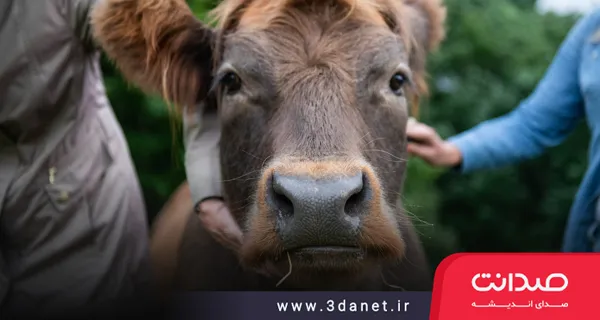
Despite pet owners' willingness to donate their animals' bodies, universities refuse to accept them and continue to kill thousands of animals for dissection classes. Donated cadavers would financially benefit the universities, yet they are not accepted.
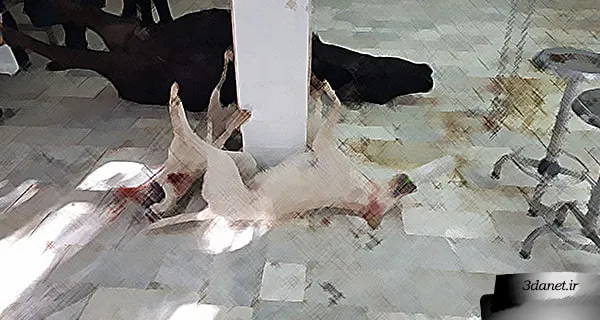
More than 1,200 animals are killed in a single zoology class; in three months, in “just” one class, 1,200 animals. This is the statistical average that Ramak Roshanaei, a dentist who eight years ago founded the Institute for Alternatives to Animal Testing in the hope that universities would cooperate with him and this figure would diminish day by day and might one day reach zero. But that did not happen. Why universities refuse to stop using live specimens in exchange for receiving animal cadavers is still unclear, and worse still, no one yet knows why, when the donation of animal cadavers is proposed and people wish to donate the body of their own free will, they are not cooperated with. Many people who lose their pet are willing to donate the animal’s body to a university so that science can advance, but the problem is that very few universities are found that use animal cadavers instead of live animals. Although using cadavers is one hundred percent financially beneficial for universities.
With what aim did you establish the Institute for Alternatives to Animal Testing?
Our main goal was to use methods that would replace the traditional use of animals for testing. Our thinking was that we could adopt a method for scientific experiments in which there would be no killing of a living being. We wanted to do something so that animals would not be abused in universities.
How did the concerns of a dentist turn toward animals and activities aimed at not killing them?
Animals such as cats, sheep, birds, etc., have been present in the lives of us Iranians from early childhood and grow up alongside us. Geographically speaking, our country is the origin of animals like the cat, and becoming accustomed to these animals is usually instilled in us. When I entered university, I realized that for research in medical fields, live animals are killed in order to be used.
Animals that in many ways resemble humans and feel everything. In our faculties, for experimentation, we do not kill any human being, even if the person has a severe disability or illness, even if there is no family to care for them, it does not cross our minds to harm them, but how is it that we so readily set about killing animals?
Animals, like humans, do not like to suffer; they do not want to be in cages or have painful procedures performed on them. Medical students study and graduate with the aim of helping patients and alleviating their pain. No doctor seeks to harm their patient, and in my opinion, using live animals for testing contradicts the primary purpose of medicine and veterinary medicine. These thoughts were constantly turning in my head. From that time on, I started searching the internet and ultimately, with the information I had gathered, I was able to establish this institute.
How did the members of your institute join this work?
When this idea came to my mind, I shared it with my close friends and started the work with a few of them. In the beginning, our hands were empty and we had nothing to offer those who were in contact with us. The most we could do was to create a blog and attract people’s attention by posting information on it. On the other hand, to attract an audience, we would set up booths at exhibitions related to livestock and promote our work. At that time, that was all we could do.
What was the reaction of people and university professors to what you were doing?
They found it interesting and would start asking questions. When we explained everything to them, the first thing they would say was, "Alright, so if we don't use the method of killing animals for experiments, what do we do?" At that time, I had nothing to offer them; in response to their questions, we would say we had the idea but the equipment wasn't ready yet. Now, eight years have passed since that episode, and we have implemented the idea we had in mind using modern tools and familiarity with methods like cadaver donation.
When did the method of using animal cadavers begin in the world? About 20 years ago, Dr. Kumar devised a method that eliminated the need to use live animals for teaching. He used animal cadavers for teaching anatomy. First of all, you should know that to prepare an animal for use in classrooms, a heartbeat is not needed. In the traditional method, a caustic substance called formalin is usually injected into the heart of a live animal so that it reaches the animal's entire body through the bloodstream and is, so to speak, prepared or fixed. This method of fixing the animal's body painfully takes its life and turns it from a living being into a solid object; a state of matter that does not decay and can be used for some time. By devising this method, he announced that those who lose their animal, if they deliver it to universities within 48 to 72 hours, the cadaver can be fixed and used.
How are animals fixed and their hearts stopped?
When the animal is alive, this happens in a completely painful way through the injection of formalin. But if we are to fix a cadaver, the task is simple. With the pressure of warm physiological serum, the clotted blood in the dead animal's body is expelled, and then the fixing substance can be introduced into its body. Exactly like when the animal is alive. This is done with a syringe for small animals and with a simple pump for large animals, requiring neither special equipment nor specific knowledge. One can fully learn how to do this with a simple half-hour video.
Are animal cadavers currently used in our universities?
Unfortunately, very little. People have no problem handing over their animal, but universities usually do not accept them. This is while in many universities around the world, until the very last day a student studies, not a single animal is harmed.
What is their reason for not accepting animal cadavers?
They make various excuses. Ranging from not having classes to the morgue being at full capacity or not having a morgue. Unfortunately, the main problem is that the use of animal cadavers for dissection has not yet become established in our universities, and this task must be officially coordinated with the universities. Interestingly, for all donation and aid efforts, extensive advertising is always needed, but in this matter, people cooperate intensely, and we have no problem with donors at all; however, there is no one to make use of these donated cadavers. Once, we placed a small advertisement in a low-circulation magazine, and people quickly began inquiring about donating their animal's cadaver, but in the end, we were embarrassed before them. Because universities accept animal cadavers only with great difficulty.
Which university has cooperated with you so far to receive cadavers?
We gave a few cats to the University of Tehran and one dog to the Shahriar Science and Research University.
Unfortunately, in addition to universities, live animals are also used for experiments in some schools. Just last year, a report was published about a rabbit that was dissected in a biology class, causing a huge uproar. Is this illegal?
We spoke with the Ministry of Education about this and even held a meeting, but they declared that dissection is not conducted in schools, and if it is, it is illegal and one can file a complaint about it. Ultimately, we did not reach a common point of view because the matter was denied outright. Our request was for a ban on this practice, which has not been implemented yet. This activity has a very bad effect on children. I spoke with several expert psychologists and psychiatrists, and they repeatedly emphasized that the effects of this work leave a very bad impact on the mind and psyche of students.
Racial discrimination, gender discrimination, child abuse, and animal abuse are all of the same kind and create a wave of violence in society.
Another important issue that has been occupying my mind in this regard is how a teacher anesthetizes an animal, while the anesthetic substance ketamine is a prohibited and controlled drug, and its transportation is considered a crime?
Do you have statistics on how many animals are killed in a single university? According to the information I have and the statistics published at the university, in the zoology class of the biology department at the university, about 1,260 animals are killed in one semester. This figure belongs only to one class at one university; now you can calculate the number of classes and universities in the country yourself and realize how staggering the resulting number is. Once, a veterinary student told me that in their zoology class, to teach one topic in a single day, they killed 40 pigeons, whereas that lesson could have been taught with one pigeon, or even with educational software or models resembling a pigeon doll.
Which animals are usually killed most often for experiments?
In faculties of pharmacy, medicine, biology, and other related sciences, mice, crabs, salamanders, snakes, pigeons, turtles, leeches, bees, toads, rabbits, and frogs are killed; in addition to these, in veterinary faculties, dogs, cats, horses, and sheep are also widely killed.
Methods that can replace and prevent the killing of animals
Dry labs
Unlike many others, "Ramak Roshanaei" and his friends do not merely shout about the problem they have found every day without offering a solution. They have several alternative methods by which animal lives can be saved. Roshanaei has interesting explanations in this regard, which you will read below.
Before we get to the alternative solutions, I must point out one thing. Some educational points can be taught without any pain or trouble on patients who are hospitalized. In situations where an owned animal is brought to the veterinary faculty clinic for treatment or surgery, the student can, under the supervision of their professor, examine the patient and practice the treatment method on them. Of course, this refers to simple, risk-free methods where the professor is confident in performing them, and the student uses this opportunity for practical work.
The next method is using simple tools for practice. A student who wants to practice suturing does not need to kill an animal and suture its body; a cushion can be used for this. During our student days, they did exactly this. Nowadays, special pads and even models and mannequins have been made for practicing suturing, dissection, and drawing blood.
Universities can, according to their needs, import educational tools for this purpose from foreign countries, or students can design and present a device as their thesis. The student must know that they themselves are responsible for the actions they take. Another method we strongly emphasize and hope its culture grows day by day is the donation of animal cadavers, which can be done easily."
Roshanaei: We have models and moulages that we have imported with our own budget and provide to universities free of charge so that they stop killing animals. But you may not believe that several universities we have spoken with are still hesitant to use even these free, modern tools and, in exchange for receiving our free services, to stop killing animals. Another solution is the use of a dry lab. Something that can easily be implemented with software and a computer. We have software that has been developed at prestigious universities around the world, and they have granted the copyright to our institute. This approach is both ethical and cost-effective, and it offers a much higher quality of education, and
it preserves compassion and mercy—ethical values essential for treating patients—in the student, preserves the student's peace of mind, and is used all over the world."
God says in the Quran, in Surah Al-Isra, verse 33: Do not kill a soul which God has made inviolable, except by right.
Today, with the existence of alternative methods and advanced tools, it seems that killing animals in laboratories is not a matter of right.
The Supreme Leader has also issued a fatwa regarding experiments on animals, stating that: In general, tormenting and harming animals is not permissible, and if another alternative method exists, that method must be used.
.
.
By donating animal cadavers, the killing of thousands of animals in dissection classes can be prevented
Do not take the lives of animals
Author: Mitra Shokri
Telegram channel of opponents of animal testing
Telegram channel documenting animal cruelty in educational and research centers
.
.
Discussion4 comments
چرا پیج اینستاگرام ندارید ،من کوهی هستم مدیر انجمن حافظان مهربانی حزود هشتاد هزار فالوور داریم در سوشال مدیا و میتونیم صدای بلندتری رو به مخاطببن ارائه بدیم ادرس اینستاگرام Instagram.com/navidkoohi
با تشکر از حمایت شما مخالفان آزمایش روی حیوانات: به خانواده ی ما بپیوندید و به آزمایشات حیوان محور نه بگویید، به یاد داشته باشید که جایگزین ها بسیارند. آدرس سایت: www.noanimaltesting.ir کانال تلگرام: @noanimaltesting پیج اینستاگرام: https://www.instagram.com/noanimalt/
لطفا يه طومار الكترونيكى تهيه كنين كه امضاء كنيم.
سلام.این پتیشن برای همینکار باز شده: https://www.change.org/p/%D8%AF%DA%A9%D8%AA%D8%B1-%D8%B3%DB%8C%D8%AF-%D8%AD%D8%B3%D9%86-%D9%87%D8%A7%D8%B4%D9%85%DB%8C-%D8%A2%D8%B2%D8%A7%D8%B1-%D9%88-%DA%A9%D8%B4%D8%AA%D8%A7%D8%B1-%D8%AD%DB%8C%D9%88%D8%A7%D9%86%D8%A7%D8%AA-%D8%AF%D8%B1-%D8%AF%D8%A7%D9%86%D8%B4%DA%AF%D8%A7%D9%87-%D9%87%D8%A7%DB%8C-%D8%A7%DB%8C%D8%B1%D8%A7%D9%86-%D8%B1%D8%A7-%D9%85%D8%AA%D9%88%D9%82%D9%81-%DA%A9%D9%86%DB%8C%D8%AF/nftexp/ex35/v5/158480785?recruiter=158480785&utm_source=share_petition&utm_medium=facebook&utm_campaign=share_for_starters_page&utm_content=ex35%3Av5