Philosophy
Nigel Warburton in Conversation with Robert Talisse on Pragmatism (with a Book Introduction)
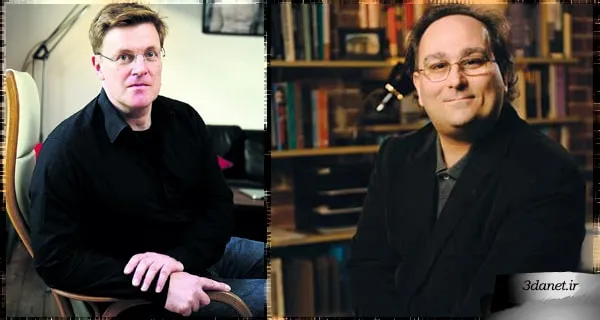
Pragmatism is a naturalistic empiricism that makes the account of experience dependent on understanding human action and conduct. In conversation with Nigel Warburton, Robert Talisse examines this school of thought and recommends five influential books for getting acquainted with it.
Pragmatism is a form of naturalistic empiricism that holds that part of the process of explaining experience must involve explaining certain aspects of human activity, or human action and behavior.
.
Nigel Warburton in Conversation with Robert Talisse
On Pragmatism
[Note: Robert Talisse[1] is an American philosopher and political theorist. He is a professor of philosophy and political science and also serves as chair of the philosophy department at Vanderbilt University. Among his works are On Dewey[2], Pragmatism: A Guide for the Perplexed[3], and Democracy and Moral Conflict[4]. Here we read his conversation with Nigel Warburton about pragmatism; a philosophical movement that, according to Talisse, has dominated the philosophical landscape in America since the early twentieth century. In this conversation, he introduces five books whose reading will be highly effective in gaining familiarity with pragmatism.]
***
To begin the discussion, can you say what pragmatism is?
That is a difficult question, because the philosophers we in America associate with this philosophical school—at its inception—had fundamental disagreements about major philosophical issues. For this reason, I think any attempt to answer this question and explain pragmatism as a philosophical doctrine is doomed to fail.
Well, can you say something general about it? Many people believe pragmatism is, in some way, concerned with practical consequences.
Pragmatism is a form of naturalistic empiricism that holds that part of the process of explaining experience must involve explaining certain aspects of human activity, or human action and behavior. Let me elaborate: unlike the British empiricists—who, to explain and understand experience, resorted to sensory perception and the passive reception of sense data, that is, as Hume says, “perceptions and ideas[5]”—according to pragmatists, experience is controlled behavior. As John Dewey says, experience is a circuit[6]: it is a series of episodes of action and encountering the consequences of action; you immerse your hands in the world and, in turn, let the world react in the way it sees fit. So it is a kind of human-centered empiricism that holds that human behavior and actions play a central role in understanding experience. Let me put it more concretely. Pragmatists want to define empiricism in the same way that job advertisements use the word ‘experience.’ Suppose you are looking for a job, and the job advertisement says, “Hairdresser with five years of experience required.” Pragmatists hold that this understanding of experience constitutes the core of a plausible and sound empiricism. An experienced hairdresser, or an experienced mechanic, is not someone who has seen a ton of hairstyles or countless car engines. He is someone who has worked on hair and on car engines.
So pragmatism is a philosophy of action?
Yes, and it seeks to provide a naturalistic and empiricist account of action. Pragmatism wants to understand all the philosophical concepts that we think are vitally important in explaining action with the help of naturalistic frameworks, rather than resorting to something transcendental or mental—in a naturalistic or Cartesian sense—to understand them. Among these concepts are belief, truth, and meaning. Pragmatism attempts to explain all of these concepts by reference to human activity and action, and thereby naturalizes[7] all of these concepts.
Your first book choice is Philosophical Writings[8] by Charles Sanders Peirce. Peirce, like many pragmatists, was an American philosopher. Why did you choose this particular book?
Peirce is considered the founder of pragmatism. He was the one who first coined the term and spent his entire life trying to provide a proof of its validity. He had a strange and tragic life, of course. He was never able to secure a permanent academic post. Many consider him the most gifted American philosopher. His writings cover a very wide range of subjects. A brief, cursory glance at many areas of twentieth-century philosophy reveals innovations that trace their lineage back to Peirce; areas such as the philosophy of language, philosophy of logic, mathematics, semiotics, and even aesthetics. For instance, he was the first person to draw a distinction between types[9] and tokens[10].
Could you give an example of this distinction?
Consider the word 'good'. As a 'token', this word has four letters, that is, g-o-o-d, but as a 'type', this same word has only three letters, because it contains two letters whose type is the same—namely, the letter 'o'. This is an obvious logical distinction that later became immensely important in all fields of inquiry, and Peirce was the first person to give names to this distinction that all philosophers now use.
I did not choose Peirce simply because he is the founder of pragmatism. Rather, he wrote two articles that were published in 1877 and 1878, respectively. By any measure, these two articles are the two documents that shaped the course, tradition, and lineage of pragmatism. I am referring to "The Fixation of Belief[11]" and "How to Make Our Ideas Clear[12]". Interestingly, the term "pragmatism" is not used in these two articles. They were initially published in an odd place; namely, Popular Science Monthly[13]. But they are generally regarded as pioneering, founding documents.
With that description, what is the essence of Peirce's pragmatism?
These two articles articulate two fundamental themes in pragmatism, the traces of which can be found in all subsequent formulations of this philosophical movement. One of these two themes is a behaviorist, humanistic, and action-oriented conception of epistemology, which Peirce calls the theory of inquiry. The second theme is the theory of meaning.
In his essay “How to Make Our Ideas Clear,” Peirce presents and develops a conception of meaning that later came to be called the “pragmatic maxim[14]” or sometimes simply “Peirce’s rule” or “the pragmatic conception of meaning.” This conception of meaning says: if we want to understand the meaning of a sentence or a proposition, it suffices to see what effect acting upon that sentence or proposition would have on our experience or behavior. So if I say, “This knife is sharp,” what I am doing is predicating sharpness of that object. I am saying the knife cuts things. You should be careful not to run it across your skin. If you have a hankering to see blood, cut your arm with it. The pragmatic rule says that the meaning of any sentence must, ultimately, be translatable into a set of behavioristic statements. What will happen if you interact with objects in such-and-such a way? If you act in a particular manner, or perform a specific action, what will the result be? Note that this conception of meaning is thoroughly naturalistic. And it makes absolutely no mention of a special property—in this case, “sharpness”—that is somehow intrinsically connected to “knifehood”…
Here you must be referring to the Aristotelian view of the properties of objects, which is an approach to the world and our place in it; an approach that Peirce is rejecting here.
Yes, the Aristotelian conception. And many other views like it. They are metaphysical. You begin by talking about properties and objects in which these properties inhere. When you start from there, all sorts of metaphysical questions and challenges arise. For instance, “What is meant by saying a property inheres in an object?” and problems of that sort. Pragmatists are deeply suspicious of metaphysics. This suspicion is part of naturalism. That is why pragmatism is a kind of empiricism that is closely related to logical empiricism and logical positivism. They all share an antipathy to metaphysics. So one branch of Peirce’s pragmatism is this conception of meaning. But this conception is related to his view of inquiry…
Here we arrive at the same epistemological approach—an approach concerning how we acquire knowledge.
Yes. Pragmatism rejects the view that the core of epistemology is the analysis of knowledge. Pragmatists hold that epistemology is normative inquiry[15]: it is interested in how things ought to be, it wants to know how we should form our beliefs. This is a very, very interesting development, and a unique characteristic of pragmatism. Pragmatists see epistemology as part of the theory of rational, correct, and goal-directed behavior.
.
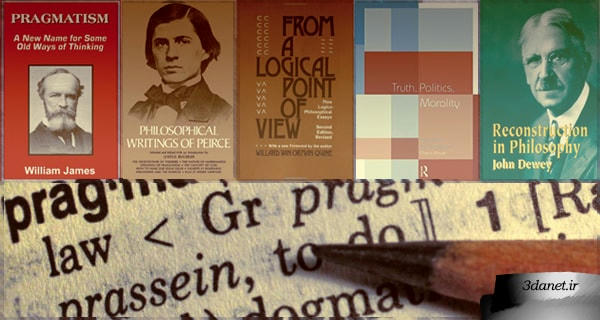
This discussion leads us to your next book. This book describes an approach to the world that is very sympathetic to and in harmony with scientific inquiry and emphasizes the correct method of acquiring knowledge about the world. The title of this book is “Pragmatism[16],” written by William James. He, the brother of Henry James—the American novelist—was initially a psychologist.
Interestingly, both James and Peirce were educated as empirical scientists [and not as philosophers]. Peirce was a chemist. James studied anatomy and was to become a physician. It was James who popularized the term “pragmatism,” while of course crediting Peirce with coining it. James’s pragmatism is, on the one hand, a theory of meaning—the very pragmatic maxim he took from Peirce—and on the other hand, a theory of truth. He took from Peirce the idea that pragmatism is a two-pronged approach; a conception of meaning and also an epistemological concept. Pragmatism seeks to offer a scientific conception of meaning, one that can be drawn out of the laboratory. Pragmatism wants to provide a conception of meaning similar to the use of the term by empirical scientists when they conduct experiments in the laboratory. James holds that the meaning of any proposition or statement must be understood in terms of the effects that believing that proposition or statement has on your conduct and actions. James even thought that part of the meaning of any statement could be its effects on your psychological well-being. This was one of James’s personal innovations; something that greatly provoked Peirce’s anger.
This is where pragmatism seems a bit strange. Because William James uses this idea to express the view that when someone says they believe in the existence of God, this is in fact a statement about the psychological effects of believing in this belief [on that person]. Is that the case?
Yes, this idea met such a fate in James’s hands. What is of paramount importance in understanding James’s motivations for saying such things is the fact that he was deeply divided in his own life. On one side lay his scientific training: he is still considered the father of modern experimental psychology. He knew how to run a laboratory and how to conduct scientific experiments. When you read his book—The Principles of Psychology—you see it is a very sound and precise assessment of things that are difficult to assess. He was truly seasoned in the empirical sciences. But that is not the whole story. His temperament inclined toward various kinds of spiritualism. He was a religious person. For a part of his life, he believed in spirits and ghosts. He even began scientifically investigating parapsychological and supernatural matters toward the end of his life. This lends him a strange and eerie aspect. So he viewed pragmatism as a kind of empiricism that is more sympathetic to religion, spirituality, and values—in their very broad sense—than the logical empiricism of the logical positivists. James constantly speaks of “feeling at home in the universe.” Part of his motivation for engaging with pragmatism is his attempt to reconcile a scientific, realistic view of the world with a religious and spiritual conception of our place in the universe. These two played a very significant role in his personality.
So according to James’s pragmatism, we can understand the meaning of propositions based on the consequences they have for our conduct. Of course, the definition of “our conduct” is broadened to include our psychological states, attitudes, and dispositions. The meaning of any proposition for us is the instructions that proposition offers us for action. Then we have the concept of truth, and a proposition is true insofar as it guides us in our actions in a successful way—or in a way that it is good for us to act in that way. Philosophically, this is a very confusing conception of truth. Moreover, it is very difficult to formulate it in a way that does not seem foolish. When James sets aside the necessary care and precision and says things like “truth is what works,” he exposes himself to a great deal of criticism that is justified. And this is something that I think is really unnecessary. Truth is what works? If I believe that I am a very handsome person, this can serve various purposes. But it might not be true. These were precisely the kinds of claims that people like Bertrand Russell and G. E. Moore exploited to the fullest at the beginning of the twentieth century [to criticize pragmatism]. It is a ridiculous and crazy conception of truth. But I think James’s view of truth—contrary to some of the things he says about it—is much more precise and sophisticated. James’s idea is that we hold our beliefs for purposes. Beliefs function as tools for us. Beliefs are like a hammer or scissors. They are supposed to play a role in our conduct. They are supposed to guide our actions. James holds that the truth of a belief depends on our employing it as a guide for action and achieving success in performing that action. When you state James’s idea in this way, many criticisms and challenges can still be raised against it, but it no longer seems as ridiculous and absurd that it can be easily dismissed; as when we say truth is what works.
And from a pragmatic perspective, one of the reasons William James’s writings work is his extraordinary prose, like his brother.
Certainly. If someone wants to read a philosophical book about truth, meaning, religion, and metaphysics; a book that is simple and readable—so simple and readable that it can be read by the pool—James’s Pragmatism is a very suitable suggestion. James’s book is a very delightful work on philosophy. I even think it is not too far-fetched to say that William was a better writer than his brother, Henry.
Let’s move on to your next book, which is Reconstruction in Philosophy[17] by John Dewey. Which, as far as I know, is not a book [but a collection of lectures]. Tell us a little about it and why you chose it.
In Dewey we find what can be called pragmatism as a philosophical theory. He [among the classical pragmatists] was the first to be a full-time philosopher. He studied philosophy and earned his doctorate in philosophy; he spent his career in philosophy departments. Of the three we have mentioned so far, he is the most systematic. Charles Sanders Peirce had a very wide-ranging philosophical mind and made numerous attempts to cast all his ideas into a philosophical system. But because of his failure to secure a permanent academic post or steady employment, his writings are not systematic. William James also did all sorts of different work in philosophy and in psychology. In my view, Reconstruction in Philosophy best sums up the entire pragmatist approach in a single volume, and in that respect it is Dewey’s finest book. By reading this book you get the whole picture; or at least the best picture of the whole that can be obtained. Because the whole is very large. Dewey was born in 1859 and died in 1952. He was an extraordinarily prolific philosopher, and his collected works run to 37 very large volumes. He was also a social activist and worked hard to reform the American educational system. So one can say he had many preoccupations.
But what is this book about? Dewey, among the pragmatists, was again committed to two fundamental themes we saw in Charles Sanders Peirce: namely, the pragmatist conception of meaning and a particular view of epistemology. However, Dewey explicitly sought to bring to the fore an intention that had, until then, done a great deal of work but had remained in the background and was not the center of gravity of the discussion in pragmatism. So this book is not merely a book in the field of philosophy; rather, it addresses what philosophy, fundamentally, is. Just look at the title: Reconstruction in Philosophy. One of the central aims of the book is to subject common conceptions of what philosophy is, what philosophers do, and what their aims are to careful, philosophical scrutiny. Dewey held that pragmatism is a challenge to traditional conceptions of philosophy; a challenge whose origin lies within philosophy itself. He held that pragmatism is a philosophical challenge to traditional conceptions of the task of doing philosophy.
For instance, he challenges the view that the aim of the philosopher is to describe our relationship to the world.
Yes, that describes very well what Dewey wanted to combat. Dewey opposed any conception of philosophy that began with the idea that human beings are separate from the world or set apart from the world. Very often when we speak of describing the world, we are already committed to the notion that the human being—as the describer of the world—is an external observer standing apart from the world.
The classic philosophical phrase in this discussion is “the external world.”
Yes. That's right, there are many problems in philosophy that reproduce this view; that is, the view that says we have an inner world and an outer world, and the problem is how to establish the correct correspondence between the two. Think of Plato, for example: [according to Plato,] there exists somewhere else another complete and perfect world, a world to which our world is somehow related, and it is not properly known how this world of ours relates to that true world, and the philosopher's task is to clarify this relation and connection. But pragmatists are concerned solely with human activity and human actions. And specifically, the Deweyan pragmatist says:
Quine often did not call himself a pragmatist. But in my view he is a thoroughgoing pragmatist, and any attempt to read him as a pragmatist—in a deeply qualified and modified sense—is mistaken. There is a common, standard narrative about the emergence and development of pragmatism. According to this narrative, Dewey dies in 1952, and pragmatism comes to an end shortly before his death. Pragmatism is America's philosophy. Pragmatism is the dominant philosophical approach in America—and elsewhere—from the beginning of the twentieth century until the end of the Second World War. And it is largely thought that this is due to John Dewey and the influence of his works. Then, somehow at the end of the Second World War, for various and interesting reasons, philosophers lost interest in Dewey and were drawn to schools coming out of England, such as logical empiricism. Pragmatism was marginalized, or pushed aside, or declined, by linguistic analysis and ordinary language philosophy and things associated with Russell, Moore, and Wittgenstein. At this stage, pragmatism remained dormant until the 1980s, when it was revived again by Richard Rorty. Note that a book by Rorty is not on my list, and this may seem odd to some people.
In my view, this is a mistaken picture of the history, development, and fortunes of pragmatism. In my view, pragmatism is a philosophical movement that has dominated the philosophical scene in America from the beginning of the twentieth century to the present day. And Quine holds an important place in this story. If you change your conception of pragmatism and hold that pragmatism has always been a set of philosophical disputes among naturalist, empiricist, and humanist philosophers in America over meaning, value, truth, knowledge, science, and inquiry—if you think that pragmatism has always been a kind of contention or debate—then I do not think this Dewey-centered story about how pragmatism developed can remain valid.
What is unusual about Quine is that he regarded philosophy almost as a kind of science or a part of science. In Quine's view, philosophy is an enterprise like science; it wants to discover the world by providing a specific kind of inquiry.
Yes, this is a pragmatist or deeply anti-metaphysical project. The very idea that there is a separate domain called metaphysics whose task is, somehow, to provide a foundation for empirical knowledge is something Quine throws out; exactly like James, Peirce, and Dewey. They all share in the opposition to metaphysics.
In this book, there is an essay that deals precisely with this topic. Is that right?
Yes. I chose this book specifically for two very famous essays by Quine. The title of the first is: “Two Dogmas of Empiricism[21]”, and the other is titled: “On What There Is[22].” The second essay, “On What There Is,” is a deeply anti-metaphysical essay. In it, Quine is like someone who is worried about ideas and thoughts that may not themselves be dangerous but can serve as a gateway into the realm of metaphysics; he is worried about the metaphysical disposition. He is worried about the kind of gateway to metaphysical thinking that confronts us when we examine sentences sometimes called 'negative existential statements[23],' for example, the sentence 'Pegasus[24] does not exist.' Since the time of Parmenides, and throughout the history of philosophy, people have thought that sentences like 'Pegasus does not exist' are very, very strange, because it seems that such sentences first pick up an object—in this case, Pegasus—and then attribute the property of non-existence to that object. But how can something that does not exist in the first place have a property? How can you pick up something that does not exist? Many philosophers have resorted to metaphysical discussions to answer this puzzle.
By 'metaphysical' here you mean a commitment to the nature of things that exist in the world....
This is the view that says it is possible for there to be objects in the world that are not empirically investigable; that cannot be put to the test of scientific verification—like Pegasus. You cannot devise an experiment to determine Pegasus’s weight. Sentences that deny the existence of objects, in an interesting way, commit you to saying that they actually exist, because otherwise how could you talk about them? Quine says: “No, no, no, we must not fall into the error of thinking that statements denying the existence of objects commit us to accepting the existence of their kinds.” What he is doing, in a way, is draining the metaphysical fuel from our language. In a manner of speaking, this is Quine’s project. He wants to give us the possibility of speaking in a scientific way; in a way that blocks the entry of metaphysical thinking.
How do you apply this approach to Pegasus?
Quine says, “Look, we have become inclined to the idea that sentences talking about Pegasus are strange because we have fallen under the illusion that the name Pegasus must, necessarily, have an entity.” But Pegasus is merely an abbreviated sign for something that behaves in a particular way; for something that pegasizes. This account is precisely in line with the pragmatic principle. That is, Peirce’s rule which said the way to understand sentences is to talk about the behavior, activity, and action [arising from these sentences]. According to Quine, “The sentence ‘Pegasus does not exist,’ is an idiomatic way of expressing the following thought: nothing behaves in this way, nothing pegasizes. Nothing exhibits such actions, nothing satisfies such a description. Well, now that you have said ‘The sentence “Pegasus does not exist” is merely an abbreviated or idiomatic way of expressing the statement that “nothing pegasizes,”’ then the sentence ‘nothing pegasizes’ no longer makes you think you have, initially, picked out something and then attributed a property to it. Such a sentence seems to block the entry of metaphysical elements; unlike the previous sentence. Then Quine says: “And in any case, this is what we mean by existence, this is what we mean when we say something exists. What we mean is that we want to say we accept that something has such-and-such a description.”
That is, based on action or behavior or change in the world?
Or, as Quine himself emphasizes, based on playing a role in our best theories about matters. Quine thinks that “to be is to be the value of a bound variable.”
Here the discussion becomes a bit technical. Is that right?
It is better for me to put it another way. Quine thinks that all that can be said about what there is, is talk of what kinds of things our best theories about the world say exist. If our best theory about the world says that atoms exist, that is all that can be meant by atoms existing. If our best theory about the world says that electrons exist, that is all that can be meant by electrons existing.
This has a pragmatic implication that is about the effects of believing a belief. [Belief in the existence of atoms] is not a theory about something that exists independently of us humans, as if somewhere very far away and very independent of us, atoms really and truly exist. When we say “atoms exist,” we mean that atoms play a role in our theorizing within our best available theory. So [our belief about atoms] can be continually revisable, which is clearly compatible with the progress of science.
Exactly. This is a thoroughly pragmatist doctrine. This approach denies that there is a special domain in philosophy called metaphysics that stands above the sciences and is the queen of the sciences. The Quinean approach says our philosophical theorizing must begin with our human practices. Science is one of the really important things we do. It is our best tool for understanding who we are and where we stand in this world. And whatever metaphysics is—though he sees no reason to call what exists beyond science metaphysics—we cannot consider it separate from science; something that is beyond science or [like a commander in war] determines the direction of science's attack. In fact, the matter is the reverse. It is science, human practices, and the investigative activities of humans that are our starting point, and whatever we say about entities and 'what there is' always takes its instructions and trajectory from science. It is precisely for this reason that I think Quine is a thoroughgoing pragmatist. These are things Peirce could have said.
It is better to turn to your latest book, which I also have not read. That is, Truth, Politics, and Ethics[25] by Cheryl Misak[26].
One of the characteristics we witness in the evolution of pragmatism is that pragmatists have continually faced the challenge of, on the one hand, taking science seriously, and on the other, not ignoring value-based questions, ethical questions, and political and social questions. We saw that the driving engine of James's pragmatism was the need to reconcile science and values in their broadest sense. We saw that Dewey thought values, in practice, are the initiators of everything; we saw how you try to keep them reconciled: you start with the social, the political, and the normative. Quine has only one essay on values, and it is very short. His works are all about the philosophy of science, and about the philosophy of logic, epistemology, and the philosophy of language. And such topics. Misak is a very interesting figure in the long story of pragmatism. She published the book Truth, Politics, Morality in the year 2000, which is a return to Peircean pragmatism in order to provide a suitable account for democratic theory. Peirce himself wrote almost nothing about values; like Quine. He did not write a single philosophical word about politics. In the letters we have from him, where he talks about politics, he utters very regrettable things about slavery, about women, and about democracy. So this is a strange return to Peirce, because it seeks to use Peircean pragmatism to achieve different ends; namely, moral philosophy and political philosophy. The gist of the book is this: we previously talked about Peirce's conception of meaning and the pragmatic maxim, and also the idea that epistemology is merely about conduct. This is the core and basis of the thought that Misak develops in her book. Reading this book makes it clear that Peirce has very interesting ideas about truth that Misak seeks to revive and clarify. Peirce thought that “truth is what the ideal community of inquirers would eventually believe.” In other words, he thought truth is the end point of inquiry in an ideal state, it is what we would eventually believe if we continued inquiry. This is what is called the “end of inquiry” conception of truth, and Peirce, like James, expresses this idea in many incorrect ways. It is a strange idea, and perhaps you might think it reverses the explanatory relationship. Perhaps you would say, “No, no, wait a minute! It is the truth of a proposition that explains the convergence of beliefs over the course of inquiry. And it is not the case that the convergence of beliefs over the course of inquiry determines truth.” I think Misak provides a much better description of this idea. She says: Peirce should have put it this way, this is really what Peirce means. Peirce thought like a thoroughgoing pragmatist that if you want to understand a philosophical concept, you must extract its consequences in human actions. Peirce thought that when we attribute truth to a particular belief, what we are doing is saying, “Nigel, go and inquire – you will come to my view.” Or “If we continuously examine the reasons and continuously challenge this belief, that belief will withstand the challenges.” This is almost similar to John Stuart Mill's view, that when we attribute truth to a belief, we are actually making a kind of prediction that that particular belief – to which we have attributed truth – can emerge successfully from philosophical scrutiny and answer doubts and criticisms.
This is almost like saying a theory will stand the test of time.
Exactly so. But note that this is a thoroughly social idea. Peirce – according to Misak's account – says, if I say that “such-and-such a sentence is true,” part of what I am saying is “Nigel! Present your arguments, bring forth your criticisms, let me know your reasons for why you have adopted a belief contrary to mine. Let us inquire into this together.” When I say proposition p is true, what I am saying is that the process of joint inquiry will confirm the truth and veracity of proposition P.
Here, I think, we have come close to Karl Popper's account of science. We make bold conjectures and then try to refute them, and the conjecture that resists refutation, or is modified in light of refutation, is our best theory at present.
It is exactly as you say. And note that, precisely like Popper's account, Peirce's account of truth is also a social project. And as seen in Popper, in pragmatism too the concept of truth is intertwined with a thoroughly social conception of inquiry.
What does Cheryl Misak do with this idea?
To put it succinctly, she says that proper inquiry—that is, the social project just mentioned—requires democratic institutions. She thinks that our commitment to the truth of our beliefs compels us to accept that those beliefs must stand up to the scrutiny and examination of critics. A commitment to the truth of our beliefs obliges us to have an open society. So this is an approach that tries to move from the pragmatist concept of inquiry—from this social conception of epistemology—to democratic politics. Cheryl and I share many philosophical views. We have fought many philosophical battles side by side. And this [democratic conception of truth] is the central core of our shared view as philosophers. Democracy is many things. It is certainly a moral commitment to human freedom and equality. But democracy is also, profoundly, an epistemological project. The fabric of democracy is interwoven with cognitive actions. Democracy is a kind of society—it is not merely a procedure for decision-making, not merely voting and elections and Supreme Court decisions. It is a kind of society that fits perfectly with Popper's description of the open society. Democracy is about freedom of inquiry and assembly and freedom of speech and all the other freedoms we see in contemporary constitutional democracies. If we care about truth, we must be concerned with preserving the political and social conditions under which our beliefs can be challenged and scrutinized, and these conditions are realized in democratic systems. So you can see in Cheryl Misak's book a very straightforward argument that begins with epistemology and leads to democracy.
.
.
[1] . Robert Talisse
[2] . On Dewey
[3] . Pragmatism: A Guide for the Perplexed
[4] . Democracy and Moral Conflict
[5] . impressions and ideas
[6] . circuit
[7] . naturalize
[8] . Philosophical Writings
[9] . types
[10] . tokens
[11] . The Fixation of Belief
[12] . How to Make Our Ideas Clear
[13] . Popular Science Monthly
[14] . the pragmatic maxim
[15] . normative enquiry
[16] . Pragmatism
[17] . Reconstruction in Philosophy
[18] . episteme
[19] . techne
[20] . From a Logical Point of View
[21] . Two Dogmas of Empiricism
[22] . On What There Is
[23] . negative existentials
[24] . Pegasus. The winged horse in Greek mythology born from the severed neck of Medusa.
[25] . Truth, Politics, Morality
[26] . Cheryl Misak
.
.
Nigel Warburton in Conversation with Robert Talisse on Pragmatism
Original interview text
Translator: Ruhollah Mahmoudi
Translator's website
.
.





Discussion0 comments
No comments yet; let yours be the first voice.