Philosophy
John Dewey and the Reconstruction of Pragmatism
Focusing on social and educational issues, John Dewey reconstructed pragmatism and set aside the classical dualisms between theory and practice. His non-reductive naturalism treats values and norms as part of human nature.
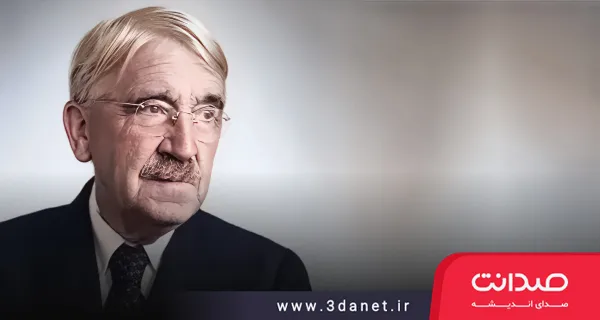
John Dewey and the Reconstruction of Pragmatism
Author: Sami Pihlström
Translation: Rouhollah Mahmoudi
This piece is translated from the book The Continuum Companion to Pragmatism.
John Dewey (1859-1952) is usually considered the third classical pragmatist. His thought spans a wide domain: from traditional philosophical problems concerning knowledge and inquiry to ethics, politics, and education. Among the early pragmatists, Dewey was the most engaged with social, political, and educational issues. Compare this with Charles Sanders Peirce, who had a scientific mind, and William James, who was more inclined toward psychology and religion.
Dewey has an essay titled “Peirce’s Pragmatism,” written in 1923. In this essay, he briefly compares James and Peirce and examines their fundamental differences, for instance, that William James focused on the individual while Charles Sanders Peirce emphasized the community. As Dewey tells us, Peirce stressed “the method of procedure” more than James did. In another essay (published in 1922) comparing James and Peirce, Dewey says James was more of a “humanist” and less of a logician, and that he both expanded and limited the pragmatic method. His work in applying the pragmatic method to the theory of truth caused the method to expand. But his emphasis on particular consequences, rather than general and universal ones, limited the pragmatic method.
There are issues on which Peirce and Dewey are closer to each other than to James—specifically, the community-oriented direction of their pragmatism and their interest in advancing scientific knowledge. However, on a fundamental issue like realism, Dewey is closer to James than to Peirce. James and Dewey could not accept the relatively strong realism that was perhaps the most original and most contested element in Peirce’s pragmatism. Nor could they accept Peirce’s exclusively logic-based, non-psychological interpretation of pragmatism. Peirce believed that Dewey, like James, had an unfortunate tendency to “psychologize” things that he had presented as logical and normative principles for scientific inference. He wrote to Dewey in June 1904: “You propose to substitute a ‘natural history’ of thought or experience for a normative science—which in my opinion is the most pressing need of our time. … I do not think that anything of the nature of natural history can fundamentally meet our present need. We need today to examine how much people’s unfamiliarity with the theory of inference causes a painful waste of thought, time, and energy.” Peirce considered pragmatism a rule in logic, and logic a normative science, so in his view, the flaw in James’s and Dewey’s work was that in their revisions of pragmatism, they had misleadingly conflated logical and socio-psychological discussions. Despite this, it can be said that later pragmatists, namely figures like Dewey and Mead, developed not only Jamesian themes but also the ideas of Charles Sanders Peirce; specifically, the reflexive nature of our habits of action and habit-based rationality.
One of the major differences between Peirce’s and Dewey’s conceptions of inquiry, and one of the similarities between Dewey’s and James’s conceptions, revolves around the concept of truth. Dewey, just like James, endorsed Peirce’s 1878 definition of truth as the “final opinion” that would ultimately be reached through inquiry. But his understanding of the tasks of inquiry was more pluralistic than Peirce’s, and this brought him closer to James. However, Peirce’s community-laden conception of inquiry was undoubtedly an important foundation for what Dewey called “instrumentalism.” Even within a pluralistic conception of the goals our inquiries pursue, one can still maintain the Peircean view that for any particular question, there is a definitive and final answer that can be reached; provided, of course, that inquiry continues long enough.
Furthermore, among the early pragmatists, Dewey had the strongest naturalistic inclinations, meaning he held that the natural world—in all its richness and diversity—is all that exists. Outside of this encompassing nature, nothing exists. Of course, nature is far vaster and more expansive than what scientific materialists and reductionists conceive. Dewey's naturalism is never a crude form of materialism. Specifically, Dewey has a thoroughly teleological understanding of “human nature.” Just like Peirce and James, purposeful human action forms the basis and foundation of his pragmatic naturalism.
Dewey held that the classical dualisms in philosophy must be set aside: dualisms such as mind and body, experience and nature, knowledge and action, science and technology, facts and values, or theory versus practice. Our human world is an intermingled amalgam of these things. Specifically, the “empiricist” attitude in inquiry rejects the traditional presupposition that theoretical knowledge and practical action are fundamentally distinct; a presupposition that has dominated traditional philosophy since Plato. Once we set aside the “quest for certainty” that characterizes this tradition, we understand that knowledge is action and theory is practice. Nature is everything for Dewey, but in his view, there is no privileged, distinct standpoint from which one can determine the metaphysical, fundamental structure of nature “in itself.” Dewey's naturalism is wholeheartedly non-reductionist. No scientific or non-scientific discipline holds an “absolute” position in describing and explaining reality. Dewey's pragmatism rests upon the natural affairs of human life and insists that scientifically problematic things like value, freedom, purposiveness—and other characteristics that have “emerged” from culture and distinguish us from animals—belong to our “human nature.” They are not something separate from the natural world. On the contrary, our conception of nature must be revised to accommodate the undeniable fact that we engage in the normative evaluation of our actions, and this is fundamentally part of our human nature. Indeed, it is our participation in cultural actions, in value-laden forms of life, that makes us fully human. But this enculturation is a development entirely rooted in nature. Thus, Dewey's naturalism is compatible with a “culturalist” conception of humanity and holds that human life, as we know it, occurs within a “normative order” that is constructed and reconstructed through cultural actions.
Dewey believes that reductive or eliminative naturalists who want, for example, to reduce values to facts—that is, to something non-normative and more fundamental—or, more radically, seek to eliminate them from the scientific worldview, are not good naturalists. Pragmatic naturalism takes seriously those things that belong to the (human) natural world. We are inherently creatures preoccupied with norms; we are creatures who habitually and continuously evaluate our actions and deeds. Values, ends, and ideals guide our habits and actions. Truth be told, mature and complete naturalism is precisely pragmatic naturalism. This type of naturalism does not deny values or normativity, because they play a vital role in our understanding of ourselves as agentive beings. The criticism often leveled against naturalism, as a general philosophical orientation, is that it tends to set aside normativity. But this criticism does not apply to Dewey's non-reductive naturalism, which is even, in some respects, more naturalistic than its reductive rivals. Dewey situates this non-reductive naturalism at the heart of pragmatism, which enables him to consider and account for values, because the starting point of pragmatism is a purposive and action-oriented conception of humanity, and it does not allow so-called more scientific conceptions of reality to call this picture and conception into question. Even the natural sciences, which are considered the main inspiration for reductive naturalism, are possible only within the framework of human life—as a goal-oriented activity structured on the basis of values. It suffices for us to understand that the pragmatic and experimental mode of thinking, common in the empirical sciences, is by no means limited to scientific inquiry. We can then extend it to non-scientific inquiries—including ethical, social, and even religious "inquiries." Let us remember that these inquiries, too, can reveal the natural characteristics of human actions.
Dewey is at war with Cartesian epistemology, and is generally a serious critic of that branch of the Western philosophical tradition which begins with Plato's theory of eternal and unchanging Forms as the objects of knowledge. But it is not entirely incorrect to say that his naturalist pragmatism is Kantian in its own particular way: he begins from within our natural actions and seeks to answer the question of what constitutes these actions, maintaining that normative and reflective evaluation is a (naturalized) condition for the possibility of certain important human phenomena, including science. Similarly, the formation of the empirical world through our categorizing actions is a Kantian theme in the Jamesian and Peircean accounts of pragmatism. If we wish to understand Dewey's views on scientific inquiry, and even on political and aesthetic issues and religious qualities in experience, we must be mindful of his non-reductive pragmatic naturalist background. We must also note that he is deeply influenced by a profoundly Kantian conception of philosophy—as a search for the necessary conditions for the possibility of certain phenomena in human experience. Dewey's naturalism is sufficiently broad, inclusive, and tolerant to accommodate natural human experiences and value-oriented perspectives on reality. This is what makes his naturalism appear ethical, aesthetic, and even religious.

Discussion0 comments
No comments yet; let yours be the first voice.