Religion
Lectures on Spirituality in Nahj al-Balagha by Mostafa Malekian
Mostafa Malekian sees spirituality as the kernel and essence of religion, which must be reached by moving beyond its outer shells, since the terms 'religion' and 'mysticism' carry negative connotations. He calls spirituality a rationalized religion that upholds both theoretical and practical rationality.
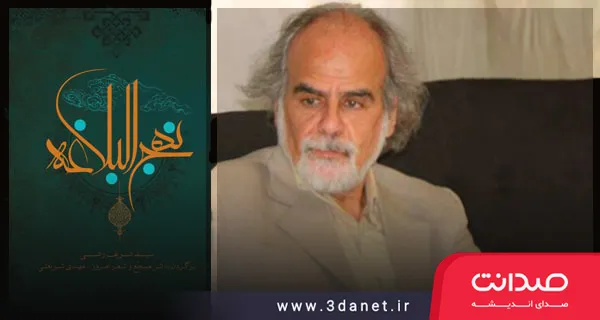
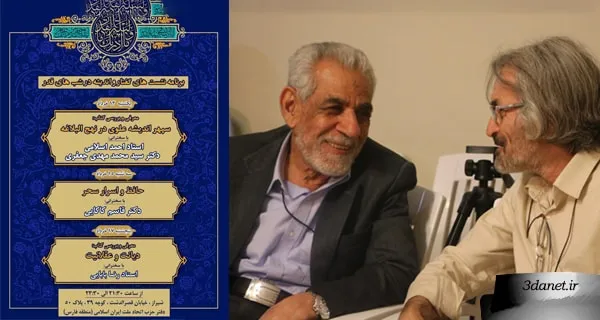
In Ramadan of the year 1379 (2000), Mostafa Malekian delivered a series of eight lectures titled “Spirituality in Nahj al-Balagha” at the Mo’asseseh-ye Negah-e Mo’aser (Institute of Contemporary Perspective)—which, unfortunately, was closed after some time due to certain problems. These sessions, which were held with a small number of attendees, contain subtle, insightful, and very pleasant material.
.
An excerpt from the first session of the lectures on Spirituality in Nahj al-Balagha: (Download the full PDF of the lectures at the end)
In one sense, one could use the term “religion” instead of “spirituality,” but because throughout history, every interpretation of religion has gradually given rise to a series of negative associations and value-laden connotations around it, it is better not to use the term religion. What is an instance of spirituality may well be an instance of religion, so instead of both instances, we use the term spirituality, so as not to evoke those negative emotional burdens in the minds and souls of the audience. Religion is not identical to spirituality, nor is spirituality identical to religion; spirituality is the kernel and essence of religion. Spirituality is attained when a person can pass through the shells of religion and reach its core, in fact, penetrate the shell and reach this gem. Of course, what we refer to as the shell or husk is not something we can arbitrarily break today; from the beginning, this shell came to contain and protect that gem. When we break this shell, we have in fact achieved the original purpose, because the purpose was to find that gem; although a superficial person might think that we have insulted the shell by breaking it. Or, for example, every box is made from the beginning to be opened, otherwise it loses its existential philosophy. If you ostensibly refuse to open this box and, based on a childish notion, hold it sacred, you have in fact forgotten the very existential philosophy of the box. The function of a box is precisely to preserve a content and to enclose that content, and when its function is this, there is no alternative but that at some point, in some way, you tear a box to reach its inside. That is, it is very childish and naive if someone thinks that this box must not be scratched at all, or that any part of it must not be torn, crushed, or cut. Because they do not know that the box’s being a box lies in this function, and since its function is these things, inevitably it must one day be broken so we can reach its content; the cardboard has been tasked until now with preserving that content for us.
In truth, it can be said that spirituality is the kernel and essence of religion, and by this consideration, we must have the power, will, boldness, and courage to be able to break this shell and reach that kernel. In this way, the identity we spoke of in the previous consideration is no longer correct; there is a kind of end and means at work; one thing is a means, called religion, and one thing is an end, called spirituality. One must always, in order to reach the end, leave the means behind and underfoot, use them as a ladder, and this using as a ladder is precisely observing the function. If I say it is an insult to step on a ladder, it becomes clear that I have no idea what a ladder was made for; being a ladder necessitates that we step on it, and of course, the ladder is important insofar as it gets us to the roof, but at the same time, the ladder must not be mistaken for the roof. We must reach the roof, not become enamored with the ladder itself, gazing at it, writing books and giving lectures on its virtues, and failing to notice that if there were no roof and if no one were supposed to reach the roof, the ladder would lose its existential philosophy altogether.
In a third interpretation regarding why we depart from the word religion, it must be said that religion is fundamentally opposed to spirituality, and that is when someone forgets that religion is a means, a shell, and a husk, and becomes enamored with religion itself; then it must be said that this religion, in a certain sense, conflicts and clashes with spirituality. Of course, here too the fault is not with religion itself; the fault and error lie in the conception that we hold.
Spirituality and Mysticism
Second point: now that we are setting aside the word religion, wouldn’t it be better to use the term “mysticism” instead of spirituality? It seems that the expression “mysticism” is also not a good choice, for two reasons. First, what we said about religion also holds true for mysticism, namely that mysticism, too, has carried a negative emotional charge of varying intensity throughout history. In our own language, when the word mysticism is uttered, it may evoke in the mind a blind attachment to a set of Sufi notions, and since blind attachments have negative requisites and consequences beyond their very blindness, they generate negative emotional charges in people’s minds. Second, mysticism itself can have a husk and a kernel; if we use the term mysticism, what we mean by spirituality is the kernel of mysticism. Frithjof Schuon, in his well-known book Sufism: Veil and Quintessence, has an interesting expression; he says that Sufism was supposed to be the esoteric dimension of Islam, but then Sufism itself developed a husk and a kernel. That is, concerning Sufism we must also ask: what is the husk of Sufism? What is its kernel? This statement holds true for Sufism, i.e., Islamic mysticism, and for other mysticisms; they too have a husk and a kernel, and our concern is to reach the kernel of religion, so it is better to use the very term spirituality.
You might ask: very well, you have thus justified using the term spirituality, but what is actually meant by spirituality itself? What do you call spirituality? One might say that by spirituality we mean the kernel of religion; but this is vague. And if we wanted to go into this, we would stray from Nahj al-Balagha. However, I myself can think of several expressions concerning spirituality that seem to me to be good expressions. Although these expressions differ greatly from one another conceptually, they have a single referent. That is, the outward meanings of these concepts are very far apart and very disparate, but upon reflection you see that their referent is one. It is evident that what is the referent of this concept is also the referent of that other concept and of a third concept. Here, too, I do not wish to elaborate on all the expressions. One of the concepts that seems to be a good expression for spirituality is “rationalized religion,” that is, a religion in which a person upholds rationality as far as it lies within their power; a rationality-oriented and religion-oriented religion.
Here, when we say rationality or reason, first, what we mean by reason is not only theoretical reason and theoretical rationality, but rather both “theoretical rationality” and “practical rationality.” Sometimes we say, for instance, that accepting “proposition A is B” is rational; this is theoretical rationality. At other times we say someone behaved rationally; this rationality is practical rationality. Here the discussion is no longer about the truth or falsehood of a proposition, or the correspondence or non-correspondence of a proposition; it is not about whether a proposition has reasons or lacks reasons; the discussion concerns whether, in the circumstances in which the individual in question found themselves, they behaved in a way that can be said to have been the best behavior, or a fitting and appropriate behavior; practical or action-oriented rationality. Second, in the part concerning theoretical rationality, what is meant is not that reason which is set against other modes of perception, because sometimes we say we have rational, sensory, observational, empirical, historical, and intuitive perceptions, and we set these in opposition to rational perception. For example, we say that various branches of philosophy, logic, or mathematics deal with rational perceptions, whereas in the historical sciences we deal with historical perceptions, in the natural, empirical, and human sciences we deal with sensory, observational, and empirical perceptions, and in the mystical and intuitive sciences we deal with intuitive and mystical perceptions; that is not what is meant. The aim of theoretical rationality here is a meaning that encompasses the four types of rationality, that is, all those perceptions that human beings—whether the individual or the human species—have attained by following specific paths. Of course, these perceptions contain errors within themselves, just as they also contain correctness, but ultimately their errors and correctness are discoverable and exposable through an objective and scientific methodology. Now, if we have a conception of religion that upholds this rationality and does not disregard or flout it, then we can be said to be people of spirituality. Spirituality in this sense (that is, a way of conceiving religion that is also accommodating and consonant with rationality) is not incompatible or in conflict with rationality.
Another definition of spirituality is that spirituality means understanding the "drowsiness" and "sleepwalking" of the human being; this concept differs greatly from the previous one, but its referent is the same. Ordinary human beings, even if they are religious in the conventional sense of the word, do not feel that they are drowsy, that they are asleep, nor do they feel that they are sleepwalking. That is, the ordinary person, whether religious or non-religious, does not feel that for most or all of the things they do, they do not actually know why they are doing them. They do not know what they are doing, and they do not know what consequences and effects their actions have, just like sleepwalkers who walk in their sleep and do a thousand things that have effects and consequences on themselves, on other human beings, and on the world around them. Yet they neither pay attention to what they are doing, nor to why they are doing it, nor to what the effects and consequences of these actions are on themselves, on other human beings, and on the world. They are sleepwalkers. A person can be called spiritual who has noticed that "I am a sleepwalker," who has become aware that "I am asleep, I am drowsy." And as soon as a person becomes aware that "I am drowsy and I am sleepwalking," then they are no longer a sleepwalker. In ordinary life, how can the depth of being asleep and dreaming (meaning ordinary sleep) be measured? By the degree of belief that one is not asleep. The more I believe I am not asleep, the deeper asleep I am. In ordinary sleep, when you are in deep sleep (what psychologists call deep sleep or full-fledged sleep), you do not believe for a moment that you are asleep. You are completely under the impression that you are awake, but this is proof that you are in full-fledged sleep. If you emerge a little from this full-fledged sleep, inclining towards wakefulness, into a liminal region between sleep and wakefulness, then for moments you think you are dealing with reality, and for moments you think you are dealing with fantasies and illusions and that you are asleep. When are you awake? When you fully feel that you were asleep; then you are told that you have woken up. As long as a person is completely asleep, one cannot say they are awake. The intensity, weakness, depth, and shallowness of sleep must be measured by the intensity and firmness of the belief in wakefulness. The more I believe I am awake, the more intensely I am asleep, and the weaker my belief in my own wakefulness becomes, the more awake I actually become. This holds true for ordinary sleep and wakefulness. This point also holds true for non-ordinary or spiritual sleep and wakefulness. People who think that from the beginning of their lives until now, and from now on until they depart this world, they are awake and know what they are doing, why and for what purpose they are doing it, and know what the effects and consequences of their actions are—by virtue of such a belief, they are in reality asleep and dreaming. But as soon as a person realizes that "for many of the things I do, I myself do not know why I am doing them, and I do not even know that I am doing something," in the words of Rumi:
We who blindly strike our canes about / Inevitably, we'll break the lanterns' glass
When a person understands that they are blindly striking their cane, and in this cane-striking the cane might hit and break a jar, a glass, a pearl, or a gem, and in short, understands that they are blindly striking their cane and are not aware of what they are doing, this person can be said to have become spiritual. And to the extent that this awareness intensifies, the person becomes spiritual. Now, is complete wakefulness—which means that I fully understand that I am asleep—possible in this worldly life or not? For example, a hadith is narrated from the Prophet (PBUH): "Al-nāsu niyāmun idhā mātū intabahū," meaning "People are asleep; when they die, they awaken." According to one interpretation, it can be said that complete wakefulness is not possible except through death. But according to another interpretation, it can be said that no, "al-nās" (people) refers to the general populace, not all people without exception. These people here are asleep; naturally, if our discussion concerns them, they remain asleep until their death. But there are some who are not among the "niyām" (sleepers) at all; in this worldly life, their lot is to be awake and vigilant. In any case, this can also be used in defining spirituality.
A third interpretation can also be offered (of course, none of these have been fully elaborated; for now I just want to say that, in my view, these are worthy and fitting interpretations for defining spirituality. There may be flaws in their elaboration, and that is not unlikely. But I feel these are good definitions of spirituality and, as we said, their referent is one). And that is that a spiritual person is one who, in encountering anything, asks: “How is this relevant to me?” And I will later add that the spiritual person will narrow down this “How is this relevant to me?” even further. If it is relevant to me, I engage with it, and if it is irrelevant to me, I let it go. We can cite a good example from the Buddha. The Buddha’s enduring parable in religious life is this: he says, suppose you are walking along a path with your friend when suddenly an arrow strikes your friend in the chest and he falls. Here, you can have two approaches to this phenomenon: one is that as soon as you see the arrow strike and he falls, you say, “O people, run and see who shot this arrow? From what height was the arrow shot? From what angle was the arrow shot? What was his intention in shooting this arrow? Was this arrow shot intentionally or accidentally? What is the material of this arrow? Are similar arrows produced or not? Have these arrows been used before or not? Does this arrow only kill non-humans or does it kill humans too?” And so on and so forth... This is one way of dealing with it, and another way is that as soon as you see your friend struck by the arrow and fallen to the ground, you lift him up and say, “O people, make haste, let us get him to a physician as quickly as possible to extract this arrow, apply a salve to the wound, treat and dress it,” and the like... Which approach seems, to our common sense understanding, the more rational approach? Here, behavioral and practical rationality is at issue. If someone adopts the first approach, we doubt his sincerity, friendship, compassion, and kindness towards this arrow-struck individual and say it seems he wants to stall until this person dies; otherwise, this is not the time for such talk.
The Buddha said that he sees many of those who speak of religion, philosophy, and the like are doing the first thing, not the second. Because they tell us, “O people, come, we want to prove whether the universe is finite or infinite? We have come to prove where we came from and where we will go. Why have we been brought here? When will we be taken away? Causality holds sway here. The system is a system of substance and accident. I want to discuss stability and change, action and rest, and motion and the like.” But I, the Buddha, have come to say that we suffer in this world; do something to alleviate our suffering, or if it is removable, to remove it. Let us address the elimination of sufferings, or at least the reduction of sufferings; what business is it of mine, in fact, whether the universe is finite or infinite? How is that relevant to me? Of course, there is one point, and that is if you get this patient to a physician so that the arrow can be extracted, dressed, and treated as quickly as possible, then the physician might say, “In order to know what salve to apply here, I need to know the material of the arrow.” So, to the extent that it is necessary, you investigate the material of the arrow; I need to understand from what distance this arrow was shot? Well... we will conduct this investigation too, but “necessity is measured by its extent.” A necessary matter is addressed only to the extent of its necessity. This means that if, one day, understanding why we humans suffer depends on solving one of those problems, then, of course, we will address those problems to the extent that this dependence exists. But one must always be careful that pseudo-problems do not take the place of problems. The gender of the archer, apparently, has no effect here, and if an investigation is conducted into whether the archer is a man or a woman, then we are, in fact, dealing with a pseudo-problem and not a problem.
We must not confuse “pseudo-problems” with “problems.” To avoid this confusion, with everything we encounter we must ask: what relevance does it have to me? If it proves relevant to me, it is a problem; if it proves irrelevant, it is in fact a pseudo-problem, a false or spurious problem. The Buddha had a similar parable and said there are only a few problems that are not pseudo-problems. There are four problems that are not pseudo-problems: What is suffering? What is the origin of suffering? What is it that eliminates suffering? What must be done to remove suffering? These are problems, and the rest are pseudo-problems. In other words, our minds are being duped by these so-called problems (pseudo-problems). (Rumi has something similar, and I am certain that in this parable he was under the influence of the Buddha.)
Rumi says: A person had stretched his head out over a stream to drink water. Someone came passing by and saw what a wonderfully elongated, flat, and well-proportioned neck it was for a slap on the back of the head; he was tempted to deliver such a slap. He delivered the slap, and the poor fellow, with moans, laments, and great agitation, seized him by the collar, saying, “Why are you oppressing me? What wrong have I done to you? I will take you to court.” The one who had delivered the slap said, “Whatever you say against me is true; I had no right to oppress you, and I will come to court and accept everything. But before we go to court, I have one question: This sound that rang out—do you think it came from your neck or from my hand? What was the cause of this sound? Investigate the cause of the sound: did it come from your neck or from my hand?” He replied: “From the manner of your question, I understand that you are without pain. A person in pain would never pose this question.”
Rumi wants to use this parable in reference to the philosophers, that philosophers are without pain, which is why they speak of substance and accident, motion and rest, permanence and change, cause and effect, potentiality and actuality, finitude and infinitude, and such matters. A person who has pain says, “Sir, what should I do? With this little time I have, I want to attain salvation. I do not want to suffer loss in this marketplace of the world. What should I do so that, all things considered, I do not suffer loss?” Let us leave those matters to those without pain; and those without pain, of course, go about their own business, and it is of no importance. But in any case, if a pain has arisen within you, you should not go pursuing those things.
A spiritual person is someone who, when encountering anything, asks: Does this have any relevance to me? But we must add a qualification: whether it has relevance to me or not must also be asked in relation to “What should I do?” Does it have relevance to my “What should I do?” Because there are many things that have no relevance to my “What should I do?” We must see what relevance it finds to my “What should I do?”
Here we must make use of a point. From time immemorial, in the world of philosophy and wisdom, it has been said that human beings have a set of fundamental, tremendous, and great questions. When we ask what these questions are, they say these questions are: Who am I? Or, What am I? Where have we come from? (i.e., before this world), Where will we go? (i.e., after this world), What is this abode of ours? Is it finite? Is it infinite? Are there other worlds besides the natural world or not? And if there is another world, what is the connection and relation between this natural world that surrounds us and that world or those worlds? Does the universe have a purpose or not? These are called the fundamental questions. In the view of someone like the Buddha, and among Western thinkers the first person to state this explicitly was Dostoevsky (the Russian novelist-thinker), who said: All of these fundamental questions are also pseudo-problems, and none of them is the real problem. The fundamental problem is: What is to be done? Or, better put, What should I do? Now, if the solution to “What is to be done?” or “What should I do?” depends on the answer to some of those other problems—meaning that I must know the answer to some of those questions before I can answer the main question—then, to the extent that it depends on them, I will also address those other questions. But the main problem, in the words of Dostoevsky and the Buddha in the East, is: What is to be done? Or, What should I do? Any problem that has no connection or relation to this is a pseudo-problem, unless it has an effect on what I should do and on how I should live (lead my life) in these seventy or eighty years.
In my view, a spiritual person is someone who, when faced with any matter, asks: Does it relate to how I should live? Or does it not? If it does not relate, they leave it be; they care neither to deny nor to affirm it, neither to accept nor to reject it, neither to refute nor to insist upon it. But if it does relate to how I should live, then they attend to it. Thus, spiritual human beings are those who are very frugal, stingy, and economical in attending to the affairs of the world; they leave most of the affairs of the world and humanity to themselves, saying we do not have the time, energy, or talent for them. From the spiritual person's perspective, engaging with the affairs of the world is not a rational act, not a wise act, but a futile one. Now, if a spiritual person is as we have defined, this means that when such a person turns to the sacred scriptures of religion and faith (whether turning to the religious and doctrinal texts of their own faith or those of other religions and denominations), they seek to extract, even from purely declarative sentences, purely prescriptive sentences. 'God exists,' which is a completely declarative sentence, or 'there is life after death,' which is also a declarative sentence; if their concern is how this relates to my 'what ought I to do?', then they ask: What do I derive from this 'God exists' for my 'what ought I to do?' What difference does it make whether God exists or does not exist, regarding what I ought to do and what I ought not to do? There is life after death; what effect does this have on what I ought to do? They are always seeking to extract prescriptions from the heart of even explicit and pure declaratives. Commands and prohibitions, or better put, recommendations; from every description, they want to extract a recommendation. Because it is through recommendations that we arrive at what I 'ought to do.'
Now, with this in mind, when I say 'Spirituality in Nahj al-Balagha,' I mean I want to see what Ali ibn Abi Talib has said regarding 'what ought to be done.' But this does not mean we only look for prescriptive sentences in Nahj al-Balagha; on the contrary, we also go after declarative sentences. And we even go after declarative sentences first, in order to extract prescriptive sentences from the heart of these declarative sentences as well. Here, it can be said that we are seeking spirituality in Nahj al-Balagha. Of course, before entering the discussion, a point must be made, and that is this: The spiritual person's reference to the sacred scriptures of their own religion and faith, or the sacred scriptures of other religions, has very important differences from the non-spiritual person's reference. One difference is that the spiritual person seeks prescriptions and prescriptive outcomes in declarative sentences, whereas the conventionally religious and non-spiritual person does not. But in any case, the spiritual person seeks to deduce a series of prescriptions from declaratives. This means that for the spiritual person, it is utterly laughable—just as children, for example, memorize that water is a compound of oxygen and hydrogen, or how the lateral surface area of a cube is calculated, or how DNA comes into being; or that God exists, and life after death exists, and who our Prophet's father was, who his mother was, and so on... They do not consider religion as a set of memorized facts at all, neither its very, very major propositions like God exists, and life after death exists, and prophethood is real, and so on, nor its much simpler propositions. The spiritual person, whenever they ask about any proposition, is in search of what use it is to me, and therefore the spiritual person is considered very abnormal by conventionally religious people, because as soon as someone says, 'How many were the martyrs of Uhud?' they say, 'What does that have to do with us?' Or when they say, 'The Prophet went on the Mi'raj,' they say, 'What does that have to do with me? If you can extract from this that the Prophet went on the Mi'raj something related to my 'what ought I to do?', then say it; otherwise, don't tell me stories.' The approach of a spiritual person to religion and what comes in the sacred scriptures of religion and faith is very pragmatic. As Westerners say, they think in terms of Realpolitik (realistically), meaning they think about reality, reality, reality. Anything that does not relate to these has, for them, more or less the quality of a legend or a tale, and that is even assuming they are unbeneficial tales. Some tales are very beneficial for the realm of action; these are unbeneficial tales. Naturally, such a person, as Rumi says, is not a reader of tales, nor a writer of tales. They only want to find the cash value of our own state in everything. In every tale, hadith, and verse, I only want to find the cash value of my own state; does it relate to me and my 'what ought I to do?' or not?
Now we intend to approach the text of Nahj al-Balagha with this perspective and see what, upon careful scrutiny, can be extracted from Nahj al-Balagha for my “what is to be done.” Perhaps what appears in Nahj al-Balagha, like any other religious book, pertains to metaphysics and the supernatural. Concerning the manner and state of the universe? It is expressed in various forms. It is expressed in propositional forms, sentential forms, and occasionally using various rhetorical techniques; metaphor, allegory, allusion, symbol, parable, simile, and other rhetorical devices are employed (we are not concerned with its variations for now). A series of its discussions are also metaphysical and supernatural. There is a series of issues in Nahj al-Balagha that constitute the anthropology of Nahj al-Balagha, and it speaks about the human being, the individual of the human species, their past, present, future, and the various existential dimensions of the human being. There is also a series of discussions that are ethical discussions, deontology, which state what one ought to do and ought not to do, how one ought to be and ought not to be, and the like...
Classification of the discussions in Nahj al-Balagha:
1- Ontological or cosmological discussions
2- Anthropological discussions
3- Deontological and ethical discussions
But our endeavor is to extract the third from the heart of the first and second discussions. Otherwise, I believe that if, from the proposition “God exists,” which is considered one of the most important philosophical propositions, nothing pertaining to duty is extracted, then “God exists” is no different from the fact that three ants are moving on this wall. That is, how much does it matter to you to understand that three ants are walking? Knowing it brings you no benefit, and not knowing it causes you no harm. If “God exists” also yields nothing for the station of duty and how I should live, what relevance does it have to my life? For instance, whether we know or do not know how many leaves are behind this wall makes no difference. “God exists” or “there is life after death” is equally insignificant, unless something emerges from these statements indicating, for example, that one should live this way and not that way, one should say this and not say that, and so on...
First, we will delve into some (metaphysical) propositions of Nahj al-Balagha. Note that among the propositions—just as with the anthropological and deontological propositions, we cannot enumerate all of them—all of it again constitutes this entire book (the book Nahj al-Balagha). In reality, we must address the propositions that are, in some respect, considered more important to us, and, so to speak, we will articulate these major points. Once these major points are articulated, perhaps the minor points can also be extracted from the heart of these major points through a series of logical deductions. It might be said that the most significant metaphysical proposition found in Nahj al-Balagha concerns God, or better yet, the propositions that are about God. Before explaining these propositions, we will first explain that God, at least in the Western religions—that is, in Judaism, Christianity, and Islam, and especially in the two Western religions, namely Judaism and Islam, and in an even more specific sense than the specific one I mentioned, in Islam—God is the object of our servitude. That is, God is the worshipped (ma‘būd) and the human being is the worshipper (‘ābid) of God; the human being must have servitude (‘ubūdiyya) towards God. We must be worshippers and God must be the worshipped. In Persian terms, we must have “parastesh” (worship); we must be His worshipper and He must be our worshipped. Now, before addressing what kind of being that entity is towards which we must have worship, let us address what worship is. In the Abrahamic religions, as understood from the terms ‘abd, ‘ābid, ma‘būd, ‘ibāda, ‘ubūdiyya, etc., “servitude means the voluntary relinquishment of freedom.”
Mawlā means master and lord, and ‘abd (slave) means, in reality, lords. This worship that is asked of us in these religions is in fact a kind of slavery and a kind of servitude. Well, what is the very essence of servitude and slavery? The loss of freedom. We call someone the slave of another when he renounces his own freedom before that other, when he gives up his own freedom. If I render myself devoid of will before you, then I have become your slave, and to the extent that I do this toward you, to that same extent I am your slave—less, less; more, more. In truth, servitude means the voluntary forfeiture of freedom. Whenever I voluntarily forfeit freedom before someone, I have in reality made myself his slave. Now then, in the Western religions—for the moment we do not wish to enter into the Eastern religions; when we do enter into the Western religions, we must then regard the core of religion along with a husk until we reach a core of the core—; since we are speaking about Nahj al-Balagha, we are concerned only with the Abrahamic religions and particularly with Islam. Here, I must voluntarily forfeit my own freedom before the freedom of others. Now, that other before whom I must voluntarily forfeit my freedom is God. I must see what kind of being that God is, in the conception of Islam and Nahj al-Balagha, that I should deprive myself of my freedom before that being. What kind of being is it that must affect my “what ought I to do?” Investigation into this being whom I must worship and who is my object of worship leads to the discovery of the qualities of that being which affect my “what ought I to do?” Now let us see what attributes of God are emphasized in Nahj al-Balagha.
The Attributes of God in Nahj al-Balagha
First Attribute: The first attribute of God is the unity of God, meaning God is one. If God is one, and that God who is one must be our object of worship, its meaning is that we must render ourselves devoid of freedom before only one being; we must forfeit our freedom. For now, we are not concerned with how much the effects and results that a person derives from this act differ if he must render himself devoid of freedom before one being, compared to someone who renders himself devoid of freedom before more than one being? Because we must discuss that in the anthropological section of Nahj al-Balagha. At present, we say that the God who must be our object of worship is no more than one. Therefore, we must render ourselves devoid of will before only one being. This is, in reality, an “ought,” meaning it relates to how we ought to live and to our “what ought we to do?”
Second characteristic: This being, which is also one and no more, has a second characteristic, namely that it is not perceptible to the senses. Vision perceives Him not, but He perceives [all] vision. In Nahj al-Balagha, great emphasis has been placed on this matter, that is, on not being perceptible; it is also not perceptible. Firstly, if that being is no more than one, and secondly, it is also not perceptible, then you must not surrender your will to any of these things you see, because these are perceptible, and it was established that it is not perceptible. That is, I must not surrender my will before any human being, because a human being is perceptible, and the God who is worshipped is imperceptible, and this itself shows that this is not God. For now, we do not know what God is, but later we will say that the beauty of God lies in the fact that not only do we not know what He is, but we will never even know what He is. All the artistry this God has in what we ought to do is a negative artistry, and we will discuss these later. So far we have said He is imperceptible; later we will see that Imam Ali (peace be upon him) emphatically stresses that He is fundamentally imperceptible and not susceptible to sensory perception. In fact, its beauty lies precisely in our knowing that perceptible things are not God, and this has an effect on our lives. Well... now, if perceptible things are not God, what are these perceptible things? There is no doubt that the most important perceptible things regarding which we must be serious in negating their divinity are human beings. Of course, all perceptible things are like this, but why should we be most serious here? Because negating freedom before a being that possesses knowledge, will, and the capacity to command and forbid is far more meaningful than negating freedom before a being that has no knowledge, will, or command and prohibition at all. In other words, you might say that if God is not perceptible, it means a wooden, golden, silver, bronze, or stone idol should not be taken as God, and this is true, but taking it as God does not occur much in life, because a human being surrenders their freedom before a being that possesses knowledge, will, and command and prohibition, so that the person then says: in the face of the command and prohibition it issued, I have stripped myself of every want and not-want, and suspended every like and dislike within myself. Therefore, a wooden idol is not so dangerous if you consider it God, because it does not command or forbid, so that if you surrendered your will to it, it would lead you into trouble. More important are those idols that do command and forbid, that is, beings that possess knowledge and will and naturally can also have command and prohibition. Therefore, human beings are the primary things that we might possibly take as God. But another thing that is perceptible is my own
This is what is meant when it is said, for example, that so-and-so has made the world his god. When “the world” is spoken of, what is meant are material things akin to inanimate objects, but because we become emotionally attached to them, we are willing to forgo any freedom in order to possess them; in essence, we become slaves to them. It is as if banknotes and coins command me. In other words, when someone becomes attached to an entity—even coins and banknotes—he no longer has freedom with respect to his beloved; the one who is attached is always in a state of servitude toward the object of his attachment, meaning a kind of state of the negation of freedom. This state of the negation of freedom has degrees. But after this, it is said that this God we have is not perceptible by the senses; it is said that the God we have is not even apprehensible by the intellect, that He is beyond apprehension. Well… if He is beyond apprehension, then the meaning of this is that anything that is an object of apprehension must not be taken as my God, and one of the most important of these is our conceptions of God. Our conceptions of God, too, must not be taken as God, because any conception of God, by virtue of being a conception of God, is not God, since God is beyond apprehension. And any conception I have of God, because it has become an object of my apprehension, is not God[1]. That is, not only in collective life, but even if I have a conception of God, I must not be infatuated with or attached to this conception, as if worshipping this conception. It is here that the saying of Muhyiddin Ibn Arabi, on the last page, the final passage of the Fusus, is very famous: whatever conception you have of God, that is not God; therefore, you must not be attached to that conception. God does not fit within the vessel of apprehension. This is akin to a saying transmitted from Imam Muhammad al-Baqir (AS): Kullu ma mayyaztumuhu bi-awhamikum fi adaqqi ma‘anihi fa-huwa masnu‘un lakum mardudun ilaykum. Whatever conception you have of God is your own fabrication and artifact. God is the Maker of you and me, but this conception I have of God is a made thing. In simpler terms, it means we must not even be infatuated with our own thoughts, even if the object of these thoughts concerns God. Being infatuated with one’s own thoughts is self-worship, and we must worship God, not ourselves.
Only God understands how a human being should live. God did not come in religion to explain realities, as is the case in philosophy, nor did He come in religion so that, with the aid of our conception of Him, we might issue judgments, negations, affirmations, refutations, and insistences. God came in religious thought to clarify what the set of wrong ways of living looks like; it was from this perspective that I said it has a negative aspect. God came to say who lives wrongly, and in this sense, in my view, God in religion is a directive entity. He is not an existent; He is a directive, that is, a guide. I do not mean to say that God does not exist; I am speaking of God's function. Some ascribe a personal existence to God, and some an impersonal existence. Those who ascribe a personal existence sometimes conceive of a personal, anthropomorphic existence, and sometimes a personal, non-anthropomorphic existence. So whether God is impersonal, personal and anthropomorphic, or personal and non-anthropomorphic, in all three cases, in religion, He has a signpost-like directive function. That is, for example, it says this is the road to Mashhad, and the other roads are not the road to Mashhad. When they put up an arrow and say it goes toward Mashhad, this arrow's sole and entire art is to make us understand who is mistaken and will not reach Mashhad. It has a signpost-like, arrow-like state, and if it does not have this, a spiritual person will again ask, what relevance does it have to me? If you say that God has no signpost-like directive aspect, then to the extent that He lacks a directive aspect, what relevance does He have to me? The existence of God in the world would make no difference to me compared to the existence of that ant I mentioned. Therefore, God must be a directive for me. That is, a pointing sign. As that poet said:
The Kaaba is a stone sign so the way is not lost
In reality, with the God that religion speaks of, we understand which modes of livelihood religion considers wrong, that is all.
A question arises here: if God cannot be imagined, can one not establish a relationship with Him? That is exactly right. For example, suppose you are a police officer, and you say to the chief of the police station, "You are sending me after a murderer; I must have a picture of him." The chief concedes that you are right and shows a picture. If, upon seeing the picture, the officer says, "If this is the murderer, then take it back. Where are you sending me, then?" They will then say, "There is no doubt that we needed this picture, but on the condition that you are aware it is a picture. If you are not aware that this is a picture, you are not a police officer at all; you are a madman. Therefore, I must show you a picture, but on the condition that you do not consider this an independent entity, that you see it as an instrumental entity, that you treat it as a means and not an end. That is, you must know that this indicates an entity that we do not know where in Tehran it is right now, and we are only now sending an agent to find him." This is what we meant when we said faith and belief are different. You notice that they have shown you some signs and markers, but do not think that the possessor of the sign is this. Therefore, if I am now whispering, praying, and supplicating to God (the personal, anthropomorphic God in the religion of Islam) and imagining an entity, there is no problem, but you must not imagine that this entity is the actual referent; you must know that this entity is a signifier. Like when a mother frames a picture of her lost child and looks at it and cries whenever she remembers him; there is no problem. But this mother never says, "This is my child." If this were her child, there would have been no reason for her to cry at all; your child is with you, and whenever you want, you can embrace and kiss him.
Point: Human beings in reality live with conceptions; they cannot be empty of conceptions, provided they know that a conception is a conception of a thing, not the thing itself. Therefore, we must not consider the thoughts we have about God to be God, and we must not attach our hearts to these and be unwilling to abandon them at any cost.
.
.
PDF file of the Lectures on Spirituality in Nahj al-Balagha (210 pages)
Download from Server One | Server Two | Server Three
.
.
Lectures on Spirituality in Nahj al-Balagha
Ramadan 1379 (2000)
Mostafa Malekian
.
.
Related Content:
An Existential Approach to Nahj al-Balagha Date: 1369 (1990)
A Commentary on Nahj al-Balagha Date: 1371 (1992)
Lessons from Nahj al-Balagha (Supplications of Nahj al-Balagha) Date: 1372 (1993)
Spirituality in Nahj al-Balagha Date: 1379 (2000)
.
.


Discussion0 comments
No comments yet; let yours be the first voice.