Political Science
Mohammad-Reza Nikfar: Weak State, Strong Nation — The Plasco Example
Analyzing the Plasco disaster, Mohammad Reza Nikfar challenges the cliché of the 'strong state, weak nation.' Responsibility for such events does not rest solely with the government; the people share in the ignorance and corruption. The real danger lies in the collusion of state and nation; the principle is to raise awareness, not to make demands.
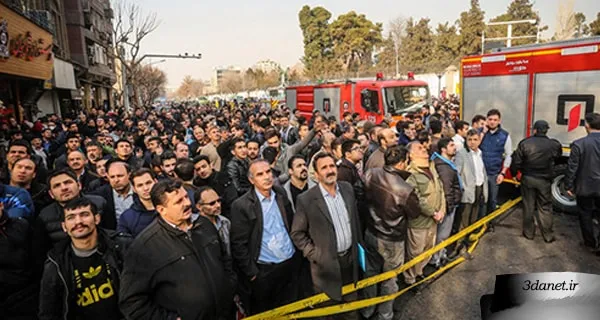
This is a note against the current, including against the main intellectual current among opposition and critical forces. The aim is to show that when we look around us contrary to common clichés, we can see more things. A fixed angle reflects only a fixed part of reality, and a part of the truth may be deceptive and make us oblivious to the whole.
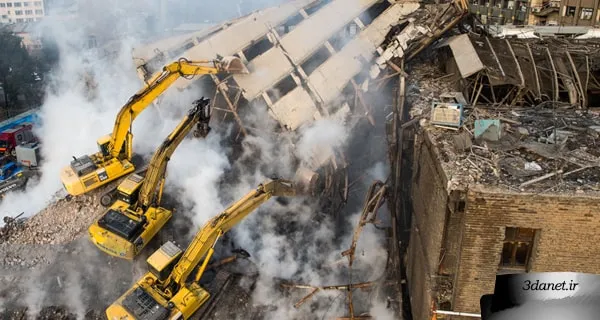
Are these people merely spectators and passive? What responsibility do the people themselves bear for catastrophes such as Plasco? Are these people merely spectators and passive? What responsibility do the people themselves bear for catastrophes such as Plasco? Let us begin with the tangible case of the Plasco building collapse. After this catastrophe, the general tendency has been to find the municipality, the Tehran City Council, the Ministry of Interior, and this or that government official guilty. But fire department officials and the Tehran City Council say they repeatedly warned the shopkeepers based in the Plasco building and its management about its lack of safety. In this uproar accompanied by grief and mourning, no one pays attention to these reminders. A culprit must be found, and the culprit is always seated in that center which is the circle of central power, the state in its broad sense.
It might be said: the authorities should have acted with force and imposed safety regulations on the Plasco shopkeepers. In Iran, however, there are not just two or three Plascos; Iran is full of Plascos, just as the entire Iranian environment can be considered a Plasco. Must the state act with force everywhere? That is, increase its power beyond what it already is? But is the state not strong? Do we not believe it is an absolute despot? Do we want it to become more despotic? You will surely say no; what is meant by power is not physical power; what is meant is that it should have better management. But does the political theory prevalent among us not say that the state's power lies in its physicality? And against the state, if the people disobey, what then? Are they always in the right when they disobey?
We say our state, besides being despotic, also has the characteristic of being rentier, meaning it is dependent on oil money and through this dependence is independent of the nation. But why do we not also consider the nation rentier? Is our culture and morality not rentier? Is its characteristic not that responsibility is not accepted and it is weighed down by the notion that something will eventually come from somewhere and solve the problem? Is the general effort of most of us not focused on getting our share of this thing?
Enough is written, we write, you read, and we read about the role of the state as responsible or claimant of responsibility. Incidentally, the state also thinks it is very responsible, very strong, meaning it must be very strong, and must always maintain its prestige and must never admit it was weak somewhere and did not act strongly. The state is also fooled by this image of itself, suffers failure case by case, but tries to act more strongly next time, so it covers up its weakness until this paper tiger finally falls to the ground in a critical situation.
What responsibility does the nation bear? Did the level of awareness of the Plasco building shopkeepers not reach the understanding of the necessity of having a fire extinguisher? Or were they greedy and said, God willing, nothing will happen, so why should we spend money?
Ignorance and greed! These two traits do not necessarily make the nation weak, but also make it strong. The state becomes captive to the ignorant nation. The ignorant state colludes and collaborates with the ignorant nation.
The state, whatever it may be, has standards imposed upon it in modern society, but the state does not dare impose these standards on the nation we have described. From the perspective of standards and general rules, the nation may well be more reactionary and more ignorant than the state.
The state's power, more than stemming from its real power, stems from the retreat it makes in the face of the power of national ignorance and corruption, so as not to provoke a reaction. By retreating in the face of ignorance and corruption, it gathers its strength and concentrates it on suppressing critics and dissidents.
Cases like the Plasco disaster are numerous. In the destruction of the environment and the misuse of resources, everyone is guilty, and the nation's share in this arena is by no means less than the state's. Even if we consider a prominent case such as oppression and discrimination against women, we can see and represent countless examples that show a significant portion of the people are even more reactionary than the reactionary state and violate reactionary laws to impose more oppression and discrimination.
The Demanding Nation
What is our habit in political analysis and activism?
We depict a nation that is weak and downtrodden, held captive by a strong-armed state. We constantly speak of the oppression of this nation and highlight its demands.
We do not want a conscious nation, we want a demanding nation! And we are oblivious to the fact that the state can come to terms with a demanding nation, because demandingness is transformed into covetousness through relatively simple tricks, and the state's power lies in bribery, meaning it turns its weakness in meeting real demands into its power of bribery.
The state makes the nation its accomplice, and the nation makes the state its accomplice. This happened in the Plasco building, and in thousands of other buildings, other institutions, other cities and villages.
A Critique of a Cliché
A duality has crippled our political thought: the bad state, the good nation – the oppressive state, the oppressed nation – the corrupt state, the innocent nation.
The most common cliché in Iran's political culture and in the view of Iran and similar countries is the cliché of the "strong state, weak people." In the realm of political theory, criticism of it has begun for some time (for example, see the works of Joel Migdal), but this criticism has not yet become influential.
In Iran, we should have set aside this cliché with the 1979 Revolution. The revolution showed how cowardly and weak the Shahanshah Aryamehr was, he, his army, and his SAVAK. The demands of a large part of the people, represented by the clerics, were reactionary against the system the Shah's regime had established. The people easily dismantled the monarchical system. A new state emerged that, contrary to what opposing political groups said at the beginning of the revolution, was not "anti-people," but was in fact very much "of the people," if we do not consider "the people" as an ideal concept. And this regime remained; it has remained for nearly four decades precisely because of its "of the people" nature, meaning the complicity of a part of the people with it.
If only a correction were made along the lines of propositions such as these:
The state is not all-powerful, and it is not the case that the nation is powerless. The nation must also be criticized and its responsibility demonstrated. Relentless cultural criticism must complement political criticism. Let us not compromise with the state, nor with the nation! The main danger is not the state; the main danger lies in the complicity of the state and the nation in covetousness, corruption, and ignorance. Consciousness-raising is the principle, not demandingness. Demandingness without critical consciousness-raising leads to complicity with greed, corruption, and ignorance, and this is a lesson we should have learned from the Bahman Revolution. More important than striving to establish an alternative state is striving to recruit for and expand an alternative culture and lifestyle.

Discussion3 comments
تحلیل های اجتماعی به سادگی افاضات فلسفی نیست که جناب نیکفر بلبل سرایی میکنند: ۱_ منطق نان و دندان: ملت طلبکار میتواند نتیجه منطقی یک ایدولوژی زوری هم باشد. چراکه نه؟! حداقل حصر منطقی که دارد. دهاتیانی که به ضرب و زور شعار انقلابی، صاحب خانه و مغازه و زن و بچه شدند چه دلیلی داره که مطالبات بیشتری نداشته باشن؟! اصلا چه انگیزه ای برای ریسک و ایثار دارند؟! مطالبق منطق هر آنکس که دندان دهد نان هم دهد، همه منتظر دستور نظامی وار هستند تا متهم به چیزی نشده و دستمال اضافی به سردردشان نبندند. دوما سازمان بیمه با انواع بیمه هایش، چنان به شمارش سکه های مردم عادت کرده که بعید نیست یاغیانش را گوشمالی دهد تا مایه عبرت سایرین گردد. شاید حقیقت واقعی چندین سال دیگه افشا شود.
دوری آقای نیکفر از ایران علت درک دیرهنگام تحولات ساختاری در ایران است . انباشت دانش و تجربه در طولانی ترین دوران آرامش نسبی ( پس از جنگ هشت ساله تاکنون ) و نیز فراوانی آگاهی تولید و پخش شده در جوامع متراکم شهری ، در واقع بسیاری از جنبه های ژرفتر و ریشه دارتر جامعه ایرانی را که در سطح سیاسی و رفتار روزمره مردم نمود می یابد ، آشکار کرده است . مثلاً مردم اکثراً در فضای خدا ـ بندگی باستانی تنفس می کنند ، این است که لایه های حجیم و پرتوان « مدرن » ایران ( پزشکان ، مهندسان ، وکیلان ، روزنامه نگاران ، دبیران و استدان دانشگاه ، کارگران ماهر .... یعنی بخش عمده قشرهای صنعتی ـ خدماتی پیوسته و متصل به روند تولید ـ مصرف ِ پول ـ کالا در گستره جهانی ) ، فاقد گفتار و رفتار مدنی و « مدرن » هستند آ از جمله در عرصه سیاسی .
بسيار جامع و مفيد و قابل درك براي مخاطب از هر سطح اجتماعي و فرهنگي