Philosophy
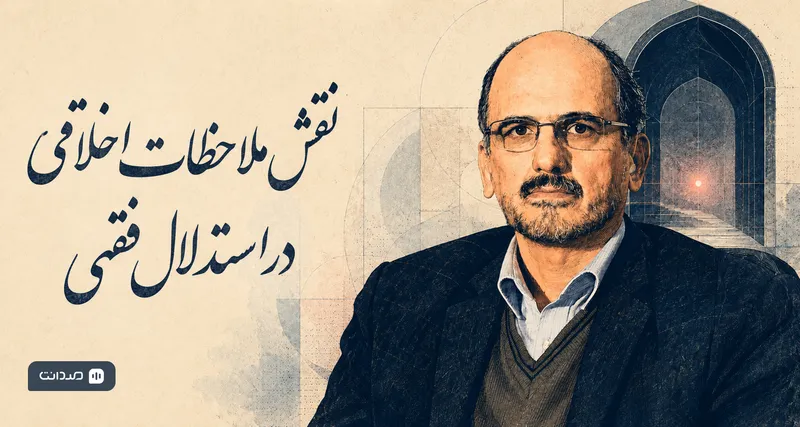
The Moral Dilemma in the Plasco Incident
The collapse of Plasco highlighted the ethical dilemma of the then-mayor: seal the building and harm business owners, or keep it open and risk the lives of firefighters. Preferring a certain loss over a future danger was an unethical decision, stemming from a miscalculation of consequences.
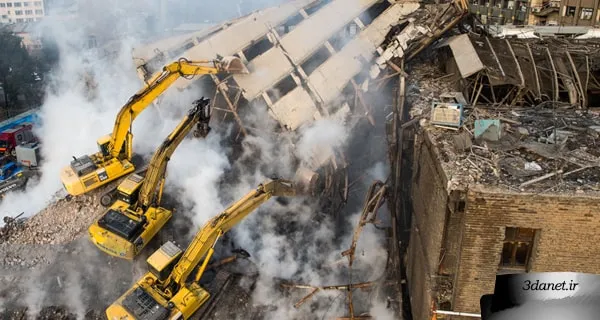
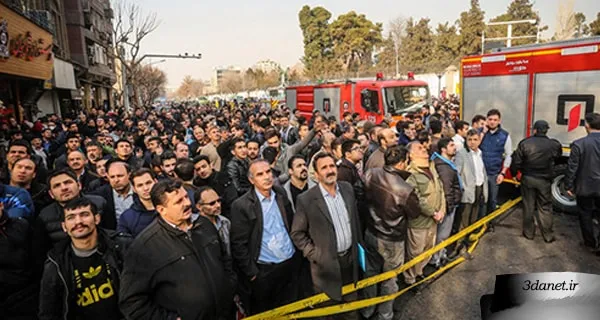
On the 30th of Dey of this year (1395) at 11:30 in the morning, a piece of news stunned all of Iran: "The Plasco building has collapsed." At the time of writing this piece, more than a week after the incident, the work of clearing the rubble and recovering the bodies of those who perished in Plasco has still not been completed. In this incident, and according to the official announcement of the Fire Department, 16 of the organization's courageous personnel were killed. In addition to these individuals, a number of ordinary citizens also lost their lives.
After the collapse of Plasco, like every other occurrence that begins in our country after a significant event, the most important task was finding the culprit. This event had to have a culprit; just as every effect has a cause, this catastrophe also had to have a culprit as its cause. There were many candidates for blame, but the municipality and, consequently, the city council were under the most suspicion.
Here, I do not intend to say that the municipality or which organization or body is the main culprit, although I imagine I wish such a catastrophe could have been prevented before this, and we would not be witnessing the loss of the youth of this land today. But some time ago, through the Mehr News Agency's Telegram channel, I was watching a clip related to one of the city council sessions in Ordibehesht of the year 1393. This session was held with the presence of the then, and of course current, mayor. It seemed that the topic, or one of the topics, of this session was related to the safety status of the Plasco building or buildings similar to it. In this session, Ghalibaf raises a moral dilemma regarding Plasco or similar buildings; here, paraphrasing the content of those words, I will limit the subject solely to Plasco: 1. If the municipality had to seal Plasco, then the business owners there would have suffered a loss. 2. If the municipality did not have to seal Plasco, then the municipality had not fulfilled its duty.
On this matter, Ghalibaf asks the council representatives: "Should I close [Plasco] or not?" In fact, he states: 3. (a) Either the municipality had to seal Plasco or (b) the municipality did not have to seal Plasco. This is an important question because the answer to this question, based on accepting each of the above cases, is that: 4. (c) Either the business owners of Plasco would have suffered a loss or (d) the municipality had not fulfilled its duty.
The moral dilemma occurs precisely here, that is, between choosing a or b and consequently between: "accepting the sacrifice of duty for the sake of the business owners not suffering a loss, or accepting the sacrifice of the business owners for the sake of fulfilling the duty." According to Ghalibaf, if in case 3 he chose a (as a result of which c would occur), then the outcry of the people, who were apparently the business owners of Plasco and the like, would arise, asking why, given the economic situation at that time and the lack of jobs and unemployment, he had undertaken such an action; and some, according to Ghalibaf, would even accuse him of intending to throw a wrench in the government's works with this act. But if he chose case b (as a result of which d would be true), then if three people (he specifically mentions three people) were to burn in a fire, everyone would accuse the municipality of having been asleep and not having fulfilled its duty. This is how Ghalibaf remains stuck between one of the sides of 3. But Ghalibaf, in any case, between choosing to seal or not to seal, chooses the latter and sacrifices duty for the sake of the business owners not suffering a loss.
This choice by Ghalibaf reminds me of the story of the shipowner in Clifford's memorable essay "The Ethics of Belief." In that essay, Clifford imagines a shipowner whose ship has become old and worn out and does not have much tolerance or capacity for another voyage. But he convinces himself, with the justification that God is benevolent to His servants and does not wish to cause them hardship, to send the ship out to sea with its passengers one more time. But the ship cannot withstand this sea voyage, sinks, and sends all its passengers to their deaths. The question Clifford raises is: did the shipowner have the right to send the ship to sea with the reason that God does not wish ill upon His servants?
The question that arises here is of the same kind: “Was Ghalibaf morally justified, given the reasons described, in not sealing Plasco?” Likewise, were the members of the city council morally justified in remaining silent in the face of Ghalibaf’s action?
I suspect that Ghalibaf acted in this affair according to utilitarian consequentialism. However, he was unable to properly estimate the benefits and harms of this affair and, as a result, could not arrange a suitable reason for accepting (A); in other words, he performed very poorly in estimating the consequences. When he was faced with (A) and (B), he never imagined how horrific the result of choosing (B), which is failing to do one’s duty (i.e., D), could be. As he states, the extent of his imagination was that at most 3 people could burn (which in itself is regrettable that he paid no attention to the lives of 3 people and considered their lives less valuable than the losses suffered by the business owners of Plasco), but he never thought that it was possible that not 3 but more than 16 people would lose their lives and the entire outcome of the business owners would suddenly turn into a mountain of dust and leave behind damages amounting to 15,000 billion tomans.
What is more astonishing is that Ghalibaf himself precisely states this sentence: “If you enter Plasco, you will be horrified, and I must close it tomorrow morning.” But even this could not convince Ghalibaf. This shows that even if Ghalibaf was truly able to estimate the benefits and harms of not sealing Plasco, he could not properly judge between the consequences of its immediate and certain harm (i.e., C) and the greater consequences that might arise in the future from failing to do one’s duty (i.e., D), and the scale of his judgment tipped towards the immediate and certain harms, due to their immediacy and certainty, and he judges expediently here. Probably, to avoid the immediate harm of this choice, like many of us who, in such circumstances, to avoid an immediate harm that we consider certain, set aside the probable future harms that may or may not occur and say, “God willing, nothing will happen,” he too preferred the immediate and certain harms to the possible and greater future harms.
Therefore, I believe that the action of Ghalibaf and the city council in accompanying him in choosing (B) was not moral. Firstly, because their reasons were not correct reasons, and secondly, because the possible harm resulting from choosing (B), even considering that it was possible, was so enormous that it outweighed its immediate and certain harm, and someone who wishes to decide rationally and morally cannot set them aside. The example of Plasco itself precisely confirms this reason.
On the other hand, this shows that not only did Ghalibaf lack a good imaginative capacity in estimating the benefits and harms of his choice, but he also lacked suitable advisors in the field of ethics. Unfortunately, this is one of the problems of our society, which imagines that philosophers are of no use to them, but this affair can demonstrate how beneficial the presence of a moral philosopher as an advisor at the level of such decisions is. .
.
The Moral Dilemma in the Plasco Incident
Meysam Moulaei, PhD student in Moral Philosophy
Source: Din Online
.
.


Discussion2 comments
با ناصر موافقم، هزار راه حل بالقوه متصورست: چطور برای ساختمانهای خودشان، میلیاردها وام و بودجه و .... شبانه و مخفیانه تصویب میشود؟! ببینید تنش و درگیری با سازمان بیمه بقدری بوده که هشتاد درصد کسبه امتناع میکردند. بعید نیست آن ۲۰ درصد باقیمانده هم چنین روزی را فعالانه و مشتاقانه، پیش بینی و زمینه سازی نکرده نباشند.! شاید آن درخت پلاستیکی از درونش پوسیده و ذوبیده.
در مطلب شما یک خطای راهبردی است آن هم اینکه تنها دو راه حل برای مشکل در نظر گرفتید . در عالم واقع اکثر اوقات می شود راه حلهای دیگری یافت. مثلا راه های مختلفی برای تامین هزینه ایمن سازی پلاسکو هست که برای یک مدیر هوشمند قابل تصورند. مثلا ارایه طرحی برای گرفتن وام برای ایمن سازی با حمایت بیمه ها و تضمین شهرداری. و... اصلا هنر مدیر در یافتن این راه هاست.