Philosophy
Evolution and the Moral Realist's Dilemma
Natural selection has shaped our moral judgments. Sharon Street, through her realist dilemma, shows that the dependence of moral beliefs on evolution leads either to skepticism or to an implausible hypothesis about survival and truth.
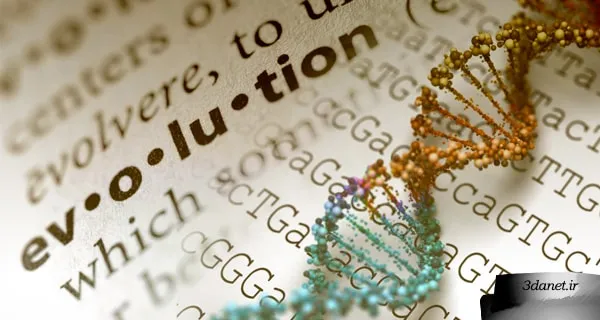
The process of natural selection, which is central to evolution, has had a significant impact on the content of our moral judgments as human beings. Some moral judgments increase our chances of survival and reproduction, while others decrease them. For example, the moral judgment that our lives as human beings are valuable aids our survival, while the judgment that we should attack our own children jeopardizes it. Some moral judgments exist among almost all human beings. For instance, if someone treats us well, that is a reason to treat that person well—that is, we find a reason to treat them well. If someone harms us, this gives us a reason to punish them or to condemn their action. Or, for example, helping our own children takes priority over helping those who are complete strangers to us. These judgments, which ensure survival, are common among almost all human beings whose moral judgments have been shaped by evolution.
Sharon Street raises two types of objections that might be leveled against this argument and then responds to them. First, one might say that the capacity for judgment in general, and moral judgment in particular, is a capacity that itself took shape during evolution. Behavioral and motivational tendencies existed in us before we had the capacity for moral judgment. For example, chimpanzees, who are considered relatives of human beings and lack moral judgment, protect their own offspring. Therefore, the moral judgments that formed in humans at later stages of evolution were probably a more complex form of our behavioral and motivational tendencies.
The second objection is that the evolution of human traits through natural selection requires that the trait be genetically transmissible to subsequent generations. But the tendency to make certain moral judgments does not appear to be so. For instance, when I say, "If someone treats you well, treat them well," this moral judgment is not genetically inherited. Sharon Street's response to these objections is that in the process of evolution, before human beings acquired the ability to speak or before language emerged, they had the capacity for rudimentary moral judgments. These judgments were non-linguistic evaluative desires, and humans did not have the ability to reflect upon or revise them. For example, when faced with danger, they would flee. These traits were genetically inherited. Through the evolutionary process, humans acquired the ability to express these evaluations and to develop more complex moral judgments, and they also gained the ability to examine or reflect upon them. Therefore, the influence of the evolutionary process on our judgments has been indirect. That is, the process of natural selection had a direct impact on our primitive evaluative tendencies, and these primitive capacities themselves influenced the moral judgments we endorse. Thus, evolution has played a role in shaping our moral judgments.
The question that the realist about moral values must answer is: where did our moral beliefs come from, and why do we hold these particular moral beliefs? According to Sharon Street's argument, the content of our moral beliefs depends on evolution, and therefore the realist about moral values must tell us how it is possible that these beliefs represent mind-independent moral truths, and must also say how the method by which our moral beliefs are formed should be such that it guarantees the correctness of at least a significant portion of them. Here, Sharon Street defines a "dilemma" for the realist.
One possibility is this:
1) We can say that there is no relation between the natural selection that determines our beliefs and the mind-independent moral truths. In this case, skepticism results. The reason it leads to skepticism is that only some of these judgments might, by chance, correspond to moral truths, but a significant portion of them will likely be false—that is, they will not correspond to mind-independent moral truths.
One of the criticisms that might be leveled at Sharon Street at this stage is to say that even if our moral beliefs have lost their connection to moral truths because of evolution, since we possess reason we can think and try to bring our judgments into line with moral facts. Street's response is that if the moral judgments with which human thought began were themselves influenced by evolution—and they were—then the rational tools of thought have been influenced by evolution in the same way and to the same extent. In other words, if reasoning includes the initial moral judgments we had and is an attempt to make them coherent, then in this form reasoning cannot turn incorrect moral judgments into correct moral judgments. Making false beliefs and judgments coherent and consistent does not make them true, in the sense that they represent those moral truths.
The second path of the dilemma she poses for the realist is this:
2) The realist must show that there is a relationship between evolution, which shapes our moral judgments, and mind-independent moral facts. The realist's best response is to say that from an evolutionary perspective, it was advantageous for us to identify mind-independent moral facts. That is, from an evolutionary perspective, it was advantageous for us to have correct beliefs about moral facts. This realist response is in fact a scientific hypothesis claiming that the relationship between evolution and mind-independent moral facts is strong and direct. This scientific hypothesis is not very plausible. Our moral judgments were useful from an evolutionary perspective because they ensured our survival, not because they identified independent moral facts. Consider, for example, the moral judgment that "we ought not to kill our own children." The realist's scientific hypothesis says that, evolutionarily speaking, recognizing this mind-independent moral fact was advantageous for us. Whereas Street says that this judgment that we should not kill our own children formed in us because it led to behavior that was beneficial for our survival. Street says her explanation is superior to the realist's because we can understand why we have some moral judgments that we often set aside after thinking about them.
For instance, the moral judgment that if a person was not of our ethnicity, or did not speak our language, or had a different skin color, we should mistreat them, or not admit them into our group, or not treat them as equals. From an evolutionary perspective, we can understand why such moral judgments formed in humans in the past. Or, for example, why we have such beliefs, or even other beliefs like the idea that human life is more valuable than plant life. If we had held the opposite beliefs, we probably would not have survived.
Street ultimately argues that the moral judgments we have are the result of evolution, and the only thing we can do is to refine and improve them by thinking about them. These refined moral beliefs are the only things we have access to, beliefs that do not represent moral facts. In fact, through evolution we acquired a set of traits, some of which may no longer be desirable now, such as the belief that we should not admit people who are not like us into our group. We can change such beliefs by thinking, but this does not mean that they come to correspond with an independent moral fact. Street's evolutionary view rejects all realist views about moral realism, whether naturalistic varieties like utilitarianism or other varieties like G. E. Moore's model, and offers an alternative model in moral philosophy.
The moral realist believes that at least some moral facts or truths are independent of human moral attitudes. Moral facts include things like: for example, when we say that "such-and-such an action is good" or "one ought to do such-and-such a thing" or "such-and-such an action is valuable," these are moral facts. Moral attitudes include things like our judgments about different actions, our desires, and our approval or disapproval of certain actions, words, and behaviors. The realist says that moral facts exist independently of our moral attitudes. Street wants to argue that this is not the case. First, she attempts to show that the realist ends up in a contradiction. She explains this with the help of evolution, and then she wants to say that, based on evolution, what is considered valuable to us is not a matter of tracking independent values, but is simply because we have deemed them valuable and they have been useful to us during the process of natural selection.
.
.
Evolution and the Moral Realist's Dilemma
Zohair Bagheri Noaparast
Sharon Street, Professor of Philosophy at New York University
For a complete study of her position, refer to the following article:
Street, S. (2006). A Darwinian dilemma for realist theories of value.Philosophical Studies, 127(1), 109-166.
Her Darwinian view on moral values has been among the recent controversial views in moral philosophy
.
.





Discussion2 comments
قلم آقای نوعپرست واقعا دل نشین است منسجم و تحلیلی وقابل فهم ممنونم من را با ایشان آشنا کردید
اگر مجموعه مشابه فلسفه اخلاق را در مورد اخلاق هنجاری مخصوصا فایده گرایی و کانت گرایی بگذارید خوبی را تمام کرده اید