Psychology
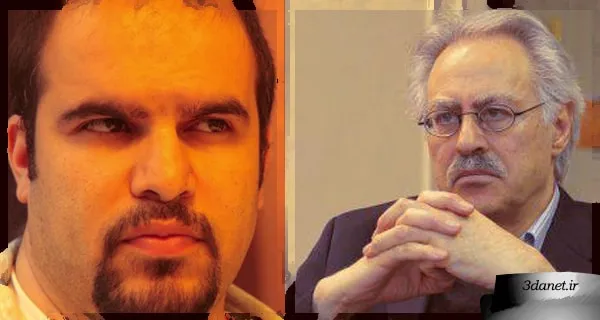
Mostafa Malekian’s Advice on Learning English and the Art of Translation
In response to the question “How should we learn a language?”, Mostafa Malekian draws together recommendations he has offered for years in his translation workshops. The method consists of four parts and, though presented with English in mind, can also be applied to other languages.

Recommendations for Improving Your English and Learning the Art of Translation¹
Introduction
Learning a foreign language, especially English, has always been a concern for Iranians, as the large number of independent language courses attests. For students and seekers of truth who wish to draw on primary sources in their fields of interest, particularly philosophy, addressing this concern and mastering this tool is an undeniable necessity.
Mostafa Malekian himself has long been proficient in English and Arabic, and from the early years after leaving the university and entering the seminary, he began teaching English. Throughout his years of teaching, he was repeatedly asked the same question: How should we learn a language? Here we have drawn together some of the recommendations he offered in his translation workshops and classes on the art of translation, and present them to seekers of truth.
These recommendations are organized into four sections. The first offers a general point about language learning; the second presents Malekian’s proposed method for understanding texts and the conditions required for applying it. The third discusses the advantages of this particular method, while the final section offers several points translators should bear in mind if they wish to produce a good translation.
One final point: although English is the language assumed throughout this text, the method appears to be applicable to other languages as well.
1. Matching the Method of Language Learning to Its Purpose
The first step is to determine one’s purpose in learning a language. Once that purpose has been established, the language should be learned accordingly, since each purpose calls for a particular kind of study and an emphasis on a particular language skill. The method of study appropriate to someone who, for example, intends to travel to an English-speaking country to engage in religious outreach, and therefore needs to emphasize speaking², will certainly differ from that of someone who wishes to remain in their own country, sit in a library, and study scholarly and philosophical works in English, and therefore needs to place greater emphasis on comprehension³.
2. An Appropriate Method for Understanding Texts and Translating Them into Persian
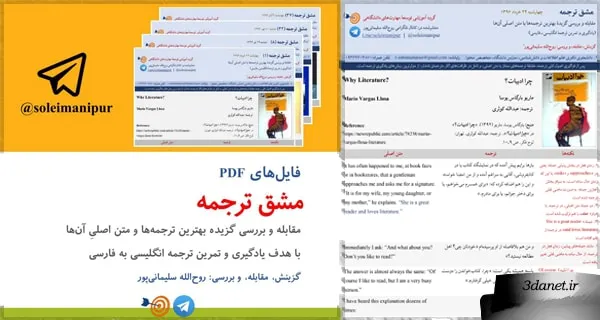
The method introduced here is useful for understanding texts and translating them into Persian. It is the best way to achieve this goal, and everyone to whom it has been recommended and who has followed it has succeeded. The method consists in selecting an English text that has been translated into Persian and comparing the English original with the Persian translation. Several conditions, however, must be met:
2.1. Choose Texts by Several Authors
It is better if the selected material comes from several authors. For example, a thousand pages by twenty authors is preferable to a thousand pages by two authors. In my [i.e., Malekian’s] view, and based on my experience, a thousand pages of text is sufficient for comparison, particularly if it consists of fifty twenty-page articles that meet the conditions set out below.
2.2. Choose Different Translators
The greater the number of translators represented in the translated material, the better. For example, a thousand pages translated by four different translators is preferable to the same amount translated by one or two. Likewise, a thousand pages translated by eight translators is preferable to the same amount translated by four.
2.3. Choose First-Rate Translators
The translators selected should be highly skilled and first-rate. It should also be borne in mind that a first-rate translator is not identified by fame, but by consulting people with expertise in the field.
In Malekian’s view, the following translators from English into Persian are reliable: Ezzatollah Fooladvand (in political philosophy), Mir Shams al-Din Adib-Soltani (in philosophy, unrivalled in his precision), Ali-Mohammad Haghshenas (whose Persian translations are exceptionally fluent and polished), Mohammad-Ali Movahed, Abdolkarim Soroush, Hassan Kamshad, Najaf Daryabandari, Abolhassan Najafi, and others. (Comparing ten or twenty pages by each of these translators is recommended.)⁴ Another point is that, as a rule, a translator’s first two or three works are often their best, while later works may not attain the same quality. This happens because once a translator has produced two or three strong works that are well received by experts, various publishers approach them with offers, and accepting multiple contracts may lead to a decline in the care and quality devoted to their work.
2.4. Use Texts from a Variety of Disciplines
The greater the disciplinary variety of the selected texts, the better. For example, a thousand pages comprising texts from philosophy, economics, politics, psychology, anthropology, and sociology is preferable to the same number of pages devoted entirely to philosophy. (This is particularly important in the humanities.)
2.5. Use Texts from Different Areas within Each Discipline
Within each discipline, the selected material should cover different areas of the field. For example, if we select two hundred pages of philosophical texts, it is better for them to cover various areas and branches of philosophy—such as philosophy of mind, philosophy of language, moral philosophy, political philosophy, metaphysics, epistemology, and so forth—than for all two hundred pages to be devoted, for example, to metaphysics.
2.6. Choose General Texts within Each Specialized Area
Within each area, the more general the selected text, the better. For example, if we select twenty pages from the field of political philosophy, it is preferable for those pages to address broader issues in political philosophy, such as justice, freedom, legitimacy, and so forth, rather than, say, a twenty-page text on Marxism. This condition is necessary because the more specialized a text becomes, the smaller its vocabulary tends to be and the more frequently those words are repeated.
2.7. The Original Text Must Have Been Written in English
The selected English text should originally have been written in English, rather than, for example, having been written in French, then translated into English, and subsequently translated from English into Persian.
3. Advantages of This Method
In addition to strengthening reading comprehension and translation ability, this method has several other advantages:
3.1. Learning the Source Language’s Style of Expression
In learning any language, vocabulary is the easiest element to acquire. Grammar comes next, followed by sentence structure. More difficult than all of these, however, is each language’s “style of expression,” which cannot be learned from textbooks or dictionaries. English, for example, makes frequent use of the passive voice. This is characteristic of English style, whereas most passive constructions in English should be rendered in Persian using the active voice.
3.2. Learning the Techniques of Translation
Another thing learned through this method, which cannot be acquired simply by reading books, is the techniques employed by good translators. These techniques cannot really be taught, but they can be learned through this process.
3.3. Teaching Students Not to Trust Translated Texts Uncritically
Besides helping to improve translation skills, this method has another incidental benefit: it teaches students not to place unquestioning trust in translated texts. In the course of following this method, you will discover the glaring mistakes that even some well-known translators have made in their translations, prompting students to consult the original texts.
4. A Few Points on Translation
4.1. Read the Text Before Translating It
We should read the entire textual unit we have chosen to translate—whether a book or an article—from beginning to end before starting the translation. This has several advantages:
• It familiarizes us with the text’s key concepts, allowing us to consult books related to those concepts and translate them accurately. Identifying these concepts and finding appropriate equivalents for them is possible only by reading the book from beginning to end.
• We can assess whether we are capable of translating it.
• The text we are translating may contain direct quotations from books for which good Persian translations already exist. Reading the work before beginning the translation enables us to identify such quotations and use those existing translations. This has two advantages: first, we spare ourselves the effort of translating the passages again; second, doing so is a way of acknowledging and appreciating the work of fellow writers and translators.
4.2. Use an English-to-English Dictionary
An English-to-English dictionary should be used. One of the most common mistakes made by translators who use English-to-Persian dictionaries is the mistaken assumption that, because such dictionaries list several Persian equivalents for each English word, they are free to use any of those meanings in any text. English dictionaries, by contrast, explain the different meanings of a word and how each is used in context.
Of the available dictionaries, the following three are recommended: Oxford⁵, Webster⁶, and Random House⁷.
4.3. Read Target-Language Texts Related to the Subject of the Work Being Translated
We should read everything that has previously been translated into or written in Persian on the subject of the text we are translating.
4.4. Broaden Your General Knowledge
Through extensive reading, we should acquire broad general knowledge. Such knowledge will help us translate certain specialized expressions in some books and reduce the need for repeated consultation of dictionaries.
¹ Compiled and edited by Majid Khani (majidkhani.politics@gmail.com)
This version was revised in Aban 1393. I hope that, if I learn any new points from Malekian on this subject in the future, I will be able to present them to interested readers in a new edition.
² Speaking
³ comprehension
⁴ Since these classes were held more than twenty years ago, the translators named here were the well-known, first-rate translators of that period. In recent years, new translators have entered the field, and I do not know Malekian’s opinion of them. Moreover, the translators listed here work in the areas of study that interest Malekian, namely philosophy and literature. Readers interested in other disciplines should consult specialists in their own fields on this matter.
⁵ oxford
⁶ webster
⁷ Random house

Discussion1 comments
با سلام و تبریک سال نو. عذر می خوام من این مطلب رو چند باری مطالعه کردم اما در یافتن منابع مورد نظر توفیق نداشتم. می خواستم بدونم شمابه نحوی می تونید به من کمک کنید؟ اگر ممکن باشه که این منابع رو داشته باشم ممنون می شم.