Political Science
Patriotism versus Nationalism: Two Paradigms for Defining Social Identity
Patriotism, unlike modern nationalism, is a cultural, pre-state phenomenon nourished by ethnic diversity, not an institution built on homogenization; a return to an older, broader, and more tolerant configuration of Iranian national identity is proposed.
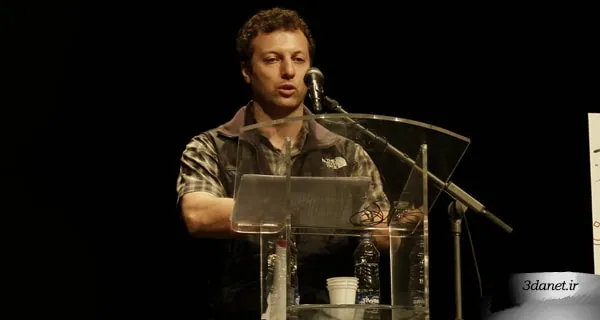

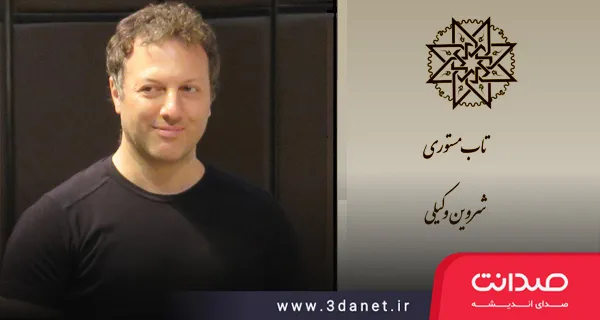
Sherwin Vakili
AuthorIn this article, the conventional assumption of the equivalence and synonymy of Iranian patriotism and modern nationalism is critiqued and deconstructed. The evolution of the nationalist framework for understanding collective identity in Europe and, in parallel, the developmental trajectory of the concept of Iranian identity within the distinct historical contexts of these two civilizational spheres are examined, and the presuppositions and theoretical pillars of both are compared from a systems theory perspective. Commonplace molds such as racism, geographic prejudice, and ethnocentrism are examined as disorders and aberrations arising from the modern concept of nationalism, and then the redefinition of Iranian national identity within the modern paradigm—which during the Constitutional era led to the translation of *mellat* / *vatan* / *mihan* / *keshvar* as "nation"—is critiqued and reviewed. Ultimately, the article proposes that the older, broader, and more tolerant configuration of nationality / homeland / fatherland, which exists in long-lasting civilizations such as Iran and China, be recognized.
The principal distinctions between these two paradigms are that patriotism emerged through a gradual process of integration and fusion of ethnic groups within a historical context and predates the establishment of a centralized state, and for this reason, it is not dependent on political institutions, although it is strengthened or weakened by them. In contrast, nationalism took shape more or less over a short period, following the establishment of a centralized state, and was formulated and promoted by political institutions, and in the absence of the state, it undergoes collapse and decay. From a systemic perspective, patriotism / national sentiment is defined at a cultural level and rests upon dispositions and meanings, whereas nationalism is born at the social level and is mounted upon institutions and power-based mechanisms. For this reason, patriotism or national sentiment develops through the absorption and integration of individuals, ethnic groups, and social groups, is immune to racial, linguistic, and religious diversity, and feeds upon this plurality, becoming richer. Nationalism, on the other hand, is founded upon the homogenization and leveling of language and therefore tends to reduce all layers of social diversity to a single level controllable by political institutions.
.
.
First: The Emergence of Modern Nationalism
The concept of nationalism and the keywords *melli* (national), *melliat-gara'i* (nationalism), and their derived concepts are frequently employed these days in sociological and historical texts concerning Iran. The reason for this may be the growing importance, in our time, of the question: how to redefine ourselves within a context of new nations and societies, each claiming a nationality for itself and considered a nation-state on a global scale. To gain a more precise understanding of our place, and the place we might hold, within this context of modern nation-states, it is first necessary to acquire an accurate understanding of the concept of "Iranian nationality."
What is referred to today by the keyword *melliat* (nationality) is, in fact, a form of borrowing the word "Nation" or its derivatives, which entered Iran from European languages over the past one and a half centuries. This concept, as will be discussed in this article, differs on the one hand from the ancient Iranian concept of nationality, and on the other hand, formulates a specific and particular version of it, the efficacy of which in the Iranian context must be doubted.
To gain a more precise understanding of the concept of the nation in the modern era, we need to look at the centers where this concept took shape in post-Renaissance Europe. One of the first movements that began in the fervor of the European Renaissance and led to the formation of the concept of national identity was the effort of the relatively small countries inhabiting the Iberian Peninsula to conquer the world. In the late fifteenth century, ocean-going ships, along with centralized and usually autocratic religious states willing to invest in building ocean-going vessels to conquer distant lands and open trade with native peoples, came together simultaneously in the countries of Spain and Portugal.
The convergence of these variables in these two neighboring countries led to the signing of the famous Treaty of Tordesillas[۱] in 1494. In this way, Spain and Portugal agreed to divide the world between themselves.[۲] The Spanish had by that time added a significant portion of the newly discovered lands of America and its surrounding islands to their domain, and the Portuguese had likewise succeeded in their voyages eastward. So it was decided that Spain would hold the Western Hemisphere of the globe under its sway, and Portugal, in return, contented itself with the eastern half of this terrestrial sphere.
It is interesting that despite this political and military division between the two neighboring countries, we still see no trace of the concept of the nation in the modern sense of the word in these two lands during this era. In fact, the use of the word nation, or Nación in Spanish, did not acquire its modern form for a very long time. Until 1884, the word Nación in the common parlance of the Spanish people still meant a group of people living in a specific territory. This keyword, derived from the Latin root nascere, meaning "to be born" and "to come into the world," still signified a group of people who shared a common birthplace and lived within a single territory.
Similarly, the keyword Patria, which in its ancient Latin resonance carried the concept of the nation to some extent, was not used in this sense in Iberia until 1925. Thus, we see that the Latin cultures of Europe—namely Spain, Portugal, and Italy—were, as it happens, relatively regressive and backward in terms of employing the concept of nationality in its modern form. Nevertheless, if we wish to examine the centers where the concept of nationality was formed in Europe, the most important and oldest center we find are precisely these Southern European countries, which possess a Latin culture and stepped onto the international stage from the era of Spanish and Portuguese maritime adventures. The Latin European countries' definition of nationality was one rooted in the age of the Roman Empire and based on carving out a historical and cultural background within the context of ancient Greek civilization.
This was the very civilization that defined its national identity against a great Other, namely Persia, and later, of course, this Other was transferred somewhat to the West and also encompassed the non-Christian Germanic tribes. A derivative of this ancient nationalist belief in the Roman Empire was what ultimately created Russian and Slavic nationalism as well; with the perception that the Russians, in fact, by benefiting from the Orthodox Christian religion, became the heirs of ancient Greek culture after the collapse of the Byzantine state in the fifteenth century and defined themselves as the principal "Other" against the Islamic world, or the East of that era.
This return to ancient Latin definitions to define identity was something that began specifically in Italy from the beginning of the Renaissance and, after the military and navigational innovations of Spain and Portugal, its center of gravity shifted slightly westward, that is, to the Iberian Peninsula. This conception ultimately led, at the beginning of the nineteenth century, to a form of modern nationalism that was, as it happens, relatively belated compared to other centers defining European nationalism.
The concept of nationality in the sense of the common identity of all inhabitants of a civilizational territory or geographical sphere on the European continent—setting aside the exceptional and transient case of the Roman Empire—has been a relatively rare and recent phenomenon. Newman, in his excellent book[۳], has shown well that one of the first glimmers of the emergence of this concept relates to England and is rooted in the development of rational and contractual politics in that land. It was in the mid-eighteenth century that, for the first time, anthems and paintings in praise of "Britain" and the "British spirit" appeared in that land, and symbolic elements such as the flag acquired identity-forming importance.
In contrast to this relatively primitive and more or less ethnocentric form of British identity, which was a corollary of the modern state formation in that country and emerged concurrently with the Industrial Revolution, another form of this concept was developing in continental Europe. This new form, unlike the conservative and monarchist English mold, had a revolutionary and republican texture. At a time when the embers of the French Revolution were still hot and a new form—and in the opinion of some, the first form—of modern nationality was taking shape in France, Abbé Sieyès[4] (Emmanuel Joseph Sieyès[5]) defined the nation on the basis of the state in 1789. In his view, a nation is a body of people who have one assembly, one law, and consequently one power.
Abbé Sieyès defined the nation on a political basis, relying on the definition of the state, that is, a single, coherent, overarching political structure, whereas Renan had a more individualistic view and placed greater emphasis on the shared customs, traditions, culture, history, and collective historical memories of a group of people. Both of these elements relied on a modern and new conception of the human being, according to which a social contract exists, and this contract organizes the relations among the members of a society; the individuals living in this society acquire a citizenship that is founded upon their common interests and shared social contracts.[6]
About a century after Abbé Sieyès, Ernest Renan[7] formulated a more complex and modern definition of nationality in late nineteenth-century France. On March 11, 1882, he delivered a famous lecture at the Sorbonne entitled “What is a Nation?”[8] and sought therein to distance himself from traditional interpretations of the “nation” that were based on geography, race, or religion. This is one of the first writings to explicate the concept of the nation on the basis of other variables. One of the variables Renan had in mind is the loyalty of individuals to a particular nation. Another is the desire of a society’s members to observe their collective interests and to compete with other societies. Another is the valuing of the special attributes of one nation as opposed to the attributes ascribed to neighboring or foreign nations, and the fourth is attention to preserving the national culture, customs, traditions, and historical possessions of a nation. Ultimately, Renan believed that the concept of nationalism is fundamentally based on the belief that humankind is naturally divided into nations. In other words, the human substrate constituting humanity is divisible into natural units that we call nations, each of which has its own form, appearance, and characteristics.
It was on this basis that Ernest Renan offered a relatively individualistic and thoroughly modern interpretation of nationality. With the interpretations mentioned, he in fact redefined nationality on the basis of a history of shared historical sufferings. This means that he took as his foundation the collective shared memory of what a nation has endured. He considered the voluntary will to live together as the basis for the formation of a nationality, and his famous statement, which belongs to this same text, says: “The nation is a daily plebiscite demonstrating the desire to be together.”[9]
Ernest Renan and the Abbé Sieyès, despite the century separating them, resembled one another in that they wrote within a shared historical context. This context was distinct from the rest of the European lands in that it had undergone a major political and historical event such as the great French Revolution. It was within this context that, at the end of the nineteenth century, a new form of the concept of national identity emerged, relying on citizenship rights and modern humanistic and individualistic foundations. French nationality in fact represented a break from the ancient concept of Latin nationality, because it was rooted in the views of Enlightenment thinkers; it also took on a hue from the views of the eighteenth-century Romantics, and was thus an amalgamation of ideas that were rationalist, viewed man individualistically, aimed at rights and a legal structure based on citizenship and the emergence of the modern state, while at the same time emphasizing Romantic and even at times irrationalist concepts, such as the role of great men in history, and in this way, drawing on this Romantic inheritance, considered language, and especially literature, as the principal basis for man's connection to his own identity and for the connection of the members of a society with one another.
The Romantic interpretation of modern nationality functioned like an encoding machine that reread the history and cultural background of peoples, and drew out natural landscapes and vistas (through Romantic paintings and poems), renowned historical figures (through novels, opera, and theater), and, most importantly, the shared language and linguistic heritage of peoples as an identity-forming umbilical cord, and with the aid of these elements restored legitimacy to the fledgling modern state—a legitimacy that, simultaneously with the collapse of the political authority of religious institutions like the Church, was facing a crisis in its own consolidation of meaning.
The French interpretation of nationality, which was accompanied by a violent and sudden event like revolution and the extinction of the ancien régime, was the foundation and central axis for the emergence of the new nationalism. This new form of collective identity, along with the reconstruction of the economic system (on the basis of capitalism) and the dismissal of the pervasive role of religious institutions (secularism), constituted the three pillars of the paradigm of modernity in the nineteenth century. In England, the concept of nationalism was adopted in a conservative context, in continuation of old political traditions and in connection with the crown and throne. In Germany, Italy, and Spain, which had been directly attacked by Napoleon's revolutionary armies and had established more extensive contact with the new French nationalism, this idea underwent a different evolutionary course and even, in the absence of centralized political institutions, demanded the formation of such institutions—a matter that gradually evolved in nineteenth-century Italy and Prussia.
In continental Europe, the most important version of nationalism that took shape under the influence of, and in opposition to, the French narrative emerged in Germany. Unlike England and France, Germany, politically and in terms of state centralization, was in a very rudimentary state until the twentieth century and was in fact a patchwork of small states and old independent principalities. Because they lacked a specific centralized state, the Germans defined their concept of nationality in a manner different from the Anglo-Saxon and French framework. Herder, Novalis, Fichte, and Schleiermacher, in their efforts to define the German nation, had defined it on the basis of the shared nature and language of the people. From the perspective of these individuals, who viewed the concept of the nation within the framework of Romantic thought, the existence of an overarching state is not a necessity, and what constitutes the fundamental and principal pillar of identity in a nation is a way of thinking and a cultural, and at times even racial, characteristic.
In fact, the framework for defining the concept of the nation in Germany can be traced back to the year 1740. This is the year when Johann Heinrich Zedler[10], in the entries of his massive lexicon, placed the keyword burger, meaning citizen, in opposition to geschlecht, meaning people, and stated that these people are the primary form of a population that lives together. Citizens, however, are the elements that make the definition of the modern nation possible. From his view, it was these very citizens who shared common traditions, customs, and a state.[11] Within this framework, we see that the Anglo-Saxon-French definition also found supporters in Germany.
The key German term for formulating nationality was Volk[12], which was still unimportant until the mid-eighteenth century but gradually carved out a place for itself. Until the sixteenth century, this keyword was used in the German language to mean family, lineage, or a group of kin. Gradually, however, it took on the meaning of “people,” and gained particular importance during the Nazi era as one of the principal keywords defining German nationalism. During the Nazi regime, practically most social institutions and even technical products bore the prefix Volk, a pattern that has endured, for example, in the name of the Volkswagen automobile.
From the German perspective, the Volk, or people, are those who belong to a nation, but this concept, unlike the Anglo-Saxon-French view, is not very individualistic and does not emphasize the social contract. Rather, it retains its old blood-based and racial character. Common ethnicity, race, and language are the principal keys that make the concept of German nationalism possible. German nationalism, in fact, due to the absence of political centralization in this land, took shape more as a reaction against French expansionism, and it is for this reason that one of the first texts in which we see this is Herder’s “Addresses to the German Nation,” which is in fact a reaction to Napoleon’s invasion of Germany.
Nevertheless, in the German context too, the definition of the concept of nation is a language-centered one. What is actually emphasized is that the shared cultural, historical, and mythological structure of the people is the main basis for the emergence of the concept of nation. It is for this reason that in Germany, movements that considered themselves Pan-German flourished after the French Revolution and the French invasion of Germany, and considered their goal to be the linguistic and cultural unity of the German people. A goal that, in the long term, was intended to lead to the political and economic unity of this people.
The Pan-German program was revealing and illuminating. This program had two main axes. One was the codification of native German law, and the other was the purification of the language, the latter being accompanied by the recording and codification of German linguistic and literary elements and the creation of new elements in this field. It was between 1835 and 1844 that Gervinus wrote a large and influential 5-volume book called “History of the Poetic Literature of the German Nation,” which was very important and whose main claim was, in fact, that a general collective spirit and a traditional historical meaning exists among the German people that is different from the Latin people and brings a special national identity to the German people.
One problem that the Pan-Germans had for a very long time was the existence of German-speaking people in neighboring lands. Poland, Czechoslovakia, and, for example, the Alsace-Lorraine region in France contained a significant minority of German-speaking people, without themselves being German-speaking countries. Another problem was the divergence and emergence of new sub-branches of the German language, which, in the Pan-Germans’ view, diminished the power of this culture-nation. It was this latter process that gave rise to new sub-branches such as Danish and Dutch within the sphere of the Germanic people.
In summary, it appears that the emergence of the concept of modern nationalism in Europe had three main centers: an older center that considered itself the heir to Latin culture and civilization and claimed a form of revival of the concept of the Roman Empire. This center emphasized a traditional understanding of neighboring and co-habiting people and was first formulated in a new political form in Spain and Portugal. At the end of the fifteenth century, the cultural and literary wave of the Renaissance arose in Italy and became intertwined with this current.
The second center took shape in the northern part of the previous center—in France and, to some extent, the Netherlands—and later found its Anglo-Saxon versions in England and America. This second center, incidentally, sought to sever its umbilical cord from the definition of medieval Latin identity and connect itself to a more ancient era, namely the era of the Roman Emperors and ancient Greek culture. If the Spanish and Portuguese considered themselves representatives of the Pope and defined their national identity in a religious context, the French revolutionaries and Anglo-Saxon enlighteners considered themselves rebels against the medieval cultural system and attributed their heritage more to the classical Roman era and the era of ancient Greek civilization.
As we discussed, this second crucible in which the concept of nationality was formed in Europe rested on two intertwined foundations: one was individualism, a juridical approach to the concept of identity, and the concept of citizenship rights, which resulted in the formation of a single, all-encompassing state based on the general will of the people. The other was the Romantic outlook, which considered language, myths, and shared history important and honored the political role of the great people as the creators of history. Napoleon became so renowned in the history of the emergence of modern nationalism because he was the unifier of both these tendencies after the consolidation of the French Revolution. The third crucible, which was to some extent a reaction to the French Revolution, took shape in Germany and, due to the absence of a unified and centralized political system in these lands, emphasized the shared race, language, and ethnicity of the people, along with common customs, traditions, and myths.
With these details, it is clear that European nationalism, in all its parallel evolutionary paths, shared characteristics with its rival versions and, on this basis, constructed a uniform and overarching paradigm that turned the nationalist fervor of the French, English, German, Italian, and Spanish into local and situated versions of a larger meta-narrative. The common characteristics that, like a thread, connected these local narratives can be summarized under four headings:
First, all the aforementioned narratives defined identity based on the modern subject, that is, the newly founded, autonomous, agentive, and rational new "I," and from this perspective, their philosophical foundation was laid upon the intellectual achievements arising from the Renaissance movement, the Age of Reason, and the Industrial Revolution.
Second, all these narratives, as we said, were very recent. Their ancient starting points dated back to around the years of the French Revolution, 220 years ago, and their formulation was mainly realized during the nineteenth century.
Third, the main unifying element in these narratives was a common language and the possession of a shared historical heritage, which was again formulated in a national language. In other words, a common language was considered the primary realm connecting the members of a nation, and in places like the border of France with Switzerland or Italy, where the language of French citizens was Italian or German, local languages were forcibly eradicated to make way for the spread of the national language.
The fourth point is that all the narratives emerging from nationalism were intensely political. These narratives were either formulated and appeared, as in the case of France, during a political transformation and the emergence of a new state, or they demanded the emergence of such a state and quickly led to such a political organization. In practice, the replicated versions of nationalism spread throughout Europe during the nineteenth century and, in the early years of the twentieth century, led to the emergence of numerous small and large states, all organized around a common language and literature, and none of them—with the exception of Italy—had a long historical precedent as an independent country.
The concept of nationalism underwent a complex evolutionary path in the nineteenth century and, as a modern paradigm established on a new concept of the autonomous and agentive human being, usually found itself in conflict with conservative political institutions and old religious traditions. Among theorists, too, there was no broad consensus on the boundaries of nationalist identity. For example, when John Stuart Mill spoke about the definition of a nation, he considered a nation to be a collection of people who shared a common sovereignty and wished to continue this common sovereignty. In other words, he also took the social contract as a basis, which is a French and Rousseauian concept and initially played an important role in the emergence of French nationalism during the Revolution. This interpretation was so ambiguous that after the French Revolution, an American like Thomas Paine, who is also the author of the book *Rights of Man*, became a member of the French National Convention in 1792, without knowing the French language, and his nationalist beliefs about the necessity of American independence from Britain and his American citizenship posed no problem for his membership at a high level of the national decision-making system in France.[۱۳]
This ambiguity regarding the precise meaning of the concept of Nation manifested itself in other domains as well. For example, Mill considered a large population to be one of the major variables for defining a nation and believed that Ireland was an independent nation because it had a large population. Of course, these were people who lived close together in a geographical territory and shared a common social contract. This was a view later criticized by Italian nationalists like Mazzini (in 1875). These critics believed that population alone was not sufficient to define a nation. At the same time, for instance around 1843, we see that in the Garnier-Pagès dictionary[۱۴] published in France, it is stated that Portugal and Belgium are not considered nations because their territorial area is small and they lack sufficient population. Thus, we see that in this era, in addition to the emphasis on the social contract and the existence of a state within the Anglo-Saxon French cultural context, hardware variables such as the country's area and the number of people living in that country are still considered important.Another example of the instability of the concept of nationality in this era is evident in the book by Edwin Cannan. From his perspective, the concept of nation in Adam Smith's "The Wealth of Nations" denotes a collection of people who will die within the next hundred years, and therefore refers to individuals of the same generation living together. In other words, Cannan believes that the concept of nation, in its conventional modern meaning, essentially does not exist in the texts of Scottish economists like Smith, and they use the concept of Nation in its old, traditional Latin sense, meaning people born at the same time and in the same place.[۱۵]
The competing narratives of European nationalism, as mentioned, were late and belated in arriving. This theoretical paradigm emerged at the end of the eighteenth century, gradually and step by step attained a firm and solid formulation in the nineteenth century, and only became a visible manifestation in European politics in the early decades of the twentieth century. In fact, the first international conflict based on modern nationalism was World War I, during which the newly established European nations and the centers defining nationalism clashed with one another and fueled a bloody war. A large portion of European nationalities only appeared on the political geography of the West after World War I and the collapse of the Austro-Hungarian and Ottoman Empires, and it was these same entities that, after a brief pause, once again experienced a world war in which nationalism was again at its central core. In World War II, the different fronts adhered to various political ideologies and had differing approaches to the concept of economic organization and the political rights of individuals. Nevertheless, when the fire of battle intensified, it was again the excitement arising from nationalist collective identity that prevailed, and the best illustration of this was Stalin's return to nationalist slogans, whose proponents he himself had purged just a few years earlier. With this description, the record of European nationalism is not very bright. This belated and newly-arrived narrative of collective identity, on the one hand, became the center of gravity for organizing and developing modern states in Europe, and on the other hand, it determined war and bloodshed among these states. Pillars such as language and race were rapidly sanctified within it, replacing the older concepts of the social contract and the slogans of the Enlightenment era. It was this same nationalism that was transferred to India and other lands during the colonial era, and was introduced into the sphere of Iranian civilization by Iranian intellectuals during the Constitutional era.Second: Nationalism in Iran
A review of historical documents shows that the conceptual foundations of modern nationalism entered Qajar-era Iran around the 1900s from three neighboring cultural centers. All three of these centers are geographically linked to the Iranian land and, in historical periods, were considered part of the sphere of Iranian civilization. The most powerful and influential center was in the Caucasus, which had enjoyed significant economic and cultural development due to its oil wells. Akhundzadeh, Talibov, and other intellectuals who were, on the one hand, spokesmen for Iranian identity and, on the other, influenced by modern European nationalism, promoted this paradigm among Iranians by writing treatises, stories, and plays. Parallel to this current, a similar borrowing was taking place in the Ottoman Empire, and sometimes the propagators and transmitters of this theme were the same individuals residing in the Caucasus. The second center was Egypt, which, especially after the increase of British influence there, had become one of the centers of activity for Muslim intellectuals. These intellectuals were mostly influenced by the political propaganda of the British in the south and the Russians in the north, which promoted newly constructed and historically rootless identities such as Turkish and Arab nationalism with the aim of dismembering the Ottoman Empire.
The third center was located in the north of present-day India and Pakistan. This was a territory where, at that time, the elites were still Persian-speaking and had not forgotten their Iranian identity. However, British colonialism was politically more entrenched in this region than elsewhere and pursued an extensive cultural program to de-Iranianize the area and replace the Persian script and language with the Latin script and English or Urdu. The three mentioned centers were concentrated particularly in the cities of Baku and Tiflis in the Caucasus, Cairo and Baghdad in the southern part of the Ottoman Empire, and Peshawar, Delhi, Lahore, and Calcutta in India. That is, it was in these cities that European nationalism was borrowed, and intellectuals tried to reconstruct a new Iranian identity within its framework.
It is interesting that the two central hubs within the country of Iran, namely Tehran and Tabriz, paid attention to this matter a little later than these peripheral centers, but simultaneously with the collapse of the Ottoman government and the consolidation of British rule in India, it was this very center that gained increasing importance. It is no exaggeration to say that the Constitutional Revolution was a political expression of this newly borrowed nationalism, and the dynastic transition from the traditionalist Qajars to the modern Pahlavis was its manifestation in the superstructure of the ruling families.
Some researchers, most notably among them Dr. Masha'allah Ajoudani,[16] emphasize that the borrowing of modern foundational concepts and elements in Iran occurred in an impure form. That is, Iranians adopted the themes and conceptual elements of modernity, blended them with their own tradition, and arrived at a new apparatus which, in Dr. Ajoudani's view, was a flawed, weak, and contradictory hybrid. This syncretism and settling for the operational and situational function of concepts is a flaw that other writers—such as Dr. Seyyed Javad Tabatabai[17] and Dr. Aramesh Doustdar[18]—have generalized to the entire history of Iran's Islamic era, and on this basis, they have considered the intermingling of incompatible conceptual strands and the internal conflict between religiosity and philosophy, or despotism and freedom, as a sign of the decline of Iranian thought and civilization.
در این میان، این نکته که کلیدواژهی ملت پیش از عصر مشروطه و برابر افتادن با ناسیون، دلالتی دینی داشته، بارها مورد اشاره و نقد واقع شده است. با این وجود این نکته که اصولا سرمشق نظریِ ایرانیان برای فهم هویت جمعیشان در دوران پیشامدرن چگونه بوده و تا چه پایه با قالب ناسیونالیسم مدرن همخوانی یا تفاوت داشته، به ندرت مورد بررسی واقع شده است. پیشداشتی که گویا بیشتر نویسندگان در این زمینه پذیرفتهاند، آن است که مفهوم ملیت و وطن، و تالیهای هویتبخشِ آن یعنی ملیگرایی/ وطنخواهی عناصری مدرن و نوپدید هستند که بعد از عصر مشروطه به ایرانیان عرضه شده و به شکلی ناقص و نابسنده توسط روشنفکران وامگیری شده است.
این برداشت، و ناپرسیده ماندنِ مسئلهی هویت جمعی ایرانیان در تاریخ دیرپایشان، امری شگفت است. چرا که از سویی تمدن ایرانی کهنترین تمدن پیوستهی جهان است، و از سوی دیگر در ادبیات و متون کهن ایرانی و انیرانی مسئلهی هویت جمعی ایرانیان بسیار مورد تاکید بوده است و در دورانهای تاریخی متفاوت، خوشههایی متمایز از کلیدواژگان و مفاهیم برای رمزگذاری و صورتبندی آن پدیدار شده و شکل نهادهای سیاسی را در ایران زمین تعیین کرده است.
بیتوجهی دربارهی هویت ملی ایرانیان در گسترهی تاریخ، به ویژه با تقلید غیرنقادانه و پذیرش انفعالی آرای شرقشناسان و ایرانشناسان اروپایی همگام بوده است. دانشمندانی که با وجود تخصص و دانش چشمگیرشان در زمینههایی خاص از تمدن ایرانی، از بستر کلی آن بیخبر بوده و در هر صورت همچون ناظری بیرونی به زبان و ادب پارسی نگریستهاند. به همین دلیل، مثلا در کتاب نیولی –آرمان ایران[۱۹]– که بسیار هم مورد ارجاع قرار میگیرد، تاریخ ظهور ملیت ایرانی تا ابتدای عصر ساسانی جلو کشیده شده است، و نویسندگانی که گویا آشنایی کمتری با منابع ایرانی و متون کهن دارند، حتا این تاریخ را عصر صفوی -و برخی از قومگرایان حتا تا عصر پهلوی- پیش کشیدهاند.
البته تردیدی در این نکته نیست که در هر دوران تاریخی، به فراخور بستر اجتماعی و سیاسیِ آن دوران، صورتبندی خاص و ویژهای از مفهوم ملیت ایرانی وجود داشته است. با این وجود با بررسی این دورانهای متفاوت و آن صورتبندیهای پیاپی، آنچه چشمگیر است، شباهتها و پیوستگیهاست و نه تمایزها و گسستها. نگارنده در پژوهشی نشان داده است که مفهومسازی برای هویت جمعیِ ایرانیان، و قالببندی آن در چارچوب ملیگرایانه/ وطنگرایانهی پیشامدرن، نخستین بار در ابتدای دوران هخامنشی انجام پذیرفته و در منابع پارسی باستان به صراحت صورتبندی شده و در تمام منابع بیرونیِ آن دوران (متون یونانی، عبری و هندی) با ساختاری همسان انعکاس یافته است.[۲۰]
این مفهومسازی برای پاسخ به «مسئلهی ایرانی بودن»، از آن هنگام تا به امروز به شکلی پیوسته و مداوم جریان داشته است. در برشهای تاریخیِ بحرانی –مانند دوران حملهی مقدونیان، اعراب، ترکان و مغولان- بیش از آن که با نفی و طرد نمادها و عناصر پیشین و جایگزین شدنشان با ساختهای تازه روبرو باشیم، شاهدِ افزوده شدنِ لایههای نو و غنیتر شدنِ همان استخوانبندی قدیمی هستیم، بی آن که مضمونهای قدیمی به شکلی جدی و زیربنایی وا نهاده شوند. بحث در این زمینه البته درازدامنه است و در این مختصر نمیگنجد. اما مقصود آن که مسئلهی هویت جمعی ایرانیان، چالشی نوظهور و تازه نیست که زیر تاثیر ورود مدرنیته به ایران زمین طرح و حل شده باشد. این مسئلهای دیرپا و کهنسال است که انبوهی از متون و شبکهای بسیار پیچیده از نمادها و دالها و زنجیرهای چشمگیر و گسترده از شخصیتها و نظریهها و جریانهای فکری و جنبشهای اجتماعی در گسترهی بیش از بیست قرن بر محورش زاده شدهاند، و هنگام اندیشیدن در این زمینه باید به کلیت این پیشینه و غنای این بافت معنایی توجه داشت.
سوم: ملیگرایی در برابر ناسیونالیسم
The history of keywords describing collective identity in the treasury of Iranian culture is very ancient and encompasses a complex network of keywords. Just as one example, I refer to the book "Al-Milal wa al-Nihal" by Shahrastani, who chose its name based on the adherents of true and false religions. That is, Milal in this title means "followers of true religions" and stands in contrast to Nihal, which is attributed to the followers of false religions. In this book, Shahrastani says that people can be classified in various ways, and he mentions classification based on the four geographical directions and the seven climes. Then he says another way is to consider their religion, and on this basis, people are divided into two categories. One is "Ahl al-Diyanat wa al-Milal," who are theists and includes the four groups of Muslims, Christians, Jews, and Zoroastrians. The other is "Ahl al-Ahwa' wa al-Nihal," which encompasses philosophers, Dahris, Sabians, star-worshippers, idolaters, and Hindus.[21] Thus, it is clear that for Shahrastani, Millat precisely meant the followers of a monotheistic religion. On the other hand, he also says that another way of classifying people is based on "Ummah," and on this basis, he considers the Ajam, Arabs, Romans, and Indians to be the greatest Ummahs of the earth. Here again, it is evident that a concept of national identity—in a sense close to the modern-day nation—existed for him, and he designated it with the word Ummah.We see a similar usage in Kashf al-Mahjub. Abu Ya'qub Sijistani writes in this book that every prophet confirms the prophets before him. Because when "Ummahs" see this, they cease their enmity towards them and are drawn to them, and those who do not do so and are fanatical about the religion of their fathers preserve that Millat and do not join the ranks of a new Millat.[22] Here again, we see the dichotomy of Millat and Ummah, and it is clear that in the fourth century AH, when this book was written, Ummah denoted a kindred and similar people in general, independent of religion, while Millat signified their religion and Sharia. We see a similar usage in Tarikh-i Bayhaqi, where it says, "The affairs of the world depend on kings and Sharia, and state and Millat are two brothers ... and they are not separate from one another."
So, in the pre-modern era, in the Persian language, the word Millat was a synonym for Ummah and designated members affiliated with a specific religion and creed. Similarly, the common denotation of the word Vatan was birthplace and the place where people were born, and Hamvatan indicated those who were fellow townsmen, neighbors, or shared a birthplace. Nevertheless, both of these words, alongside other keywords that are proper name labels (such as Iranian, Farsi, Ajami), referred to Iranian identity and the commonalities of "Iranian selves." Since these words have been proposed and popularized over the past hundred years as equivalents and counterparts for modern nationalism, we hereby stipulate that we will assume Melli-gara'i and Vatan-khahi as the native counterparts of nationalism, and we will use the word nationalism itself, which has also become common in Persian, to refer to the borrowed modern version.
Dr. Ajoudani, in his book *The Iranian Constitutional Revolution*, reviews alongside this data the evidence from the early years of the Constitutional movement and concludes that, based on this same old signification, at the dawn of the arrival of modern ideas in Iran, *mellat* (nation) had a more or less religious meaning and, in particular, represented the class of religious scholars and clerics in opposition to the state and royal authority. He also demonstrates, by providing several examples, that this dichotomy existed in pre-modern Iranian sources and carried a similar meaning.[۲۳]
As mentioned in passing, a precise and proper discussion of the course of nationalism in Iran requires extensive research that carefully examines the conceptual elements, supporting institutional structures, theorists and key texts, and the ideological contexts relevant to each historical period, and on that basis identifies the semantic centers of gravity and the points of similarity and difference among successive formulations. At present, the author has only completed a part of this research and therefore does not intend to generalize his findings to other periods. Nevertheless, based on what we know about the beginning and end of this historical trajectory, a comparison can be made between Iranian *melli-garâyi* and European nationalism, arriving at an operational judgment in this regard.
Let us first look at the similarities between modern nationalism and pre-modern Iranian *melli-garâyi*:
First: Both are discourses for formulating collective identity, and they consider people living within a specific geographical territory to be of common descent, homogeneous, and of the same essence, through generalized symbols and codes.
Second: Both are linked to power, are reproduced by political systems, and transformations in their discourse usually lead to the emergence of new forms of political order.
Third: Both formulate collective identity by relying on commonalities in elements such as language, habitat, historical experience, and sometimes kinship.
Perhaps it is due to these similarities that, among the intellectuals of the Constitutional era, European nationalism was considered a continuation of, and a synonym for, the ancient Iranian national identity, and in terms of word choice, became linked with concepts like *vatan* (homeland) and *mihan* (fatherland). Nevertheless, the differences between the two must also be taken into consideration. We will examine these differences in greater detail, as the operational proposal of this article will be based on the distinctions presented.
First, it must be noted that the old Iranian *melli-garâyi* operated within a pre-modern theoretical context, and a modern narrative of it has not yet been produced. In contrast, the European nationalism that has replaced it in contemporary Iran, by absorbing superficial elements and symbols of ancient *melli-garâyi* into its discourse, has an entirely modern form, and its conceptual foundation is based on a modern view of humanity and society. The author's conjecture is that Iranians, contrary to what is seen in the views of some contemporary theorists, have not suffered from an inability or lack of intelligence in understanding and absorbing the pillars of modernity. Just as they have absorbed and utilized modern structures and technologies—which are operationally more complex than theories—with remarkable speed. The cause of the distortion of modern Iranian collective identity, in my view, is the conflict and competition between two distinct theoretical systems. One is modern nationalism, and the other is traditional *melli-garâyi*, which, with an identical goal, employ and process similar concepts and indicators. But they articulate them in different forms and derive divergent theoretical frameworks and operational strategies from them. In other words, the secret of modernity's failure to become institutionalized in Iran is the existence of a resistant and stubborn indigenous semantic structure that still does not tolerate the dominance of a foreign paradigm and, despite a relatively complete retreat from the fields of technology and practical politics, still claims superiority in the cultural, religious, literary, and ethical spheres and considers itself superior to the modern model. Iran, unlike other lands where modernity has not yet been institutionalized, is neither geopolitically remote and isolated from the world, nor is it grappling with economic, demographic, and cultural poverty. Therefore, the failure of modern theoretical frameworks to take root in this land must be attributed to an endogenous cause, which, given Iran's long-standing historical background and the richness of its cultural reserves, is likely the presence of a competing indigenous meaning system.Second, the evolutionary trajectory and the pattern of emergence of nationalism and Iranian patriotism differ. Nationalism appeared on the scene somewhat suddenly, following political revolutions in Europe. It employed ideas and concepts that were at most three centuries removed from the Renaissance, and created convergence and bonds among people who were not distinct from their neighbors based on their historical background or natural and geographical boundaries. That is, European nationalism was born under conditions where it was conceptually young and nascent, connecting populations that had just emerged from the isolation of the Middle Ages and lacked robust, endogenous ties with one another. Moreover, it established boundaries for the "nation" that had no specific historical precedent or geographical rationale. This means that when the French invented a modern French national identity for themselves at the dawn of the French Revolution, they did not possess a dramatic or meaningful distinction from the inhabitants of Spain, Switzerland, and Italy in terms of lineage, religion, language, or historical background. If we look at the history of Europe, we see that throughout the pre-modern era, we are faced with relatively small and underdeveloped political units caught in the constant ebb and flow of migrating tribes and populations, with the only unifying foundations at their disposal being, initially, the authority of the Roman Empire and, subsequently, the spiritual dominion of the Catholic Church. The fact that the Russian royal family had German ancestry and that in France the Bourbons, who were not originally French, founded the longest-lasting dynasty, is just one example of the mobility and instability of ethnic fabrics in pre-modern Europe. In fact, when nationalism was proposed as an alternative to the combination of Church and King for defining the collective identity of peoples, it bore a heavy task: drawing boundaries among people who were very homogeneous in terms of lineage and race, had all converted to Christianity, lived in a territory with a more or less uniform and homogenous geography, and whose history of literacy, literature, culture, and art before the Renaissance was not very long-standing or widespread. The identity-forming distinctions existing before the emergence of nationalism consisted of a sense of belonging to a tribe or clan, and obedience or rebellion against the authority of the Pope, manifested in the Reformation movement. In both cases, these affiliations and identity boundaries, which from a comprehensive perspective had very minor differences, led to prolonged and bloody wars. The minuteness of the rift between the two supposedly distinct sides becomes more striking when we look at the shared structure of Protestant and Catholic Christianity and compare it, for example, with the distinction between Muslims and Hindus in India, or Zoroastrians and Muslims in Iran. The ethnic and ancestral distinctions among Europeans, all of whom belong to kindred clusters of Indo-European populations, are also not comparable to the difference we see, for instance, in the Iranian lands between the almond-eyed Turkmen of Khorasan, the Dravidian Brahuis of Balochistan, the Arabs of Khuzestan, and others.
In the Iranian lands, by contrast, we see an entirely different form of the emergence of national identity in the pre-modern era. The Iranian lands, from the beginning of the third millennium BCE, were the scene of the emergence of urbanization and writing. The remains discovered from Shahr-e Sukhteh, the Indus Valley, Elam, Sumer, the Ray region, the Caucasus, and around the central desert of Iran show that one of the world's most ancient waves of urban settlement emerged in this region, contemporaneously with Egypt and Anatolia. For two and a half millennia after the emergence of urbanization and literacy, the Iranian lands remained politically disunited, and its relatively small political units were organized in the form of individual city-states, or confederations like the Elamite state, or invading kingdoms like the Assyrian state. Archaeological data shows that from the beginning of this era, a significant and extensive commercial network existed among the population centers of this entire territory, and thus a form of cultural and economic exchange, independent of political connections or even contacts, existed and was institutionalized throughout this geographical realm.
The emergence of a unified and singular country of Iran was realized in the mid‑sixth century BCE, and this central network was united so firmly that it freed sufficient force for the Achaemenid kings to conquer the entire known world. As detailed in the book Darius the Just,[24] undoubtedly from 521 BCE and most likely a generation earlier, this Iranian national identity, with its long‑standing and pre‑political history, had also assumed a state and political expression, and was being formulated in the form of specific and explicit keywords, concepts, and rules, centering on a new form of the “Iranian self.”
Iranzamin, unlike Europe, is a land that enjoys remarkable geographical and ethnic diversity. The oldest formulations of Iranian nationality in the Achaemenid period show that from the very beginning this diversity and variety was recognized and even encouraged as a basis for the authority of the inclusive Achaemenid state. The surviving documents from this era constitute the oldest encoding and demarcation of Iranian ethnicities, and the data show that ethnic groups were clearly distinguished from one another based on clothing, physical appearance, language, local customary laws, main economic products, and even their specific weaponry, yet within a more general paradigm they were considered united as citizens of “this land of Pars” and “this vast and wide realm.” In such a way that their paying tribute to the King of Kings, their presence in the colorful Iranian army, and their adherence to the general and universal laws governing the entire Achaemenid domain were considered the basis of their shared identity.
The Iranian nationality that appeared on the stage of history in the mid‑sixth century BCE was, in Hegel’s words, considered the oldest “state” of the ancient world, and resulted in the most expansive enduring empire in history up to the modern era. The success of this particular fusion of ethnic diversity and national unity was such that (in Gnoli’s words) the “idea of Iran” preserved its continuous and fateful continuity after the collapse of this state, and later maintained it vis‑à‑vis political systems as well. The course of the evolution of Iranian nationalism is entirely different from what we see regarding European nationalism. In Iranzamin, it was first commercial connections and cultural contacts among peoples that continued gradually and quietly over twenty‑five centuries, and only in late and unhurried steps led to the emergence of larger states and ultimately the integration of all of them into a single, overarching political system. That is, the shared identity of people belonging to different ethnic groups and living in lands with diverse climates had already been encoded and consolidated over a long historical passage, and it was fundamentally on this basis that a vast and enduring state like the Achaemenid Empire found the opportunity to emerge. The Achaemenids, in fact, reviewed and rewrote the intermingled heritage of these fused ethnic units, and it was in this way that the monotheistic religion of Eastern Iran, the hierarchical politics of Elam, the military organization of Assyria, Mesopotamian rituals, and the agricultural techniques of Sogdia and Khwarazm—which had long been in contact—were formally blended together and forged a shared political identity.
This precedence of Iranian identity over the history of the emergence of the Iranian state is the key that explains the other differences between melli‑garāyi and nationalism. In Iranzamin, practically in the interval between the Arab invasion and Shah Abbas, no overarching state came to power that revived the entire ancient realm of the Sasanian era and whose rulers were Iranian. The Samanid and Buyid states, which came somewhat close to this project, collapsed under the pressure of eastern nomadic tribes, and the Seljuks, who presented themselves as the heirs and promoters of a particular form of this national identity and rendered the greatest service to the expansion of the Dari Persian language, followed a specific narrative of the Caliph’s religious authority that in some aspects had an entirely anti‑national character and violated fundamental elements of the old Iranian national identity. In the fourteen‑hundred‑year interval between the collapse of the Sasanians and the arrival of modernity in Iranzamin, the concept of Iranian nationality existed with full force and was clearly reflected in literary works, political treatises, and religious sources, while throughout this entire period most political institutions were either non‑Iranian or their approach was antagonistic toward the old Iranian nationality.
The fact that Iranian nationalism in this era has existed and persisted in the absence of state support, and has determined political institutions rather than being determined by them, is the most important difference that can be enumerated between its course of evolution and Western nationalism. This distinction, as we have said, points to the deep-rootedness of the concept of identity and its initial formation in a pre-political sphere. Iranian nationalism, rather than relying on social institutions and political structures, or emphasizing the hardware similarity of people's form, appearance, race, or habitats, has been a kind of general and pervasive software that manifested at a cultural level in the form of rituals such as Nowruz and customs related to food, clothing, and hygiene, was encoded in philosophical, literary, and religious systems, and ultimately, at a psychological level, created Iranian "selves," who may or may not have lived in a nationalist state domain, and may or may not have been loyal to it. In other words, if we look at the issue from a systemic perspective, we will find European nationalism to be a discursive paradigm that developed at the social level (modern political institutions, modern centralized education, modern citizenship rights) and emphasized the biological level (common race, common habitat and climate). In contrast, in the case of Iranian nationalism, we see a discourse that emerged at the cultural level and relied on the psychological level. That is, in the four-level hierarchical system of Faraz[25], Iranian nationalism is dependent on the cultural and psychological levels, and modern nationalism on the social and biological layers.
Another significant and important difference between the two arises from this same hierarchical distinction in origins. Nationalism emerged in a European context that encompassed a geographically relatively small territory (more or less the size of the country of China), which housed a Christian, Indo-European, and village-dwelling people. A people who, throughout the Middle Ages and beyond, had endured a violent history of ethnic conflicts and religious disputes. It was in this context of a poverty of meaning-giving distinctions, and in this bloody backdrop of long-standing conflicts over minor differences, that nationalism emerged and emphasized language as the main pillar for defining collective identity. Language, in this context, was replacing an older unifying variable, which was religion. The only umbilical cord that connected the people of Europe—and not the people of lands like France or Germany—during the thousand years of the Middle Ages was the Christian faith and the authority of the Pope, which also made possible great military movements like the Crusades. The common and pervasive identity of European Christians cannot, of course, be referred to by the title of nationalism, but it is considered the background and prelude against which modern nationalism appeared on the scene as an alternative, rival, and antagonist. Simultaneously with the Reformation movement and the joining of the northern lands to Lutheran theology, this legitimacy and authority also underwent corruption, and the common Christian identity vanished along with it. The bloody history of the Reformation and Counter-Reformation in Europe in the late eighteenth century had precluded the possibility of reviving religion as a center of gravity for identity-giving, and it was at this time that nationalism emerged as an antithesis and proposed language as its substitute.
Today, the link between nationality and language in Europe is sufficiently evident and seems natural and self-evident. But one must pay attention to the fact that the widespread use of a national language and its confinement within the borders of a specific country is a recent matter that was realized after the emergence of nationalism and as its political consequence and result.
French was spoken by only half the population of France until the era of the French Revolution. The figure for mastery of the French language was even lower, and only 12 percent of all French people spoke this language correctly until the time of the Great French Revolution.[۲۶] Such a pattern can even be seen in Italy, a country whose formation owes itself to the slogans of Giuseppe Mazzini and his emphasis on a common Italian language. Until 1860, when the first form of modern political union took shape in this country, only 25% of these people used the Italian language on a daily basis. The same applies to the German language. That is, in the eighteenth century, only three to five hundred thousand people could speak the polished modern German of today. The main factor in promoting the German language was theater, because at that time there was not even a unified government in the German-speaking lands to have a common policy for promoting this language.All the new national languages, which were nurtured and promoted under the protection of modern nationalist states, happened to be local languages that were not used by all the members and inhabitants of a territory. The Bulgarian language actually belongs to the west of that country. The Ukrainian language is actually a specific dialect that was initially prevalent in the southeast of that country. The Hungarian language in the sixteenth century was originally a literary language that elites created from a selection of all dialects. The Latvian language, similarly shaped by elites, is actually a combination of three or four different languages and different dialects, and the Lithuanian language likewise came into being from the merging of two different languages.
The novelty of these national languages, and their dependence on the institutions of governance, is reflected even in the way these languages are written and the people become literate. For instance, the Croatian language, despite being a national language and having long since become a literary language, is written by Catholics in the Latin and Roman alphabet, but the Orthodox write it in the Cyrillic script. Sometimes this national language was entirely unprecedented and artificial, and only spread through centralized state education. For example, Ivar Andreas Aasen[۲۷], a Norwegian nationalist, created the Landsmål[۲۸] language between 1808 and 1845 to prevent the "Danification" of the Norwegian people and the infiltration of Danish language and culture among Norwegians.[۲۹] Of course, this effort did not achieve the complete result he desired. Landsmål is what ultimately gave rise to the Nynorsk[۳۰] language today, which is mostly used in central and western Norway and is actually spoken by only one-fifth of Norway's population. After all these efforts, the Norwegian people are still bilingual and speak both Danish and Nynorsk. The interesting point about language, especially in its European context, is that almost all the national languages we know, except for German which was initially promoted through cultural channels, have been established as a universal language by the force of national states.
In all cases where we encounter the consolidation of modern nationalism in a territory, even non-European ones, this emphasis on a common language and the effort to standardize and establish the national language is seen. In this process, the ethnic and local languages that were prevalent in various regions before the establishment of the nationalist state are viewed as a dangerous rival, and speaking a language other than the national language alone is considered a sign of disloyalty to the modern nationality. It is for this reason that after the emergence of nationalism, we witness a kind of mass extinction of local languages, and particularly in Europe, the consolidation of normative national languages has led to the eradication of ethnic and local languages.
Regarding ancient Iranian national identity, the matter takes a completely different form. Reviewing the works of authors who formulated Iranian national identity in the form of epic (Ferdowsi, Nizami, Asadi Tusi, etc.), history (Tabari, Bayhaqi, etc.), and philosophy (Suhrawardi, etc.), it becomes clear that ancient Iranian national identity, unlike modern nationalist identity, is not dependent on a single variable such as language, and instead draws upon a network of themes and indicators. The national language is, of course, an important indicator in this context, but it has no conflict with ethnic and local languages, and the greatest creators of Iranian culture were those who were familiar with one or two ethnic languages and whose mother tongue was sometimes not Dari Persian. The fact that the mother tongue of Qabus ibn Wushmagir Ziyarid was Tabari, that of Amir Nava'i was Turkish, or that of Bidel Dehlavi was Tatar, not only had no negative effect on their use of Dari Persian, but probably enriched their use of this language and led to the creation of masterpieces that constitute an important part of the semantic treasury of Iranian civilization. Moreover, language was not the sole determining indicator of Iranian national identity, such that it would be endangered by competition with ethnic languages. One of the major indicators was personal ethics and conduct, which was formulated in the form of mythological narratives concerning ideal human beings, and only in a subsequent step related to organized religious systems. Thus, figures like Imam Ali or Rostam, who occupy a more or less identical position in the realm of heroic ethics, belong to two completely different religious traditions despite their coexistence and similarity, and the same applies to the coexistence of Adam and Keyumars or Jamshid and Solomon, which demonstrates the creation of parallels in the parallel Indian and Iranian-Semitic mythologies. Religion, too, with a relatively broad and more substantial definition than adherence to specific rituals, determined the national identity of Iranians in a further step, and for this reason, during the Constitutional era, the word 'mellat,' which meant people of the same faith, was used as a translation for the European 'nation.' In other words, in translating 'nation' as 'mellat,' the intellectuals of the Constitutional era did not commit much of an error. Modern nationalism is a thinner and more specific concept than Iranian patriotism and national sentiment, which, during translation, was encoded with one of the most popular indicators of Iranian identity, namely religion (mellat), perhaps with the notion of not provoking the opposition of the clergy and defenders of traditional religion.The course of growth and development of the Persian language, and its elevation to the status of the national language of Iranians over the past twelve hundred years, is itself sufficiently indicative of the difference between the modern national language and the national language among Iranians. The Persian language, and all the intellectual and literary masterpieces created in this language, were never promoted by force or through a state educational system at any point in our pre-modern history. The course of the spread of this language and the themes embedded within it, exactly like the course of the development of Iranian nationality itself, has been a step-by-step, gradual, and long-lasting process based on the contact of people with this language and their free and enthusiastic adoption of it. Hakim Bosnavi, who was from modern-day Yugoslavia and provided the first commentary on Hafez, like the Indian literati who promoted Persian language and literature on that continent before British domination, was not affiliated with the Iranian court and was not appointed by any political institution for a specific task. They were simply literati of fine taste who admired a language and a work, adopted and internalized it, and girded themselves to propagate it, and this is a general pattern upon which the Persian language, the Iranian ethical system and its usually mystical religious expressions, and in a broader perspective, Iranian identity itself, has expanded over the course of history.
Fourth: Conclusion
The interaction of modern nationalism and traditional Iranian national sentiment over the past one and a half centuries has not been very fertile or generative. What we see in the contemporary history of Iran is the enthusiastic borrowing of modern nationalism, which began in the Constitutional era and, relying on both pillars of religion and history and the Persian language, brought the Constitutional Revolution to fruition, and then split into two conflicting and rival branches, resulting first in the Pahlavi state and later the Islamic Republic state, with emphasis on pre-Islamic history or the heritage of the Islamic era. Throughout this period, the dominant theoretical paradigm for defining the collective identity of Iranians has been modern nationalism. Whether in the archaistic narrative of the Pahlavi era, which took the Achaemenid period as its historical reference, or in today's religion-centered narrative, which takes the Safavid era as its standard.
But the issue that must sooner or later be addressed is a radical critique of nationalism and a reassessment of its degree of compatibility with Iranian civilization. The thinkers of the early Constitutional era, who linked the despotism of the Qajar kings, Iran's industrial and economic backwardness, and the decline of the collective identity of Iranians to the entire body of tradition, along with their other borrowings, also sought to borrow a new collective identity based on modern ideas. This new gift was modern nationalism. A nationalism that, in fact, bears little relation to the dominant version customary in European countries; rather, it is a hybrid narrative, arising more from expediency and less from ignorance, from the combination and false equivalence of traditional Iranian concepts and modern European keywords. This modern Iranian nationalism, due to its modern structure and texture, became intertwined with Iran's accelerated modernization process during the Pahlavi era and provided the necessary ideological framework for legitimizing the political system, which was the same role it had played, more or less in the same mold, in European countries a few decades earlier. Nevertheless, the aforementioned nationalism had a hybrid nature. That is, in some of its pillars, it was tied to the themes of ancient Iranian nationalism and was the product of a fragile synthesis that sometimes juxtaposed incompatible and disparate meanings, and at other times ignored identical and translatable themes. Nevertheless, due to the remarkable mastery and dominance of the first generation of Iranian nationalists over the ancient tradition and thought of our land, this fragile eclecticism, on the one hand, preempted the excesses and extremes prevalent in European nationalism. In such a way that ethnic languages in the Iranian land were not uprooted, nationality was not reduced to a specific race, shape, or appearance, and violence of the kind witnessed after the French Revolution and German unification at the hands of the Nazis did not occur in the Iranian land. However, the consolidation of modern nationalism in the Iranian land has also had its own heavy price. The eight-year war between Iran and Iraq, two fused-together parts of the Iranian land, was the longest war of the twentieth century in terms of duration and has also been considered the last classical war in history. The borrowing of the fragmented mold of modern nationalism in ethnic spheres led to the emergence of Pan-Turks, Pan-Kurds, Pan-Arabs, Pan-Persians, or other Pan-isms, whose common denominator was ignorance of their shared historical heritage, and their lack of knowledge about the root, lineage, and precise meaning of the keywords they sanctify. The decline of the collective identity of Iranians, although rooted in complex historical currents and particularly tied to the course of colonialism in the region, is nonetheless, in its current form, heading towards extinction within the mold of modern nationalism.The proposal of this writing can be concisely expressed in three clauses:
First: One must be aware of the distinct lineage, incompatible semantic content, and different function of ancient Iranian nationalism and modern European nationalism. The points of difference and distinction in these two separate discourses must be recognized, and both must be critiqued based on their theoretical solidity, their background, and their achievements.
Second: It is necessary to formulate a new version of Iranian nationalism. A version that must undoubtedly consider the robust conceptual foundations and theoretical complexities of the modern paradigm and borrow its useful and valuable methodological or conceptual focal points. But it is doubtful whether there is a need to adopt the entire body of modern nationalism. That is, we in the Iranian land have a distinct narrative and a far more enduring and, in some aspects, more complex discourse of collective identity, which needs to be reviewed and reconstructed in light of contact with the modern paradigm, but there is no logical necessity for it to "become modern."
Third: The pathology of the collective identity of Iranians today and the revision of the incorrect policies pursued in blind obedience to, or blind opposition to, the paradigm of modern nationalism is an operational counsel, attention to which appears increasingly vital by the day.
Bibliography
Ajoudani, Mashallah, Iranian Constitutionalism, Akhtaran Publishing, 1383 [2004].
Dustdar, Aramesh, Dark Gleams, Khavaran Publishing, Paris, 2004.
Sijistani, Abu Ya'qub, Kashf al-Mahjub, Tahouri Library, 1367 [1988].
Shahrestani, Abi al-Fath Muhammad ibn Abd al-Karim, Al-Milal wa al-Nihal, edited by Seyyed Mohammad Reza Jalali Naeini, Eqbal Publishing, 1373 [1994].
Tabatabai, Seyyed Javad, A Discourse on the Theoretical Foundations of Iran's Decline, Kavir Publications, 2009.
Gnoli, Gherardo, The Idea of Iran, translated by Seyyed Mansour Seyyed Sajjadi, Pishin Pajouh Cultural and Artistic Institute, 2008.
Vakili, Shervin, Darius the Just, Shourafarin Publications, 2012.
Vakili, Shervin, Theory of Power, Shourafarin Publications, 2011.
Ager, D. E. Sociolinguistics and Contemporary French, 1990.
Cannan, Edwin, Preface and Introduction to Adam Smith’s “Wealth of Nations”, 1904.
Davenport, Frances Gardiner, European Treaties Bearing on the History of the United States to 1648, Washington, DC : The Carnegie Institution of Washington, 1917.
Dictionaire de Garnier-Pages, Paris, 1843.
Haugen, Einar, “Aasen, Ivar Andreas”. In Johnston, Bernard. Collier’s Encyclopedia. I A to Ameland, New York, 1997.
Nash, Kate, The Blackwell companion to political sociology. Wiley-Blackwell, 2001.
Newman, Gerald G. The Rise of English Nationalism: A Cultural History, 1740-1830. New York: St. Martin’s Press, 1987.
Renan, Ernest, “Qu’est-ce qu’une nation?”, conference faite en Sorbonne, le 11 Mars 1882, “http://fr.wikisource.org/wiki/Qu%E2%80%99est-ce_qu%E2%80%99une_nation_%3F.
Solinger, Jason D. “Thomas Paine’s Continental Mind,” Early American Literature, (2010) 45#3 , Vol. 45 Issue 3, pp 593-617.
Van Deusen, Glyndon G, Sieyes: his life and his nationalism, New York: AMS Press, 1968.
Zedler, Johann Heinrich, Grosses vollständiges Universal-Lexicon Aller Wissenschafften und Künste 61. 1749.


Discussion4 comments
این متن را هم در سایت خود بگذارید خوانندگان استفاده کنند مصطفی ملکیان، متوهّم ملّی فاضلغیبی http://www.iran-emrooz.net/index.php/think/more/57808/
خیلی خوب میشه اگر خلاصهای هم از این مقالههای طولانی در دسترس باشه
دو پاراگراف اول مقاله « خلاصه »آن است .
برگذشتن از « تبعیتِ چشم و گوش بسته» ( « غرب زدگی » ! ) از یک سو و « مخالفتِ چشم و گوش بسته با سرمشقِ ناسیونالیسم مدرن » ( سنت پرستی ! )از سوی دیگر ، و تدوین « نسخهای نو از ملیگرایی ایرانی » « در پرتو تماس با سرمشق مدرن » ، یعنی « رسیدن به درکی متناسب با شهری شدن جمعیت ، شکستن بافت دودمانی و ایجاد شبکه های و سازمان های مدنی ( مبتنی بر منافع و باورهای پایدار مشترک و همسو )، متناسب با همبستگی و درهم تنیدگی جوامع ( که شبکه های فرامرزی ورزشی و هنری و علمی از نمودهای آن است ) .... » . تحقق این سنتز می تواند « مدرن شدن گفتمان ایرانی ملیت » نامیده شود زیرا « عناصر مدرن ( غلبه تجارت و صنعت ، مساوات حقوقی و نگرش « عقلی » ) » الزاماً می باید در این « فرآورده نو و برتر » وارد و هضم و جذب شوند .