Sociology
Ahmad Zeidabadi in Conversation with Mostafa Malekian | Politics, Truth, and Identity | Ham-Mihan Newspaper
In a conversation between Zeydabadi and Malekian on politics, truth, and identity, Zeydabadi emphasizes national origins, while Malekian argues that preserving the country is conditional on the regime's justice and that dialogue depends on embracing rationality and ethics.
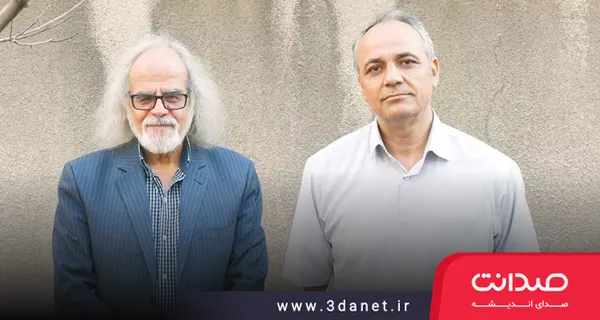
Ahmad Zeidabadi in Conversation with Mostafa Malekian
Politics, Truth, and Identity
Published in Ham-Mihan Newspaper (January 15 & 16, 2023)
Mojtaba Parsa (International Desk Reporter): The last time I interviewed Mostafa Malekian was in December 2019. He was not in a very good state, and this could easily be read on his face. I had gone to his office with a colleague. We were supposed to talk about another subject, which I no longer recall, but it was impossible to ignore the bitter and sorrowful events of that November. Ultimately, the topic of the interview changed right then and there. Malekian said you cannot prick someone with a needle and then, when they cry out in pain, confront them for why they are crying out. Three years have passed since those days, and it seems nothing has diminished from the suffering of that time and nothing has changed, except for Mostafa Malekian's face, which has become more sorrowful than before. This time, Ahmad Zeidabadi sat opposite Malekian and engaged in dialogue with him. A Zeidabadi who finds a receptive ear neither among the rulers nor among the people; and for this reason, having withdrawn from politics and political analysis, he has conversed with a Malekian who recently said he has no hope for reforming the situation. Zeidabadi believes that we were born at this point in history and geography, and that culture and language shape our "national identity," and for every human being, their origins and roots should matter. Zeidabadi is worried about the future and borders of Iran, but Malekian says preserving the country is of no importance in and of itself; rather, "preserving a country is important whose political regime acts based on justice and ethics." He also believes that in the intellectual sphere, when we speak of truth, it means the intellectual must share what they perceive to be the truth regarding social subjects, issues, and problems with their fellow human beings. As this conversation continues, the discussion turns to truth and expediency, ethics in politics, and the impossibility of dialogue with those who violate "law," "ethics," and "rationality." Malekian says that if they accept these three as common ground, he is willing to engage in dialogue with anyone.
Concepts are used in your thought that may create ambiguity for some audiences. The first is the very term "nationality," which I realized you do not attribute much authenticity to and consider it a kind of construct by certain people. I want to ask whether Professor Malekian considers himself to have an Iranian identity.
Before answering your question, I must state that I have repeatedly said two things must be distinguished from one another: one is the issue of "patriotism" and the other is the issue of "nationalism." These are two different things. Patriotism is like love for one's mother; that is, just as humans instinctively love their mother, and almost anyone who does not love their mother is not considered normal, and psychotherapists and psychologists look for a brain disorder in them, in the same way, if someone does not love the "motherland" or mother country, they are almost considered abnormal. But this love of country is exactly like love for one's mother; it has neither moral virtue nor moral vice, because moral virtue and vice fundamentally apply to "voluntary" matters, and loving or not loving one's mother or country, which is entirely instinctive and natural, can be the subject of neither moral praise nor moral condemnation. This is something like our need for oxygen. Our need for oxygen has no moral judgment whatsoever, for the reason that it is not a voluntary matter. One cannot say this person should be praised because they love their mother, and that person should be praised because they love their motherland. Neither praise nor condemnation. These are not "anti-moral." They are amoral; that is, they have nothing to do with the realm of morality because the realm of morality lies in voluntary matters; therefore, patriotism is something that exists in every normal human being, and including in myself, if we accept that I am normal, it exists.
Let me make a point here. In the old texts, when they said, There are two points. The first point is, if you mean that because I am considered, for example, part of Iranian society, then if my state, my government, and the political sovereignty of my country goes to war with any country, I will also defend it? Absolutely not, I would never do such a thing; meaning, it is not the case that if my country goes to war with any country, I will defend my country. Well, what if it is subjected to aggression? That is a different matter. I first ascertain whether my country is the oppressor or the oppressed. If it is the oppressed, I defend my country; if it is the oppressor, I do not defend it. This means that my defense is not because it is my country. It is because an oppressed entity has been subjected to injustice. For example, suppose I were a citizen of Russia; I would never defend my country in its war against Ukraine. So my first point is that the criterion for my defending or not defending is not my nationality; the criterion is oppressiveness and oppressedness. You also raised a second objection; you who used to say one must be committed to the laws of the country. Yes! At the beginning of my talk, I said that, as it happens, a person's first moral duty is to obey the decrees and rules of their country that have become law; with certain conditions, of course. I practice civil disobedience. This, too, is a commitment to the laws of the country. Why? Because when I practice civil disobedience, whatever cost the law of my country imposes for civil disobedience, I willingly bear that cost. I do not participate in military service; but if, instead of two years of military service, the ruling regime says you must go to prison for four years, I will go to prison for four years. In civil disobedience, a person is caught between two 'duties' that conflict with each other. One is that morality tells him he must not deviate from moral standards, and the other is that this same morality also tells him he has a contract with the regime governing his society and must honor the contract. People like Emerson said that if these two moral decrees come into conflict with each other, you should side with the moral decrees and rules and stand against the law of your country. But the sign that you still have a commitment to the laws of your country is that you pay the cost that this very law determines for civil disobedience. When we speak of patriotism , it does not mean that if this geographical unit has an oppressive or aggressive government, you, as a citizen, are morally obligated to follow its every decision. The assumption is that this national unit is administered democratically or in some legitimate way and has a foreign policy based on public opinion, and public opinion pursues legitimate interests in the realm of foreign policy. That is, does it make no difference to you whether your country has been subjected to aggression or some other country? Absolutely not. Of course, my resources do not always allow me, and therefore I observe the rule of 'the nearest, then the next nearest.' This principle also holds true in the decrees of private morality. You have a moral duty towards all the hungry people of the world, but if your entire income can only feed the hungry in your neighborhood, you no longer have the possibility to help other hungry people. This rule exists everywhere. Wherever an oppressed person is subjected to injustice, we have a moral duty, but because my resources—meaning my lifespan, my energies, my inner talents, and my external opportunities—have limitations, I then practice 'the nearest prevents the farthest' or, in another expression, 'the nearest, then the next nearest'; meaning, I say I will first defend my own country, and if my resources exceed this, I must certainly defend any other country as well. But even in a fully democratic country, the possibility of civil disobedience exists. Why? Because a fully democratic country, which we also assume to be entirely just and free, might mandate military service. But suppose I am ethically a pacifist. Here, I am not saying the government had no right to issue that decree—since the assumption is that the law was enacted through a democratic mechanism—but that decree does not align with my ethical standards. You and I can both be fully committed to that country, but you may not be ethically a pacifist and so you perform military service; I am ethically a pacifist and do not perform military service. Yet my refusal to perform military service is still an act of civil disobedience, and I pay its legal cost. Therefore, we should not think that if a government is fully democratic, I absolutely have no right to civil disobedience. Of course, there is no doubt that the more democratic a government becomes, the fewer the instances of civil disobedience for a person committed to ethical rules, but they always exist. Well, look! You can only permit any personal rule if its universalization would also entail good effects. We must logically accept this. Suppose in these 200 countries we inhabit, all Iranians become pacifists, none of them do military service, they are all willing to pay the cost, and essentially no army is formed in this country, and then you have neighbors who covet your land, property, and wealth. Here, if we accept this right universally, we have moved towards the abolition of that country's existence. In response to you, I must make three points; the first point is that your presupposition was that you are ethically a consequentialist. Well, I am not a consequentialist at all ethically; I am a virtue ethicist. The second point is that you accepted a rule that has been accepted by the convention of moral philosophers since the time of Kant, namely that a necessary condition for the validity of a moral judgment is its universalizability. I do not accept this at all. In my view, Kant's statement that a moral judgment, if it is to be considered valid, must first pass through the filter of universalizability is indefensible. That is, to pass through the filter of seeing whether, if all human beings behaved in this way, any disruption would necessarily occur! Whether any hardship or difficulty would arise? Well, if that is the case, you would have to remove almost most moral standards from ethics; because if all the people of the world were ethically content—even though contentment is a great ethical virtue—the wheel of human culture and civilization would stop entirely. It is because of greed, avarice, and miserliness that culture and civilization have reached this point. If we all lived like Epicurus, Diogenes, and Spinoza, human culture and civilization would not have reached this point; yet despite all this, the ethical duty of every human being is contentment. And the third point is that anthropology must always be considered by ethics and law; that is, in both ethics and law, we must also have an anthropology. Meaning, suppose I recommended to someone that, ethically, based on my knowledge of you, you should become a monk or a nun. Then Dr. Zeidabadi comes and objects to me, saying, look! This ethical recommendation of yours is incorrect, for the reason that if all men and women become monks and nuns, hardship and difficulty will arise. I tell you, Dr. Zeidabadi! I know that if all human beings become monks and nuns, hardship and difficulty will arise, but at the same time, anthropology tells me that human beings are so constituted that, except rarely, they will not become monks and nuns; therefore, rest assured. The wheel of human culture and civilization will not stop at all. Therefore, I recommend monasticism to this person, whose flourishing I see in monasticism, while knowing that the caravan of human culture will never stop. So, in other words, let's summarize your point like this: thank God that not all people think like me, and there are always some who will defend the country, because preserving this country is very important in your view... No; absolutely not, do not attribute this statement to me. Preserving the country has no importance whatsoever. Preserving a country that acts based on justice and morality is important, and if a country is based on oppression and injustice, I try to encourage the citizens of that society to leave it so they can escape from under that oppression and injustice. The issue isn't oppression and injustice. The issue is that the country belongs to its people; where are they supposed to go? I say that I love my mother, and I also love my country; but this does not mean that if my mother commits any injustice against the neighbor's wife, I should defend my mother. Absolutely not. I say: Mother! I have an affection for you that I will never have for the neighbor's wife, but at the same time, if you commit an injustice against the neighbor's wife, I will take the neighbor's wife's side. As an Iranian who was born here and holds citizenship here, when you step outside this country, you are considered a foreigner on the other side of the border; meaning, outside that country, you are deprived of many rights. Yes, you are right. When I go to the other side of the border, I am deprived of many rights, but I am also exempt from many duties. Mention that as well. Meaning you are no longer considered a citizen unless you try to obtain the citizenship rights and nationality of another country, that is, change your nationality... Well, what is the problem with not being considered a citizen? Yes; I am not considered a citizen, meaning I lack certain rights, but in return, I also do not have numerous duties. Well, from the perspective of the Greek philosophers, not being a citizen does not have a good meaning! Furthermore, I was born in this place, in this culture, in this history, with this geography, with this language, and with these relationships. Do I possess an identity in this world that we can call "national identity"? That is, shouldn't this matter to a human being: from which point they arose, where their roots are, where their culture was formed, and in what language they have conversed with others? If I want to say this in philosophical language, I would say it like this: our ego is completely connected to our society and, as you say, to our history, culture, traditions, and even our citizenship in this society. But I absolutely do not believe that "I" am the same as "my ego." I believe every human being has a "self" that accepts no coloring from anywhere, and I seek to rescue my own self from the limitations of my ego. Therefore, I do not accept that I, by virtue of being Mostafa Malekian, if one day I leave this society, if one day I no longer speak the Persian language, my self would encounter a problem. Of course, my ego is exactly like that. In fact, my duty is to rescue my self from the clutches of the ego. As the mystics say, and I also subscribe to their saying, the greatest flaw of every human being is their egotism. That they tell you: this is your child, defend him; this is your spouse, your country, your academic discipline... and then I become a creature in the position of defending this baggage that you have assembled for me! I believe in a self that is detached from all these things, which I must attain through ascetic discipline. In that real self of mine, neither Iranianness, nor religion, nor creed, nor any other matter holds importance. These recommendations seem very abstract. For instance, the very point you mentioned about not being a consequentialist in ethics but a virtue ethicist. Well, when you bring this into politics, it can be infinitely destructive. Well, we shouldn't bring it into politics. Ethics is different from law. I have said many times that in ethics you can be a consequentialist, a virtue ethicist, or a deontologist; but in law, every human being must be a consequentialist. You must not confuse the story of law with the story of ethics. So you are saying that I, as a political person, must behave according to legal norms, but non-political people should act based on ethical rules? Not at all, absolutely not. I am saying that every human being in a democratic government must be both political and ethical; but if one day ethics conflicts with politics, then at that point they must side with ethics, not with politics. Meaning the same applies to the politician as well? The same applies to the politician. The politician, insofar as they are a politician, must be a consequentialist. Insofar as they are ethical, they must be either a consequentialist, a virtue ethicist, or a deontologist. But if, ethically, they are not a consequentialist and one day their deontology or virtue ethics conflicts with a legal ruling, then they will enact the law but themselves engage in civil disobedience. One of the duties you have defined for yourself is the discovery of truth... Not the discovery of truth. I said the "articulation" of truth. Because discovery is not a duty... Yes, the articulation of truth; what do you mean by truth? When you speak of articulating truth in the world of politics, you become almost completely helpless and unable to make any decision. What is your definition of truth? In an article I wrote, I think in the year 1379 [2000-2001], I said that the tragic aspect of the intellectual's life is that an intellectual must both "articulate truth"—that is, inform their fellow human beings of what they believe to be the truth—and "reduce suffering," meaning they must reduce the suffering of their fellow human beings as much as they can. Therefore, the focus of my discussion was on the intellectual life. I recognize two roles for the intellectual and the political activist. Dr. Zeidabadi may be both an intellectual and a political activist; just as he may also be a mathematician and a painter, but this does not make mathematics the same as painting. The focus of my speech was on the intellectual life, not on political activism. Now, that same intellectual, what truth should they articulate? What is meant by truth? When we speak of truth in the realm of intellectualism, it means the truth pertaining to the issues and problems of society. That is, truths that relate to social subjects, social issues, and social problems. Meaning any truth that refers to a subject, an issue, or a social form, and as long as something regarding these appears to me to be the truth, I must share it with my fellow human beings. Do you mean the root of a problem? That is, describing a problem, explaining the problem, and the way to resolve it. We call these three things truth. In other words, if I express what I believe to be the truth regarding these three matters, I have articulated the truth. That is, if it seems to me that the “problem” is this, not what you suppose, or the “cause of the problem” is this, not what another supposes, or the “way to resolve the problem” is this, not the way another supposes, then I have a duty to share this with my fellow human beings. In fact, you define and identify a problem from your own particular perspective... And its acceptance depends on the audience. Is honesty an intellectual’s method for correctly explaining a problem and its solution? I have said many times that I subscribe to “perspectivism,” and therefore when I say truth, I mean “truth from my perspective,” which I have striven for with honesty and seriousness [and arrived at]. When you strive with honesty and seriousness, the truth may appear to you as something else. You have no duty to disseminate my truth. Nor do I have a duty to disseminate your truth. Therefore, truth means what “I” find to be true. Let us see, expediency for what? Yes. If expediency is for the public, which can be termed “national interests,” or for the people of the world, which can be termed “human issues,” then yes. I said that in politics we must be consequentialist. But I do not express the opposition you mentioned in that way. [The conflict arises when] if one day I want to share a truth with others, their pain and suffering would increase; otherwise, you are absolutely right that a politician, by virtue of being a politician, must consider expediency, and expediency means the ultimate benefit. Well! Now, if the “ultimate benefit” of humankind or the “ultimate benefit” of the nation requires that a truth be concealed, [the truth must be concealed.] But this is in the realm of politics; that is, in the realm of law. The realm of ethics is a different story. In ethics, if articulating the truth conflicts with reducing suffering, some schools say articulating the truth takes precedence, and others say reducing suffering takes precedence. So, in the realm of politics, if the interests of the general public (whether the general public of the world or the general public of my country) require that a truth not be told, because we are consequentialist there, we must conceal the truth; but for the sake of the public interest! Not the interest of the regime or the political system. But in ethics, there are three schools that do not have a unified view on which should be preferred if “articulating the truth” conflicts with “reducing suffering.” But where does this discussion belong? Only in the [domain of] ethics. No, Doctor! Are you not a single human being? Yet for your medical needs you consult certain people, for your economic needs you consult economists and experts, and if, God forbid, you develop a mental illness, you consult a psychotherapist, psychiatrist, and psychologist. It is true that this is “one” human being, but this human being’s different purposes must be fulfilled for their life to become good. God forbid! I cannot accept that. In that case, the politician must enact laws based on the public interest, but then, if this conflicts with his own morality, he must engage in civil disobedience against that specific legal provision. How optimistic you are about politicians. [Do you really think] the only problem politicians have is being caught between morality and the public interest! Moral principles should not be sacrificed for anything. I have said many times; there are six sources of social normativity, and the one that must prevail over all of them, and whose side must be taken in case of conflict with the others, is "morality." In the conflict of morality with "law," "social customs, traditions, and conventions," "religious rites and rituals," "expediency," and "aesthetics," it must always be dominant and sovereign over them. What do you generally say in the discussion of the conflict of moral duties? You say that whenever two duties – both of which are "duties"! Not that one of them is not a duty – come into conflict with each other, we must see which one takes precedence; choose the lesser of two evils. Well, in this case, lying is choosing the lesser of two evils. Do not think that when someone, in a conflict of moral duties, takes one of the two sides, they have abandoned morality! Because both were moral duties; but they came into conflict. Well, there is no choice; one must take one of the sides, and indeed, this president must take the side you mentioned. There is no doubt about it. Yes. At the beginning of my remarks, I said that everyone's first moral duty is to obey the law; because we assumed that the law addresses the public interest, therefore my first moral duty is to obey the law. Here, too, the assumption is that a "just" government sees the expediency in not saying that the wheat and barley silos are empty. This politician or president had two moral duties, one of which, being less important, he sacrificed. This person has not violated morality. No. I don't agree with that at all. I too might one day lie within the sphere of my family relationships. Of course, bear in mind that "my expediency" is not important! The expediency of the "kind" is what matters. The very example Kant gave, which he had taken from Socrates: if a lie saves an oppressed person from being killed, or if a truth causes an oppressed person to be killed, then of course one must side with that lie. Yes. Yes, you are right. We are close. I must just add that sometimes it is said that political ethics differs from individual ethics or family ethics! I oppose this statement. Ethics is one ethics, but in the realm of politics, instances of moral conflict arise more often than in cases where individuals deal with one another. Therefore, I do not accept two things: first, that some among our intellectuals and political activists say politics has no ethics; and second, that they say politics has ethics, but the ethics of politics differs from the ethics of interpersonal relations. I do not accept these two interpretations. Look, rationality is sometimes in the realm of thought, sometimes in the realm of speech, and sometimes in the realm of action. There are three types of rationality, all of which share a comprehensive aspect by virtue of which they are called rationality. All schools and traditions that have spoken about theoretical rationality share one thing, and that is that rationality in the realm of thought means proportioning the degree of your attachment and commitment to an opinion to the strength of the evidence that exists in favor of that opinion. The stronger the evidence in favor of that opinion becomes, the more you should increase your degree of attachment and commitment to that opinion, and the weaker that evidence becomes, the more you should lessen your degree of attachment to that opinion. This is the essence of theoretical rationality. Practical rationality means not undertaking an action whose cost is greater than its benefit, and if, during the act, you realize that the cost of that action is greater than its benefit, you stop that action from that very moment. This is the essence of practical rationality. We also have a discursive rationality, which requires that when I am in a communicative situation with you—meaning I am either writing something that you will read or saying something that you will hear—I should act in such a way that you grasp my speech with the least possible pain and suffering and with the greatest degree of certainty. Someone like Kant even says that in practical rationality, you should distinguish between the rationality of means and the rationality of ends. He says that human reason can also pronounce on ends; that is, it can say that someone who has chosen this end has behaved more rationally than someone who has chosen that end. But people like Hume and James do not accept this. That is, they say we cannot say this goal is more rational than that goal; but if you have chosen a goal, we can judge the means and say that choosing these means to achieve that goal is more rational. I had not said that at all. What I had said was that since any dialogue that is to take place must be based either on “rationality,” “ethics,” or “law,” and when the government believes that we must also accept their ideology and even their anti-rational statements, “we” cannot engage in dialogue with them. I was saying that because they grant ideology a veto over rationality, the path of dialogue between us is closed; otherwise, if ideology itself were made the subject of discussion, rationality could be used to show that ideology is erroneous. But regarding what you said, let me make three points. The first point is that we have things that are rational, things that are non-rational, and things that are anti-rational. That is, if something is not rational, one cannot immediately say, let him have his own “non-rational” thing and the other have his own “non-rational” thing. We sometimes deal with the anti-rational. We cannot accept the anti-rational. There are propositions that are non-rational, and everyone should be allowed to have their own non-rational beliefs. But the anti-rational is not like that. If I could show that there is a contradiction in your beliefs, what would you say? Contradiction is anti-rational, not non-rational. Popper said that if someone accepts one contradiction, they must accept all the contradictions in the world. He has a very simple logical argument for it. I say that if everything we disagree about were non-rational matters, then we would say let everyone have their own non-rational beliefs. But when there is inconsistency in someone’s statements, meaning there is either contradiction, contrariety, or conflict, what do we do about that? Talk “about” it or talk “based on” it? No, Doctor! These two are very different. Sometimes a subject, issue, or problem is the focus of our discussion, and both of us see that subject, issue, or problem. Then, if you want to address this subject based on your ideology but I address it based on rationality, and you grant your ideology a veto, the discussion is closed. If you say, “There are contradictions in our beliefs, but this ideology is above contradiction, so set aside your sparrow-sized intellects,” what am I supposed to do with that? So you mean to say that what I am saying has no real-world instance. But that is not the case. I have debated with some scholars, and their argument is that if so-and-so said something, your reason is wrong to say anything. Here, the door to dialogue is closed. No. I am not saying it from that perspective. No. I am saying that dialogue must have a common ground. This common ground must be either “law,” “ethics,” or “rationality.” If you say the Guardianship of the Jurist is above the law, you have closed the legal path; if you say preserving the system is the most obligatory of obligations, you have closed the ethical path; if you say preserving power at any cost—will they accept that we discuss these three things themselves? If they accept, I am the first person willing to engage in dialogue.When we move from the discussion of truth into the realm of politics—whose foundation is expediency—sometimes in your works this expediency is placed in opposition to truth; whereas, in fact, expediency stands in opposition to harm and means discerning what is in the best interest of a person, a country, or anything else. Do you accept that politics is based on expediency?
The public interest.
Look! Politics, law, and ethics are all for the life of an individual living in a society. When you separate them so sharply, it is as if the totality of a human being is disintegrated.
But ultimately, a human being must have coherence among the components of their thought and action system, and these components cannot be detached from one another. Consulting a specialist creates no schism in my action or mentality; now suppose Professor Malekian became the president of a country...
And the exigency of the public interest is such that, for instance, in some situation you must not only conceal a truth, but also sacrifice certain moral principles like truthfulness for that public interest. What would you do?
In this way, virtually all politicians or presidents of countries would have to enact laws and make statements for the public interest, but because they do not agree with them morally, they would resign from power and hand over the reins to someone else, and so on... Ultimately, someone has to do this job.
In the real world, that is how it is. Those who pursue politics are not very interested in moral principles or the articulation of truth; but in the realm of theory, let us suppose a morally-oriented person happened to become a candidate and also won the election. By the nature of politics, he is compelled in some places to sacrifice certain moral principles for the public interest...
Well, this makes politics impossible! Let us suppose you are now the president and the wheat silos are completely empty, and you are faced with the question: Mr. President! How much wheat do you have for the future? There are two scenarios; either you uphold truthfulness as a moral principle and articulate the truth, which leads to chaos because people might storm and loot the silos, or you say, "Rest assured, the silos are full for the next three or four months." What should this politician say in that situation?
So, in moral conflicts, it is better to do that which entails less suffering.
So the public interest means preventing harm to the general public of the country.
Is this not itself the highest moral principle?
Do you agree with Plato's statement that "lying is permissible only for governments and must be their exclusive prerogative"?
So in reality we have a series of moral intuitions that, in different situations, one takes priority over another, and our duty is to adopt the one that provides the greatest benefit or the greatest expediency.
We have come very close together.
The final topic is rationality. Defining rationality is very difficult, or perhaps impossible, but sometimes it seems in your views as if rationality is a completely clear concept, and we can say that such-and-such a person is rational and one can talk to them, or that such-and-such a person lacks reason, follows ideology, and cannot be a party to dialogue. What do you mean by rationality?
Thousands of factors, perhaps even including genes, can influence your choice of goal; for example, suppose someone says the purpose of life is to gain God's approval, and then our ultimate aim should be a society oriented in this direction. Perhaps we can make many criticisms of the end they have chosen, but we cannot say it is not rational. Therefore, a kind of worldview or a series of values, some of which are interpreted as ideology, plays a role in our subconscious or conscious mind in determining our goals. So, what you said earlier, that "for some people, their ideology dominates their rationality, so we can exclude them from the circle of dialogue," it seems to me that in this way we would have to exclude almost everyone.
Well, there may be dozens of contradictions in our words and thoughts that someone discovers and we ourselves become aware of. So the mere existence of contradiction does not cause non-rationality or anti-rationality. Someone can be anti-rational who says, “I have nothing to say to anyone. I have force, and through this force, I will compel you to obey.” I can consider this anti-rational; but outside of this, anyone who says I have a claim and something to say, and I am willing to come and talk about it.
Talking about it is one level of dialogue, and talking based on it is another! In principle, it makes no difference.
That person is not engaging in discussion. Such a person has no need for discussion or dialogue. Usually, someone who invites dialogue claims that they have a logic which, if expressed, will convince you.
Yes.
Yes. That is not dialogue. But currently, some principlists are inviting dialogue, and they do not place restrictions on this dialogue. They themselves are now saying that anyone who has a discussion or something to say should sit down and speak as equals. Some say we should not engage in dialogue with them at all.
Yes. The premise of the discussion is that you grant the other party the right to question the principles and ideas you hold. Nowadays, when they debate at the political level, they don't say,

Discussion4 comments
مصطفی ملکیان همه چیز را در دوگانه حق و باطل میفهمد و به همین دلیل نمیتواند تعارض منافع در سیاست و منطق منافع ملی را بفهمد
از خود جناب ملکیان و امثال ایشان انتظار اینستکه بطور مثال بحث ولایت فقیه را از بنیان مطرح کنند...ایشان که خود دستی بر دروس حوزوی دارند در مجامع دانشگاهی و حوزوی خصوصا ، حاضر شده و در مورد ولایت فقیه و آیه اطاعت و امثال آن درخواست مناظره کنند.... کنار زدن هاله تقدس از این موضوعات ، آنچنانکه حقیقتا نیز تقدسی برای کسی نمی آورد ، گام بلندی است برای وادار کردن متولیان به پاسخگویی... مباحث اخلاقی و عقلانی فصل الخطاب و حد یقف ندارند ، میزان اتصال قرآن ، ریسمان نجات است...تا آنجا که کاربرد ابزار عقل در رعایت این اتصال ، موجب رشد خود ابزار عقلانی و اخلاقی نیز هست... نتایج حاصل از رعایت اتصال در خوانش قرآن شهادت میدهد به اعتبار این کتاب و کنترل غیبی چیدمان فعلی آن... quranmizan[.]com
سلام اقای ملکیان اول گفتند حوزه اخلاق و سیاست جداست و باید اخلاق مقدم باشد و نیز گفتند در اخلاق وظیفه گرا هستند اما در مقام پاسخ به مثال خالی بودن سیلوها امدند گفتند باید دروغ گفت. خوب در اینجا چطور ساحت سیاست و اخلاق را جدا میکنید؟ این سیاستمدار دارد کار غیر اخلاقی انجام میدهد اگر چه به لحاظ سیاسی و حقوقی درست است. تفکیک حوزه سیاست و اخلاق گرچه درست است اما نمیتوان گفت این عمل سیاستمدار به لحاظ سیاسی پسندیده و به لحاظ اخلاقی ناپسند است زیرا در اخر کار معلوم نمی شود این کار مطلوب است یا نه و اگر برتری به قول ایشان با اخلاق باشد که باید این سیاستمدار را سرزنش کرد. به نظر بنده، چنین تفکری همانطور که اقای زیدابادی هم اشاره کرد می تواند بسیار مخرب جامعه باشد و نگاه همه جانبه نگرانه ارجحیت دارد یعنی همان که همه ابعاد مسئله سنجیده شود و وقتی این دروغ ارحجیت پبدا کرد حال دارای فضسلت خواهد بود یعنی هم به لحاظ نتیجه مطلوب است و هم به لحاظ فضیلتگرا بودن که فضیلت نجات جان انسانها برتر از رذیلت دروغ است که برای حفظ ان جانها صادر شده باشد
آقای زیدآبادی فرموده بودید دیگر در مورد سیاست ایران صحبتی نخواهید کرد. لطفا به ما طرفداران سابق توضیح دهید که مرز و محدوده این سخن کجاست. راه دیگر هم این است که سخن خود را پس بگیرید و به حضور جهادی و خودجوش خود در همه رسانه ها ادامه دهید. داستان شما "یکی داستانی است پر از آب چشم"