Sociology
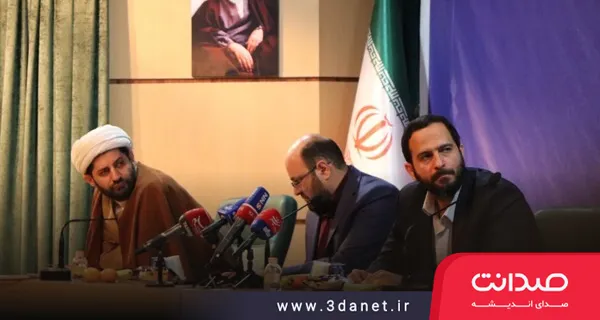
Seminar on “The Enigma of Law in Iran’s Legal System” with Mohsen Borhani
The problem of law in Iran has remained unresolved from the Constitutional era to the present day. By raising questions about legislation and enforcement, Mohsen Borhani identifies the conflict between proponents of sharia and advocates of customary law as the central challenge of Iran's legal system.
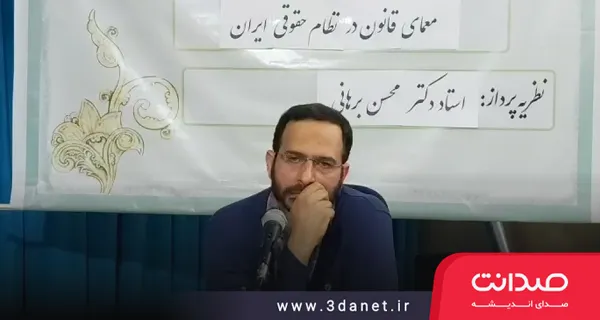
The Enigma of Law in Iran’s Legal System
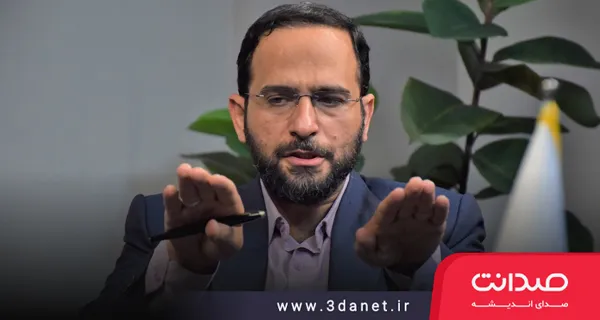
With Mohsen Borhani (PhD in Criminal Law and Criminology; Faculty Member, University of Tehran – Graduate of the Qom Seminary – Attorney at Law; Member of the Central Bar Association)
Fahim Research and Cultural Institute | 1 February 2023
Summary video of this session on YouTube
Full video of this session on YouTube | Aparat
Listen to the full audio of this session on Castbox | Anchor | Spotify | Google Podcasts
Download the full audio file of this session
If we look at a historical trajectory from one hundred and forty years ago, from the pre-Constitutional era in Iran and the contexts that gave rise to the Constitutional Revolution, we see a fundamental issue among thinkers, and that issue is law.
When we read Mostashar al-Dowleh’s treatise *One Word*—written before the Constitutional Revolution—we see that the issues Mostashar al-Dowleh grappled with then appear to be the same as those we are entangled with now. When you read the treatise *One Word*, it is as if it were written for today’s Iran, and as if the question of law in Iran remains unresolved.
All the discussions you have about how development should occur in Iran, or the mode of interaction with power, the issue of foreign relations, how to relate to citizens—all of these converge and, at one point, become “law.” How we are to have law. Based on what criteria we should write law, and how we should implement it.
So here we have two issues and questions. What law should we have? How should we write law? In light of what contexts should we write law?
And on the other hand, in what manner should we implement the law we have? We have a problem in legislation and enactment. Imagine all of us are legislators and we have gone to parliament and want to enact laws; suppose we have all become legislators. This is the stage of enactment and legislation. In this legislation and enactment, when we want to legislate, in light of what should we legislate? That is, from what context do we want to produce propositions that are, in technical terms, meant to “administer affairs”; that is, to extract a proposition from a source, and this derived proposition is to regulate social behaviors.
We are afflicted with insoluble problems in Iran’s legal system, both at the stage of legislation and at the stage of implementation.
Based on these two stages, I will divide my remarks into the pre-legislative and post-legislative stages. That is, let us see what the problem of Iran’s legal system is in the stage before legislation.
We are faced with a complex legal structure in this system, which we can call both a legal system and a non-legal system.
This is very strange. We live in a structure that, as the scholars say, admits both affirmation and negation.
When we want to discuss whether a term is literal or figurative, they say, see if it admits affirmation or admits negation. We currently admit both affirmation and negation. That is, we both have a legal system and do not have a legal system. Why?
In my view, reflecting on these two questions in these two stages helps us. I do not want to say I can solve the problem, but I want to pose a problem.
Let us see why, when we look back a hundred and forty years, we have apparently not changed, even though when Mostashar al-Dowleh was writing that treatise we still had no parliament, we had a monarchical system, it was the Naseri era, yet the issues were still the very same issues we grapple with today.
1- The Pre-Legislation Stage
What problem do we face in the pre-legislation stage?
Let me offer a preliminary point. Look, friends, societies are not a single version. Iran, Afghanistan, Iraq, America—we find ourselves situated within certain societies. We are thrown into historical dualities. It is not as though we are to build a structure from beginning to end; we find ourselves in temporal and spatial situations.
We are not responsible for this situatedness. A series of historical events occur. The Constitutional Revolution happens, the ’79 Revolution happens. Certain currents take shape, and then we find ourselves in a situation. As that philosopher said, societies suffer a kind of “historical thrownness.” It is as if we have been thrown into a certain point. And this point has its own coordinates.
Why do I mention this? Because some people, as soon as we say how should legislation be? say, well, we have a thing called tradition. We must start from within this tradition and gradually produce a structure from within it. Now, this has not happened. We cannot stop the country and say, in the name of God, let us start building from the beginning.
There was a sultanic period, and suddenly a number of thinkers came from the West, and a duality took shape within Iran’s structure. This duality took shape, and we did not create it. Others created it, and we are the inheritors of that period.
The Two Great Camps of the Pre-Legislation Stage
In the pre-legislation stage, we have two great intellectual camps, and both of these great intellectual camps, in the Foucauldian definition, possess power. We cannot deny their power. That is, in the social arena and in the intellectual arena, they command a portion of the social forces. We have two camps. One: the camp of the Sharia-believers. Two: the camp of the custom-oriented or reason-oriented.
All the events that are taking place in our country stem from the war between these camps. Some say, why war? We have managed, in our system, to reconcile Sharia and custom. The will of the people and the law, the Guardian Council, etc. No, it is not like that at all! We are now in a historical conflict, a historical conflict that has been ongoing from 1290 [1911], when our General Penal Code was written, until today, which is 1401 [2022]—when they want to pass a law so that no one speaks without officials giving their opinion.
The Camp of the Sharia-Oriented
The claim of the Sharia-oriented is this: Sir, you must take the rules and laws from the Sharia and derive them from jurisprudence. They say, well, not everything is stated in the Sharia. There are some things outside the Sharia. Here, too, two groups emerge in response: a group, which is the overwhelming majority of distinguished professors in the seminaries, says that there is a part that the Sharia has stated and a part that the Sharia has not stated. Where the Sharia has not stated, the principle of exemption applies, and contracts apply. And where the Sharia has stated, that must become the law.
This view is the view of traditional jurisprudence. Among the Sharia-believers, there is also a second group, and now in the seminaries, especially in recent years, they have emerged and become very prominent, who say: It is not like that, one part God’s and one part not God’s. It is all for God. They say, we have something to say about that area too, only it has not been derived yet. There is no fresh or dry thing but is in a clear Book[1]. All of these must be derived from the Sharia. That is why you see in the seminaries extensive courses on system-building being offered, such as the cultural system and the architectural system[2], and so on.
Why? They say that empty realm must be filled by you with the Sharia. It is not as if God has spoken in one place and not in another. The fact that you have not derived the second part stems from your own weakness. Because your jurisprudence is individual and traditional, you lack the capacity for derivation. The extreme version of this, of course, becomes the Islamization of all sciences! All sciences become Islamic. But others say the humanities are our private domain and must be extracted from Islam. I am merely describing; I do not wish to say whether it is right or wrong.
Whether we like it or not, the first camp holds power in society. Many religious people and many clerics believe in this view.
The crucial point here is that conflict arises when either of these two currents claims totalitarianism. That is, when they claim "only me and none other." When they say, "I will not accept a co-wife." Both currents also possess effective tools for striking the opposing side. For instance, the adherents of Sharia quickly bring forth Quranic verses: "What is there, after truth, but error?"[3]. If you wish to speak of anything other than these, it is a departure from the guardianship of God and entry into the guardianship of Iblis. Of course, the opposing side also has its own labels and tags.
The Camp of the Secularists
The second current, which in fairness holds power and whose members initiated the Constitutional Revolution and, well, stood up to limit power, is the camp of the secularists. They say: You who go to the parliament to legislate have no commitment whatsoever to any pre-legislative source. You legislate based on the public will, the social contract, modern rationality, and expediency. They ask: What about the Sharia? They answer: If the Sharia comes and manages to secure the maximum number of representatives in parliament, it can legislate within the parliament. But you cannot say that this law must necessarily be bound by a scriptural text. The whole world has established rules and regulations, and they are established here too. Do not the rest of the world have civil laws? What specific demand have you produced that you must necessarily resort to a narration in this punishment? They say there is no commitment. Just as the rest of the world came and legislated, we too legislate.
In this view, it says: I produce something based on the people's will as customary law.
The Struggle Between These Two Camps and the Way Out
Now, these two camps have been in conflict for 140 years. And it remains unresolved. Whenever we reach a certain point, a "Bek ya Allah" begins. We reach a point, and again, "Bek ya Allah." Look at this cycle. In 1925 we wrote the Penal Code, in 1928 we wrote the Civil Code, we took a few items from it and amended a few others. In 1934 we added the section on persons. Gradually, we removed the Sharia-based elements from the law. The Islamic Revolution came, consigned all of this to the dustbin of history, and said: The Islamic Revolution means all laws must be from Islam, and they introduced some derivatives into the law. A few years passed, and they said we want to write the Ta'zirat (discretionary punishments). They saw that Islam does not have Ta'zirat, so they said: Well, let's go and bring back the same 1925 General Penal Code. They secretly brought it and placed it alongside, and so on. Then they wrote the Ta'zirat law again. We are constantly circling! Meaning, we have been going around in circles for one hundred and forty years. Then we do not know where we stand with ourselves! Right now, if you go to the seminary, they say: Everything comes from Islam, period! You filthy Western liberals! We go to the university, they say: A bunch of historical primitives! Where did you people come from! This is for the Arabs!
This one tells the other: You are a historical matter who does not even know what the modern world says. And that one tells him: You are an atheist, and these things you say are contrary to what God has revealed. Look at the hijab dispute now. Everyone is standing here, striking at each other. One says: In this matter, these two cannot be brought together. They say: No, it is impossible! It is a defensive trench; if this one goes, everything goes. Who ever said it is a defensive trench?
What is the way out? My belief is that the first point is that these two currents are ineradicable in the nation-state we have built; they are ineradicable. That is, those who say the criterion is the will of the people and those who say the criterion is the rulings derived from the texts—these two currents are ineradicable. The truth of dualities is fundamentally this: they cannot be eliminated. They wax and wane. They gain dominance and ascendancy. In 1925, Zoka al-Molk came and drafted the General Penal Code. Did the Sharia-believers, who held belief in hudud and diyat, get eliminated? No! They stood in a corner of history until 1981.
Fifty-six years later, they so thoroughly rolled up the scroll of the other side that God only knows. Then the same thing happens again. Look at the social inflammations. They say to one another, 'Until the cleric is shrouded, this homeland will not become a homeland!' In 1925 they also said, 'If he is not shrouded, this homeland will not become a homeland!'
For goodness' sake, does a homeland becoming a homeland depend on shrouds? When you haven't solved the fundamental problem! Now you have come and eliminated all the clergy from government. Suppose a revolution happens. Will the clergy be eliminated? Well, they won't be eliminated. Will the religiously observant be eliminated? Well, they won't be eliminated. They too have their tools. Another war will start again. You expel everyone from the university. Will they disappear? No, because they have social power, and because they have a platform. They have ears, and people who listen and act upon it. Well, the time you co-opted us was a time when you had eliminated a certain group in order to co-opt us! I shouldn't deny reality, after all. Those who were co-opted should be eliminated. Those who were eliminated should be co-opted. There was a time when the movement became a Sa'i between Safa and Marwa of the state university and the Islamic Azad University! 'And these days [of victory] We alternate among the people.' This story never ends.
Setting Aside Totalitarianism by Both Camps
My point is that both currents must set aside totalitarianism. Why? Because the Sharia-oriented current says: 'The common people are like cattle; what is the will of the people? Do not pay attention to the people's words; act upon your duty!'
When the Islamic Republic came, what was it for? It wanted to somehow reconcile this duality. That is, the will of the people and the will of the Sharia. You cannot say Sharia, yes, but the will of the people, no! Then, as soon as we say 'the will of the people,' they say, 'What if all the people wanted to drink wine?' It's one of those all-purpose, catch-all answers for every discussion! They say, 'What if all the people wanted something?' Well, if they wanted to be homosexuals, well, you pack up and leave then! I mean, if all the people truly said they want to be homosexuals, do you want to stand and govern? This is a fundamental question: if all the people wanted, God forbid, to become apostates, or if all the people of Iran wanted to become idol-worshippers! For goodness' sake, the assumption of an Islamic Republic is that sixty percent, fifty percent of the people have a commitment to Islam! You cannot run an Islamic Republic over infidels. Well, it's obvious an Islamic Republic is over Muslims. What I want to say is that these two camps must agree to set aside totalitarianism.
The Importance of Having an Eclectic Perspective
The basis is that, contrary to those who once considered 'eclecticism' a curse word—in my interpretation, eclecticism is not a curse. Eclecticism means finding a point of balance between the will of the people and the will of the Sharia. We have not found this point of balance, friends; we didn't find it from '57, nor did we find it in 1401. From the Constitutional era, some efforts were made. In fairness, the actions of the late Naini were efforts to bring these two closer together. Well, the late Naini's project did not reach fruition. It was perhaps not completed theoretically, and practically it led to a dictatorship where no one gave a fig for the late Mr. Naini's ideas.
So our challenge in the pre-legislative camp is these two camps, and the first step is for us in these two camps to set aside totalitarianism. Certainly, if we are in a position of reconciliation, the secularists will not achieve one percent of their demands, nor will the Sharia-oriented achieve theirs. We must accept it, sir! Because we have two camps and we have two powers. You have to give in a little, and so do they. The secularists say, 'You shouldn't even mention qisas to me! What is qisas? The whole world has answered; you must answer like the rest of the world!'
An Example of Reconciling the Demands of Sharia and Society
لا یقتل الوالد بولده [4] We have four authentic narrations and one reliable narration. If a father kills his own child, he is not subject to retaliation. The Sharia says he is not subject to retaliation. Society also says he has killed his child. What do you mean he is not subject to retaliation? Sir, I want to reconcile this matter with the social demand. Did you see what happened? He beheaded his wife, the guardian of the blood forgave, and in the end, eight years in prison, and everyone was stunned. Part of that was the demand of the Sharia, but because you did not have a correct understanding of the social demand, it became a caricature. The social demand called for a heavy response, but in the end, you handed down an eight-year prison sentence. But you could have imposed a thirty-year prison sentence. On the one hand, say that the person is not subject to retaliation because there is a religious impediment, but he faces thirty years of imprisonment. You see, the social demand would have been appeased.
Did they not do this with a woman's blood money? The former head of the judiciary said that the excess of a woman's blood money up to the full blood money should be granted by the public treasury!
The Potentials of Jurisprudence for Reconciling Sharia and Custom
Do you know where the problem lies? The Sharia-oriented, that is, the jurists who deduce rulings, when they deduce a ruling, they say this is what God has revealed. The second jurist also says this is what God has revealed, and the fourth jurist also says this is what God has revealed. They arrive at a ruling based on a specific method of deduction. Sir, now, among these jurisprudential opinions, which one should we enforce upon the people? If the people wanted one opinion and did not want another opinion, is that contrary to what God has revealed? No! It has turned away from one 'what God has revealed' to another 'what God has revealed.' Of course, I am mentioning one of the potentials in reconciling these two.
Yes, in some places, the Sharia-believers are forced to concede a little, and the custom-oriented are also forced to concede a little. We have not reached this point of equilibrium in the pre-legislative stage. I will not go into its harms. I just want to say that the cause of this problem is totalitarianism. Now, another problem in our society is that the individuals who should be the symbol of society, the members of parliament, have been doing their own thing for some time now.
What did we do in our country? We said we will solve it! The members of parliament give their opinion, their opinion passes through the filter of the Guardian Council and becomes law.
Was it that easy? The members of parliament approve something that conforms to the fatwa of 40 percent of jurists; the Guardian Council says it is contrary to Sharia and sends it back. They ask why? It says it does not conform to my ijtihad. Well, now, it does not conform to your ijtihad, but it conforms to the ijtihad of 40 percent of jurists. It says: No! I must act according to my own opinion.
See what a dead end forms right there!
If the Sharia-believers were to reach the point of asking: how much can I concede? As soon as we say concede, they say: Are you conceding from God's ruling?
What is the fruit of this? These social conflicts that we have. The people want one thing and the law wants something else! They say we will stand firm and hit you on the head. They answer: Is it in your own hands? You must want it! Now, in the West, since the time of Durkheim, there has been this discussion: if a law is not wanted, is civil disobedience legitimate? As soon as I mention disobedience, they say it is equivalent to waging war against the Imam of the Age (may God hasten his reappearance). The law is not such that, with two or three intermediaries, it becomes tantamount to waging war against His Holiness, the Hujjat (may God hasten his reappearance).
The Path of the Intellectuals
My point is that these two camps are totalitarian, and neither of them concedes. In the intellectual current, one thing they say is: do something to twist jurisprudence! One cannot live with this. Now, either we reinterpret, or bring ethics into the middle, or say it is historical. The various schools of thought among the intellectuals! I mention these because they say: strike at the root of jurisprudence, because it does not want a co-wife! This one also does not want a co-wife. For heaven's sake, you two currents are co-wives to each other. History has made you two currents co-wives to each other. Now, if you want to pull each other's hair until the end of your lives, well, go ahead!
There comes a time when you divide the benefits: these two rooms for me, and those two rooms for you, and God is the best of providers.
This nation will not see good fortune unless it reaches a point of equilibrium between these two poles. Otherwise, every day is the same: one day it is the hijab, tomorrow it is cyberspace, and the day after it is keeping a pet. Society wants one thing and Sharia wants another, and it is a constant, bloody struggle.
The Way Out of This Problem
My belief is that in traditional jurisprudence, and in the intellectual movement, both have this potential, provided they are not totalitarian. To graft the acquisitions of the modern era onto the branches of tradition is like spitting on a shaved face, as Jalal said. It is not these things. The fruit, the stalk, and the root must be one! And the other side says, "No, sir, are you combining the acquisitions of the guardianship of Satan with the acquisitions of the guardianship of God? How is that possible? This is the very essence of polytheism." Some even say eclecticism is worse than disbelief. Meaning you speak of God and non-God? These are totalitarian views. But if these totalitarian views do not relent, as the late Hosseini said: "The gold-worshipper is the leader and the leader is the gold-worshipper / This caravan will limp until the dawn of resurrection." If both sides of this conflict do not abandon their totalitarianism, it will last until Judgment Day. Whether a cleric rules or a tie-wearer! Do you think if a tie-wearer came to power now, the religious people and clerics would all go and put on ties? No! They have tools now, you see. Then the war would truly begin. Now we would attack in the name of defending Islam.
We Must Reach a Point of Equilibrium.
So, the first phase of my talk concluded that: the challenge is between the two camps of Sharia-oriented and custom-oriented people, and the failure to reach a point of equilibrium between them. It is about finding the capacity within them to reconcile the demands of Sharia and the demands of the people. When we say people, we mean the entire society, not just a part of it.
2- The Post-Legislative Stage
But let us move to the second phase: In the post-legislative stage, when the law has been passed and we now want to implement it. In the post-legislative stage, we are faced with the situation where law is created but not implemented. How? We have components, institutions, and organizations that render the existing law null and void. Theoretically, the element of expediency, and institutionally, parallel bodies, and even those superior to the parliament.
Look at these very days: they introduce a single article. Three people give authority to seven people, so that whatever these seven say, all conflicting laws are abrogated. Meaning you have to go and blow up several articles in the Civil Code. Blow up several articles in the Penal Code. Blow up one or two principles of the Constitution. This is not legislation! They call it a resolution, but a resolution that can override all laws.
Rule of law means you have established a rule, and no one should deviate from this rule, and everyone must act according to this rule. But now, we have successfully brought those two camps closer together and produced a law, then they say it is not expedient now. The element of expediency comes into play, even for the bailiff, even for the constable, even for the manager, and they begin to deviate from the law.
The main source of this story is the governing power itself. If the governing power commits to the law, even where it is to its detriment, this legalism and law-abidingness will flow throughout the entire society. Now, a huge portion of the people in power say that law is a cumbersome thing; what matters is that you have a vision for the lofty goals of Islam. Oh, come on! What does that mean? Is this law for implementation or not? We are practically seeing commitment to the law as an unresolved issue in Iran's legal system.
Some matters are indisputable principles of the Criminal Procedure Code, some matters are indisputable principles of the Islamic Penal Code—meaning laws that the Islamic system itself has produced. But they say, not in this situation! And special institutions are created. Suddenly, a special council issues a resolution, and when you ask why, they say it is confidential.
اساساً وقتی درباره قانون صحبت میکنیم یک سری امور میگویند جزء امور شکلی لازم الرعایه قانون است. اعلام قانون، اطلاع مردم، روشن بودن قانون. لئون فولر یک جایی بیان کرده بوده اگر این نباشد قانون نیست. اگر شما یک مصوبه محرمانه دارید و با آن مصوبه محرمانه ملت خفت میشود آن که اصلاً قانون نیست. برای همین بود که Rule of law بهعنوان مبنای اساسی قرار دادهاند. که آقا تکلیف همه روشن باشد.
ما بنابراین تکلیفمان نه در مرحله پیشاتقنین روشن است چون تکلیفمان در بین اراده شارع و اراده مردم روشن نیست. در مرحله عمل هم التزام و عواملی که باعث میشود آن قانونی که ما داریم عملاً التزام به آن پیدا نشود.
هدف از وضع قانون
اصلاً قانون برای چه آمده است؟ قانون برای این آمده است که رفتار حاکمیت قابل پیش بینی باشد. الآن هیچیک از ما نمیتوانیم پیشبینی داشته باشیم به آینده. البته این باعث میشود انسان توکلش بالا برود! توسلش بالا برود!
الآن وکلایی که وارد مجتمع میشوند با آیتالکرسی وارد میشوند. چرا؟ چون ممکن است یک شعبه نظرش ایکس باشد و شعبه دیگر نظرش ایگرگ باشد.
مثلاً شما دلار دارید در خانه. یک دفعه اعلام میشود هر که در خانه فلان قدر دلار دارد قاچاقچی است! شما نمیدانید چه اتفاقی میافتد. یکدفعه دولت اعلام میکند کارخانه شما ملی است! خب میگوید این کارخانه را من ساختم. اما در جواب میگویند ملی شد دیگر[5]. الآن شما میخندید بروید قانونی که در تیرماه 1358 تصویب شد را ببینید. هنوز نظام اقتصادی ایران درگیر این اموال است. با این حساب هیچکس در ایران سرمایهگذاری نمیکند. حالا میگوییم از خارج افرادی بیایند و سرمایهگذاری کنند. از کجا معلوم ناخواسته در پازل دشمن بازی نکرد و سرمایهگذار جاسوس نشد؟ من میخواهم بگویم قابل پیشبینی بودن رکن رکین تقنین است.
در یک دعوای حقوقی که بانک ملت علیه دولت انگلیستان مطرح کرد (برای ما این بخش اصلاً این آپشن وجود ندارد و برای من در نظام حقوقی ایران قابلفهم نیست) که اقامه دعوی میکند بانک ملت ایران علیه دولت انگلیس در دادگاه انگلستان دولت انگلستان را محکوم میکند به پرداخت صدها میلیون پوند به بانک ملت. شما که بانک ملت را تحریم کردید بدون دلیل بوده است. که آن پولی که بانک ملت پرداخت شد ظاهراً از بخش عظیمی از سرمایههای بانک ملت در ایران بیشتر بود.
آقای دولت برای شما قانون مهم است؟ چون در ذهن مردم قانون آنجایی است که به پر شال حاکمیت نزدیک نشود. بابا اصلاً حقوق آمده پر شال حاکمیت را کوتاه کند. حقوق نیامده است که ترک نفقه را باهم بحث کنیم یا افراض مسئله ملت ایران نیست که.
از مشروطه کنترل قدرت بحث بوده است. الآن میگوییم آقای دولت سلامعلیکم. شما فیلترینگ کردید برایتان امنیت جامعه مهم بوده؟ بله. الآن این همه آدم ضرر کردند چه؟ وزیر ارتباط میگوید: میخواستند نیایند! آقا یعنی چه؟ اصلاً قانون آمده است قدرت حاکمیت را محدود کند. میگویید امنیت مهم است. من میگویم دولت تو به بهانه امنیت به من خسارت زدی. مضطر بودی؟ بله! خب این اجماع فقهاست که عمل اضطراری ضمان آور است.
پس فاز دوم التزام به قانون است و بدانیم این قانون میتواند حکومت و حکمران پاسخگو کند. فرقی ندارد چه فیلترینگش و چه سد بستنش. شما سد بستی و باید به من پاسخگو باشی.
الآن اصلاً اینگونه نیست. الآن کدام حقوقدانی میرود اقامه دعوا میکند؟ میگویند برو بابا شوخیات گرفته است. ببینید جایگاه قانون به ابتذال کشیده شده است.
کار به آنجا رسیده است که کسی هم از قانون دم بزند میگویند حالش خوش نیست!
در مرحله التزام و اجرا تلقیای که حاکمیت به شهروندان میدهد این است که آقاجان این قانونها برای شهروندان است اما تو نمیتوانی به این قانون تمسک کنی و بروی سراغ حاکمیت!
It is famously said: the current king of Germany, opposite the Palace of Versailles in France, was building a palace for their rivalries. One part of it was a mill. And this mill fell within the palace’s blueprint. They went to the miller and said, sell this. He said, I will not sell! They said, well, give it to us. He said, no, I love it. I will neither sell it nor give it. The king said, what do you mean? I want to build a palace. He said, do you know who you’re dealing with? Yes! I know you are the king of the land, but independent judges still live in Berlin, and you cannot take this mill from me.
That is, to set a boundary that even the king cannot cross. Law came first to control power, and in the second step, the relations among the nation.
.
.
[1] . Reference to the verse: “Nor is there anything fresh or dry, but it is in a clear Book.” Verse 59 of Surah Al-An’am
[2] . Reference to the book Fiqh of Architectural Sharia, Mohsen Araki
[3] . Verse 32 of Surah Yunus
[4] Wasā’il al-Shīʿa: vol. 19, chapter 32 of the chapters on retaliation for life
[5] Reference to: Confiscation of property in the early months and years after the 1979 revolution
.
.
Discussion0 comments
No comments yet; let yours be the first voice.