Sociology
Debate between Mohsen Borhani and Jalil Mohebbi: Moharebeh in Jurisprudence and Law
After the execution of Mohsen Shekari, a debate took place between Borhani and Mohebbi on the charge of moharebeh. Borhani argued that his actions fell outside the scope of 'brandishing a weapon to frighten the people,' while Mohebbi addressed the legal precedent and the distinction between criminal intent and motive.
Moharebeh in Jurisprudence and Law
Debate between Mohsen Borhani and Jalil Mohebbi
Ham-Mihan Newspaper, Tuesday, December 13, 2022
Listen on Anchor | Castbox | Google Podcasts | Spotify
Watch the debate video on YouTube | Aparat
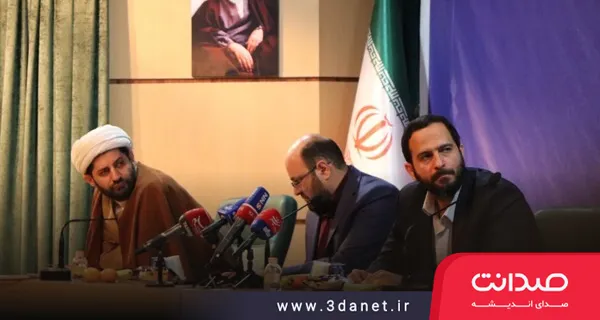
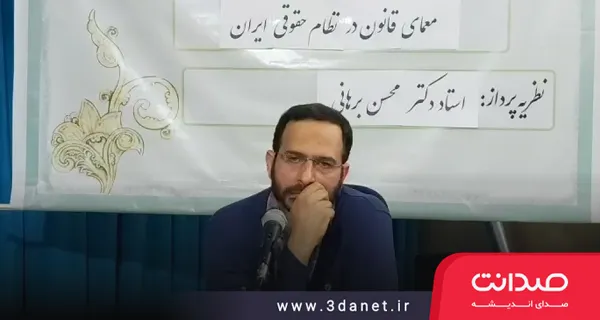
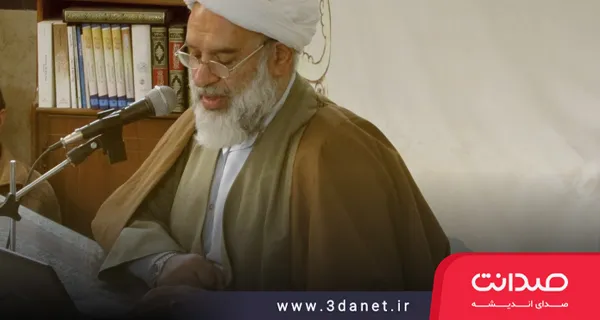
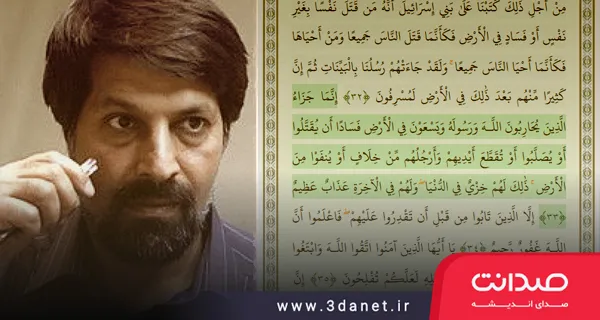
Farhad Fakhrabadi (Political Group Reporter): The issuance and execution of the death sentence for Mohsen Shekari, on the charge that he committed moharebeh on Sattar Khan Street in Tehran, is one of the subjects and cases that has been the topic of discussion in various circles in recent days, and various opinions have been expressed in opposition to and support for the execution of this young man for the crime of moharebeh , revolving around the debate of whether the crime committed by Mohsen Shekari truly constituted an instance of moharebeh that led to his execution. In this context, in the days following the execution of Mohsen Shekari's sentence, Imam Sadiq University organized a debate titled "Moharebeh in Jurisprudence and Law," in which, on one side of this debate, was Mohsen Borhani, a faculty member at the University of Tehran in the field of criminal law and criminology, and on the other side sat Jalil Mohebbi, a faculty member at the Majlis Research Center and former secretary of the Headquarters for Enjoining Good and Forbidding Evil. The detailed account of this debate is as follows.
Mohsen Borhani: It is fundamentally outside the scope of moharebeh
I would have liked to visit the students of Imam Sadiq University at a time when minds and hearts were not worried about lives and security. As those concerned with jurisprudence and law, we must examine issues from a jurisprudential and legal perspective, not a political and emotional one; we must state what is wrong and does not align with the principles, even if it costs us dearly and affects our social standing. One of the important matters that law students are familiar with is that legal rules are clear, and we are supposed to comment on external reality based on these clear rules. One of the crimes addressed in specific criminal law is the crime of Moharebeh . Friends are familiar with it, and I do not wish to repeat it. Some of the elements present in Moharebeh , due to a misunderstanding in its realization, are expanded to such an extent that a limited crime based on mitigation is interpreted in a way that blurs the boundaries between different crimes. We have a crime called armed robbery, and a crime called intentional wounding with a knife, the aggravated form of which falls under Article 614; we have a crime called brandishing a knife and a crime called Moharebeh. Unfortunately, based on the erroneous practice that has materialized in some branches of the Revolutionary Court and has incurred great costs for the country, the system, jurisprudence, and the school of thought, the expansion of the 'crime of Moharebeh' extends to cases that are fundamentally outside the scope of the article from a religious and legal standpoint. You are all familiar with the definition: 'brandishing a weapon to frighten people,' and its basis is this verse from Surah Al-Ma'idah: 'The recompense of those who wage war against Allah and His Messenger and strive to cause corruption on the earth...' The jurists and the late Imam viewed the phrase 'and strive' as the mental element in 'brandishing a weapon.' They state that not every 'brandishing of a weapon' is Moharebeh ; 'brandishing a weapon with the intent of causing corruption' constitutes Moharebeh , meaning one draws a weapon to create corruption on earth, not every knife fight, nor every injury, nor even brandishing. So, one draws a weapon to frighten people; this is the summary of the jurisprudential matter. In the subject and text presented, the witness said he held the knife in its sheath, and my friend said, 'Let's block the street, wait for the officer to come, and beat him.' Is the goal 'to frighten people'? Or is the goal to strike an officer? He says, 'As he got close, I drew it from the sheath, the first one fled, I struck him in the side and ran away, and was arrested at the end of such-and-such alley.' So, firstly, does 'brandishing a weapon' occur in the middle of Sattar Khan Street, or at the moment he draws the knife, strikes, and leaves? As a rule, the gentlemen say 'brandishing a weapon' means drawing the weapon; someone who holds a knife in its sheath is not said to have 'brandished a weapon'; at the very least, the title is doubtful. Secondly, something that has caused much reaction in cyberspace is this: if I draw a weapon against a person, is that specific person the subject of the crime, or is a specific person categorically outside the scope of the article, and rather, my intent must be directed at people as people? An officer comes, I draw the knife and strike; if the officer came, this striking of mine is to frighten whom? To frighten the people or to wound the officer? If it is to frighten the people, why did I not display my behavior towards the people as 'brandishing a weapon'? Because our information from the case is nothing but the clip; have no doubt, if there were even a shred of other evidence in favor of Moharebeh , it would have been broadcast in this clip. This is it, in its entirety, and nothing else exists; in this clip, he says, 'I drew the knife, struck, and fled.' If I want to frighten the people, I must draw the weapon in such a way that people see it, become frightened, and I achieve my goal, not hold the knife, strike the officer, and flee. In the criminal act, there is doubt about the drawing of the weapon. There is doubt about what it pertains to—whether it is the people or, for instance, an individual—and the subject has not been realized. Thirdly, did the Penal Code not state 'with intent against life, property, honor, or to intimidate'? Which of these has been realized? His goal was to strike the officer and leave; he struck the officer and left. The legislator, who expanded the concept, still did not say that intentional wounding suffices for its realization. Let me mention another point about the material element; did the legislator in 2013 not define the crime of Moharebeh as a result crime? Did it not state that insecurity must be created in the environment? Do the gentlemen not read in general criminal law that the result must stem from the act, meaning the insecurity must stem from drawing the weapon? Is it not so?چطور این نتیجه برای آقای عموزاد قاضی شعبه 28 دادگاه انقلاب محقق شد؟ میگویند آنجا مغازهها را بسته بودند، بسته بودن مغازهها بهخاطر شلوغی آنجا بود نه ضربه او. ناامنی باید به تبع تشهیر باشد، نه اینکه ناامن بود و من چاقو زدم. کسی که در برابر مامور سلاح میکشد، یعنی میخواهد با حکومت تقابل کند و اساسا از حیطه محاربه خارج است. چون تقابل او با حکومت است نه با مردم؛ 5 اشکال فقط بر عنصر مادی وارد است، عنصر روانی را هم بعدا خواهم گفت.
Jalil Mohebbi: I came to ask about the difference between specific malice and motive
I agreed to come to ask Dr. Borhani about the difference between specific malice and motive. The Islamic Penal Code of 2013 was submitted to the Parliament in 2007, during the presidency of Mr. Hashemi-Shahroudi, in the form of the "Islamic Punishments" bill. At that time, the 1991 law was in force, which stipulated in Article 183: "Anyone who takes up arms to create terror and fear and to deprive people of their freedom and security is a mohareb and mofsed-e fel-arz." I was then an expert at the "Majlis Research Center," and this law had been referred to me. The problem raised in the meetings at that time was that our Islamic Penal Code, in the "Book of Ta'zirat" (in 1996), had, in Dr. Shiri's words, a master key, and wherever it wanted to execute someone for a serious crime, it used that master key, which was the phrase "moharebeh and efsad-e fel-arz." The Guardian Council also approved this law, and from the perspective of the Council's jurists, it is considered religiously legitimate, although from a jurisprudential standpoint, there have been differing opinions. At the time of the Islamic Penal Code's approval, the late Momen sought an inquiry from the Leader as to whether our own opinion is the criterion here or the opinion of the Vali-e Faqih? As we heard, the Leader said that in such matters, "the opinion of the Vali-e Faqih, if it exists, is the criterion," and even the opinions of the Guardian Council are not the standard. Therefore, in choosing the existing jurisprudential theory, the legislator selects one. You should note that this article I read had a clear contradiction with those instances where the legislator introduced an individual as a mohareb and gave them the punishment of a mohareb, or said they are in the ruling of a mohareb, while they had not even used a weapon. I will review Article 687: "Anyone who commits destruction of traffic control devices, installations, and signs, without the intention of disrupting the system, shall be sentenced to imprisonment from 3 to 10 years." Note 1 says: "If the aforementioned acts are for the purpose of disrupting public order and security and confronting the Islamic government, they will have the punishment of a mohareb." The example I gave is this: "Anyone who destroys traffic signs and signals, if it is with the intent of confronting the government, is a mohareb." At that time, there was a discussion, and the discussion was whether we should write the Hudud section in such a way as to include those who are in the ruling of a mohareb in the Ta'zirat, or remove them. Another point was that it had come up, it had raised two titles, and Mr. Shahroudi himself was not in favor of it being two titles and considered it one, but they said, considering what has transpired in our legislative system, what is needed is their difference or their unity. Whether the carrying of arms in the title "moharebeh and efsad-e fel-arz" should be one, and like verse 33 of Surah Al-Ma'idah, "a weapon is not a condition in it," or whether it should be two titles, with "a weapon being a condition in moharebeh " and "a weapon not being a condition in efsad-e fel-arz." Article 279 of the law was placed on the agenda of the Parliament's Judicial Commission, and it had added several phrases, delivering something other than what we called "brandishing a weapon to frighten people." Another point is that with the change in the law, the specific provisions existing in the 1996 law were not abrogated; it is not the case that their intention was to repeal Article 675. Another discussion is that the Constitution says the judge interprets. That is, we have two interpretations of the law: first, the legislative authority, and second, the judge in the position of execution.
Mohsen Borhani: Caution in bloodshed and the principle is that of innocence
5. Objections were raised regarding the material element: “Is intimidation (tashhir) realized? Are government agents the object of the ruling? Is wounding (jarh) the subject? What is the criminal result and how is it established? And finally, fundamentally, confrontation with the government, protest, and rioting—because it pertains to the ‘government’ and not the people (al-nās)—falls outside the scope of this article and goes to Article 498 onwards.” The legislator’s expression in 2013 is subsequent, meaning it distinguishes three titles from one another; that is, it says that what I previously said, this is my new expression. When the legislator clearly and unequivocally expressed the subsequent statement, it enacted Article 286. It no longer makes sense, after the legislator’s subsequent expression, to return to the former law and say there was a place where the concept of moharebeh had been expanded, as they are doing now. Let us not say that when the legislators were writing, they all paid attention to drafting the articles precisely; no, they made bizarre blunders, and later in 2013 it was discovered that they had also left several “inchoate offenses” here and there. Then they cried out, and they brought the Reduction Law, and figures like Dr. Ahmadzadeh came and explained the Reduction Law, and that one was resolved. Let us move on to the mental element. Gentlemen, regarding the mental element, I refer you to the words of great figures in criminal law, such as Dr. Ebrahim Pad and luminaries like Baheri, which they wrote and our professors understood. Four components as the mental element are analyzable in every crime, but in all crimes, the first two parts must be present, and the third and fourth are present in some crimes. Knowledge of the subject is at the beginning of Article 144; intentional conduct and general malice (sūʾ al-niyya al-ʿāmm), meaning with knowledge of the subject, one performs the conduct intentionally. The end of Article 144 specifically concerns the result in result-bound crimes; if a crime is result-bound, wanting the result—when the legislator in Article 279 said “insecurity in the environment,” meaning I must want insecurity in the environment, we want to stretch it; the Guardian Council came and, at the end of it, said knowledge of the occurrence of the result. But as for motive, some professors say that if a crime is absolute, a specific mental element came, that becomes specific malice (sūʾ al-niyya al-khāṣṣ). Motive is the primary incentive in committing a crime, meaning what am I seeking by committing the crime, and motive varies with the number of individuals and has three applications. One, in mitigation; two, in aggravation; and three, in certain specific cases, the legislator considered motive a condition for the realization of the crime, such as practical defamation, forgery with intent to defraud, and moharebeh. The legislator wrote: if one draws a weapon with a personal motive, then motive is a condition. You observe, did this individual who was executed bring about insecurity in the environment as a consequence of drawing the weapon? Because it is a result, and the result is consequent upon the act, not that they blocked the road, created insecurity, and then stabbed; that insecurity which was the realized result, the result must be consequent upon the conduct. He drew a knife and fled. Their plan was to block, come, strike, and flee. Where did he want to create the result? Did I say I will strike the agent to create insecurity in the environment? What caused surprise is that drawing a weapon, stabbing, intentional wounding, beating, and striking with a baton are crimes. That it is a crime, what does it have to do with the rest? If I came and struck the agent, the law says if you strike and insecurity is created, it has such an instance. Did he strike to create insecurity? Or he blocked the road, it became chaotic, shops closed, agents came, and he struck and left. Is it a subsequent condition? Does it have retroactive effect? Insecurity occurred, and he stabbed. If we want to consider motive, it is the same. We rejected this same objection at the time regarding the assault on two clerics at the Imam Reza shrine. Is my motive personal or public? Then what security is this, that the insecurity in the environment received 14 stitches? Was insecurity in the environment created, meaning he struck, everyone scattered, and a clash occurred? The agent is in front of me, and the protesters are beside me; shall I come and say, O people, see I am striking the agent, do not be afraid. Why do you get angry? No one says their act is not a crime; yes, it is a crime, but it is not moharebeh . Now, there are 5 objections in the material element and 3 objections in the mental element. That is, may God bless the judge’s father. Mr. Amouzad, there are 8 objections; did no doubt arise for you? Did no hesitation occur to you that perhaps it was not realized? If precaution in bloodshed (iḥtiyāṭ fī al-dimāʾ) and the principle of innocence (aṣl al-barāʾa) are a joke, tell us so our duty becomes clear. Say that in the current critical situation, all jurisprudential and legal principles must be minced, and put our minds at ease. Friends! It is in crisis that we must uphold jurisprudential rules; these rules are not just for times of love and romance. It is in crisis that one must cry out and pay the cost, then you kill the person and half the Iranian nation says, why did you kill him? You say it is God’s decree. Must Jaʿfar ibn Muḥammad pay its cost?
Should Imam Baqir and Sheikh Tusi pay the price? Should we object and be insulted? Legal rules are for both crisis and calm. Jurists must stand firm and say that society is inflamed and these individuals have committed crimes, but they must also say that we have the presumption of innocence, and we have the principle of caution in bloodshed. If we doubt whether the subject has been realized, the ruling does not apply. The relationship between subject and ruling is that of cause and effect. Once the subject is established, welcome. If you want to control society, start with those who killed people. Why do you manipulate the jurisprudential title so that we feel ashamed to talk about moharebeh and say that there is one moharebeh in jurisprudence and another moharebeh that Mr. Amouzad has discovered in Branch 28? In general criminal law, they say the result must be consequent upon the conduct, so if the result comes first and then the conduct, you cannot say insecurity has been created. The judge should have asked him: Did you stab? Did you intend to kill, which is an intent against life? He should have asked this and then relied on it. Does saying "let's go attack the officer" mean "let's go kill"? Mr. Mohebbi's statement is strange when he says the judge must interpret. We had read that if the law is ambiguous, whether it is a conceptual doubt, a doubt in application, or a doubt in the subject, strict interpretation and the presumption of innocence are firm. Where is judicial interpretation? If that is the case, remove the presumption of innocence, strict interpretation, and the principle in favor of the accused, and say the judge can interpret whenever he likes. Why do you disrupt the rules of criminal law? It is not always Sha'ban; it might be Ramadan once. Kant says when you write a law, write it as if you think you are a minority that a powerful majority wants to apply this law to. It is not always like this. If I become the subject of the ruling, would I accept it? If there is doubt, and the judge acts on his own diagnosis, nothing will hold together. Insecurity resulting from a declaration and a motorcycle in the middle of Star Khan is not our issue. The legislator says insecurity must result from drawing a weapon; I draw a weapon, insecurity is created. He drew a weapon and fled. Now how was insecurity created? Judge, tell us how you established that this blow created insecurity? If you pay attention, insecurity must result from drawing a weapon; tell us what happened. Secondly, there must be intent against life, property, honor, and intimidation, meaning he knows and wants the subject. Did you ask if he wanted to kill the officer? He did not say with intent against physical integrity. They speak in such a way about the interpretation of judges and that two judges have seen these things. Attend these courts and see how these rulings are issued. This is not a problem; if you had asked these two questions, nothing would have happened. My point is to use legal rules carefully; a legal rule is precisely this.Jalil Mohebbi: Closing a street and brandishing a knife is insecurity
Intent and knowledge of the outcome go together, and the Guardian Council, in order to stretch it later and derive something from it, did not allow this. I wrote this phrase, and the Guardian Council objected to the entire article. The previous law was "la yukhif al-nas" (not frightening the people); the current law has added [the intent against] people's lives and property. The legislator, based on expediency, approves something that may not have appeared at all in the verse, the well-known opinion, or the hadith; well, this is either approved by the Guardian Council or the Expediency Discernment Council and becomes law and is enforced. They say the crime is result-oriented; Article 279 of the Islamic Penal Code states: "Moharebeh consists of drawing a weapon with the intent to [harm] people's lives, property, or honor, or to intimidate them." What is important is that we now have a law, different from the law of 1370 (1991), whose author is also known, and the detailed proceedings are as well; I was opposed to this phrase "with the intent to [harm] property, with the intent to [harm] life, and with the intent to [harm] honor." The discussion of law reform also has a specific path and method. I wrote a single-article bill, with the approval of which the threshold for the death penalty in drug offenses went from 30 grams to 2 kilograms; in Tehran alone, 3,500 people were not executed. I was opposed to the expansion of the death penalty. We can propose that the legislator change its mind. Don't you say it is ambiguous? In ambiguity, it goes to jurisprudential rules to be interpreted based on one's understanding. In this same video, the prosecutor's representative says, it does not say with intent to [harm] life, it says with intent to intimidate. On the other hand, in the text of the article, the phrase after "or" is a continuation of what precedes it. That is, whatever came before it is equivalent to what comes after it. Regarding the discussion of a "specific person," you have a quarrel with your neighbor, for example, over him putting his trash at your door; this becomes personal. This does not mean you separate the officer from the people. The officer is even worse. He is the protector of people's lives; you cannot remove the officer with the word "al-nas" (the people). The fact that in some neighborhoods they issue calls and some do not dare send their wife and children to that area, that is intimidation. Or, for example, on a day when there was a call, I walked to Enghelab Square; two people insulted me, but more than 10 people said, "What courage he has," meaning I should be afraid. Insecurity means this. What definition of insecurity do you have that does not include the closing of a street and brandishing a knife? I am here, and Mr. Borhani changes my words. I say the law is clear; if it needed interpretation, he says the law is ambiguous. When did I say the law is clear? Can Mr. Borhani say that the intent to [harm] life, property, and honor points on one side to the subject of the crime and on the other side to a specific malicious intent? Both sides must be one thing. What is clear from the sentence is that it is with the intent to [harm] life, property, and honor. Intimidation is the act, and life, property, and honor are the subject. Article 144 was approved alongside Article 279, and you cannot set this article aside.

Discussion4 comments
مبارک است، میارک است: بیبیسی به نقل از اعتماد، شنبه ۲۴ دی ۱۴۰۱: آقای عبداللهیان که به بیروت سفر کرده است، به گزارش تسنیم گفته است: «ما هیئت حاکمه کنونی افغانستان را به رسمیت نشناختهایم، اما در برخی موارد برای کاهش مشکلات این کشور با آنها ارتباط برقرار کردیم.» وی با اشاره به منع تحصیل و کار زنان در افغانستان افزوده است که «محرومیت زنان از فعالیتهای اجتماعی در افغانستان با مبانی اسلام رحمانی در تضاد است.» اسلام رحمانی بالاخره به جاهای بالا هم رسید! باید کلاه را بالا گذاشت! بارها گفته شده، از سوی دلسوزان هم گفته شده که با سلاح فقه(استدلال دروندینی)، سزاوار و شایسته نیست که با تجاوز به حقوق انسانبهما هو انسان برخورد کرد. تنها ابزار این کار، تکیه به بدیهیاتِ اخلاق جهانی و قوانینِ جهان شمولِ مورد اجماعِ عقلا است. جناب برهانی شجاعت و پایداریشان قابل تقدیر است، اما باید حتما مسیر را عوض کنند، چون همیشه کسی پیدا خواهد شد که بر اساس همان متنهای مورد استناد ایشان (نه خود موارد استنادی) ورق رو کند و تمام رشتههای رحمانیِ ایشان راپنبه کند.
بدیهایت ویتگنشتاین! اجماع عقلا!! عجیب است که وحید و سروش عدم موفقیت فلسفه غرب در طول 2600 سال برای حل ساده ترین مسألههای فلسفی را به دانشجویان خود اطلاع رسانی نکردهاند. دانشجوی ایرانی با argument ای بسیار controversial به نام بدهی بودن علیه فقه که آن را نمی شناسد نظریه اخلاقی میدهد! ریاضیاتی اگر نگاه کنیم فقه یا درست یا غلط یا مهمل یا غنی میتواند باشد اما یک چیز قابل تعمق است: چماق علم علیه رقبا برای اهداف غیر علمی در دست افرادی که خود فلسفه تحلیلی را دقیق ارائه نمی کنند و ناتوانیهای آن را پنهان میکنند.
بارها گفته شده، از سوی دلسوزان هم گفته شده که با سلاح فقه(استدلال دروندینی)، سزاوار و شایسته نیست که با تجاوز به حقوق انسانبهما هو انسان برخورد کرد. جمله اول شما مجهول است. چه کسی گفته است. گفتن فاعلی مجهول ارزش استدلالی ندارد. دلسوز قابل تحقیق نیست. فقه چه درون دینی باشد چه برون دینی تغییری در ارزش یک حکم اخلاقی ایجاد نمی کند. درون دینی بودن معمولا در مورد فلسفه دارای معناست نه در حکم اخلاقی. شجاعت و ادعای آن ژورنالیستی و عکس واقعیت است. اکنون ملاها با توجه به دموکرات بودن!!! جبهه مقابل خود جرأت باید بکنند که سخنی بگویند. در حال حاضر دموکراسی و حقوق بشر ابزار فاشیسم فکری و توجیه گر هر نوع خشونت است.
ضمن تشکر از شما اما واقعا این چه قصهایه که به جای لینک دانلود لینک پخش آنلاین میذارید؟ از وضع اینترنت در دوره انقلابیون خبر ندارید واقعا؟!