Religion
The problem is not the Shia–Sunni divide; it is the clash of two perspectives on Islam
The confrontation with Wahhabism is not confined to Shiism; it is a clash between two visions of Islam—one grounded in esoteric interpretation and discursive theology, the other opposed to any hermeneutic or ijtihadi approach. The way forward lies in a critical spirit, rational inquiry, and the rejection of dogmatism.
Some imagine that the dispute with Wahhabism and Salafi thought is specific to Shiism. It is clear that this is not the case. The first reactions to Wahhabism, as we know, came from Sunni scholars in the form of compiling works refuting them. The problem of the historical Sunni schools with Salafism is, of course, not confined to the modern period or to the teachings of Muhammad ibn Abd al-Wahhab. From the very early centuries in Khurasan and Baghdad, and later in Syria and Egypt, there were differences of opinion between Shafi'is and Hanafis inclined toward the Ash'ari and Maturidi theological schools on the one hand, and the Hanbalis and the literalist, text-oriented Ahl al-Hadith on the other; and naturally, these differences of opinion sometimes led to enmities and hostilities, generally motivated by political and social factors. Among these, we know, for example, how what is known in the sources as the Fitna of Ibn al-Qushayri led to bloody conflicts in fifth-century Baghdad between the Ash'aris and the Ahl al-Hadith and Hanbalis. In the age of Ibn Taymiyya, too, the opposition of Ash'ari scholars to Ibn Taymiyya is no secret to anyone. The Hanafis and Shafi'is disregarded the Hanbalis to such an extent that they refused to mention the jurisprudential opinions of Ahmad ibn Hanbal in their works of fiqh, considering him merely a simple hadith scholar and not a jurist possessing jurisprudential knowledge and ijtihad. The Hanbalis, for their part, were no less hostile and antagonistic toward Ash'ari and Maturidi scholars. Their hostilities with the Ash'aris and Shafi'is were particularly greater due to the overlap of their spheres of influence. The result was the compilation of hundreds of books refuting Ash'ari or Maturidi theology and accusing them of expressing heretical beliefs. Naturally, in these books, such beliefs were not merely presented and rejected as heretical; rather, some of them sometimes rejected any kind of allegorical interpretation of the Quran, hadith, and the texts of the traditions of the Salaf, especially in matters concerning divine transcendence and tawhid, and interpreted some of those beliefs as amounting to unbelief; and if they assumed them to be of the same kind as the beliefs of the Jahmiyya, they sometimes did not hesitate to accuse the holders of those beliefs of unbelief. Well, by this reckoning, not only the Shafi'i and Maliki Ash'aris had to watch their step, but the Mu'tazila, many of whom were Hanafi (or later Maturidi), knew full well where they stood with these clamorous hadith scholars. Later, with the rise and spread of Sufism, which became an inseparable part of the historical schools of Sunni Islam, the situation became even more complex and difficult. The Hanbalis, with the exception of a number of them, generally did not get along well with Sufism, especially if it took on the hue of the school of Muhyi al-Din Ibn Arabi. Well, in later centuries, as Sufism and Sufi orders spread widely in North Africa, Egypt, the Levant, and Greater Khurasan, and even found their way into traditional religious schools, the result was that the Salafi and Hanbali tendencies felt, simultaneously, a growing enmity toward the historical schools and a heightened fear of a deepening identity crisis. It was clear: "Ahl al-Sunna wa'l-Jama'a" was a constellation that originally belonged to the Hanafis and later the Shafi'is, and it was only from the sixth century AH onwards that the Hanbalis were counted among them. By this reckoning, it was natural that the persistent state of antagonism between them and the main representatives of the historical schools of Sunni Islam would fuel crises on a broader scale. Ibn Taymiyya, with a distinguished position from the point of view of his historical role (although in his time he had no shortage of problems with his Sunni contemporaries), to some extent found a salvific role for Hanbali Islam in later centuries. With the emergence of Muhammad ibn Abd al-Wahhab and the political empowerment of Najd, along with a zeal for a kind of Salafi and revivalist religious reformism over the past two centuries, the situation changed in favor of the Hanbalis and improved further, and thus the Wahhabi sect opened its eyes to the world. But, well, the disputes continued: was not the dispute, from the beginning, over two perspectives on Islam?
One Islam valued esoteric interpretation, independent reasoning, and theoretical, theological, and philosophical reflection. The Muʿtazila (whom the Imāmī and Zaydī Shīʿa soon joined), the Ashʿarīs, the Māturīdīs, and the people of the Sufi realm represented this perspective. Opposing it was a view hostile to kalām, to theological and philosophical speculation, to any hermeneutical approach to the sacred text and hadith, and to ijtihād in jurisprudence (indeed, from the Wahhābī and Salafī standpoint, ijtihād is a call to abandon the historical schools of law and to return afresh to the Book and the Sunna — that is, to the very transmitted hadith reports that the efforts of jurists and thinkers over centuries had been devoted to interpreting). That being the case, fortune smiled on the Salafīs and Wahhābīs: in the twentieth century, petrodollars arrived, with which one could ceaselessly propagate the creed of the "pious ancestors" among believers in the historical Sunnī schools of Islam, while at the same time a worldwide calamity emerged in the form of political Islam, religious fundamentalism, and religious revivalism, which in various forms traced, and continues to trace, its roots to Salafī schools of thought. The weakness of traditional Sunnī Islamic institutions such as al-Azhar — which, of course, had multiple causes — compounded this problem, so that Salafī Islam, after centuries, suddenly saw itself as the representative of all Islam and, with the weapon of takfīr, branded whatever it disapproved of as outsider, alien, heretical innovation, and unbelief. Now you tell me: is the problem the Shīʿa–Sunnī confrontation, or the confrontation between two different perspectives? Is not the remedy, then, to strengthen the critical spirit among Muslim scholars and to strive for the renewal and reconstruction of Islam, so that it becomes compatible with scholarly rationalism in engaging with religion, with religious democracy and human rights, and with the rejection of religious and sectarian dogmatism, finding a path from its medieval era toward "renewal" and "modernity"? It is in this way that we will move from this atmosphere of fruitless sectarian conflicts toward a better tomorrow..
.
The problem is not the Shia–Sunni divide; it is the clash of two perspectives on Islam
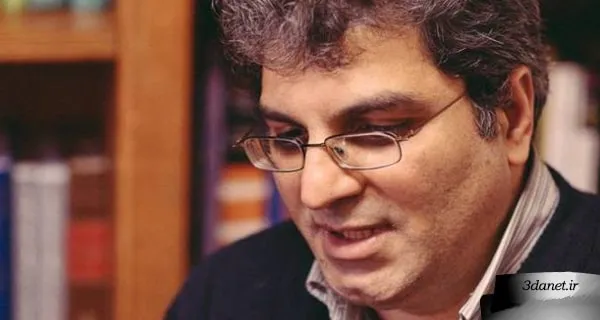
Hassan Ansari
Hassan Ansari's personal website
Hassan Ansari's Telegram channel
.
.



Discussion0 comments
No comments yet; let yours be the first voice.