Religion
New Interpretations of Religion and the Claim of Purity, by Hassan Ansari
Modern interpretations of religion were shaped by twentieth-century Islamism and claim purity, yet they remain alien to the jurisprudential and theological tradition of the past. Hassan Ansari considers this worldview a syncretic amalgam of twentieth-century religious thought rather than an authentic evolution.
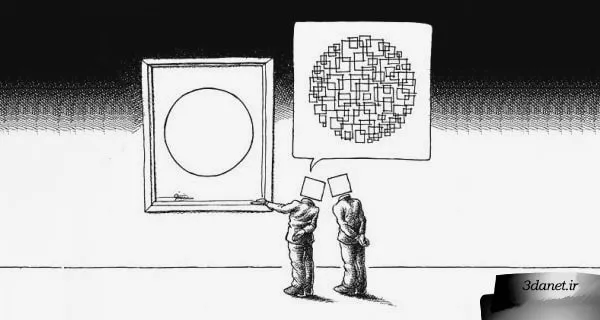
One of the consequences of Islamist and revivalist currents in the Arab countries in the mid-twentieth century was a transformation of the Islamic worldview among broad segments of the educated urban middle class. Figures such as Hassan al-Banna, Sayyid Qutb, Abd al-Qadir Awda, Abu al-A'la Mawdudi, and Abu al-Hasan al-Nadwi spoke of a kind of universal Islamic system based on a set of ideas concerning the ummah, God's sovereignty, the jahiliyya of societies in which God's sovereignty is not guaranteed, and the implementation of the Sharia. This intellectual system, which functioned as an ideology for Islamist groups and, with the help of the political thought and practice of Islamic associations and organizations, was conceived by Islamists as an alternative solution to Western solutions or those of patriotic and national governments, later, in the 1970s, put forward the slogan of implementing the Sharia and the Islamic solution. Non-partisan Islamist writers from among the Azharis and traditional circles, even if they did not go along with the political projects of these associations—and later, when the bulk of these Islamic associations turned to theories of violence, the practice of violence, and ideas of takfir and hijra, they did not accompany them and distanced themselves from them—were nonetheless generally influenced by the literature and religious culture of this worldview. In fact, revivalist and authenticity-oriented thought effectively propagated and consolidated a new worldview among broad segments of religious writers, one that bore no relation to what we know in the Islamic tradition. Whatever it was, it was and is a kind of new outlook and perspective. Although the roots of this type of thought can be traced to various ideas and beliefs of different Islamic sects in the past, it was usually interpreted under the rubric of new approaches to religion and a kind of Islamic awakening. Everywhere, too, there were citations of Quranic verses and hadiths, and a distinctive, revolutionary interpretation of Islamic history and the sira. Whatever the case, these interpretations bear no relation to the main Islamic traditions throughout the history of Islamic civilization and historical experience, especially to the entirely distinct outlook of Shiite Islam concerning issues of imamate, legitimacy, and political or religious authority. In the decades between the 1320s and 1350s SH, various kinds of religious influences from Muslim Brotherhood and Islamic revivalist tendencies can be seen in the literature of our religious writers, who of course formed a broad spectrum: from a kind of orthodoxy directly influenced by Brotherhood thought, to tendencies influenced by Sayyid Qutb, to the Islamic left influenced by Islamic socialist leanings. Much of the religious literature from the 1320s SH onward, and especially in the 1340s and 1350s SH in Iran, was under the various influences of the idea of a universal Islamic system and the worldview of Islamic sovereignty, which was largely drawn directly from the literature of Egyptian writers. Many Quranic commentaries were influenced by those published by the Brotherhood or writers influenced by them in Egypt, Pakistan, Iraq, and the Levant. After the Islamic Revolution, some blended these interpretations with those of anti-Western traditionalist thinkers on the one hand, and writers with Heideggerian leanings according to Ahmad Fardid's interpretation on the other, sometimes producing new concoctions whose effects we still see in the religious literature of a number of writers in the last decade. A common phenomenon among these writers is the greatest possible expansion of a kind of Islamic worldview—and, of course, an anti-Western-civilization one—in which the status of all sciences, not only the humanities but also the pure sciences, is clarified, and which seeks an Islamic version for everything. If you follow the titles of certain websites in Iran or the summarized headlines of the lectures of some writers and those of the pulpit and pen, you can clearly trace the presence of such a religious worldview in them. What was added to this amalgam during those eight years was that a kind of apocalyptic thinking, previously unprecedented among the adherents of these tendencies, was also blended with this worldview. This mode of thought not only reproduces its own particular religious worldview but also has its own particular historical narrative, and within it a different account of Islamic history, world history, the developments of the last two or three hundred years, and a different interpretation of current events is presented—narratives that are in harmony with that worldview.
I do not wish to pass judgment, but generally these writers claim a kind of purity of religious thought and do not tolerate historical evolution within the context of religious thought and contemporary interpretations of religion, and they do not accept the existence of historical evolution in the reception and understanding of religion. My question is this: Do they imagine that this worldview they present and this interpretation they have of religion, politics, and jurisprudence bears any relation to religious purism? What, in truth, is the relationship between these kinds of interpretations and what can be traced in our historical religious literature? This worldview is as alien to our ancient jurisprudential and theological tradition as the interpretations they deem liberal of religion. The tradition of ancient heresiographical literature has been to record new interpretations or types of deviation from official religious literature, especially when they take on the color of communal identity (which is usually accompanied by new group rituals and customs and with an identity-forming role), under the headings of new sects. Today, of course, this is not the custom, and that genre of heresiographical literature has become a thing of the past, but undoubtedly future generations will speak of what we witness today in our religious literature as a kind of intellectual transformation; a transformation that, although it claims purity, is merely a mixture and pastiche of various twentieth-century religious and denominational thoughts.
.
.
New Interpretations of Religion and the Claim of Purity
Hassan Ansari | Personal Facebook | 16 July 2016
.
.


Discussion1 comments
مقالۀ آموزنده ای بود . با سپاس از دکتر انصاری عزیز . فقط خیلی کلی و خلاصه بود و من نتوانستم منظور اصلی مقاله را خصوصا در ارتباط با نو اندیشی دینی در ایران درک کنم . با احترام.