Psychology
The Vein of Speech 2: The Child, the Donkey, and the Wolf
Every human being contains an inner child, a donkey, and a wolf. The wolf pursues gain without responsibility, but it is the inner donkey, cloaked in 'holy simplicity,' that creates catastrophe; recognizing this aspect is essential to averting disaster.
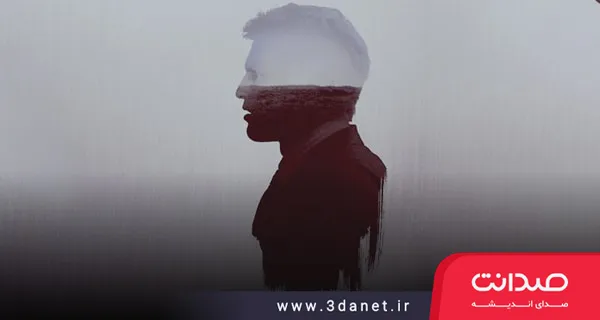
Perhaps you have heard the saying: “Let your inner child come out and play sometimes.” The “inner child” refers to that innocent, untainted aspect of every adult that may have been preserved or lost in adulthood. This saying asks us to allow our inner child a place in our adult world. This advice, for all its ambiguity, is entirely apt. The grim, serious, and fast-paced adult world also needs the freshness, playfulness, and slowness of the children’s world to achieve balance. Someone whose inner child has died, or who is not allowed to play in the adult world, is unlikely to be a balanced person.
The Inner Donkey
Let us move on from the discussion of the “inner child” and address the most important aspect of the human interior: the “inner donkey.” Perhaps you have also heard it said: “People do not only have an inner child; they also have an inner donkey.” The inner donkey is that foolish aspect of human existence that is sometimes mistaken for the inner child, but is in fact different from it. The inner child is the simple, untainted aspect of a person, an aspect that “seeks no formalities or protocols.” The inner child, unlike the inner donkey, is not stupid, but rather authentic and true to its own way. The inner donkey, however, is that aspect of human existence that wants to seek formalities and protocols, even wants to “split the heavens’ roof asunder”; it is not necessarily simple and untainted; it fancies itself clever and pure of intention, but it is stupid, wreaks havoc, and even creates catastrophe.
The Inner Wolf
Now let us unveil another aspect of the human interior: the “inner wolf.” This part is probably the most familiar part of human existence, though in my opinion it is not the most important. The inner wolf is that part of human existence that wants to make the most of situations but with the least acceptance of responsibility, or without accepting any responsibility at all. Someone who commits plagiarism in writing a scholarly article or cheats in an exam session wants to undermine others and pull strings, and, so to speak, wants the greatest benefit without any responsibility. Basically, wherever the acquisition of profit without accepting responsibility proportionate to that profit is at stake, the inner wolf is present and ready.
The Inner Donkey and Holy Simplicity
Well, so far I have enumerated three important parts of human existence. But what is my main point now? My main point, in one sentence, is this: all three parts of human existence can create catastrophe, but contrary to what it might seem, the catastrophe-making of the inner donkey is not comparable to that of the inner wolf. To explain the catastrophic aspect of the inner donkey, one can draw on history and film. However, although our surroundings are full of brilliant historical examples on this subject, let me again give an example from distant times.
Giordano Bruno (1548–1600 CE), the Italian mystic, philosopher, mathematician, and astronomer—who was tied to a stake amidst a mountain of firewood to be set ablaze by order of the ecclesiastical Inquisition on charges of heresy—saw an old man laboriously dragging a piece of wood to throw onto the pile of wood around him, so as to share in the merit of burning an infidel, that God might be pleased with him and grant him paradise. Bruno glanced at him and murmured: O holy simplicity!
Bruno hit the nail on the head. The inner donkey, many times, clothes itself in sanctity and thereby creates catastrophe. Even the inner wolf, if it wants to create a great catastrophe, must don the garb of the inner donkey, or that same holy simplicity. Because the inner wolf in its own garb is immediately recognized and people reject it, but holy simplicity cannot be easily discerned. Sometimes, by the time you realize that what has been fed to you in the guise of sanctity, purity, and clarity is nothing but the inner donkey, you see that several generations have been burned and history has been twisted and distorted. It is also important to note that the sanctity inherent in holy simplicity is not only religious sanctity, but can also be secular sanctity, such as nationalism.
Many of history's catastrophes were created by people who had good intentions and whose piety was even exemplary. It is enough to look at the history of the Inquisition of the Christian Church in the Middle Ages to see what well-intentioned and pious priests were engaged in torturing, killing, and burning heretics, witches, and infidels. So, piety and good intentions must be viewed with suspicion, because holy simplicity nests precisely in this piety and good intentions.
Know Your Inner Donkey!
But how can holy simplicity be recognized? How can one understand that the inner donkey has donned the garb of sanctity, such that sometimes one is even forced to take refuge in the inner wolf? In short, someone who harbors ambitious plans, without taking the foreseen, short, and achievable steps to reach them, and wants to traverse a hundred-year path overnight; someone who deals in generalities and obfuscation and does not speak in a detailed, specific, and falsifiable manner; someone who blocks the path to criticizing their words in any way; someone who throws dust in the mouths of critics and places gold in the mouths of flatterers—such a person, even if they have good intentions (that is, are not the inner wolf), is an example of holy simplicity, or the inner donkey.
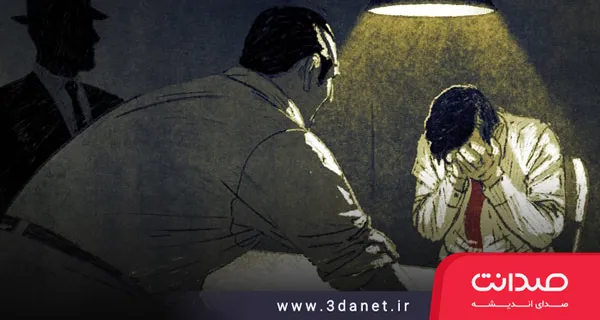
For a tangible understanding of holy simplicity, you can, until the next issue (or for as long as you like), watch the Canadian film "The Calling" (2014) and pay particular attention to the impactful conversation at the end of the film between its main character—who is a perfect example of holy simplicity, and precisely for this reason, criminal and catastrophic—and the female police detective.




Discussion0 comments
No comments yet; let yours be the first voice.