Philosophy
The Vein of the Word 1: Hey! A Word Is Not Just Hot Air
Words are not mere air, and this column, 'The Root of the Word'—drawn from a poem by Sohrab Sepehri—insists on pausing over language. Words can become instruments of slaughter, as seen in the Rwandan genocide; oppression first tears apart words, and then it tears apart bodies.

This is the first installment of a series of writings with the fixed title “The Vein of the Word.” This title is taken from a poem by Sohrab Sepehri (1928–1980), the Iranian poet, writer, and painter—may God have mercy on him and shower his grave with light: “and sometimes one must pitch a tent in the vein of a word” (from the famous poem “The Traveler”). We do not know what the late poet meant by this line—if he meant anything at all!—but this verse has pleased us.
“It is clear and evident to all that” in this world, there are words worth pausing over and contemplating, just as there are words that are nonsense, drivel, and rubbish, not even worth hearing or uttering once (for nonsense, there is no need to give examples; it is enough to spend one day thinking about some of the things you say or hear, or both, with the intention of detecting nonsense, but I will provide examples of thought-provoking words later on). There are also words that, though they may be nonsense, possess magic and allure and enchant a person. Such words, too, must be paused over and contemplated. Now, “pitching a tent in the vein of a word” might mean that there are words worth pausing over and contemplating, and if “pausing” and “contemplating” are too highfalutin, let me say instead: worth thinking about. If it has crossed your mind how one can pitch a tent in the vein of a word, it is enough to travel during the holidays, with the intention of finding tents or otherwise, to the north of Iran or one of the pilgrimage cities to see how the people, with indescribable creativity, pitch tents almost everywhere.
Therefore, the issue is not how one can pitch a tent in the vein of a word, but rather why the people, who pitch tents everywhere (and of course we have no objection and more power to them, because hotels are expensive), why don’t they come and pitch a tent in the vein of a word as well? And this is the goal that—again, “it is clear and evident that”—we intend to achieve by setting up the tent of this column. That is, we intend, with the aim of disturbing the public mind—which is a very good thing, but one that must be avoided—to incite the people to pitch tents in the vein of words worth thinking about and pausing over (and if you dislike the word “incite,” just imagine we said: urge or encourage). The entire effort of this column—which has no relation whatsoever to that column, meaning the fifth column, God forbid—is to show its reader that, contrary to popular opinion, a word is not just hot air, and even if it were hot air, if you want to put this very hot air into your car, motorcycle, or other tire following certain procedures, you have to pay a lot of money, so even hot air is not just hot air, let alone a word being hot air, which it is not.
But the not-easily-satisfied reader might lament: Look! The only thing left for us was just talking, and this affluent, carefree, expatriate, pseudo-intellectual, pen-pushing, ivory-tower-dwelling bunch have blown it up so much, made it so important, mounted their moral high horse, and made it so difficult that a person gets sick of saying a word or hearing a word. As soon as you try to speak, they say don’t talk nonsense; as soon as you try to listen to a couple of words, they say don’t listen to nonsense! Leave me alone, man, you’re in a mood. It is understandable that sometimes—if not almost always—a person wants to “seek no rules or formalities” and say “whatever their aching heart desires” and has no patience for cumbersome formalities. But speaking and listening, whether willingly or unwillingly, knowingly or unknowingly, may make the world even darker than it already is, and may darken the world in such a way that you can no longer say: Bro, bless your hands, as you pass by that door, turn on that lamp too, it’s very dark here! Darkness without a lamp is very dark (what a profound sentence that turned out to be! Tomorrow it will be written on the back mudguards of buses alongside the sentences of Kahlil Gibran and Paulo Coelho).
Confucius (551–479 BCE), who was an ancient Chinese sage and since his name and memory have endured, it is clear he was no fragile figure, says, “Most of the injustices that befall human beings stem from the injustices that befall words.” Again, someone might object: Hey, sir! You’ve got it backwards, you’re fixated on injustice through words! Yes, why not? Injustice first tears words apart and then tears bodies apart (this sentence is also good for the back of a mudguard).
Sir, the discussion has become abstract; give an example! With pleasure. But since "we are the best," instead of an example from around here, I'll give one from Jabalqa and Jabarsa: In the Republic of Rwanda, located in central Africa, in the year 1994, over the course of roughly one hundred days, a massive genocide took place in which 500,000 to one million people were killed in a horrific manner (mostly by machete, at the hands of their neighbors and former friends), and 200,000 to 500,000 women were raped. The scale of the catastrophe was such that twenty percent of the country's total population was killed in this genocide, marking one of the darkest genocides of the twentieth century. This conflict was the result of an ethnic struggle between the two groups, the "Hutu" and the "Tutsi," and was triggered by the downing of the plane carrying Rwanda's president, who was a Hutu. The plane crashed after being struck by a surface-to-air missile, and the Hutu attributed this act to the Tutsi, but instead of proving this accusation and trying the perpetrators, as the ethnic conflict escalated, extremist Hutus embarked on ethnic cleansing, killing Tutsis and moderate Hutus who refused to kill Tutsis. You can see an account of this genocide in the extraordinary film "Hotel Rwanda" (2004), directed by the Irish director Terry George. This film is sometimes referred to as the African "Schindler's List."
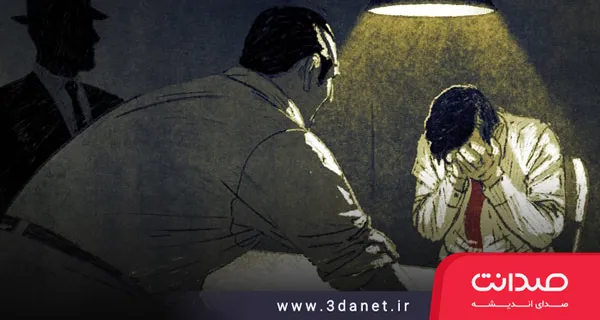
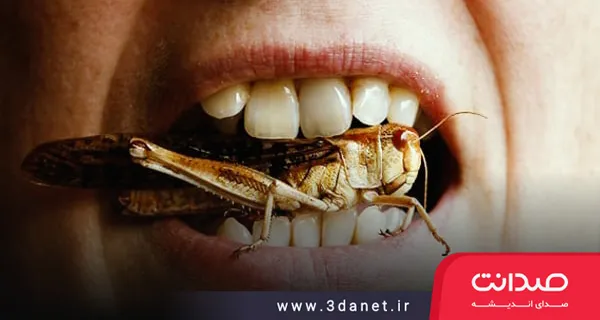
With apologies for bringing up such a bloody and violent example, you might ask: what does this genocide have to do with our discussion? It is said that one of the key factors that accelerated such a massive slaughter in the limited time of just over three months was the establishment of a special radio station and newspaper by Hutu extremists. On this radio and in this newspaper, and especially on the radio, the Tutsi people were regularly called "weeds" and "cockroaches," and by giving the exact addresses of Tutsis' or moderate Hutus' homes, people were urged to "pull out the weeds" by the roots and crush the "cockroaches" under their feet. It is precisely here that words become instruments of slaughter. If you can convince people that what they are killing is not a human being but a cockroach, a rat, or a hyena, the killing machine gains speed. But to convince these people, you must use words and arguments. In such a situation, a word functions like the very machete that strikes the victim's head and face, or like the very bullet fired at the victim. Without convincing a vast number of people, the Hutu extremists could not have carried out such a massive genocide in such a short time (it is said that later, during the trials related to this genocide, nearly two million people were accused of involvement in this crime), and it was these words and arguments that bore the burden of convincing them.
For precisely this reason, words are very dangerous, even more so than a sharp kitchen knife or the blade of a neighborhood thug. If heads are not to be severed, bellies not to be ripped open, and prisons not to be filled with the innocent, the spell of words must be taken seriously and demystified. These deeds are not done solely by rulers to the people, but—more so and prior to that—by the people themselves to one another, and words are their primary weapon for this. "The Vein of the Word" intends to expose a corner of the destructive or constructive power of words. If you also think that a word is not just hot air, then join us on this journey. To do so, until the next issue (or whenever you feel like it), please watch this very film, "Hotel Rwanda," and pay particular attention to the parts broadcast from the radio.



Discussion1 comments
ممنون