Life and Thought
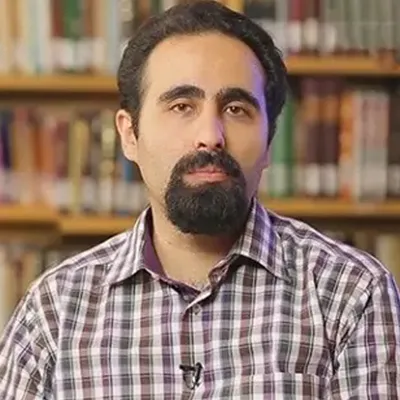
Amir-Mohammad Gamini is a historian of science and a faculty member at the Institute for the History of Science, University of Tehran. His main research areas are the history of astronomy in Islamic civilization, the history of hayʾa (theoretical astronomy), non-Ptolemaic planetary models, and the relationship between modern science and scientific and religious traditions in Iran.
Amir-Mohammad Gamini is an Iranian historian of science and a faculty member at the Institute for the History of Science, University of Tehran. He studied the history and philosophy of science, and his research focuses primarily on the history of astronomy and hayʾa in Islamic civilization.
Key themes in his work include the study of the works of Qutb al-Din al-Shirazi, non-Ptolemaic planetary models, the history of Islamic astronomy, the historiography of science, and the relationship between modern science and intellectual and religious traditions in Iran. Gamini has also researched the encounter of Muslim and Iranian scholars with modern astronomy, the theory of evolution, and the question of science in the Qajar period.
The significance of his work lies in linking meticulous historical research with a critique of simplistic narratives about science in Islamic civilization and contemporary Iran. In his writings and conversations, he has sought to forge connections between the history of science, the philosophy of science, the critique of pseudoscience, and the social understanding of science.