Iranian thinker
Hamid Parsania
Hamid ParsaniaIslamic Philosophy and SociologyIranian
Life and Thought
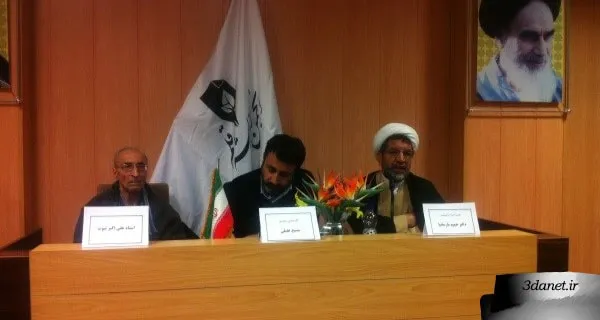
Hamid Parsania (born 1958) is a philosopher, sociologist, and lecturer in both seminary and university, considered one of the prominent students of Ayatollah Javadi Amoli. He is a member of the Supreme Council of the Cultural Revolution and an active figure in expounding Transcendent Theosophy and its connection with the social sciences. His works in the fields of Islamic anthropology, religious science, and the critique of modernity are well known.
Hamid Parsania was born in 1958 in Mashhad. He completed his university studies in sociology at the University of Tehran while simultaneously pursuing advanced seminary studies in Qom. He studied jurisprudence and its principles under masters such as Mirza Hashem Amoli, Fazel Lankarani, and Vahid Khorasani, and philosophy and mysticism primarily under Ayatollah Javadi Amoli and Hassanzadeh Amoli.
For many years, Parsania has been engaged in organizing and compiling the philosophical works of Javadi Amoli, including the commentary on the Asfar (Rahiq-e Makhtum) and other texts of wisdom. His intellectual system is founded upon Sadrian Transcendent Theosophy and emphasizes the harmony of demonstrative reason, Quranic revelation, and mystical intuition. He believes these three sources exist in a hierarchical relationship, with the Holy Quran holding a central position in the epistemological system.
Among his important works are 'Being and the Fall' (Hasti va Hobut), 'The Discourse of the Cup' (Hadith-e Peymaneh), 'Mysticism and Politics' (Erfan va Siasat), 'Tradition, Ideology, Science' (Sonnat, Ideoloji, Elm), and 'Science and Philosophy' (Elm va Falsafeh). In the field of social sciences, Parsania has also critiqued secular approaches and endeavored to establish an Islamic sociology. He is a member of the Supreme Council of the Cultural Revolution, a professor at the Research Institute for Islamic Culture and Thought, and formerly served as the president of Baqir al-Olum University.