Religion
Religious Government in the Face of Akhund Khorasani's Questions
Akbar Sobout and Hamid Parsania critiqued the political thought of Akhund Khorasani at an Andisheh va Ghalam Society meeting. Citing Agha Bozorg Tehrani's accounts, Sobout argued that Khorasani did not believe in an Islamic government during the Occultation, a view Parsania rejects.
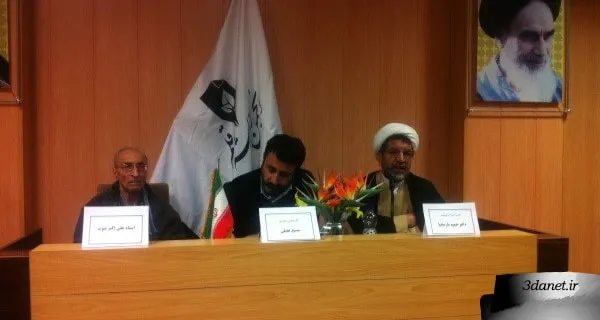
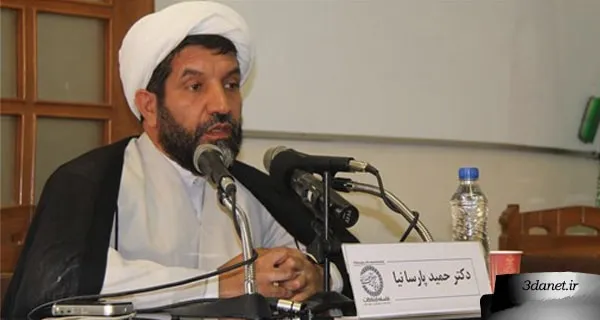
The significance of Akhund Khorasani in Iranian political thought in general, and in Shiite political jurisprudence in particular, is such that even a rigorous critic and researcher like Javad Tabatabai considers him, alongside Naini and Mahallati, among the scholars who, unlike Westernized intellectuals such as Malkam, “knew all the intellectual premises and principles of political discussions” and, by proposing the theory of “public interests,” “approached the discussion of modern political thought.” Nevertheless, there is still no consensus on Akhund’s political thought. In the first session of the Thought Group of the Andisheh va Qalam Association, a discussion on this matter arose between Akbar Sobout, the author of the unpublished yet controversial book Akhund Khorasani and His Students, and Hamid Parsania, during a critique and review of the book. In that session, the book’s author, himself a researcher in Islamic and human sciences, particularly Islamic jurisprudence, law, and philosophy, relying on this book—which is essentially Agha Bozorg Tehrani’s account of a conversation with his teacher Akhund Khorasani—sought to demonstrate that Akhund did not believe in an Islamic government during the Age of Occultation, while Hamid Parsania, a researcher in Islamic sciences, endeavored to show that this was not the case. The second session of this association was a continuation of these discussions, in which the two researchers attempted to complete their arguments or provide more evidence and documentation for their claims. What follows is a report of the remarks made by these two, in the order they were presented at the session:
Theoretical Consideration is Separate from Practice
Akbar Sobout Researcher in Islamic History and Philosophy I am pleased that this book, about which dozens of critiques have been written and which itself has not had the opportunity to be published, has found a chance for a face-to-face critique. I have been a student and lecturer of law for many years and have also worked in the legal field for some years. A piece of advice from the late Dr. Amir Nasser Katouzian has always been on my mind; he used to say that a legal professional, such as a lawyer, judge, or legal advisor, in the realm of practice and action, must consider only and solely the letter of the law and not deviate from it, whether they agree with that law or not, and whether the scholars they believe in have accepted that law or not. In the position of practice and implementation, they have no other way but practical adherence to that law, even if they do not believe in it. However, in the position of teaching, writing, and research, a jurist or legal professional at that stage must report and present every existing theory and opinion in the best possible manner. Therefore, this point has always been on my mind: that the realm of practice and the realm of theory must be separated from one another, and the right of each must be fulfilled separately. Unfortunately, in our country, a great deal of confusion has arisen between these two realms. That is, simply because a certain gentleman or lady disagrees with a law, they want to break the law and transgress its boundaries, or, on the other hand, some people, by virtue of agreeing with that law, insist on showing that the earliest and latest scholars agreed with it. Both of these approaches are wrong. The boundary of theory, history, teaching, writing, and research is one place, and the boundary of practice and action is another. Naturally, in the position of practice and implementation, in whatever society I am in, I consider myself obliged not to transgress the boundaries of that society’s law. But in the position of writing, teaching, and research, the right thing is that whenever any legal, jurisprudential, philosophical, etc., question is raised, we raise it freely and are able to explain the critiques and objections that apply to any theory.
Akhund, in the Theoretical Realm, Does Not Believe in the Guardianship of the Jurist After this introduction, my belief is that, in the first stage, the late Akhund's view on the limits of the jurists' guardianship in government, in the judiciary, and in other arenas must be clarified. But whether an Islamic government and a government of the clerical class have certain consequences is a secondary discussion. Therefore, at present, I prefer to have a brief discussion on this matter in the first stage. First, I raise the question: What was the late Akhund's view on the absolute guardianship of the Infallibles? Given that the guardianship of the jurists is, in reality, a deputyship of the guardianship of the Infallibles. Thus, we must take a brief look at the guardianship of the Infallibles (peace be upon them) and pose the question as follows: Did the late Akhund believe in absolute guardianship for the Infallible or not? In that very commentary on the Makasib and in other works presented by some of Akhund's critics, such as Naini and some of his interpreters, the matter is raised that the late Akhund did not even believe in absolute guardianship for the Infallibles. Here, as an example, I will read a few words from one of Mr. Amid Zanjani's interviews. Mr. Amid Zanjani, in defense of guardianship and in confronting its opponents, did not yield an inch, and there is no need for further explanation in this regard. Nevertheless, he had an interview during his lifetime, which was also published at that time. I will read a part of this interview: 'The late Akhund, in his marginal notes on Makasib, in his views on the guardianship of the jurist, says that the guardianship of the jurist cannot be superior to the guardianship of the Imam, and they discuss the guardianship of the Imam... I have seen and read almost all discussions on the guardianship of the jurist, from the earliest Shi'a jurisprudential books, such as the books of Sheikh Mufid, up to the present era, at least the well-known books. In none of them is the guardianship of the Imam discussed. The jurists did not permit themselves to speak about the authorities of the Infallible Imam, or they simply considered it futile. With this reasoning: whether we define the limits of the Infallible's guardianship or not, the Infallible Imam himself exercises his own authorities. Wherever he exercises it, it is his right, and wherever he does not exercise it, it is not his right. But the late Akhund dares to enter this discussion and says that the Infallible Imam does not even have guardianship in private rights.' This interview is published in Mr. Mohsen Daryabeigi's book, which is a collection of interviews related to the late Akhund.
Akhund, in Practice, Does Not Accept the Government of Mulla Qurban-Ali The issue is how the late Akhund dealt with the existing realities that presented themselves as a religious government based on the guardianship of the jurist. We know that about half a century before the Constitutional Revolution, a great Shiite jurist had established a religious government in a vast region of Iran, centered in Zanjan. He was a righteous man who had neither amassed much wealth, nor was he a son of a cleric or from a prominent family, nor had he accumulated money. Scientifically, he was at a high level, and in terms of asceticism and piety, he was also very elevated. He did not recognize any government other than his own, saying that governance is religious governance, and that is precisely the government I have formed. He was Mulla Qurban-Ali Zanjani, and he was unwilling to meet any king, nor was he willing to accept money from any king. Despite Naser al-Din Shah and others repeatedly seeking an audience with him, he did not permit them. He believed that no government should exist except his own religious government, and this was his stance towards the governments of the time. This government existed during both the reign of Naser al-Din Shah and the reign of Mozaffar al-Din Shah. During Mozaffar al-Din Shah's reign, the Constitutional movement took root. When this movement began, roughly forty-some years had passed since the establishment of Mulla Qurban-Ali Zanjani's religious government. When the people's protests erupted during the Constitutional affair, it was natural for the late Akhund Khorasani and other sources of emulation to seek the best alternative to replace the despotic government. At this stage, if the late Akhund believed in the guardianship of the jurist, the best option would undoubtedly have been none other than the religious government of Mulla Qurban-Ali. For, in those very days, a religious government existed in Zanjan and its surrounding areas, and it would have been better to expand this religious government to all of Iran, placing the entire country under the sovereignty of the clergy and the rule of Mulla Qurban-Ali Zanjani, who was a learned and just jurist. Yet, at the same time, we see that the late Akhund absolutely does not support the government of Mulla Qurban-Ali, and not only does he not support it during that period, but later, when conflict arises between the constitutionalists and the autocrats, Akhund again supports the Constitution, not the religious government of Mulla Qurban-Ali Zanjani. This affair continues until the despotic government of Mohammad Ali Shah comes to power and subsequently falls, and a constitutional government, even if nominally, takes hold. It is at this stage, when conflict and strife occur between the religious government and the guardianship-of-the-jurist apparatus of Mulla Qurban-Ali and the constitutional government, that, with the permission and agreement of the late Akhund, the constitutional government goes and, with the utmost dignity and respect (in my interpretation), removes the late Mulla Qurban-Ali from Zanjan, disperses his entourage, and brings some who were corrupt to justice for their deeds, sending him, in his nineties, to the Atabat to spend the remainder of his life there in worship and pilgrimage. This is one example of the late Akhund's dealing with a reality that existed as a religious government based on the guardianship of the jurist.
Akhund's Opposition to Seyyed Abd al-Husayn Lari But another example is Seyyed Abd al-Husayn Lari. Seyyed Abd al-Husayn Lari was a mullah who, even before the Constitutional affair began, was thinking of forming a religious government under his own supervision and rule, and he took many steps in this direction. When the Constitutional movement arose, Seyyed Abd al-Husayn Lari also aligned himself with the Constitutional current, with the intention of using this movement to achieve his own goal, which was to form a religious government headed by himself. Of course, we cannot say that his intention was necessarily bad. But in any case, he enters the Constitutional movement and even makes some strange and peculiar defenses of the Constitution that had caused an uproar from Sheikh Fazlollah. Among them was that he had said the sacred National Consultative Assembly is second only to the Kaaba and like the Kaaba, and so on... Later, Sheikh Fazlollah Nuri had many disputes with the Constitutionalists over these matters. Even though these words were spoken by a mullah like himself. At the same time, he (Seyyed Abd al-Husayn Lari) aligns himself with the Constitutionalists, and at this stage, when he is aligned with the Constitutionalists, the late Akhund endorses him and endorses his movement and his followers. But later, Seyyed Abd al-Husayn Lari gradually moves towards imposing his own specific goal, which was to form a government headed by himself and to establish a religious government. In any case, he enters this arena and forms a religious government under his own leadership in a region in southern Iran, and even prints stamps, prepares military forces, and distributes military, social, and political positions among his followers, and gradually comes into conflict with the constitutional government. It is at this stage that the late Akhund no longer endorses him and even advises him repeatedly that those around you are not wholesome people, to be wary of them and not to trust them. Of course, Seyyed Abd al-Husayn did not heed these words and continued to pursue this movement against the government of the time, until unfortunately, under unfavorable circumstances, this movement and the community around him fell apart, and he himself died in a distressing isolation.
This Is Not a Debate Hamid Parsania Researcher in Islamic Sciences On the eve of the Ten-Day Dawn celebrations, these discussions are among the fundamental and essential theoretical issues upon which, in a way, the identity of our life today, our revolution, and our internal and international encounters and actions are based, and in the realm of theory, as was mentioned, any deepening, precision, and research into these foundations is appropriate and worthy. Being in the service of Mr. Sobut and engaging in a debate is difficult for me. Because debate has its own etiquette and issues, and I am not one for that etiquette and those issues. What I mean is that in a debate, one must enter the discussion ruthlessly, without regard for the attendees, and use methods common in rhetoric, discussion, and polemics. Our regard for Professor Sobut has increased since the previous session. In any case, we will proceed on the basis that we are conducting a scholarly discussion, and there is no talk of a debate, and I will enter the discussion from this angle.
Absolute Guardianship versus Restricted Guardianship: Absoluteness Does Not Mean Despotism First, a report of the previous session was presented, and in light of that and Mr. Thubūt’s remarks, I will make some points. In the last session, the discussion was that, regardless of the authenticity of what Mr. Thubūt has narrated and what exists in the marginalia of Makāsib or in his book on adjudication, as recorded in the lecture notes of the late Qūchānī, Āqāzādeh, and others in the library of Āstān-e Quds, there is no contradiction. Sometimes we discuss the very principle of the guardianship of the jurist, its limits, or the guardianship of the Infallible Imam. Proving the guardianship of the jurist without regard to the guardianship of the Infallible Imam is irrelevant, and the guardianship of the jurist falls under the guardianship of the Infallible Imam, and I began the discussion in the previous session from this very point. Its limits are also as follows, that is, to what extent does the guardianship of the Infallible Imam extend? The discussion of infallibility, the discussion of ontological guardianship (wilāyat-e takwīnī), the discussion of guardianship over legislation, and the discussion of legal guardianship are distinct from one another. In the discussion of ontological guardianship, it is said that God, the Glorified, is the Absolute Guardian, and the Infallible Imam is the Perfect Human and has no guardianship in opposition to God’s guardianship, and what is discussed in this arena is vicegerency. However, in legislation too, it belongs to God, the Glorified, and if reference is made to the Infallible in some instance, it is again by God’s permission and not independently. Legislation belongs to God, and one of the instances where legislation has occurred concerning the Infallible is his guardianship, which is a conventional (iʿtibārī) guardianship. To what extent this limit and bounds should be is something that can be pursued, and as a rule, when he has a guardianship that signifies the executive function, it is the execution of the Sharia. What they narrated from the late Mr. ʿAmīd Zanjānī, that not only in the private sphere but also in public law and other matters, the duty of the Prophet and the Imam is both to convey the message and to execute it. If there are conflicts among these, as a rule, in cases of conflict, just as in our private lives this guardianship belongs to us, where we must prefer and act based on criteria derived from the principle of conflict (tazāḥum), in social matters too, it is incumbent upon the guardian of society to perform this task. That is, as long as no conflict has arisen, the Prophet or the Imam intends to execute the Sharia, meaning that the very rights individuals possess must be acted upon, and they are both the conveyors of the Sharia and the protectors of the Sharia. We understand this from the expressions that have been related about the Prophet and the Infallible Imams. The meaning of absolute guardianship (wilāyat-e muṭlaqa) must be clarified. Does it mean a despotic rule where the guardian says whatever he wishes, or not? Absolute guardianship does not at all pertain to this issue. Absolute guardianship is contrasted with restricted guardianship (wilāyat-e muqayyada). Of course, restricted guardianship must also be clarified as to where its criterion lies. Is it that in all social matters and issues where the matter is a social, not an individual, one, the custodianship and authority over it belongs to a single person? This is absolute guardianship. All matters that are of the type of social issues, which must subsequently be carried out within the framework of the rules of preferences and outweighing factors of the Lawgiver’s system and the prioritization of rulings themselves, or whether it extends to a portion of these matters and not another portion. If absolute guardianship is discussed even for the Infallible Imam, the meaning is all matters pertaining to the authority and custodianship of society; the custodianship and authority is the responsibility of the Prophet and the Imam. Of course, he has come to establish the Sharia and justice. That is, he is the executor of a law. After the Imam, is the custodianship of social affairs, to the same extent, delegated to his deputy, or is there a specific region, just as there is a specific deputy, like Egypt or another place, or is another part of affairs delegated to other individuals, and the custodianship of another part left unresolved until the Infallible Imam comes? It is on this basis whether it is absolute in relation to other than the Imam or restricted... Are there also disagreements in this regard? In the previous session, it was pointed out that these disagreements are sometimes explorations surrounding the discussions and arguments. That is, a jurist seriously debates, looking at this argument, and the middle term of this argument proves no more than this up to this point, and when the jurist addresses another issue, he may prove more than that or less than that, or consider a rational, transmitted, or theological proof. In the previous session, it was pointed out that the discussion of Imamate and guardianship has both a theological dimension and a jurisprudential dimension. From the dimension that it is obligatory upon God, meaning we speak about God’s act, it is a theological discussion. But from the perspective of what the duty of the Imam himself is and what the duty of the people towards the Imam is, it is a jurisprudential discussion. This discussion concerns the meaning of guardianship and Imam, and the discussion related to the deputy of the Imam during the Occultation.
The Conflict Among Constitutionalists Was Not Over Wilāyat al-Faqīh In the previous session, I argued that the dispute between the constitutionalists and the proponents of mashrūʿa (religious law-based government) during the Constitutional Revolution was not over wilāyat al-faqīh (the guardianship of the jurist). That is, they were not arguing with one group saying, “We want wilāyat al-faqīh,” and another saying, “We do not want wilāyat al-faqīh.” The dispute was over the suitability of Muhammad Ali Shah or the parliament, and so on. This was because everyone felt they could not implement wilāyat al-faqīh, not that they were opposed to it from a jurisprudential standpoint regarding the Infallible Imam or the jurist, irrespective of the scope of authority the guardian could have. They did not share a common belief on this matter. That is, during the Occultation, they considered at least some of the prerogatives of wilāya to belong to the jurist, but they did not deem it executable. Just as during the time of the Infallible Imam, the Imams themselves did not deem it executable, yet they believed the truth to be that wilāya belongs to the Imam. The result was that these existing sovereignties are neither just nor sharʿī (religiously legitimate), but the question of what our duty is in confronting an illegitimate sovereignty has a scope that must be considered entirely moment by moment and era by era. Sometimes it may be uprising, sometimes cooperation, and opposition may be a sin; this is the case even for the Infallible Imam. Sometimes it is sacrificing one’s life to remove that illegitimate sovereignty, and sometimes it is having a bone stuck in the throat and a thorn in the eye and cooperating. Just as Ali (peace be upon him) does this. But what Ali (peace be upon him) does does not mean that what exists is legitimate. A situation exactly like this exists during the Occultation.
The Guardianship of the Jurist in Practice Requires Conditions One discussion is that our jurists, in jurisprudential terms within their legal books, have always paid attention to the principle of the Guardianship of the Jurist, but in terms of compilation, writing, and declaration, they did not always have the ability. Even the Infallible Imam sometimes addressed the caliph as Amir al-Mu'minin (Commander of the Faithful), while jurisprudentially we have no right to use this title for anyone other than Ali ibn Abi Talib (AS), but practically, due to dissimulation (taqiyya) and other issues, this was done. Therefore, during the Occultation, sometimes this matter cannot manifest. Thus, the interpretation I mentioned, that the late Sahib Jawahir did not express this statement, is because it could not be declared, even though the discussion of jurisprudential guardianship exists in every legal book. In every legal book, when public matters are discussed, the jurist appears. In practice, too, wherever jurists had authority (bast-e yad), they had a duty to exercise this within a limited scope among the Shi'a, or where there was an interface between the individual and the government, they administered judgment. The judge was not appointed but was a judge of arbitration (qadi tahkim). A judge of arbitration must have certain conditions; a general permission for judgment must exist. People would come to their own jurist, and this judgment would be carried out. But when Shi'ism could do this was a social discussion. That is, when the capacity for implementation arose, it gradually occurred after the Safavid era. During the Qajar era and Fath-Ali Shah's reign, it was in the process of happening. But its realization is sometimes hindered from a religious standpoint. Just as the Infallible Imam could exercise authority somewhere, but must also consider the overall authority and unity of the entire Islamic world, and therefore refrains. If someone were to implement guardianship in Isfahan, or in Zanjan, or in the Jabal region and Kermanshah, and if the authority of Iranian society against foreign enemies were weakened, should they still do so or not? If a feudal-like sovereignty were to emerge in this collection and central security could not be maintained, is exercising this guardianship appropriate or not? These were issues that some jurists paid attention to. Did we have a jurist who could create influence of speech across Iranian society and preserve the society's unity against foreign enemies? If we had such a person, we would say it is possible, and why is it not being done? But for a jurist in a village or a city to be able to do this, and then by exercising this power weaken the central authority, that itself is the first point of contention. In the previous session, I referred to a quote from Mr. Zanjani. When the great Mirza Shirazi issued the tobacco prohibition decree, he deliberated for some time on how much this governmental decree I am issuing, which is not even for myself, conflicts with the power of the central government or not? Should I do this or not? Ultimately, after calculations, he issued the decree. Therefore, the discussion is that within the Constitutional movement, neither side of the conflict at the level of Iranian society saw themselves as capable of, or seeking to, implement the Guardianship of the Jurist at the societal level. But everyone knew that legitimate government in the Age of Occultation is a government that derives from the Guardianship of the Jurist. Based on this, occasionally, sources of emulation who had influence of speech would discuss it. It is from Sheikh Ansari onwards that we have comprehensive religious authority (marja'iyyat-e tamma). It is from this period that jurists issue decrees to make certain interventions, without seeking to implement the Guardianship of the Jurist. The conflict that exists in the Constitutional Revolution is this: in conditions where we do not have ideal governance and must interact, what is the best type of interaction? When 'Shari'a-based' (Mashru'eh) was added to 'Constitution' (Mashruteh), in this conflict, the sides who wanted to call themselves legitimate had a criticism of the opposing side, but their affirmative aspect was not that this ideal government is the Guardianship of the Jurist. Rather, their interpretation was that cooperating with this group that is coming does not bring us closer to Sharia and is worse, and the other side is better, so we should act on this side. They said, in controlling the central power and interacting with it, we want it to act in accordance with Sharia. These people who entered this parliament are not seeking Sharia and do not want the rulings of Sharia. Of course, in the next turn, I will explain that seeking the rulings of Sharia at that juncture was also not something that was expedient. The late Akhund pays attention to this matter. That is, when there is no Guardianship of the Jurist, if you want to compel the ruler within society to implement the rulings, he cannot do such a thing.
Repelling the greater evil with a lesser evil is obligatory Akbar Sabet Researcher in Philosophy and Law One question is whether the late Akhund even believed in the formation of an Islamic government during the Occultation and its possibility. My answer is no, he did not. That is, in his view, the matter itself is ruled out—whether the ruling jurist wants to form this government or anyone else. I will read you this passage from a letter he wrote in response to the people of Hamadan. But since I have other points to make, I will not pursue this matter at length. However, if we were to follow up on this issue itself, there is much room for discussion. He says: "How strange! How have the Muslims, especially the scholars of Iran, forgotten the essential doctrine of the Imamiyya school, which is that legitimate sovereignty is when the management of the general affairs of the people, the ordering and handling of all matters of the Muslims, and the adjudication of all important affairs are in the hands of a person who is infallible, designated, appointed, explicitly stipulated, and commissioned by God, such as the prophets and saints, and like the caliphate of the Commander of the Faithful (peace be upon him) and the days of the appearance and return of His Holiness the Proof (peace be upon him). And if the absolute ruler is not infallible, that sovereignty is illegitimate, as is the case during the Occultation. And illegitimate sovereignty is of two kinds: the just, such as a constitutional vizier where the direct administrators of public affairs are the wise and the pious, and the oppressive and tyrannical, such as when the absolute ruler is a single, unrestrained, self-willed individual. Of course, by the explicit judgment of reason and the clear stipulations of the Sharia, the just illegitimate [government] takes precedence over the tyrannical illegitimate [government]. And through experience, sound investigations, and thorough inquiries, it has been proven that not even a tenth of the transgressions of the era of despotism occur under the constitutional era, and repelling the greater and uglier evil with a lesser evil is obligatory." The source of these sentences is the book Hayat al-Islam, which the distinguished student of Akhund compiled as a collection of his letters and telegrams, gathered three or four years after Akhund's death or during his lifetime, and the late Aqa Najafi Quchani passed away around 1321 or 1320 AH. I also mentioned last time that even others have quoted the late Akhund as saying that from the time Imam Hasan was forced to make peace with Mu'awiya until the appearance of His Holiness the Proof, son of Hasan (blessings of God upon them), no religiously legitimate government will be established. This is his view, and as I said, we are in the position of stating views. The position of theory, research, and writing is one thing, and the position of practice and implementation is another.
From Khums to the Matter of Judgment But regarding the statement that the jurists, in all instances, would speak about the issue of the guardianship of the jurist and its exercise whenever an opportunity arose, I will present a simple matter. I will now read from the book Ma‘jam al-Jawāhir the sections related to the expenditure of the Imam’s share. Presumably, Haj Agha (Parsania) has examined Jawāhir far more than I have and has seen the books of ‘Allamah, Shahid, Muhaqqiq, Shaykh Tusi, Ibn Idris, and others, and knows that before the Qajar period, it is unlikely that we can find even three major jurists who believed that the portion of khums which is the Imam’s share must be given to the mujtahid. You can see this in Shaykh Tusi’s Tahdhib, Ibn Idris’s al-Sara’ir, and the book Jawāhir itself. All agree that jurists such as Shaykh Tusi, Shaykh Mufid, Ibn Idris, and others did not consider the jurist’s disposal of the Imam’s share permissible at all. As we come forward in time, again in the books of Muhaqqiq, ‘Allamah, Shahid, and others, even if they do not issue a fatwa on its impermissibility with such firmness, their opinion is by no means that the Imam’s share must be given to the mujtahid. It is gradually, from the early Qajar period, that this fatwa emerges, stating that the portion of khums which is the Imam’s share must be given to the jurist. Considering this point, my question is: if all these jurists, including Shaykh Mufid, Shaykh Tusi, Ibn Idris, ‘Allamah, Muhaqqiq, Shahid, and even the jurists of the Safavid period, believed in the governance of the jurists, they should have at least thought about a financial backing for the government. But as for the statement quoted from the author of Jawāhir—of course, we do not intend any disrespect towards him—we must see what he meant by that guardianship of the jurist, of which he says anyone who does not accept it has not tasted the scent of jurisprudence. The scope must be clear. Of course, if it is a guardianship of the jurist where the jurist does not even have the right to collect khums on behalf of the Imam, then certainly Shaykh Tusi also believes in this guardianship of the jurist. But Shaykh Mufid, Shaykh Tusi, Ibn Idris, and many other jurists say the jurist has no permission at all to dispose of the Imam’s share. What kind of guardianship of the jurist is this? Let us return to the discussions related to the late Akhund. We ask: how did the late Akhund think about the subject of judgment? You know that when we traditionally turn to traditional jurisprudence, we can almost say that the majority of jurists, in the book on judgment, raise the discussion that only a mujtahid can assume the office of judgment. This is in our jurisprudential books. Although we sometimes see a flaw introduced in this, in that while only the jurist can assume the office of judgment, the jurist does not have the permission or the right to compel others to refer to him for judgment. But what does the late Akhund say in this regard? To understand the late Akhund’s theory, it is necessary to refer to the state of judgment at the time of the emergence of the Constitutional Movement. At the time of the Constitutional Movement, we have two series of courts: Sharia courts and courts affiliated with the monarchy. The Sharia courts usually issued rulings in the domain of private law, such as buying and selling, divorce, marriage, lease, and so on, and of course, some of these Sharia judges sometimes also issued criminal rulings, for example, regarding the Babis or those recognized as corrupters on earth, and the like. Of course, these Sharia courts had problems, and corruptions had found their way into them, which the late Ayatollah Borujerdi once noted with a realistic view, saying: “Two things brought the Constitution into being: one was Qajar oppression, and the other was the contradictory rulings issued by the Sharia courts.” The source of this statement was an interview by Mr. Moadikhah. In any case, part of the work related to the matter of judgment was carried out by the Sharia courts, which were under the supervision of clerics and mujtahids. The other part of judicial work, which dealt with political and social affairs, etc., was carried out by courts established by the monarchy, and in fact, it can be said that these were not courts at all, but rather acts of coercion. In the Constitutional Movement, the first demand raised by the people was the request for a House of Justice, meaning a request for an organization to which people could present their complaints if they had grievances against oppressive apparatuses, others, or the powerful. After the Constitution took hold and the country became constitutional, among the tasks undertaken at the outset was the formation of a judiciary separate from that which the clerics had and separate from the courts of the monarchy. This judiciary was naturally not to the satisfaction of the despotic apparatus, and the clerics and Shaykh Fazlollah Nuri were also strongly opposed to this judiciary, and Shaykh Fazlollah even explicitly said, “This is not a judiciary; it is an oppressory.”
Among the actions this judiciary took were harsh treatments of those who acted against the constitution, including a number of affiliates who stirred up riots in the city and then attacked the house of a poor Zoroastrian, killed him, and stole his property. This judiciary, despite all the pressure exerted by the court and the clerics affiliated with the court, ruled that these individuals must be tried and punished, and so it was. For example, Seyyed Mohammad Yazdi, the brother of Seyyed Ali Aqa, despite his clerical status, was arrested and imprisoned, which itself became another pretext in the hands of the opponents of the constitution, crying, "O people, come and see what they have done!" On the other hand, there is absolutely no objection from the pro-constitutional scholars and sources of emulation to the actions of this judiciary, which is not under the supervision of the mujtahids and yet carries out judicial work and issues punitive sentences. Interestingly, later, in an incident that occurs and a conflict arises between the constitutionalists and Mohammad Ali Shah, Mohammad Ali Shah writes a letter to the sources of emulation in Najaf, saying that these constitutionalists are a bunch of Babis and corrupters and must be suppressed. The letter that the three great sources of emulation—Akhund Khorasani, Haj Mirza Hossein Khalili, and Sheikh Abdullah Mazandarani—write to the Shah is that the duty of determining the corruptor on earth and the Babi must be specified by the constitutional judiciary. That is, contrary to what had been the case until then. Previously, the duty regarding a Babi and a corrupter was determined either by the religious courts or by the governmental courts. Here we see that these three great sources of emulation who are the backbone of the constitution say that the duty regarding a Babi and a corrupter must be determined by the constitutionalists' judiciary. They also pass this stage. Later, Mohammad Ali Shah, through repression, dismantles the constitutional order and continues his repressions. Then the pro-constitutional scholars, including Akhund, Mirza Hossein, and Sheikh Abdullah, issue a statement against the Shah, and among the injustices of his that they enumerate, one is that he has closed the courts. This is the exact phrase. The question is, which courts did Mohammad Ali Shah close? For he had not closed the religious courts or the governmental courts. He had closed the constitutionalists' courts, and this, too, was in fact a seal of approval on the non-religious court of the constitutionalists.The Azerbaijan Provincial Association Another example is that the constitutionalists in Azerbaijan had a large organization called the Provincial Association. This Provincial Association had both a military section and a judicial section, as well as other sections. This judicial section, although not under the supervision of the mujtahids, issued a series of judicial rulings. Among these rulings was the exile of certain clerics who had opposed the constitutional movement. What is interesting in this regard is that Akhund endorsed this entire Provincial Association. Even when Mohammad Ali Shah wanted to pawn the royal jewels and write a treaty with the Russians and the British to obtain a loan, the late Akhund wrote a letter in which he explicitly stated that, given that we currently have no National Consultative Assembly, the Provincial Association serves as the parliament of Iran, and this parliament of Iran must decide and exercise its opinion on these treaties that are to be concluded. This approach of Akhund also indicates what I mentioned earlier. That is, it places a seal of approval on that part of the judiciary that has absolutely no connection to the clerics. I will read another section for you later.
Why Does Naraqi Discuss the Guardianship of the Jurist? Hamid Parsania Regarding the late Sahib Jawahir expressing that phrase, or the principle of the Guardianship of the Jurist, which never has an independent discussion in jurisprudential books, and the first person to open an independent chapter and discuss it is Mr. Naraqi in 'Awa'id, the reason is that the social circumstances did not permit an independent chapter on this subject in jurisprudential books. Because this would mean directly opposing the existing powers, and it could not be spoken of. Therefore, this is something that must be tasted and sensed; that is, you should not look for it directly, as it cannot be found. Meaning, the possibility of its independent expression did not exist. But whichever chapter you consider concerning social matters, this issue manifests itself. Historically and culturally, when a Shiite society takes shape and the capacity for its realization emerges in various regions, and indeed it even leads to chaos, with everyone exercising authority in some corner under the pretext of having guardianship, and the central power is disintegrating. It is for this reason that Mr. Naraqi, in the argument he presents, says: now that everyone is doing this, it must be clarified whether everyone has the right to do so? Can this be done at any cost? These are issues that must be clarified and refined. Now the historical necessity to discuss it has arisen, and the questions, branches, and queries manifest themselves one by one and must be raised. However, regarding khums, many did not believe in paying it. Even now, some exercise caution and do not collect or use it. This has nothing to do with the Guardianship of the Jurist. Even during the time of the Infallible Imams themselves, they sometimes collected it and sometimes did not; sometimes Imam Jawad, peace be upon him, states that they collect it, and sometimes says they do not. Why did they not collect it before? Because collecting khums itself was a political and social matter. What a jurist infers from these instances of collecting and not collecting, regarding whether it must be done or in its applications, those cases concerning the Imam's share and otherwise, etc., the fatwas differ. Moreover, if the discussion is about the Guardianship of the Jurist being present throughout history and others, including Sheikh Mufid, addressing this issue, this did not mean that everyone believed in it in an absolute sense, in the same meaning they hold for the Infallible Imam. They accepted what the evidence supported, and a khums whose principle was a subject of debate and whose dimensions were not refined, and one dimension of which is excluded, does not serve as evidence to call the entire issue and the principle of the matter into question. That is, what has been said about khums cannot be taken as evidence that there is no Guardian Jurist. There are many other instances as well. They also do not permit offensive jihad. Is this proof that there is no Guardianship of the Jurist? Anything they cannot prove, or prove from that side, may be excluded from the matter.
Akhund’s ruling is one of guardianship If during the Occultation we lack the presence of the Infallible, it is nonetheless discussed in certain chapters of jurisprudence with various arguments and to varying degrees. For instance, do you say that the jurist has a duty to exercise authority, or that if people do not come forward their lives are illegitimate and their social affairs are illegitimate? These are two separate discussions. But when the realization of this semantic system enters the sphere of culture and public life, even the minimum that Shaykh Ansari discusses in Makāsib—its realization without the realization of a governance whose axis is jurisprudence and justice has no legitimacy in the age of Occultation other than this. But when it lacks legitimacy, what is to be done? Must the social order and systemic obligations be preserved or not? If Akhund Khorasani today says that systemic obligations must be preserved, and these obligations require courts and such institutions, and that one must proceed along this path, and in a sense says this too is not a religiously legitimate governance and speaks from the standpoint of the lesser of two evils, is the legitimacy of the matter thereby established, or are we in a position of assessment where we say that if this is not done, people’s disputes will remain unresolved and the alternative that exists involves greater injustice, so one turns to it? Here, when Akhund Khorasani himself says this must exist and its ruling is binding, this itself is a ruling of guardianship; and when he tells others to carry this out and they do not, within the very limits of his guardianship and authority, this ruling must be implemented. Even if it is not a ruling of guardianship, it is carried out as a rational course of action, in circumstances where you cannot achieve one hundred percent, you must preserve systemic obligations. A similar issue is expressed by Shaykh Fazlollah and others, and by the late Sayyid Muhammad Kazim Yazdi, the author of al-ʿUrwa. My point is that what occurs during the Constitutional Revolution is that both sides argue over this matter—that is, in circumstances where there is no guardianship of the jurist, what is to be done in confronting the existing power? The late Shaykh Fazlollah says: I brought along those who were in Najaf and Karbala, and I persuaded them to support the Constitution. That is, initially he himself is cooperating. But later he reaches the conclusion that these individuals who have come or are coming are acting far worse than the past. Of course, he may be thinking incorrectly. I do not wish to enter into this debate. I do not intend to enter into the disputes of the Constitutional era; otherwise, I would bring forth the letters and petitions and read portions of them. My point is that what exists during the Constitutional era are two viewpoints concerning the fact that, in circumstances where we cannot have the governance of the Infallible, which of the existing options is preferable and must be pursued, on the basis of repelling the greater corruption by means of the lesser corruption. And when Shaykh Fazlollah expresses his view, or the proponents of Mashruʿa express theirs, or the late Sayyid Muhammad Kazim Yazdi expresses another opinion, in opposition to the Constitutionalists, he thinks within this framework. That is, he is not seeking to stand against the Constitutionalists and say that the ideal governance in the age of the Occultation of the Imam of the Age must be realized. That is, their Mashruʿa is not the religiously legitimate government of the Occultation. The religiously legitimate government that they speak of means that this oppressive government and oppressive ruler, which is not legitimate, must act within the framework of the Sharia. My discussion was whether we can always act within the framework of the Sharia, or whether the social conflicts that arise sometimes prevent us from acting in strict accordance with the Sharia much of the time. In the face of the opposing side, and the sense of danger regarding the Babis and currents who believed they were completely departing from the religious sphere, they insisted that one must act in a Sharia-compliant manner, and that these others do not believe in Sharia-compliance.
Why Does Akhund Object? One of the issues that the late Akhund raises is that we cannot establish a religious government now, because if we do (this is one of the points I thought we would discuss now and had categorized), others will want to reciprocate, and then how will other countries act toward Muslims and Shiites? He also gives examples, which Mr. Thubūt says show the positive historical results of cases where they did not act. Does this issue lead to the conclusion that if we could, the Guardian Jurist and the guardianship of jurisprudence should not have been present, or, on the contrary, when power revolves around jurisprudence, is he obliged to see these very matters in an organized way? That is, when the guardian of the community implements international treaties and concludes international agreements, he is in fact managing, and this is a matter of conflict (tazāḥum). In implementing this matter that we are now carrying out, we must pay attention to its effects on other societies. Therefore, he manages this through a governmental decree. This is a point that has been made: we face problems at the time of execution. In circumstances where you have someone like Mohammad Ali Shah or a parliament like that, whichever of these comes to power, you must give it executive power; you cannot compel it to implement the Sharia in every exact detail. That is, in the face of the deviations from the Sharia that they saw from the constitutionalists, they insisted that we want a power that acts on the basis of the Sharia. Their insistence on acting on the basis of the Sharia is criticized by the late Akhund, and it is a valid criticism. One cannot act completely in accordance with the Sharia. There must be room for maneuver in this matter. The interests of the Islamic Ummah must be assessed wisely, and some matters must be observed, just as other limits, such as tolerance, forbearance, and matters within the framework of Sharia rules, must be implemented. This is the point of contention at this stage: we cannot implement it, and within the existing framework where we cannot implement it, we can have a competitive partnership with the existing power. That is, before the Qajar era, the scholars merely had a kind of passive resistance and did not participate at all. Now, due to the social conditions and the possibilities and capacities that have emerged in the cultural and social sphere, they feel that simply withdrawing, sitting on the sidelines, and not participating at all is no longer timely, and they can participate and limit this to some extent. This is where the discussion of the House of Justice (ʿAdālatkhānah) arises. In fact, the Constitutional Movement is initially the movement for the House of Justice, but as this movement advances, disagreements arise over what constitutes the instance of this control. In my view, the disagreements between the two sides are not jurisprudential or foundational disagreements. I am not saying there were no disagreements between the two Kāẓims, that is, Muḥammad Kāẓim Khurāsānī and Sayyid Muḥammad Kāẓim Yazdī, but they were mainly over the identification of the instances that were about to occur. Here, Mīrzā Nāʾīnī raises a discussion and a feeling. A feeling that the late Sayyid Jamāl al-Dīn Asadābādī had before him. A feeling that is quoted from Malkum Khān, and a feeling that Nāṣir al-Dīn Shāh felt. That feeling is: why do you want to control the rule of the oppressors? Instead, take the religious sovereignty and social guardianship away from the orbit of a person you do not accept and want to act within the framework of the Sharia, and place it in the orbit of someone you do accept and want to act within the framework of the Sharia. Absolute (muṭlaqah) does not mean autocratic; absolute means being the executor of the Sharia, and you sit over him and supervise. Of course, what kind of supervision over the executor of the Sharia—that is, whether it is approbative (istiṣwābī) or otherwise—is itself a matter of debate. That is, the model of supervision must also be specified within the framework of the discussion. Mīrzā Nāʾīnī's proposal to Akhund Khurāsānī is: now that this dispute has erupted in Najaf and spread to the entire Iranian society, you yourself come and sit in this position, and all the conflicts will be resolved. And the debates will end where some say it is religiously legitimate (mashrūʿah) or that Mohammad Ali Shah acts better, or others say the parliament acts better, because they consider both inherently illegitimate. The proponents of religious legitimacy (mashrūʿah) consider him (Mohammad Ali Shah) legitimate in comparison to the constitutionalists. The late Akhund also presents arguments that we cannot act, and one can think and reflect on these arguments. It is possible that Akhund is right and Sayyid Jamāl is mistaken. It is possible that the capacity existed for him to have taken action, and it would have been better. These can be considered.
The Episode of the Meeting between Imam Khomeini and Ayatollah Hakim For several decades afterward, Akhund's students insisted on the point that we cannot, not that they insisted on the principle that there is no guardianship for the jurist at all. In this very conversation between Imam Khomeini and the late Ayatollah Hakim that has been republished in recent days, we encounter this same discussion. When the Imam goes to Najaf to see Ayatollah Hakim, his talk with him about the situation in Iran and these matters, his point is that you should come and take on the leadership of this social movement. Mr. Hakim's fear is that the people will not go along and it is not feasible. His argument revolves around this. The Imam says the people will go along. It is a general public matter. When we came forward, the culture greatly welcomed this issue. See what the disagreement is about? Is it feasible or not? This is the issue that was a point of contention during the Constitutional Revolution, and the debate must center on the question of which of these diagnoses is correct and whether success in practice and implementation is possible. That is, as I mentioned in the previous session, a constrained guardianship also necessitates a form of governance proportionate to itself. Otherwise, no governance allows its judicial branch to be in the hands of other sectors and another part in someone else's hands. How can this be implemented, and how does the executive capacity for it emerge? Without the presence of a public culture, is this possible or not? Has the culture of Shiite and Iranian society reached such a stature that it can safeguard this or not? This is a discussion that has existed since the time of Sayyid Jamal, and this requires social analysis, not jurisprudential analysis. This demands a cultural understanding and knowing the existing capacities. Then, even when we establish it, if an Infallible Imam or the deputy of the Imam sits upon this throne of authority and guardianship, it is not necessarily the case that his governance will be the ideal governance of the Imamate or deputyship. Just as when Imam Ali, peace be upon him, came to power, how was it? Did society bring Imam Ali, peace be upon him, to power as the successor of the Messenger of God and as Shiism perceives him? Of course, Imam Ali, peace be upon him, saw his own legal right in this. But when they came to him, they saw him as a caliph like the other caliphs. Even in the matter of issuing fatwas and legal opinions, they did not see his opinion as correct. When he said do not perform the Tarawih prayers, they acted according to the tradition of the previous caliphs. How did Imam Ali, peace be upon him, act there? Did he abandon this capacity for authority, which was for enjoining good and forbidding evil and reforming society and the matters he expressed? It was the same during the Constitutional Revolution. One must advance as much as possible. When the parliament stopped Mohammad Ali Shah during the Constitutional Revolution, why should one not have come forward? The Master acts there. But afterwards, despite the fact that society does not see him as the Shiite Imamate, he still utilizes this capacity and acts, as much as possible. There are 5 years of caliphate, conflict, and struggle with all those issues, and the very caliphate of Ali, peace be upon him, or the power of Ali, peace be upon him, is a model for the Shiites in the future of history. That is, even if you cannot implement what is ideal, you must never be purely negative; you came forward in a competitive manner, advance to the extent of positive competition, and come forward as much as you can, and implement to the extent that you can.
One of the practical objections to the discussion of an Islamic government from the people's perspective is that when scholars come to power, they turn a blind eye to the corruption existing within power.
A Meeting That Never Came to Pass Akbar Thubūt These discussions draw us into the issues of the day, and I am not inclined to debate these matters here or to find fault with the conduct of so-and-so. For finding fault with the conduct of so-and-so requires an opportunity far greater than this. If you believe that the eyes of the scholars were truly not closed to corruption, we too say, very well, we accept that. But if you say they were closed, we too say that the late Akhund said precisely that. At the same time, this is not the place to pursue this discussion. That is, we are not here to criticize our own government. We have not come here to say that the eyes of the scholars who now rule are closed to corruption. Praise God, no such thing has occurred, and fortunately they are all clear-sighted and aware. If we were to enter into these quarrels, we would end up in places that are not very pleasant. For this reason, I think we should preserve the level of theoretical discussion and not come forward from the society of Akhund’s time to the present. I certainly do not accuse Shaykh Fażl Allāh of lying, but contrary to what Dr. Pārsāniyā quoted from him, I have another account, and I have its source as well. Shaykh Muḥammad Ḥirz al-Dīn is one of the scholars who was a student of Akhund and lived through his era, and he has a book entitled Maʿārif al-Ḥijāz. In this book, he relates an interesting matter. He himself was not at all a constitutionalist, nor was he Iranian, and he was not a particularly pleasant person overall. He says that one of the scholars who was a student of Akhund was very insistent on drawing me into the sphere of Akhund’s political activities, which were within the bounds of constitutionalism, and then, interestingly, when did this mullah die? He died ten or twelve years before the Constitutional Revolution. The meaning of this statement is that Akhund, from the period when he was not yet a marjaʿ and Mīrzā-yi Shīrāzī was the marjaʿ, and from the period when Nāṣir al-Dīn Shāh was at the head of the government and the leader of Iran’s intellectuals, the esteemed Malkum Khān, was pursuing the guardianship of the jurist, from the period when the leader of the Iranian revolutionaries, namely Sayyid Jamāl, was pursuing the realization of the concept of the guardianship of the jurist—from that period Akhund was seeking to establish a constitutional system in the country. Therefore, when Shaykh Fażl Allāh says, “I brought the scholars of Najaf along with me,” it stems from the good opinion he has of himself. But the reality of the matter is not so. That is, the story of Akhund and Akhund’s far-sightedness is far greater than merely being under the influence of Shaykh Fażl Allāh’s words. Another point, given that the name of Mīrzā-yi Shīrāzī came up and he also referred to Mīrzā-yi Shīrāzī by name, I must say that Mīrzā-yi Shīrāzī is one of those very exceptional cases in history. That is, he is a case where, when that man issues a ruling, even the royal harem obeys his ruling. Even when Nāṣir al-Dīn Shāh goes to his own harem and says, “Bring a water pipe,” his own favorite, Anīs al-Dawla, hurls the water pipe away and says, “Sir, he has declared the water pipe forbidden.” When he wielded such authority even in the Sultan’s harem, you must see what authority he wielded in the mosque. Yet at the same time, this very Mīrzā, who possesses such power and authority and has witnessed it himself—Sayyid Jamāl al-Dīn Asadābādī writes to him saying, “Sir, you who have such power, uproot corruption!” Malkum Khān strives so hard and says, “Sir, you who have such power, uproot corruption and come take power into your own hands. Come and establish a religious government.” But Mīrzā-yi Shīrāzī’s response is negative. This Āyat Allāh Sayyid Muḥammad Ḥusaynī Hamadānī, in an interview, relates an interesting point from the late Nāʾīnī. I believe he is also Nāʾīnī’s son-in-law. He says, quoting the late Nāʾīnī: “From the time Sayyid Jamāl al-Dīn was in Iran and I was studying in Isfahan, I was in contact with him. Later, when I went to Samarra and was in the presence of Mīrzā-yi Shīrāzī, Sayyid Jamāl al-Dīn came and asked me to arrange a private meeting for him with Mīrzā. Because of my friendship with Sayyid, I accepted. Naturally, Sayyid wanted to say these very things to Mīrzā—the same things he wrote in his letters and in his al-ʿUrwa al-Wuthqā, saying, ‘Sir, overthrow the apparatus of oppression and establish a lawful government.’ Mīrzā-yi Shīrāzī would not even agree to meet with Sayyid and said, ‘No, I cannot become Sayyid Jamāl al-Dīn’s strongman.’ This is the exact phrase. Sayyid Jamāl al-Dīn is thinking of forming an Islamic government, but Mīrzā-yi Shīrāzī says, ‘No, I cannot become your strongman.’
Constitutionalists, Legitimists, Proponents of the Guardianship of the Jurist Another point, as I mentioned, is that during the Constitutional Revolution we do not have only two fronts, one being the front of Mohammad Ali Shah and the Legitimists, and the other the front of the Constitutionalists. There was a third front as well, and it was not a weak one: the front of the proponents of the Guardianship of the Jurist and advocates of a Sharia-based government. Mulla Qorban-Ali stands at the head of this front of Legitimists as an advocate of Sharia-based government. That is, he is at the head of a movement in which he himself had been a Sharia ruler for 50 years. Not only he, but Seyyed Abd al-Hossein Lari also sought to establish a Sharia-based government, and indeed he did establish one. But as I said, Akhund is not willing to accept either of these two Sharia-based governments.
The Front of All Hamid Parsania I also agree that there were three fronts in the Constitutional Revolution. However, the third front is the front of all. That is, we also have the Akhund of the Book of Judgment and the Akhund of the Marginalia on Makasib, who accepts the principle that the Guardianship of the Jurist exists, albeit within a limited scope, but says it is not feasible. It is not feasible in the stage of implementation. The question here is whether it is not feasible until the time of the Imam of the Age, or whether it was not feasible under the conditions of that day? That it was not possible under the conditions of that day is certain, but whether we should extend this impossibility absolutely until the time of the Infallible is a matter of debate. I do not accept attributing this to him in an absolute manner. In one of the instances where the book was written, Mr. Sobut himself has added a marginal note, stating that the manuscript is very varied and has different forms, and he himself had reservations about citing that particular issue. But the main dispute of Kazimayn is over the whole of Iran, and this is precisely the dispute of the Constitutional Revolution. None of these parties, in this dispute, speak of implementing the Guardianship of the Jurist. Incidentally, it is because the capacity for its realization has emerged at the public level and in the culture that the late Naraqi wrote on these matters earlier. For he saw that under these conditions, this itself creates corruption. When you want to take the implementation of the Guardianship of the Jurist somewhere, all the pathologies of power are present in it. Especially when there is no collective participation and regularity within it.
Wilāyat-i faqīh is the right of the people and society One of the issues present in the book is that Mr. Thubūt, with his background and connections to the households of constitutionalist jurists, is well acquainted with the issues, rivalries, and currents that exist within those households. It is similar to the discussion raised by Ibn Khaldūn, namely the question of generations and the sons of the elite. Wherever there is power, these issues exist. When we move toward power, a kind of corruption may arise among some clerics. In the discussion of wilāyat-i faqīh, one must note that this is not a discussion of the guardianship of the clergy or clerics. It is the right of the people and the right of society to benefit from juristic expertise and justice. Juristic expertise and justice are not the property (milk, with a kasrah) or the dominion (mulk, with a ḍammah) of the jurist, for him to say I want to come forward or I do not want to, I bestow it, and so on. If he is able, it is his duty, and he must bring it forth and safeguard it, and society must pursue it. If you did not organize this, and society was not vigilant and did not realize it, and governance was in the house of the Qājār Khān or some other khān, would harm not then befall the clergy? In fact, its harmfulness would be even greater then. It has been recounted that there were two problems that brought about the Constitutional Revolution; one problem was the judicial practices that existed. A major part of these judicial practices was due to the dominance exercised when the central government was weakened and local khāns held sway; and if they found a cleric, they would make demands of him, entice him, and even bestow upon him the very title of cleric, install him, and obtain his signature in the name of wilāya. When power was in their hands, they would fabricate mullahs and clerics, fabricate jurisprudence, and concoct religion. And these conditions existed, and this is what led the esteemed Narāqī to write about wilāyat-i faqīh, because everyone from every corner was doing this, and those at the center of decision-making were the khāns, and in the name of sharīʿa-adherence, they brought forth sharīʿa-deprivation. Therefore, these afflictions are not absent under those conditions, and it is not the case that these afflictions only exist under conditions where there is clerical governance. So if we are to address this, we must see what the advent of wilāyat-i faqīh did, and what harms it had, within the relations, calculations, and cultural and social issues of our contemporary history. Then we must also see what harms it has and remedy them. This is the subsequent path that must be traversed. The late Shaykh Anṣārī was a judge in Shūshtar; he abandoned that place and left, because on the night he was adjudicating, they pressured him to judge in such and such a way. How many people are like Shaykh Anṣārī, who would abandon everything and leave? When power is present in society in this way, no matter who the person is, even if he truly knows the sharīʿa, he operates under these pressures and enticements.
What did Sayyid Jamal want and why did Mirza oppose it? Akbar Thubut The writings of Sayyid Jamal al-Din are available. There is no doubt that he sought to launch an Islamic revolution and held anti-Western views. That is, you must see Sayyid on the one hand in the arena of opposition to domestic despotism, and on the other hand in the arena of opposition to colonialism, especially British colonialism. It is for this reason that he faced all sorts of difficulties inside Iran, and ultimately he was expelled from the country with such insult and disrespect at the shrine of Abd al-Azim al-Hasani. Outside Iran as well, wherever he went, from India and Egypt to other places, the British intervened and tried to have him expelled. Therefore, his political stance is clear: that is, anti-despotism and anti-colonialism. On the other hand, he firmly believed in the sovereignty of Islam, though not an Islam whose scope is limited to a particular sect. But in any case, he believed that Muslims must achieve unity so that through this unity they can stand against the West. At the same time, he saw the backwardness of Muslims in the fields of science and culture, and so on, and he wished for Muslims to progress scientifically and culturally as well. On the other hand, he had the notion that if a source of emulation came to power and held spiritual leadership, these desires of his would be realized, and just as in the Tobacco Protest he was able to strike the snout of colonialism and despotism and vindicate the people's voice, he could do so in other cases as well. It was with this notion that he entered the arena, constantly writing letters and sending messages to Mirza Shirazi, and ultimately going to Samarra and telling Mirza Naini, "Arrange a half-hour appointment for me so I can speak with Mirza." Mirza opposed this. Because Mirza, although he believed in opposing colonialism and despotism, and even believed in Muslim unity, did not believe that he should be at the head of a government and fulfill this goal. Even though he sat at the highest level of power and knew that the decree he issued was carried out even within the Shah's harem.
Sectarian differences should not be inflamed This book (Akhund Khorasani and His Students) was published unofficially about 15 years ago. At that time, there was no Al-Qaeda, no ISIS, and no sectarian war of this kind had erupted. Yet, when this book was published, the first problem Akhund saw on the path to a Shiite Islamic government was precisely this: if we form an Islamic government and our clergy become the source of governance, a sectarian war will break out. Of course, Akhund does not possess knowledge of the unseen; his view is directed at the Safavid period, and he knew how, during the Safavid era, when a government was formed in the name of religion and then that vast and strange propaganda, accompanied by insults against the Caliphs and Sunnis, took place, that great sectarian conflagration erupted. Now the question is, after the revolution and after the publication of this book, has a sectarian war broken out or not? Don't you think that if our clergy had at least acted with a bit more caution in dealing with Sunnis, and if they had paid attention to all the resources they have in the field of publishing, writing, and printing books, and had not engaged in so much insulting of the Caliphs and Sunnis, and had not sent books full of insults to the farthest corners of the world, don't you think that if these things had not been done, this sectarian war would not have taken on an anti-Shiite dimension, at least? As far as I have explored, from the time of Akhund Khorasani to the time of Mr. Borujerdi, the concern of all Shiite sources of emulation was to keep themselves as far removed as possible from Shiite-Sunni conflicts. Seyyed Abolhassan Esfahani, the source of emulation before Mr. Borujerdi, refused to fund the printing of Al-Ghadir. Al-Ghadir, which is a masterpiece of Shiite theological literature. Mr. Borujerdi refused to say a single word in defense of Al-Ghadir. What does this mean? It means that we are sources of emulation, but we have nothing to do with these quarrels. It was with this policy, shrewdness, and prudence that they were able to gain concessions from the Sunnis. It was with this policy that they were able to compel the Sheikh of Al-Azhar to declare that following Ja'fari jurisprudence is permissible, that Shiites are Muslims, their jurisprudence is Imami jurisprudence, and their word is accepted. It was with this policy that Mr. Borujerdi, and even before him Seyyed Abolhassan, was able to send his representative, an official Shiite cleric, to the center of Wahhabism, which was the Hejaz. Mr. Seyyed Mohammad Taqi Al-e Ahmad Taleghani, the brother of Jalal Al-e Ahmad, was Mr. Borujerdi's official representative in Medina for Shiite propagation, and the Saudi Wahhabis accepted him and had no problem with him. After Seyyed Mohammad Taqi Al-e Ahmad, Seyyed Ahmad Lavasani, the brother of the famous Seyyed Mohammad Sadegh Lavasani, was the representative of the sources of emulation in Medina. The books of our scholars were printed in Egypt; our Majma' al-Bayan was printed in Egypt, and Sheikh Mahmoud Shaltut, the head of Al-Azhar University, wrote a beautiful introduction to this book. Whenever I read this introduction, I wept from intense emotion, seeing how much this Sunni scholar praised the book, and I delighted in his fairness. This was the result of the prudence our scholars had in withdrawing themselves from quarrels and conflicts. But in the revolution, everything fell apart. Once again, the quarrels and conflicts were started by us, and a flood of curses and insults was directed that way. The trials and tribulations of Bihar, whose publication Mr. Borujerdi had prevented, were printed very easily and sent to the farthest corners of the world. Then these writings fell into the hands of club-wielding Sunnis, and with our own writings, they were able to gather many followers and give such a thick anti-Shiite hue to their actions. I do not suppose that at any point in history have we ever had Shiism so hated in the Islamic world. What is the result of this?
Seyyed Jamal understood the lever of power Hamid Parsania Seyyed Jamal understood the importance of the lever of power and authority in the realm of culture and other matters, could not tolerate neglect of it, and sought to make use of this issue. He was aware of colonialism and did not see our problem solely in confronting our own internal issues, but rather saw the problem of the Islamic world in relation to the Western world, even though he saw the West primarily with a political face and observed it through its colonialism. Therefore, in terms of Islamic awakening in this direction, he is a pioneer and a trailblazer among both Sunnis and Shiites. Wherever you go in the Islamic world, in this self-awareness, they consider him a pioneer, and he believed that the first reform must address this arena; otherwise, if this arena is not reformed and it lays its hand here from this angle in global interaction, the rest of the issues, as long as they serve this matter, will take shape on this margin and periphery.
Shiism has never been as popular as it is now But after the Islamic Revolution took shape, I believe that Shiism never gained popularity like it did during the revolution. Now, the number of groups that have become Shia numbers in the millions, a trend that occurred and has been accomplished after the revolution. This is evident in Africa and other parts of the Islamic world. The fact that we have not acted properly is because we have been apolitical, not because we have stepped into the arena of political power. We did not make good use of politics, and the rival has also become sensitive and is carrying out its own operations. Was or is anti-Sunnism the policy of the Islamic Republic? No. I am not saying that there were no mistakes, perchance. They definitely made mistakes. Our discussion is not about the practical arena. Our discussion is theoretical. We should not bring up examples from the Islamic Republic. We can set this aside. Is it not possible, in the face of this humiliation that the Islamic world suffers before the Western world, to create an Islamic international as Seyyed Jamal said and the Imam expressed as a movement towards the unity of Islamic countries? Is it not possible for a union to be formed among states? Is there not capacity for this interaction in Shia jurisprudence and in Sunni jurisprudence? Can we not activate these parts? Did the Islamic world not form a sovereignty that stretched from the Baltic Sea to China and covered various ethnic, racial, linguistic, historical, geographical, and other fault lines, and could give them a single identity? Is this possibility not there to be realized? If this possibility exists, it is not because of coming to the arena of power, but because of not using it properly and the errors that exist. In every new arena that humans experience, numerous problems arise; measures must be devised for them.
.
.
Download the audio file of the session "Religious Government in the Face of Akhund Khorasani's Questions"
.
.
Session "Religious Government in the Face of Akhund Khorasani's Questions"
Source: Andisheh va Qalam Association
.
.

Discussion0 comments
No comments yet; let yours be the first voice.