Political Science
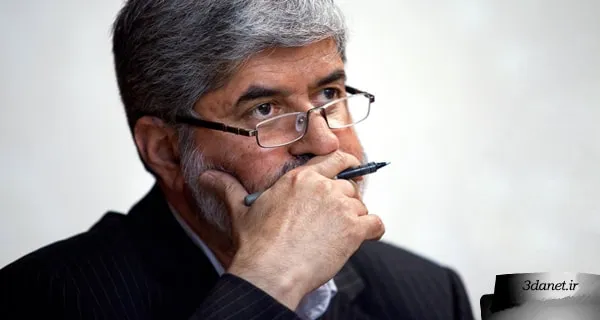
Mohammad Reza Jalaeipour: A Few Questions for Ali Motahari on Social Freedoms
Critiquing Ali Motahari's remarks on hijab and social freedoms, Jalaipour raises questions about jurisprudential foundations, minority rights, and racist and gendered statements, calling for attention to empirical evidence and justice in the social sphere.

Hello, Mr. Motahari. Tonight, in your conversation on Clubhouse about compulsory hijab and social freedoms, you made remarks that, although we had heard them from you many times before, were once again a source of surprise and regret.
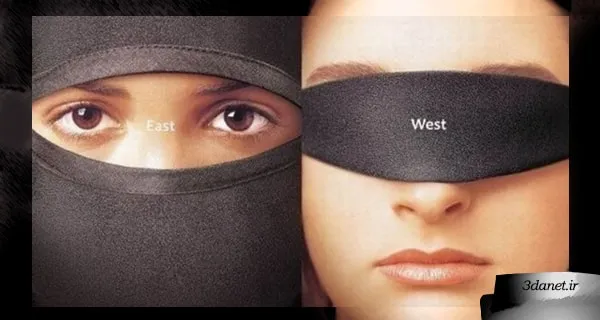
There is no complete consensus among Islamic scholars and jurists regarding the limits and form of hijab in the era of the Prophet, and today we are faced with a plurality of jurisprudential opinions on this matter. How can you, with such certainty, consider a specific form of hijab to be an indisputable religious obligation?
Even if there were a consensus among jurists on the form and limits of hijab, the consensus of traditional jurists is that in the era of the Prophet and the Imams, this religious ruling was not imposed and, like many religious obligations (including prayer), was performed voluntarily and without compulsion by believers. On what basis do you deem a religious ruling that the Prophet did not impose as worthy of imposition?
Even if we assume, contrary to this consensus, that a specific form and limit of hijab was imposed by the Prophet's government, and assume that the majority of citizens in our society support compulsory hijab, in today's pluralistic society, which is not composed solely of believers in a specific form of one Sharia, imposing hijab on a hypothetical minority is unjust, because it contradicts justice and violates the fundamental rights and freedoms of a significant portion of citizens who do not follow that style of belief and religiosity. On what basis does a hypothetical majority have the right to violate the fundamental freedoms of a hypothetical minority?
As it happens, supporters of compulsory hijab are no longer even the majority of Iranian citizens. Numerous credible surveys (including those endorsed by the Majlis Research Center, the Presidential Center for Strategic Studies, and ISPA) show that in recent years, supporters of compulsory hijab are no longer the majority and have fallen below 50 percent of society, while the majority of Iranian citizens still support optional and non-compulsory hijab. Why does a minority have the right to impose a law on the entire society?
Tonight you said that European women mostly turn to African men. This is contrary to fact. The majority of white European women still choose their partners and spouses from among white Europeans. But even if they did not, it would not necessarily have the cause and meaning you attributed to it. Regardless of its inaccuracy, does this statement of yours not contain a kind of humiliation and racism towards dark-skinned non-Europeans, or conversely towards white Europeans?
Tonight you said that a man who is not aroused by seeing women swimming at the seaside is ill. Which scientific study confirms this? On the contrary, do sexologists not confirm that excessive arousal from seeing a part of the hair and body of unknown women is a sign of a degree of deviance, ill-health, or at least sexual deprivation? Furthermore, is your description of the extreme excitability of Iranian men not a form of insult to them and an assumption of their sexual deprivation?
Many of your statements about compulsory hijab, the state of sexual relations, and social freedoms in Iran and other societies are of the nature of common folk beliefs that not only lack reliance on empirical data and scientific studies, but are contradicted by numerous credible studies. Why do you not see the need to pay more attention to empirical evidence in statements made with such certainty and to such a large audience?
Can we hope that you will show a fraction of the admirable truth-seeking and liberality you demonstrate in the realm of political issues towards gaining awareness of the arguments, facts, and credible empirical studies in the realm of sexuality and social freedoms, and that we will hear fewer surprisingly and regrettably gender-biased remarks from you than before? Does justice and freedom have applicability and desirability solely in the political sphere and not in the social sphere?
.
.
A Few Questions for Ali Motahari on Social Freedoms
Author: Mohammad Reza Jalaeipour
.
.
Listen to the controversial part of Ali Motahari's remarks on Clubhouse (6 minutes and 22 seconds)
Listen to Ali Motahari's full remarks on Clubhouse (1 hour, 2 minutes, and 30 seconds)
.
.


Discussion2 comments
آقای جلایی پور منبع تان را معرفی کنید. ضمنا دخالت مفهوم سرمایه در پوشاک زنان را در نظر بگیرید. اصرار بر برهنگی و تابعیت مُد روز با آزادی پوشش دو بحث جداست. نهایتا اینکه در غرب هر اتفاقی افتاد چسم بسته باید دنبال بکنیم اشتباه است، از این طرف هم نقایص سنت خودمان را نیز باید در نظر بگیریم.
منبع بیارید که سکسولوژیستها اون حرف رو زدن و بعد نشان دهید اجماع هست بینشان بلکه ادعای علمی بودن حرفهایتان کمی رنگ بگیرد. ما فکر نکنیم مانیفست سیاسی نوشتید