Religion
Ali Motahhari: The Public and Researchers Should Not Be Deprived of the Unpublished Insights of Martyr Motahhari
Ali Motahhari considers the unpublished notes of his father, Morteza Motahhari, a scholarly treasure whose suppression is unjustifiable. Responding to Abolqasem Alidoust, he argues that extending his father's criticism to all clerics and withholding the notes are both incorrect and a manifest injustice.
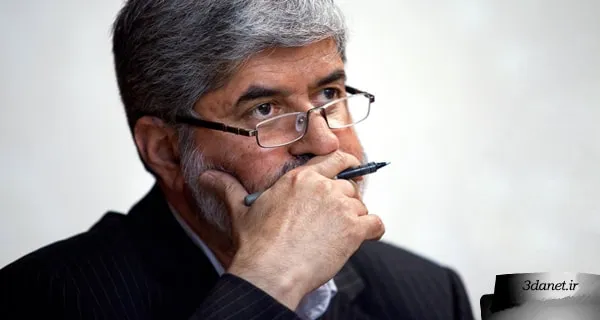
The esteemed seminary professor, Hujjat al-Islam Abolghasem Alidoust, has published a most astonishing piece regarding the notes of the martyred professor Ayatollah Motahhari, considering this entire collection to be “private” notes and expressing the wish that the professor’s collection of notes, which exceeds ten thousand pages, had never been published at all! His reasoning is precisely based on the same analogy that Dr. Soroush expressed about twenty years ago after the publication of Martyr Motahhari’s marginalia on one of the books of the late Dr. Shariati: that this act is tantamount to dragging a person out of their home in their underwear. Regarding his short text, which has inadvertently turned out to be insulting to the professor, several points are worth pondering:
1_ The non-publication of these notes, which contain hundreds, indeed thousands, of points not found in the professor’s works, is to deprive the public and researchers in Iran and other countries of a unique, great scientific and spiritual asset. He has also made a prophecy that if Martyr Motahhari were present, he would have processed these notes, whereas the point is, now that Martyr Motahhari has been martyred at the hands of the enemies of the clergy and is not present, what should be done with this rich asset? Can the public be deprived of this immense asset because of a few sentences whose meaning is clear, yet which do not suit the taste of some? Or should they be made available under the title of “Notes”? Of course, this work is by no means “book-making from private notes,” as he has stated. It is obvious that notes from that great Islamic scholar which are purely personal and confidential have not been and will not be published.
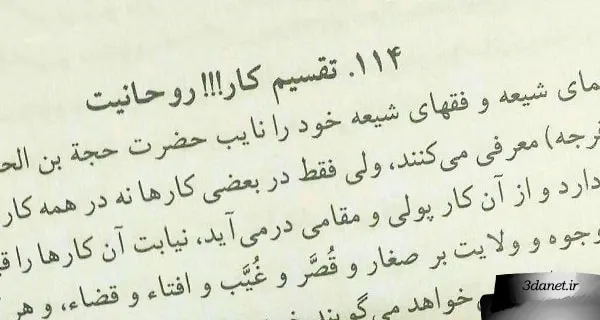
2_ A sentence in the professor’s notes that has caused Mr. Alidoust to issue a fatwa for the imprisonment of tens of thousands of the professor’s notes is a critique of Shia scholars. The martyred professor criticized that Shia scholars and grand jurists take the lead in matters that are profitable but do not concern themselves with public reforms, saying that the Imam himself should come. Mr. Alidoust, despite being certain that the professor’s intention concerns a portion of the jurists, feigns ignorance, generalizes the matter, and then proceeds to defend, stating that among the clergy we also have figures like the First Martyr, the Second Martyr, and Modarres. As if that high-ranking thinker, philosopher, and jurist was unaware of the existence of such personalities within the clergy!
It is strange that a seminary professor, who has been familiar for years with contextual and situational indications, absolute and qualified terms, and general and specific expressions, interprets the statement of a personality who says: “In my entire life, I have no more than one honor, and that is this very turban and cloak” (Husseini Epic, vol. 1, p. 141) as applying to all clerics. Is lining up trivial, so-called counter-examples from great jurists not astonishing and questionable for the “author of the book Islamic Movements in the Last Hundred Years” and someone who is himself a martyr in the struggle against the “thesis of Islam minus the clergy”? Did Imam Khomeini, who in the Charter of the Clergy describes some clerical individuals as sleek, spotted snakes, mean all clerics? Or when he says that the jug from which my son Mostafa drank water was ritually cleansed because his father teaches philosophy, did he mean all the scholars of the seminary?
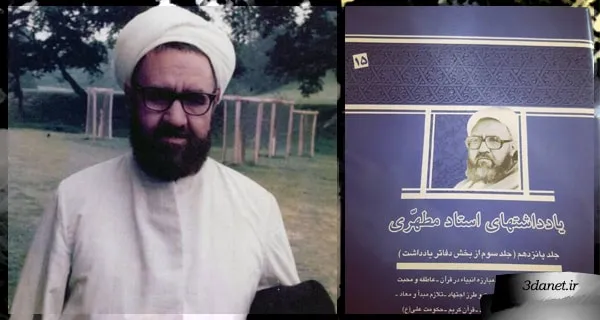
3_ Apparently, he has not had the opportunity for even a cursory review of the professor’s notes, which are filled with analysis, scrutiny, and sometimes groundbreaking ideas, and therefore has described them as “mostly a bunch of hypotheses”! To refute this injustice, it suffices to say that the professor stated several times towards the end of his life that if he had no sources at his disposal, he could publish books for thirty years using his notes. Yes, these notes cannot “necessarily” be considered the final text that the professor would have published had he lived, and the possibility of revision and correction in them is not ruled out, just as an author and researcher sometimes revises and corrects in the second edition of their book. It is precisely for this reason that these materials are published under the title of “Notes,” and this is not called book-making from private drafts.
4_ Hujjat al-Islam Alidoust analyzes the professor's notes in such a way that if one did not know him, one would think he has postmodern leanings and considers the validity of any statement dependent on the specific mental, personal, and social conditions of the author at the time of writing. That is why, instead of asking whether Martyr Motahhari's statement was intended as a particular affirmative proposition and, if so, whether it is deniable or not, he has resorted to the "pitfalls of youth" and the "specific socio-political conditions" at the time of writing the relevant text. This is where it becomes clear that even if this note about the clergy had been processed by the professor, it would not have resolved the objector's problem, because even if it had been processed, they would immediately question its validity due to being influenced by "specific socio-political conditions" and the author's personal states. Can one question the validity of Imam Khomeini's (ra) words in the book "Sahifeh-ye Noor" because they were influenced by specific socio-political conditions and perhaps the pitfalls of old age(!)? Truly, under the influence of which personal motives and socio-political conditions was this recommendation to suppress the martyred professor's notes written?
If people like Mr. Alidoust are concerned about the position of the clergy, let them be certain that a well-known and tested personality like Professor Motahhari will not only cause no harm to it but will also consolidate its position, provided that we hold Ayatollah Shahid Motahhari in such esteem that we do not forget to "interpret the action of your brother in the best possible light" when dealing with his statements, and that we do not base our reasoning on a generalization we are certain was not intended. Of course, now that fault-finders and controversy-seekers abound in the virtual space, it is necessary to place words like "some" in parentheses in such texts so as not to give pretexts to ill-wishers, and this will be done, although researchers and those familiar with the professor's thought have no need for this obvious clarification. When misuse can be so easily prevented, insisting on suppressing this unique treasure and calling its publication "manifest injustice"—especially from a well-known seminary professor—is unjustifiable and astonishing.
.
.
The Public and Researchers Should Not Be Deprived of the Thousands of Unpublished Insights of Martyr Motahhari
Ali Motahhari's Response to Abolqasem Alidoust's Critique
.
.
Related Content:
Republishing a Writing by Morteza Motahhari on Shia Jurists
Abolqasem Alidoust: Martyr Motahhari's Writing Was Not Unaffected by the Pitfalls of Youth
.
.

.webp)
Discussion5 comments
سانسور واقعیت شخصیتها و نیز سانسور حقایق و واقعیتها از شخصیتها یکی از آثار بسیار سوء و زشت مصلحت محوری است.دیری است در جامعه ما حقایق از مردم یا از مسئولان و شخصیتها پوشیده نگاه داشته می شود با این بهانه که مصلحت نیست به اعتقاد بنده مطهری مطهری است چون چنین دیدگاههایی را دارد سانسور دیدگاههای وی چه در قالب یادداشت و چه در قالب کتاب و سخنرانی از قماش همین مصلحت محوری هاست که جامعه را به این وضع چه کنم چه کنم گرفتار ساخته است.
بنده هم به استاد علی مطهری اردات دارم و هم به استاد علیدوست. قسمت از کتاب مکاسب را از محضر این استاد استفاده کردم. ایشان عالم فاضل و قابل قدر است. به استاد متفکر شهید مطهری در عشق علاقه دارم و آثارش را می خوانم و خواندم و در فضای مجازی نشر می کنم. ولی در این نزاع حق را با علی مطهری می دانم. یاد داشتهای استاد نباید حبس شود. چه اینکه در برخی مطالب نکاتی که در یادداشتها وجود دارند در کتاب ها نیست. حبس این یادداشتها ظلم بزرک به نسل جوان و فرهیخته جهان اسلام است. اندک عبارات که در برخی موارد ممکن موجب سؤ فهم شود ولی با کمی توضیح سؤ تفاهم رفع می شود، نباید موجب گردد که ما حکم به حبس این گنجینه بزرک بدهیم. در هر صورت نشر یادداشت های متفکر شهید خدمت بزرک به نسل جسجتجوگر و مسلمانان است.
هم دغدغده آقای علیدوست موجه است هم دغدغه جناب مطهری. پس بهتر است همدیگر را تخریب نکنیم و سعی کنیم دغدغه های صحیح همدیگر را ترتیب اثر دهیم. مشخص است که انتشار آن یادداشت ها بدون مقدمه و توضیح کافی منجر به سوءاستفاده های بزرگ میشود در این دوره که شبکه های مجازی و کانال های ضدانقلاب به دنبال مستمسکی هستند برای حمله سیاسی به روحانیت و جمهوری اسلامی! آقای مطهری در این فقره هم باید با تأمل بیشتری عمل کنند ایشان به مواضع عجولانه و تند شهره هستند!
به نظر من، حرفها و نوشتههای واقعی همانهایی هستند که در یادداشتها میآیند، چرا که هنگام اصلاح نوشتهها، معمولاً نویسنده مجبور است تا بسیاری را از ملاحظات فرهنگی، اجتماعی، سیاسی و ... را در نظر بگیرد و مطلب خود را اصلاح نماید.
همانطور که آقای علیدوست نمیتواند ادعا کند که شهید مطهری نوشتارش را اصلاح میکرد شما هم نمیتوانید ادعا کنید که اصلاح نمیکرد ... و یادداشت هم همانطور که از اسمش پیداست ، مطلب خامی است که باید پخته شود ... این همه پافشاری علی مطهری را درک نمیکنم ...