Foreign thinker
Hilary Putnam
Hilary PutnamPhilosophy of Mind and LanguageAmerican
No sane person should regard something as subjective simply because it cannot be settled beyond all controversy.
Life and Thought
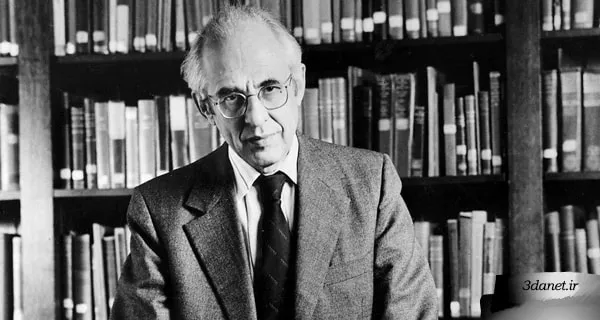
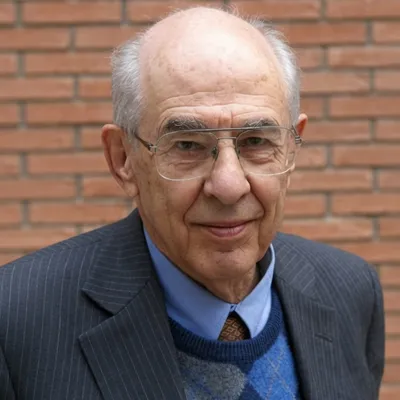
Hilary Whitehall Putnam (1926–2016) was an American philosopher and one of the most influential figures in analytic philosophy in the second half of the twentieth century. He produced foundational works in the philosophy of mind, philosophy of language, philosophy of science, logic, and mathematics, and is renowned for his intellectual shifts and his defense of realism. The concepts of semantic externalism and the "Twin Earth" thought experiment are among his most important legacies.
Hilary Whitehall Putnam was born on July 31, 1926, in Chicago. His father, Samuel Putnam, was a leftist translator and writer. He studied mathematics and philosophy at the University of Pennsylvania and received his doctorate in 1951 from the University of California, Los Angeles, under the supervision of Hans Reichenbach. Putnam taught at Northwestern University, Princeton University, MIT, and, from 1965, at Harvard University, where he remained until his retirement.
In the philosophy of mind, Putnam was a pioneer of functionalism, though he later distanced himself from its reductionist versions. In the philosophy of language, he proposed semantic externalism through the "Twin Earth" thought experiment, demonstrating that meaning is not merely a mental affair but also depends on the external environment. He was also a defender of scientific realism, although he adopted different positions at various times, ranging from metaphysical realism to internal realism.
Other areas of his work include the philosophy of mathematics, the theory of truth, and the critique of the fact/value dichotomy. In the final years of his life, he paid greater attention to pragmatist philosophy and the ethical dimensions of epistemology, and also drew closer to the Jewish tradition. Putnam died on March 13, 2016. His works remain a central reference point in contemporary debates in the philosophy of mind and language.