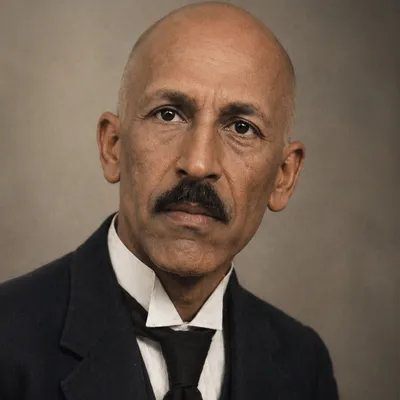
Iranian thinker
Mohammad Qazvini
Mohammad QazviniPersian literature and textual criticismIranian1877–1949


Life and Thought
Mohammad Qazvini was an Iranian literary scholar, researcher, historian, and one of the leading editors of classical Persian texts in the modern period. Through his meticulous editions of important works such as Tarikh-e Beyhaqi and his extensive studies in manuscript scholarship, he played a major role in establishing scientific methods of Persian textual criticism.
Mohammad Qazvini (1877–1949) was an Iranian literary scholar, researcher, manuscript expert, and a pioneer of scientific research in Persian literature. He was born in Tehran and came from a scholarly family. In his youth, he studied literature, history, and Islamic sciences, and later spent many years in Europe, especially France, where he became familiar with modern methods of historical research and manuscript studies.
In Paris, Qazvini became acquainted with important libraries and manuscript collections and worked on collecting, examining, and comparing manuscripts of Persian works. His cooperation and intellectual connections with European Iranologists contributed to the development of scholarly studies of Persian texts.
Qazvini’s most important achievement was his extensive work in editing classical Persian texts. His edition of Tarikh-e Beyhaqi in collaboration with Qasim Ghani is among his most notable works. His articles and studies on literary history, classical authors, and issues related to Persian language and texts remain important sources for later researchers.
Qazvini’s method was based on careful comparison of manuscripts, attention to historical evidence, and avoidance of subjective emendation. By emphasizing the necessity of scientific textual study, he had a profound influence on Persian literary scholarship and manuscript studies in Iran.