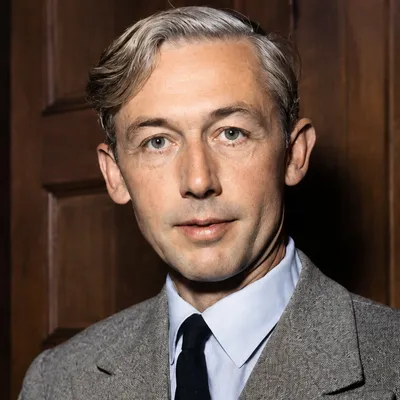
Foreign thinker
Robert Bresson
Robert BressonFilmmaking and film theoryFrench1901–1999


Life and Thought
Robert Bresson (1901–1999) was one of France's greatest filmmakers and a foundational figure of twentieth-century art cinema. Through his spare, ascetic style, his use of non-professional actors whom he called "models," and his exploration of themes such as grace, suffering and freedom, he turned cinema into a language of its own, distinct from theatre. His book *Notes on the Cinematograph* is among the most influential texts in film theory.
Robert Bresson was born on 25 September 1901 in Bromont-Lamothe, in central France. Before turning to cinema he worked in painting and photography, and in the 1930s he entered the film world, working on screenplays and a few short films. His first feature, *Les Anges du péché* (1943), about the life of nuns, was followed by *Les Dames du Bois de Boulogne* (1945). During the Second World War he was held for a time in a German prisoner-of-war camp.
International fame came with *Diary of a Country Priest* (1951), an adaptation of Georges Bernanos's novel that revealed his mature style. *A Man Escaped* (1956) is a meticulous account of a prisoner's escape during the Occupation, and *Pickpocket* (1959) explores the idea of redemption through love. *The Trial of Joan of Arc* (1962) was based on the actual records of her trial. His other major works include *Au hasard Balthazar* (1966), *Mouchette* (1967), *A Gentle Woman* (1969), *Four Nights of a Dreamer* (1971), *Lancelot du Lac* (1974), *The Devil, Probably* (1977) and *L'Argent* (1983). The last, an adaptation of a Tolstoy story, earned him the award for best director at the Cannes Film Festival.
Bresson called his own art "cinematography" and distinguished it from "cinema" understood as filmed theatre. Instead of dramatic acting he used "models": non-professionals who, through endless repetition of scenes, were stripped of conscious performance and display of emotion. In his style, sound and image each have an independent role, rhythm and ellipsis are essential, and hands, glances and objects carry much of the narrative. Music in his films is used very sparingly and with great care.
Thematically, his work is bound up with concerns such as fate and freedom, divine grace, the suffering of the innocent and the possibility of redemption. Critics have often seen it as shaped by Catholicism, and in particular by Jansenist reflections on predestination, although he himself disliked such labels. *Notes on the Cinematograph* (1975), a collection of concise observations on the art of film, is a key source for debates on cinematic aesthetics. Bresson died in Paris on 18 December 1999.