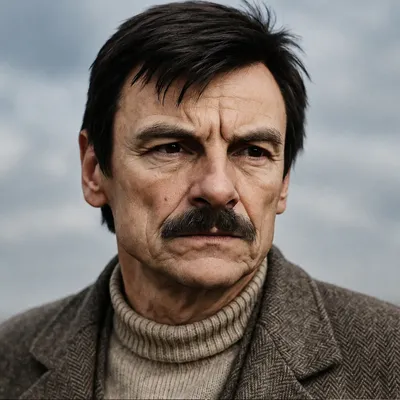
Foreign thinker
Andrei Tarkovsky
Andrei TarkovskyFilmmaking, screenwriting, and film theoryRussian1932–1986
Cinema must create a world in which man can have a spiritual experience of life.


Life and Thought
Andrei Tarkovsky was a Russian filmmaker and film theorist, and one of the most influential directors in cinema history. His works are known for philosophical reflections on time, memory, faith, the meaning of life, and the human condition; films such as Mirror, Stalker, and Solaris are among the major works of world art cinema.
Andrei Arsenyevich Tarkovsky was born in 1932 in the Ivanovo region of the Soviet Union. His father, Arseny Tarkovsky, was a well-known Russian poet, and the literary atmosphere of his family had an important influence on his artistic outlook. After studying in several fields, Tarkovsky entered the Gerasimov Institute of Cinematography (VGIK) in Moscow, where he studied cinema under Mikhail Romm.
His first feature film, Ivan’s Childhood (1962), received international acclaim and won the Golden Lion at the Venice Film Festival. He subsequently established his position as one of the most important filmmakers of the twentieth century with films such as Andrei Rublev (1966), Solaris (1972), Mirror (1975), Stalker (1979), Nostalghia (1983), and The Sacrifice (1986).
Tarkovsky’s cinema focused on the inner experience of human beings, the relationship between time and memory, the search for spirituality, and ethical and existential questions. In his book Sculpting in Time, he explained his views on cinema and emphasized the importance of recording the flow of time in film and creating a poetic, contemplative experience for the audience.
His films usually feature slow narratives, symbolic images, and a poetic atmosphere, exploring themes such as faith, doubt, moral responsibility, suffering, and hope. Although Tarkovsky faced restrictions and conflicts with the Soviet cultural system during his career, his works exerted a profound influence on filmmakers around the world.
In the final years of his life, he worked outside the Soviet Union. After making The Sacrifice in Sweden, he died of cancer in Paris in 1986. Tarkovsky remains one of the most important figures in intellectually driven and artistic cinema worldwide.