Iranian thinker
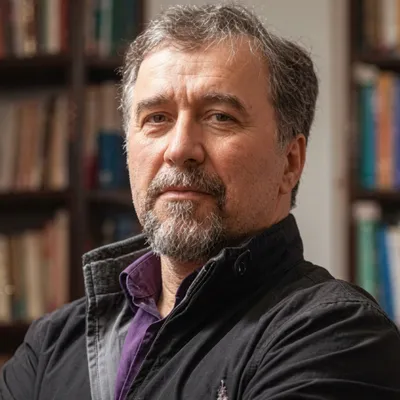
Seyed Javad Miri
Seyed Javad MiriSociology and Social TheoryIranian-Swedish
Life and Thought
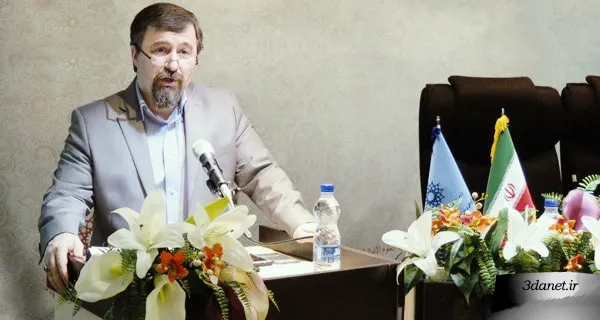
Seyed Javad Miri is a sociologist, social theorist, and professor at the Institute for Humanities and Cultural Studies. In his Persian and English works, he focuses on social theory, the thought of Muslim thinkers, civilizational dialogue, Iranian identity, and the relationship between Islamic intellectual traditions and the modern humanities.
Seyed Javad Miri, born in 1971 in Tabriz, is an Iranian-Swedish sociologist and researcher in social theory. He completed his undergraduate and master's degrees at the University of Gothenburg in Sweden and then received his PhD in sociology from the University of Bristol in England. His dissertation was dedicated to intercivilizational social theory and the relationship between Islamic and Western intellectual traditions.
Miri is a faculty member at the Institute for Humanities and Cultural Studies and conducts research in areas such as social theory, sociology of religion, history of religions, philosophy of social sciences, identity, the Muslim intellectual tradition, and the possibility of reconstructing the humanities in the non-Western world. He is also the founder of the journal "Islamic Perspective" and is an active figure in introducing and re-reading the thought of Allameh Mohammad-Taqi Jafari, Ali Shariati, Iqbal Lahori, Erich Fromm, Malcolm X, and Frantz Fanon within the framework of social theory.
His English works include "East and West: Allama Jafari on Bertrand Russell," "Islamism and Post-Islamism," "Reimagining Malcolm X," and edited volumes on Shariati, Fanon, Orientalism, and Erich Fromm. In Persian, works such as "Sociocavation," "Sociotherapy," "Mother Tongue," "Re-reading the Idea of Iranshahri," "Philosophy of Religion in the View of Khayyam," "General Theory of Religious Reform," and "Iran in Five Narratives" have been published by him.
Miri's significance for the Sedanet audience lies in his effort to open a dialogue between sociology, philosophy, religious studies, and the question of Iran. He strives to free social theory from the monopoly of dominant academic traditions and to take seriously the possibility of thinking from within the historical, religious, and cultural experiences of non-Western societies.