Sociology
Lecture Series “On Identity, Nationality, Ethnicity, and Iranianness” by Seyyed Javad Miri
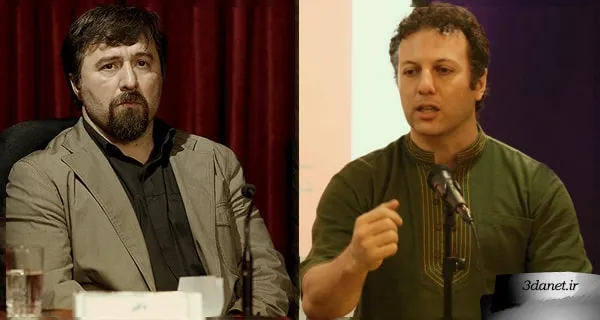
In his lecture series “On Identity, Nationality, Ethnicity, and Iranianness,” Seyed Javad Miri critiques essentialism and the perceived opposition between Ferdowsi and Rumi, examining the relationship between identity, peace, and education. To confine identity within a Hegelian order is to foreclose possibilities of human existence.
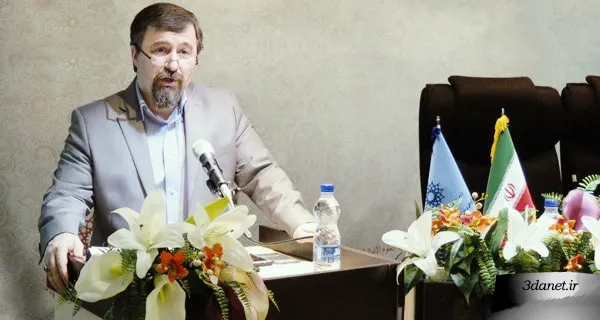
What is identity? How can the “I” or “we” be defined and delimited? Can Iranian identity be assumed to possess an immutable element? Some, like Dr. Nadooshan, believe in an essence of Iranianness, and others, like Dr. Seyyed Javad Tabatabai, attempt to build a universal Iranian world upon this element of Iranianness, but other thinkers, such as Mr. Mostafa Malekian, do not believe in such essentialism regarding national identity. In the lecture series “On Identity, Nationality, Ethnicity, and Iranianness,” I have tried to lay the groundwork for the discussion, and in future sessions, I will delve deeper into the fundamental issues in this regard. My main claim, of course, is that the dispute between Hegel and Kierkegaard—that is, between philosophical systems and existential thought—is ongoing at all times, and confining the concept of identity within a Hegelian order eliminates countless possibilities of human existence.
.
.
First Session | 18 February 2017
.
.
Second Session | 18 March 2017
In this session, I referred to the two approaches of Ferdowsi and Rumi, and I found Rumi’s empathetic openness more fitting than Ferdowsi’s dualistic, race-centered view for the 21st century. My argument is that utopian and xenophobic perspectives are serious obstacles to Iran’s national development and flourishing.
.
.
Third Session | 13 May 2017
The Ummah as a cultural entity and the causes of the modern world’s and the nation’s misunderstanding by scholars and jurists. The nation as an entity in contradiction with the body of Christ and the absence of such a concept in the Iranian mind.
.
.
Fourth Session | 28 May 2017
The topic of this session was “the relationship between peace and identity,” in which Ms. Hedayati first presented a discussion, and I then spoke about national and global identity and the creation of the concept of the world-citizen and the sovereignty of one’s own views.
.
.
Fifth Session | 6 June 2017
Focus on the subject of education
.
.
Sixth Session | 11 June 2017
Peace, national identity, and the education system
In the sixth lecture, held with the presence of Ms. Hedayati, the issue of national identity in relation to peace and education was addressed.
.
.
Session Seven | 14 June 2017
Peace and Identity: The Role of Religion in Education for Peace
In this lecture, Ms. Hedayati presented her proposition on the role of religion in the framework of education for peace, and then I spoke about the category of religion and the mission of religions from the perspective of Imam Musa Sadr and Dr. Ali Shariati, and the connection between religion and conscience in the view of Professor Abdolhossein Zarrinkoub, who conceptualized religion as belonging to the category of dāʾinā (in the realm of conscience).
.
.
Session Eight | 21 June 2017
The Eighth Lecture on Identity and Peace, Focusing on Education
On Wednesday, 21 June 2017, the eighth and final lecture on identity and peace was held at the Institute for Humanities and Cultural Studies with the presence of Ms. Hedayati.
.
.
Dr. Seyyed Javad Miri (Associate Professor of Sociology, Institute for Humanities and Cultural Studies)
Institute for Humanities and Cultural Studies
.
.

Discussion0 comments
No comments yet; let yours be the first voice.