Religion
42 Magazine: Science and Religion
The ninth issue of 42 Magazine examines the relationship between science and religion, asking whether civilizations can achieve scientific success without science's independence from religion. The issue focuses on the conflict or compatibility between the two, the role of religions in economics, and scientists' perspectives on their relationship.
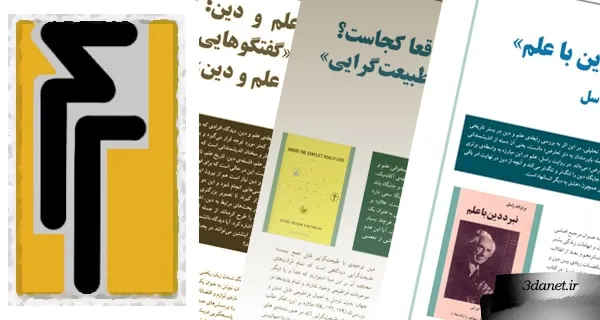
Issue 9 of 42 Magazine is devoted to the relationship between “Science and Religion.” In the “Editor’s Note” section, Zohair Bagheri No-Parast addresses the question of whether the scientific success of Christian European civilization and Islamic civilization can be replicated, and whether science can be advanced without its independence from religion. In this piece, approaches that reduce the role of Islamic civilization to mere “mediation” are criticized, and it examines why modern science emerged not in ancient Chinese civilization or Islamic civilization—both of which were scientifically advanced—but in Christian European civilization. In an article titled “What Science and Religion Are and How They Relate to One Another” by Helen De Cruz, translated by Nahid Khasi, a history of contemporary approaches to the relationship between science and religion is presented. The views of nineteenth- and twentieth-century thinkers such as Auguste Comte, Marx, and Freud on the relationship between science and religion have given way to more recent perspectives that possess greater precision and nuance. In this article, while addressing these recent approaches, the study of religion in various scientific disciplines such as psychology and cognitive science in the contemporary era is mentioned, and the religiosity of scientists and academics in the West is also examined. In an article titled “Can a Believer in Evolution Believe in God?” Steve Stewart-Williams, through his investigations, attempts to show that evolution is incompatible with the traditional conception of God. In this regard, he demonstrates how Darwin’s theory brought to full fruition the argument Hume designed against the design argument in “Dialogues Concerning Natural Religion.” This article has been translated into Persian by Amirhossein Zahedi.
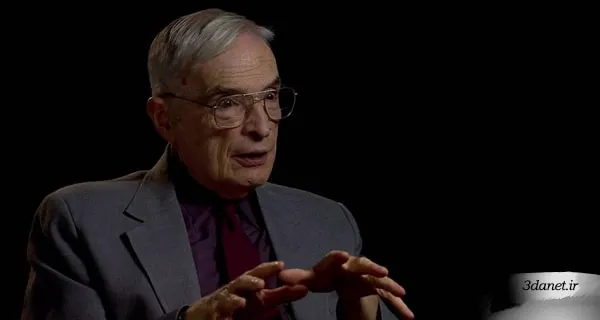
In the next piece, the book “Where the Conflict Really Lies: Science, Religion, and Naturalism” by Plantinga is introduced. Plantinga is among the theists who try to show that religion and science are compatible and that only minor, superficial conflicts occasionally arise between them. By shifting the main question regarding the compatibility of science and religion, Plantinga claims that the compatibility of naturalism with science should be examined, and he himself attempts to show that naturalism is incompatible with science. This book introduction has been translated into Persian by Mohammadamin Mousavinejad. In the following piece, Sarah Hamon elaborates on Heisenberg’s views on the relationship between science and religion in the book “Conversations on the Relationship between Science and Religion.” In discussions about the relationship between science and religion, philosophers of science and historians usually examine the relationship between these two domains from outside of science and religion. However, in this work, Heisenberg, as one of the prominent scientists of the twentieth century, as someone engaged with the science of physics, examines this relationship. Shahnaz Tariqati, by reviewing Bertrand Russell’s book “The Battle of Science and Religion,” addresses the historical context of the formation of conflicts between science and religion in Christian Europe.
Russell is among those who subscribe to the conflict thesis, meaning he believes that the nature of the relationship between science and religion—as long as religion retains prominent social dimensions—is tense and challenging. Mohammad Ghaderi, in another article, examines the impact of religion on the economy. By critiquing and reviewing Jared Rubin’s book, he addresses the question of why the Middle East remained poor and the West became wealthy. In this context, he examines the influence of Islam and Christianity on the economies of the Middle East and the West and shows that highly complex and intertwined reasons played a role in the formation of this vast economic difference between the Middle East and the West. In another piece, Philip Clayton’s book is introduced, in which the author addresses the approaches of different religions to science. Buddhism, Hinduism, Islam, Christianity, and Judaism are among the widely followed religions examined in this book, each having established a different relationship with the sciences. After this piece, it is the turn of introducing the book “Mind and Cosmos” by Thomas Nagel. A book that considers existing Darwinian materialism to be mistaken and claims to be proposing a new design. In this piece, Nagel’s arguments are introduced in summary. Finally, in an article titled Religion and Economic Development, Elham Seyedali examines the role of religion in economic development and, by referring to some recent research, elaborates on the diverse perspectives surrounding the relationship between Islam and development.
.
.
Download the PDF of 42 Magazine, Issue 9: Science and Religion
.
.



Discussion1 comments
آیا علم انسانی نیز توفیق داشته؟ یا شما نیز علم انسانی را با نگاه تجربه گرایان فیزیکالیست می نگرید؟