Religion
Science and Religion in the Hands of Ian Barbour
Ian Barbour, a Christian physicist and theologian, structured the dialogue between science and religion by proposing four models: conflict, independence, dialogue, and integration. His works, translated into Persian since the 1980s, have become a classic source in Western religious studies in Iran.
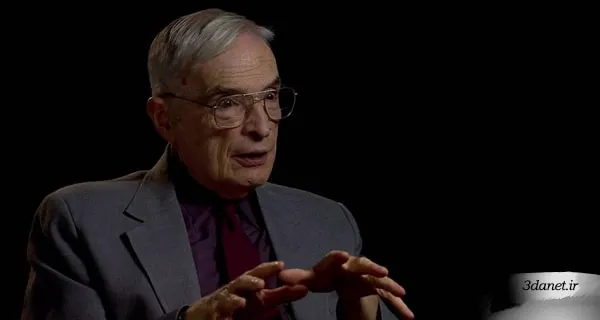
It was December 2013 when the philosophical and religious community lost a distinguished scholar in “science and religion” without much public notice. Ian Barbour, the renowned American Christian theologian and physicist, passed away at the age of ninety. His name is familiar to Iran’s philosophical and seminary community, first coming to prominence in the 1980s through one of his brilliant works, Issues in Science and Religion (1966). This work was recognized in 1999 by the American Public Broadcasting Service (PBS) as having inaugurated the field of science and religion. It was after the translation of that book in Iran that academics and seminarians welcomed Barbour and employed his ideas. Gradually, his works became classics in the field of Western religious studies and were included among the resources for the national entrance exam. I, who considered myself one of his indirect students, set out to revive his name.
Ian Graeme Barbour was born on October 5, 1923, in China and spent his childhood there. He pursued his education in physics in England and the United States, finally graduating with a doctorate from the University of Chicago in 1950. Due to his deep interest in theology, after earning his physics doctorate, he went to Yale University to obtain a degree in theology under the auspices of the academic system. He eventually received a Bachelor of Divinity (B.Div.) from Yale University in 1956. From 1955 until his retirement (in 1986), he taught and conducted research at Carleton College in Minnesota, bequeathing unparalleled fruits to the scientific and religious community. He also delivered two series of his Gifford Lectures at the University of Aberdeen in Scotland between 1986 and 1991, titled “Ethics in an Age of Technology” and “Religion in an Age of Science,” which were later published under the same titles. In 1999 (at the age of 76), he was awarded the Templeton Prize (approximately one million pounds) for the advances he had made in fostering dialogue between the world of science and the world of religion. This prize is generally awarded to those who have made a significant contribution to affirming the spiritual life of human beings. Finally, on December 20, 2013, he fell into a coma following a stroke and passed away four days later.
When Ian Barbour won the Templeton Prize, John Cobb, the contemporary American philosopher of religion and theologian, described Barbour by saying that no contemporary philosopher has been able to create as much connection and unity between religious knowledge, scientific knowledge, and ethical values as he has. According to Cobb, Barbour’s works are unique and unparalleled in their depth and the breadth of sources they employ.
Barbour, by his own admission, was influenced by Christian theology. He stated somewhere that, religiously, he calls himself a moderate Protestant who strives to explain and, to some extent, remove the existing conflict between science and religion. Furthermore, Barbour considered himself indebted to Whitehead’s process philosophy. In science, he was a realist and defended critical realism, writing: “I am more in agreement with the position of a theology of nature that is combined with a cautious use of process philosophy.” He also adds, “In their scientific work, scientists usually hold to realism. Astronomers, biologists, chemists, and others regard theories as representing events in the external world; they also consider viruses and electrons to be real…. And we must take seriously the categories common in the language of the scientific community.” And finally, he says, “I am an advocate of critical realism, in which models and theories are abstract, theoretical symbolic systems that can selectively, though less than adequately, represent specific aspects of the world under specific assumptions.” In his works, Barbour attempts to introduce the discussion of critical realism into the realm of religion as well as science.
It was in 1983 that Baha' al-Din Khorramshahi, a contemporary literary scholar, presented a brilliant translation of Science and Religion to the market at the University Publishing Center upon the recommendation of Abdolkarim Soroush, acquainting Iran's philosophical-religious community with Barbour's ideas. Gradually, the discussion and examination of the relationship between science and religion under the Western model of religious studies gained momentum in universities and seminaries, and numerous articles and theses were written in explication and critique of Barbour's ideas. Barbour's book Science and Religion is truly an exemplar of the idea of research and a serious model of scholarly and investigative inquiry that our academics and seminarians should place on their agenda. A cursory glance at the book's final references reveals that Barbour took great pains and spent considerable time in authoring it.
Barbour was a fortunate scholar. During his lifetime, he was able to witness the flourishing of his ideas with his own eyes and observe them being translated into several languages. For example, some of Barbour's books, articles, and ideas were translated into Arabic in addition to English and Persian. Apart from the translation of Science and Religion by Khorramshahi, one can also point to the books Religion and Science: Historical and Contemporary Issues and Astronomy and Creation, which were brought to the market by Pirooz Fatoorchi. The following articles by Barbour, also translated by the same translator, have been published in the journal Philosophy and Theology: "Models and Paradigms in Science and Religion," "Four Views on the Relationship between Science and Religion," and "Galileo and the Relationship between Science and Religion," among others. In the Arabic language, one can also point to the translation of the book Ethics in an Age of Technology: The Gifford Lectures and several articles about Barbour. Furthermore, his comprehensive and well-known book from the year 2000, titled When Science Meets Religion, has been translated into fourteen languages. In this book, Barbour, inspired by his previous works, examines the relationship between science and religion in four relations: conflict, independence, dialogue, and integration. He then emphasizes specific sciences such as astronomy, quantum physics, evolutionary biology, genetics, and neuroscience, and in the final chapter of the book, he also touches upon the relationship between God and nature (see also his book on this subject: Nature, Human Nature, and God, 2002).
Barbour's scientific mind and interest, along with his extensive use of scientific examples, led to him being called the grandfather of the "Evolutionary Christianity movement." This means that he borrows from the theology of nature to endorse religious naturalism. For instance, Barbour defended human cloning, believing that through this, science could demonstrate its capabilities regarding what is possible, while religion could cultivate the idea of what is desirable.
Barbour saw similarities between science and religion in four respects: structure, model, paradigm, and criteria for evaluation. The structural similarity between science and religion states that the structure of both science and religion includes observations and empirical data, theories and concepts, and beliefs, and in this respect, they are, of course, similar. Similarity in model, however, means that just as scientific models, acting as metaphors, make our epistemic access to natural phenomena easier and simpler, in religion, models also interpret the transcendent and metaphysical for us with the aid of analogies, symbols, and even rituals. Barbour writes on this matter: "Religious models are neither literal descriptions of reality nor useful fictions, but they have been created by humans to help us interpret experience by imagining what cannot be observed."
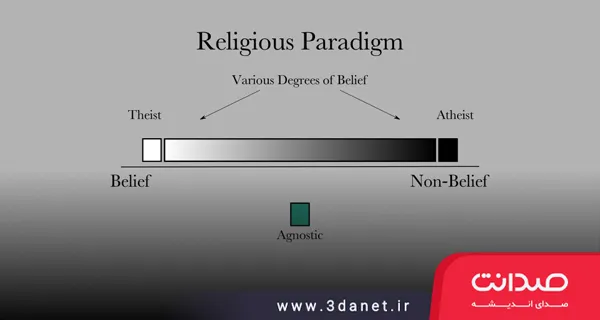
Barbour demonstrates the similarity between science and religion in paradigm under the views of Thomas Kuhn. This means that in science, data are dependent on the existing paradigm, and paradigms resist change. Furthermore, there is no rule for choosing a paradigm. In religion, too, data (for example, religious experiences) are dependent on paradigms, and religious paradigms show resistance to change. Finally, it must be said that there is no criterion or standard for choosing religious paradigms. This statement by Barbour should also be seen as an emphasis on religious pluralism, especially where he writes, "Acceptance of the diversity of models... can help us to value the models of other traditions as well, and this can be an important contribution in today's pluralistic world."
Finally, in Barbour's view, the criteria for epistemic evaluation in religion and science are similar, and whatever we use in science to evaluate our knowledge can also be applied in religion. For instance, the criteria that scientists generally employ to assess scientific theories are: consistency, coherence, and utility. Barbour believes that these very same criteria can be used in religion as well to evaluate religious knowledge.
Although Barbour's philosophical views have been widely criticized, until the end of his life he never abandoned the claim that a link exists between the two worlds of science and religion, one that renders the ideas of both knowledge-bearing. In short, Barbour saw no conflict between science and religion and believed in a kind of "shared methodology" between them. For this reason, according to him, religious propositions, like scientific ones, are meaningful and evaluable. Discourse on theology and metaphysics (as the logical positivists claimed) is not futile or nonsense, and precisely because of these methodological commonalities, theology can be considered a kind of science.
It appears that at the outset of his work, especially in books such as Issues in Science and Religion, Science and Religion, and Christianity and the Scientists, Barbour was influenced by the philosophy of science of Thomas Kuhn and Karl Popper. Perhaps his attention to critical realism, individual scientific theories, and paradigms can be seen as confirming this point. Gradually, however, his view in the philosophy of science changed, and although it became more sophisticated in some respects, unfortunately, the work he did late in life did not receive much attention. Looking at his later works, one can see that he was drawn to the ideas of Imre Lakatos, the Hungarian philosopher of science, and for this reason considered the concept of the "research program" to be the best model for religious studies. If previously Barbour viewed religion as a collection of theories and metaphors that are refined and revised in epistemic encounters with one another, in his later works he saw religion as a research program with a hard core of "essentials" surrounded by protective belts of "accidentals." It is in encountering counter-instances that these belts loosen or are entirely cast aside, and it is only much later that the turn comes to change the essentials. It is as if the accidentals sacrifice themselves to guarantee the survival of the essentials.
Iran's scientific and religious community, in both the university and the seminary, truly ought to consider itself indebted to the efforts of Ian Barbour and make his path the guiding principle of their work. A path that brings peace of mind to the generality of believers who desire modern life with its instruments and apparatus, namely science, and in the shelter of this path, they can survive the flood of destructive critiques of the conflict between science and religion. May God have mercy on him, for after a lifetime of striving for a spiritual life and intellectual struggle, he departed this world with a full and heavy backpack to pursue his eternal life.[1]
[1] All direct quotations from Barbour are extracted from the article "Science and Religion; Methodological Parallels from the Perspective of Ian Barbour" written by Mohammad Hossein Taheri.
.
.
Science and Religion in the Hands of Ian Barbour
Author: Hossein Dabbagh
.
.

Discussion0 comments
No comments yet; let yours be the first voice.