Philosophy
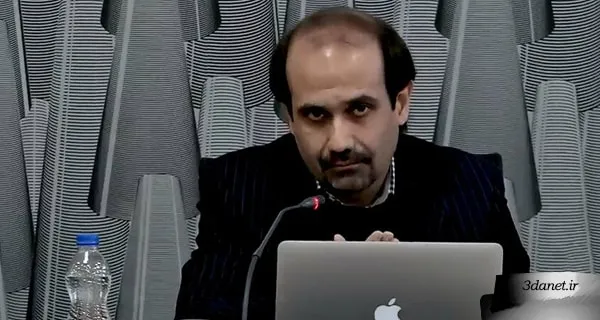
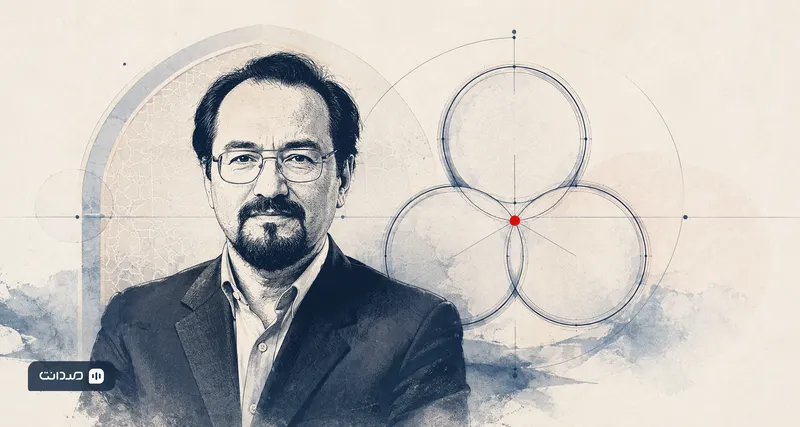
Analytic Philosophy Is Rejected and Subjugated in Iran: A Conversation with Morteza Mardiha
Morteza Mardiha sees philosophy as a failed science, one that has been unable to break away from the main body of knowledge and become independent in the way physics and psychology have. The lack of a method, limited scope for development, and a shortage of an audience have been the main obstacles to this separation.

In ancient times, anyone who possessed knowledge or something akin to it in any field was called a philosopher, but what happened in the modern world was that gradually and in succession, parts of knowledge separated from the main body and declared independence. First, for example, astronomy, and after that physics, chemistry, biology, and then the human sciences, such as psychology, sociology, and economics, separated and went their own way. Like a number of partners who establish a shop together, but after a while, due to expansion and specialization, the majority of them split off and set up their own specific shop, and in the end you are faced with a traditional shop where limited goods are found at the bottom of its stall. This shop is philosophy.
.
"Analytic Philosophy Is Rejected and Subjugated in Iran" A Conversation with "Morteza Mardiha" on the Future Path of Philosophy and the Neglect of Anglo-American Philosophy
Professor, there are perceptions of philosophy in the public mind, but naturally these perceptions differ. We wanted to ask what your perception of the concept called philosophy is?
My answer may be considered somewhat anti-philosophy, but I don't think it is. As everyone knows (and I hope they won't be wearied by hearing it again, which is necessary for its denial), in ancient times, anyone who possessed knowledge or something akin to it in any field was called a philosopher, but what happened in the modern world was that gradually and in succession, parts of knowledge separated from the main body and declared independence. First, for example, astronomy, and after that, physics, chemistry, biology, and then the human sciences, such as psychology, sociology, and economics, separated and went their own way. Like a number of partners who establish a shop together, but after a while, due to expansion and specialization, the majority of them split off and set up their own specific shop, and in the end you are faced with a traditional shop where limited goods are found at the bottom of its stall. This shop is philosophy.
Why didn't the rest of these vendors leave your allegorical shop?
For some reasons, the possibility of independence was not provided for them. Three factors—lacking a method for measuring claims, the limited development of issues, and a shortage of customers—did not create the conditions for them, like the others, to establish their own specific shop.
So, in your interpretation, ancient philosophy, which was considered the entirety of human knowledge, remained in its shop, but a large number of its constituent elements achieved independence and left?
Yes, and those remained for whom, apparently, the possibility of some kind of independence and a distinct name and reputation in the new world, the world of experience, did not exist. The collection of these is what we now engage with under the title of philosophy. That is, mainly ethics, aesthetics, and epistemology, for which, due to the three reasons I mentioned, conditions did not arise for them to go and establish an independent enterprise like astronomy, physics, chemistry, or biology, or even economics, sociology, and psychology. Philosophy is approximately equivalent to failed science. A science that has not been able to distance itself much from its initial monstrous situation.
What factors caused favorable conditions not to arise for these categories so that they too could become independent?
As I mentioned, the first factor was method, meaning they did not arrive at methods by which they could produce statements that are, to a significant degree, examinable, refutable and verifiable, or capable of being strengthened and weakened. The second was development, meaning that, for various reasons, they never faced diverse and expanding questions like other sciences. The questions of ethics and epistemology are not dramatically different from the questions that existed in Plato's time. Whereas today's physics or chemistry, and even the contemporary humanities, are astonishingly different from what they were in the past. The third factor was the limitation of practical efficacy and the sense of need. This branch of knowledge did not have many customers to strengthen and encourage its producers. Having problems in an increasing and expanding manner, having a method such that answers and questions become testable to a significant degree, and having customers who might be willing to pay for acquiring it, were the things that necessitated some disciplines to separate from that primordial mother science and grow as independent apparatuses.
So categories like mysticism, ethics, and the like are not things people feel a need for?
Yes, apparently people's sense of need for these things you mentioned is not as great as for other sciences. Many people feel, or even claim, that if they do have a need, they can satisfy it themselves. Let me give you an example. If you and I wanted to build a house now, neither of us would feel we don't need a structural engineer; we pay money and say, calculate the beams for these ceilings and the column. Then, if we go to an architect, we interfere extensively in their work. Why? Because we feel we understand it ourselves, or we don't go to an architect at all. That is, we might feel a need for that science but consider ourselves experts in it. Then, when it comes to interior design, ninety-nine percent of people might not even know there is a profession where someone comes to your house and tells you what curtains to hang, what furniture to get, what style to arrange. See, that's the point. Perhaps some people feel they don't need aesthetics and ethics as a body of knowledge, or that it's a secondary need, but the bigger problem is that even when they do feel it, they say, well, who is going to teach me ethics, you sir? I don't want it; I know what I should do myself. Because we assume these are not developed, specialized sciences in which anyone can claim expertise.
But in various sciences, there is still a need to use the philosophical questions related to them. We now have philosophy of science or philosophy of mathematics; even philosophy has branched into various sub-disciplines. That is, the source is still generative, and the sense of need for philosophizing in other branches that have separated from your allegorical store still exists.
I don't deny that. If we were to deny that need entirely, nothing would remain for philosophy. But the problem is that this need is emphasized more by philosophers than by scientists. For instance, if you talk to a physicist, they will typically speak of the need for the physics of light, the physics of electricity, the physics of heat, or for example, chemical physics or applied mathematics, etc., in the advancement of their work. But you would be hard-pressed to find a physicist who believes that for the progress of physics research, there is a need for a philosopher to explain the preliminaries of the science of physics and its related methodological discussions. I don't imagine the situation is much different for the rest of the philosophies 'of'. The same applies to ethics and aesthetics.
In all these cases, not only is the sense of need low, but even if there is a need, individuals usually claim that addressing it is their own job. Even if a physicist feels a need to discuss methodology, or if some people consider answering questions concerning ethics and art necessary, they often deem themselves more qualified to answer than philosophers. Of course, I suspect they are not very correct in this perception. But in any case, the issue is that for a profession to flourish, the sense of need must also exist in the customer, not just be emphasized by the seller. That part of philosophy which remains in its contemporary sense is like this: the sense of need is not from the customer but from the producer itself.
So, in your view, philosophy is a collection of sciences that has no effective function for society?
Let me put it more precisely: parts of the inheritance of ancient knowledge, in whose problems, in their questions and answers, a development commensurate with other sciences did not occur. In their method, a way that could sufficiently convince was not created, and they were not very successful in finding customers and people who feel they need this and come forward for it.
In these cases, you spoke of a lack of customers, for example in ethics. But the books published in the fields of self-knowledge, vitality, life, and the psychology of success have plenty of customers?
Yes, you are mixing up our problem; they want to see how they can be happier and more successful, that is not ethics.
What is ethics, then?
Classical ethics, which apparently says one must not be happy and successful and shows the way and the pitfall for this very thing, but even ethics in its empiricist narrative is about why and how one can and should be happy and successful, but not in a purely selfish way. Not at a heavy cost borne by others.
So what becomes of that definition of philosophy which deals with essences and presents matters universally?
Don't mention these anymore; their validity expired long ago in history. Science also deals with essences; for example, when you say sulfuric acid is made of sulfur, oxygen, and hydrogen and has such-and-such properties, you are defining its essence. Forget the universal, too. The universal belonged to a time when knowledge consisted of reasoning from a distance. The universal departed, and the science of things, the science of the soul, and the science of life (physics, psychology, and biology) arrived. Philosophy, in this sense, means universal science. And universal science means the first, immature, pseudo-knowledge. Science and philosophy are not two rivals. Philosophy, in this sense, is an aged father who must hand the crown of his kingdom to his young son and depart from the world. Not like Kavus plotting against Esfandiyar. Science is a phoenix that arose from the ashes of philosophy. The universal went, the particular came.
Given this description, what remains of philosophy?
What can now be called philosophy consists of those parts of knowledge that have not been able to be empirical alongside its other divisions.
Given the conditions you have depicted for philosophy today, what can be done with this field of thought?
Nothing, except to let it go, even if stumbling and staggering, down that same path. That is, to join the caravan of experience. Of course, I hope you won't say that philosophy fundamentally deals with issues that are not empirical. That which is not empirical, is not. Or at least is not a subject of cognition. Great figures made efforts in this regard and were largely successful; Hobbes, Hume, Smith, Bentham, and Mill were among these individuals. These people, almost at the same time that the likes of Galileo and Newton understood that physics was not what Aristotle said, understood that ethics is the same, art is the same, politics is the same. That is, in these too, one must move from speaking in universals toward observation and testing. The greatest of these, one being Hobbes and another Hume, moved in a direction to pull art, ethics, and cognition—which had remained in the wares of philosophy (that is, non-empirical science)—toward a place where, in terms of method, it speaks in a way that is more observational, more controllable, more amenable to precision, and they were largely successful. Of course, there is no doubt that the degree of empirical becoming of ethics, politics, etc., is not at the level of physics and chemistry, nor exactly similar to their methods. Therefore, these sciences may perhaps never be comparable to other sciences that went and gained independence. To some extent for this reason, these have remained in the wares of something called philosophy. However, this philosophy, to the extent that it can go in terms of method and criterion of assessment and approach experience, can, in my opinion, have validity. In that case, perhaps in the future, the philosophy of anything will be considered the more theoretical part of that discipline, not something independent.
Dr. Mardiha, if we look at the ancient period, at the time of that grand emporium, we see a kind of absolutism and untestability. This type of outlook shaped the philosophical atmosphere of that time, but nowadays, people young and old will no longer accept a claim if it is not measurable, not amenable to reasoning, or if it is remote from or contradicts definite, objective judgments. Isn't this the philosophical outlook of today?
Look, any common sense in the ordinary meaning of the word will affirm what you say. That is, all people, whatever you tell them, want the concepts and terms of that statement to be defined within the framework of empirical understanding, and the claim itself to be, as far as possible, open to observational scrutiny—whether it concerns nature, economics, or football. So far, no problem. Now, if you say that a soul exists, a conscience exists, something called beauty exists, something called goodness exists, many philosophers believe this is different; it is a matter of rational inquiry and is entirely different from how scientists and ordinary people deal with concrete, empirical matters.
But empirical philosophers think that the person of common sense will again ask you to define these things for them. For example, if you say beauty is like a gazelle, like a pheasant, like a landscape of forest and sea, like the pleasant sound of a nightingale, they will accept it. But if you say there is something in beauty that cannot be defined, they will say, well, what is that to me? What use is this definition to me? The same goes for goodness or justice. This is the reaction of common sense in the minimal meaning of the word. Yet, see how a large number of philosophers succeeded in removing many subjects from the scope of a reasonable (i.e., empirical) view and handing them over to a kind of incomprehensible language game. And not only did they succeed (by creating a discursive space) in advancing their own words as serious discourse, but they also mocked the words of the opposing side. That is, if you say, for instance, Michelangelo's statue of David is an example of masculine beauty, you might be ridiculed.
So, can we say that beauty is Michelangelo's David?
No, no, I do not want to enter into technical discussions here at all; they have their own particular complexities. I just want to say that from the perspective of common sense (on whose simple meaning, despite its complexities, one cannot fail to agree), the discussion of beauty must also have some relation to the general experience of it. But of course, the complexity of the problem of definition is not limited to philosophical issues like goodness and beauty. If you enter physics, the same story repeats itself. There, one can ask: is water H2O? That is, if we go somewhere and test something, break it down, and it has two H and one O, but, say, it smells, is not transparent, or is not fluid, is that water? Conversely, if we find something that has all the attributes of water, but we break it down and it has three H and one O, what then?
But concepts like beauty cannot be reduced to a few specific observations or tastes.
I was not here to define beauty; I was presenting a method for how common sense approaches a concept like beauty. Just as when you want to define a physical object, you do so by giving explanations about its shape, form, material, constituent substances, function, and use, relying on common convention; in so-called philosophical subjects like beauty, goodness, and justice, there is no alternative but this, and this is precisely what the British empirical philosophers did. You raised the point that one cannot be content with these examples for a precise and correct definition; yes, that is correct, one cannot be content, but this is the path. For any other subject you name, we do the same thing in defining it. That is, we first enumerate its familiar instances and attributes, but then, if you want to speak more precisely and comprehensively, you run into difficulty. Running into the problem of complexity does not mean that the empirical method in philosophy is simplistic, naive, or wrong. In other subjects, scientific or conventional, we also begin just as simply, based on initial observations and instances, and in the same way, we run into difficulty as we proceed and seek greater precision.
Suppose someone wants to define a chair; they usually begin by saying that a chair is something made up of two or three parts, it has a base, a part you sit on, it can be wooden, metal, for instance, and you might even show some examples. Under normal circumstances, many people will accept this from you and reach a mutual understanding based on it. Now, if you try to go further and make it more precise, examining the exceptions and addressing the problems, you then reach a point where your definition oscillates between a chair, a stool, a bench, and a platform. This problem applies as much to a chair as it does to beauty, to water, or to inertia, and so on.
That philosophy which was a raw, embryonic science, when its various disciplines separated, began by describing those same initial empirical characteristics (sometimes simple and laughable) and moved forward. In the remnants of today's philosophy as well, in understanding the good, beauty, justice, and so on, there is no other way. The complex, metaphysical definition of these matters and the mockery of observations and instances is no different from the work of those who, before the separation of the sciences, spoke about the planets, their shapes, sizes, and rules of motion using the same criteria, which fit more into the realm of poetry than knowledge.
The entities in philosophy are such that they are not very susceptible to instantiation, meaning they are, in a way, beyond physics.
Something that has no instance, cannot be defined, and cannot be examined objectively, is not a thing, or if it is, we have little to do with it, or if we do, it belongs to imagination, art, and so on, not to the realm of understanding and comprehension. Yet it is true that ethics and aesthetics submit to certain more objective and empirical investigations with greater difficulty.
Do you mean that philosophy should move toward physics?
In my book "Uncertainty," I have said that there were pioneers in the nineteenth century who pursued the ideal of "social physics," and likewise "moral mathematics." No, that is not what I mean. But this explanation is also necessary: our understanding of science is sometimes imprecise. Science is not technology, nor is it the rules found in textbooks. Our image of science's great precision stems from this confusion. A more accurate picture of science (physics, chemistry, etc.) is found in doctoral dissertations or in articles presented in academic journals and conferences, which encounter far more disagreement, imprecision, and conflicting judgments than we imagine. Conversely, the subjects remaining in the domain of philosophy, if the criterion of discussion is experience, are not as absolutely contentious as is commonly thought. Therefore, physics and chemistry are not as precise as is assumed, nor are ethics and aesthetics as subjective and personal as is assumed. Although, of course, the distance and difference between them is undeniable. I am not seeking to turn ethics into physics, but ethics, and every other discipline, has no choice but to follow the same path. Following the same path does not mean reaching the same goal; in every field, you must try, as far as possible, to approach things more empirically, more objectively, and in a more testable manner. Even within physics itself, some parts are closer to these characteristics, and some parts less so.
Has this view of philosophy been successful in the world?
Successful in the sense that they have instilled their idea in the minds of a vast multitude of people and intellectuals: yes; but from the perspective of philosophical discourse, status, and fame: not so much. A great philosopher still means an obscurantist, a generalizer, and a disparager of science and experience. Someone who is a rival to the scientist and deals with entirely different problems using a different method.
Can you name any contemporary philosophers who fit the model of philosophy you have?
In the English-speaking world, their renowned figures of the past century could be, for example, Russell, could be Moore, in some of its manifestations could even be Wittgenstein, and also people like Ryle and Austin. Also American pragmatists like Dewey, like James, even to some extent like Rorty—these are people who, in my view, have accepted that philosophy must move toward empiricism, pragmatism, and testability. Opposing these is the dominant French and German tradition, under the titles of idealism, postmodernism, or structuralism and the like, or Marxism, neo-Marxism, critical theory, even some things with nice names like "multiculturalism" and so on. Of course, some of them may have considered empiricism in a new form and do not work solely with pure argument, but ultimately the difficulty is understanding what they are saying, and if we read their books and understand them, what change will occur in us from tomorrow; that is, how do we think about issues differently, and what change does this way of thinking create in our actions, or in our view of the world that can change and improve our situation—these things are not clear.
I said this explicitly at a thesis defense ceremony: that although Marx created many problems in our world, it was clear what he was saying, very precise and clear, but regarding his followers, be it Foucault or Derrida, one cannot understand what they are saying. I ask their advocates and followers: tell me, what does their philosophy say about what to know and how to act from tomorrow? Only critique and negation: whatever you think is truth, is not. Whatever you think is order, is not. Whatever you think is scientific, is not. Whatever you think is justice, is not. What problems do these solve for us?
Let's turn to philosophy in Iran?
That shop I mentioned is not seen by most Iranian philosophers, especially among academics, with the eye I described. They consider it an independent and dignified institution where a commodity is offered, in the face of which empirical knowledge is not something considerable, and which answers the fundamental and essential human need for certain knowings with a completely exclusive and efficient method. From the perspective of these grandees, philosophy (at least primarily, if not entirely) means metaphysics, means Greek philosophy, means German philosophy. In a Master's program in Western Philosophy, we have Plato. We have Aristotle. Hegel and Kant each have two or four credits. But the entire empirical philosophy of England is two optional credits, which are usually not even offered.
Some time ago, when I was teaching this very course, a student from another university came to me and said, I want to audit your classes. He said, I told the head of the department at our own faculty, why don't you offer a course on the empirical philosophy of England? He said, the English are carefree people; because we are people of suffering, we must read German philosophy. I said, actually, that professor is right; to be fair, in German philosophy there is indeed a remedy for every pain. For example, Hegel: the fascists used him, and the communists used him. Both treated their pains with him. Although perhaps those pains were fundamentally incurable. As they say, in the Battle of Stalingrad, World War II, one million people were killed in the war between the Hegelian left and the Hegelian right. There is no doubt that teachings of this kind cannot be reduced to this type of view. Of course, there are many subtleties. But firstly, this approach is potentially dangerous because, without certain experience-based considerations, it issues commands that have sometimes come at a heavy cost. Secondly, relative to the time and energy it consumes, it is not clear how much result it yields. Sometimes its intellectual result is more the strengthening of the thinking faculty, as is obtained from chess or mathematics or difficult puzzles. Thirdly, it is intensely arbitrary, and argumentation within it is released into a void where almost anything can be said, and stood by.
A congress for Hegel was also held at one of the universities a while ago?
Yes, on the occasion of the two-hundredth anniversary of the publication of the Phenomenology of Spirit. Perhaps some of the participants in that congress were more excited and impassioned than they would have been at a congress on Hafez and Saadi. At the end of the ceremony, one person was reciting poetry, another was murmuring a Quranic verse, and one or two, out of intense empathy and favorable feeling, seemed on the verge of tears. Why? At least in part because these are sometimes obscure discourses that align with our obscure verbal and mystical culture, and because one has free rein in interpreting them and expatiating upon them; they are also more compatible with adventurous, world-upending desires, as well as with imagination and art, and also because they are more difficult to understand, making expertise in them, inevitably, more respect-inspiring.
Regarding Iranian philosophers, can you cite examples of those who have moved toward making philosophy empirical?
Many of those we know as Iranian philosophers specialize in ancient and medieval philosophy—that is, a philosophy whose pillars are Plato and Aristotle, Augustine and Aquinas. Sometimes they have also tried to combine those thoughts with mystical, Indian, or even Islamic teachings. A segment of Iranian philosophers have also turned to the study of modern philosophy, but they have mostly gravitated toward idealist philosophers like Hegel. Even when some of these eminent figures turn to thinkers like Kant and Descartes, who are dual-aspect, they pay more, or even exclusive, attention to the idealist aspect of their thought. (In my view, Descartes is someone who has been wronged in Iran. Apart from one or two areas—namely, the discussion of theology and the discussion of the mind—in all other domains, especially in understanding the physical world, he is intensely materialist and objectivist, to the point that it sometimes seems he might even be considered extreme; yet in Iran, only that other aspect of his thought has been emphasized.)
In Iran, most esteemed professors of philosophy think their time is too precious to be wasted on studying and teaching Anglo-American philosophy. With a few exceptions, who usually also lack the opportunity for serious activity in the Iranian academic sphere, analytic philosophy and empirical philosophy are generally rejected or subjugated among Iranian philosophers.
In a situation where the world we actually live in is a world of measurement, logic, testing, experience, and clarity, why is our philosophical inclination the polar opposite?
There is this fatal paradox: all those who criticize, reject, ridicule, and disparage science and technology, modern culture, and especially the Anglo-American spirit do not hesitate to turn to them when faced with certain concrete problems, such as illness. But leaving that aside, one reason is that obscure philosophies offer benefits that some people, depending on their personality or position, pursue. Empiricist philosophy shows you that human limitations in this world are vast, and many of our problems stem from the structure of this world and the fundamental constitution of the human being, meaning we can only make small efforts and limited reforms. For many people, this is not appealing. It is unappealing in two senses. There are those who are more inclined toward action, and radical action at that. Their thinking is oriented toward fundamental action, and they want to turn the world upside down. So they turn to philosophies in which, just as you can easily liken your beloved to the moon or your hero to a lion or a dragon, they devise programs for revolution and the total remaking of the world with the same method and the same ease—as in the philosophies of Marxism, Nazism, and certain fundamentalist narratives. Then there are others who may not be much concerned with the world and changing it, but prefer to sink into their own imagination rather than feel the objective, empirical reality of this world. That is, it is either an artistic, mystical, imaginative, or delusional inclination that makes those philosophies more attractive, or an inclination toward the fundamental transformation of the world and humanity at any cost.
Can we take these two inclinations away from human beings? Imagination and transformation?
No. But every task has its own method. Art has been established for this very purpose; no one asks why Ferdowsi said: "Two lances, two arms, two brave men / One a dragon and the other a fierce lion." No one criticizes Hafez for saying: "A cypress like you the garden does not possess / A moon like you the sky does not possess." No one asks, what is the moon, which cypress? What relationship exists between these objects and a human being? Because art is the place for such things, it is the place for imagination, for creativity, a place where you compensate for the limitations of life. Poetry, stories, painting, sculpture, music are of this kind. Even parts of mysticism, if not translated into socio-political terms, belong to this realm. Because you dislike enduring human limitations, you can imagine as if everything loves everything else, everything is beautiful and lovely, everything is moving toward a goal; there is no problem with that. But if we want to present these as political and social teachings to people, then consequences arise that are very dangerous. No one says it is forbidden, but they have their specific place. Philosophy is not art. But regarding change, if what is meant is a radical upheaval, that too belongs to the faculty of imagination. In artistic schools like Surrealism, one can design another world, though it cannot be implemented. But if feasible change is meant, its path is the same as what English philosophers like Smith, Hume, and Mill have said.
How do you currently see the trajectory of philosophical thought in Iran?
I am optimistic. Of course, the discourse I mentioned still retains its strength, but its power has diminished. Roughly since the 1970s, that awe and grandeur that existed has been shattered. Perhaps its supreme form is in the events of May '68, which occurred in Germany, France, and to some extent America, and the magnificence, grandeur, and authority those thoughts possessed declined. Yet still, the dominance of intellectual thought, in the general sense of the word, is that same perspective. They mostly look at issues with theories that are radically transformative, captivating, abstract, and macro-oriented. But my general feeling is that (at least in the absence of major, devastating economic and environmental crises) the world is moving in those very directions that are severely criticized by these philosophies; that is, democracy, liberalism, positivism. The evidence suggests that philosophy in the future will increasingly seek to provide reasonable and moderate definitions of justice and freedom. And, of course, it will not neglect art for soothing its own limitations.
.
.
Analytic Philosophy Is Rejected and Subjugated in Iran: A Conversation with Morteza Mardiha
A Conversation between Ali Kadkhodazadeh and Seyyed Abolhasan Mokhtabad with Morteza Mardiha
Source: Mehrnameh Monthly Humanities Magazine, Year 1, Issue 6, Aban 1389 (October/November 2010)
.
.


Discussion3 comments
فلسفه تحلیلی در ایران مطرود و مقهور است, چرا که سِنخ روحی و روانی ایرانی ها با فلسفه قاره ایی هماهنگی بیشتری دارد. همانگونه که فلسفه تحلیلی با سنخ روحی و روانی کشورهای انگلیسی زبان هماهنگ است..
عالی بود
بسیار دقیق و نکته سنج گونه..