Economic Sciences
Behavioral Differences Between the Rich and the Poor
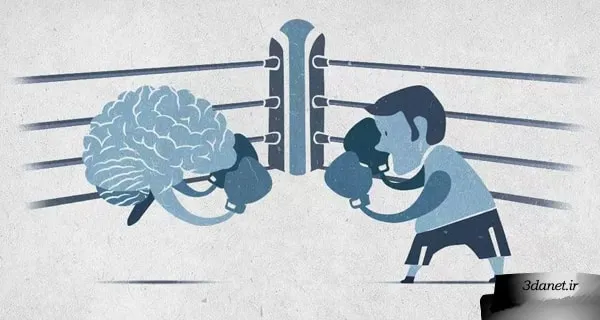
Poverty occupies mental bandwidth and impairs cognitive performance, pushing people toward decisions that perpetuate the cycle of scarcity. Behavioral economists show that a shortage of resources imposes a heavy cognitive load regardless of one’s level of education.
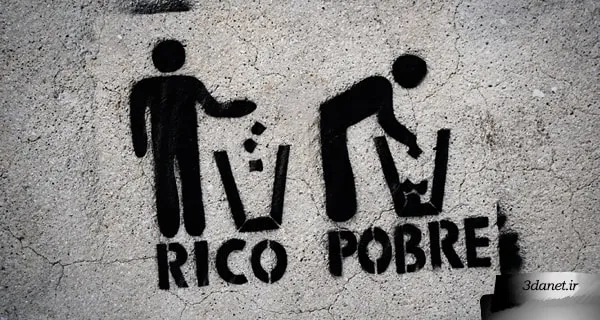
Poverty appears to be a devastating fire among families, neighborhoods, villages, cities, and entire countries, stretching from one generation to the next and leaving individuals in socio-economic pits from which climbing out is sometimes impossible. Researchers have found a relationship between poverty and problematic behaviors such as poor financial management and lower productivity. One of the most important questions raised in this field is: what factor causes a poor person to remain poor or be unable to escape the trap of poverty?
Several experts in the field of behavioral economics propose a new definition and perspective. Shafir, a professor at Princeton University in the United States, along with Mullainathan, a professor at Harvard University, have offered a different approach by looking at the effect of poverty on behavior and decision-making. Shafir elucidated this view at the opening of the Psychological Science Convention in the Netherlands in 2015, which we will explain further below. Their data shows that poor people, contrary to popular belief, make very precise decisions. They weigh their trade-offs, pay special attention to prices, and allocate their resources carefully. But their intense focus on "making scarce resources last longer" can deplete all their mental capacities, leaving them with no "cognitive bandwidth" to pursue job opportunities, education, and other opportunities that could lift them out of poverty. In a series of their experiments published in the journal "Science" in 2013, they found that individuals struggling with financial problems show a decline in cognitive function equivalent to a 13-point drop in IQ scores (as if you had gone a full night without sleep). In their study, they went to a hypermarket in New Jersey and randomly asked 400 participants from various financial levels to take part in their research. They asked the participants to think about how they would solve a series of "hypothetical" financial problems, such as paying for car repairs. Some individuals were placed in the easy-scenario group, such as a mechanic's bill of only $150 (low amount), while others were placed in the hard-scenario group, such as a car repair cost of $1,500 (high amount). As the participants pondered these scenarios, they answered several tests designed to measure their intelligence and cognition. The individuals were also divided into two groups, "poor" and "rich," based on their financial status. The researchers found that in manageable (easy) financial scenarios, both groups performed identically on the designed tests, but in hard financial scenarios, participants in the poor group performed significantly worse than the rich group. To confirm the results and discover the effects of poverty in real and natural environments, these researchers studied 460 sugarcane farmers in India [who are generally poor before the annual harvest and rich afterward]. Each farmer performed better on the designed tests after the harvest compared to before it. In fact, their performance on intelligence tests, with the same level of education and the same health status, was about 10 points higher when they were in a state of "abundance" than when they were in a state of "scarcity."
Therefore, in this view, poverty is a situation-based state. We can take a wealthy individual and give them the "feeling" of poverty, and they will make the same decisions we typically see in poor individuals, which are associated with the poverty trap; thus, scarcity in itself leads to failure. In another study, Shafir and Mullainathan, along with a team of behavioral economists in 2012, sought to examine the reasons why borrowers facing a shortage of liquidity are often drawn to lending practices that involve high interest rates (such as loans with daily interest). They randomly assigned students into two groups: "poor" and "rich." Individuals in the poor group were allocated fewer resources (such as time) in a money-making game. Participants played several rounds, and in some situations, they could borrow "time" from their future rounds by paying interest (for example, some participants, by borrowing one second from the present, paid back two seconds in the future). The researchers found that rich participants tended to avoid high-cost borrowing, whereas poor participants quickly took out loans, borrowed excessively, exhausted their allocated time sooner, and ultimately left the laboratory with less money and in less time. Behaviors like these are often attributed to the short-sightedness of the poor and a lack of control, except that this time, the poor were students at Princeton University in the United States; therefore, scarcity can affect even privileged individuals.
"In fact, a scarcity of time, attention, and money can lead to decisions and behaviors that perpetuate poverty; in other words, poverty consumes an individual's mental resources and imposes a cognitive load on them." Shafir suggests that policies and services designed to help the poor should take into account that poverty affects an individual's cognitive function. This could include simplifying the generally complex steps of job applications and other forms that are challenging for individuals and impose excessive mental resources on them while filling them out. Without considering these issues, it is society that prevents the emergence of an individual's abilities to succeed.
.
.
Behavioral Differences Between the Rich and the Poor
Author: Zahra Mousavi (PhD student in Psychology at the University of Tabriz and researcher in the field of Behavioral Economics)
Source: Donya-e-Eqtesad
.
.


Discussion2 comments
مقاله خوبی بود با تشکر از خانم موسوی از انتخاب خوبشان برای ترجمه. اقتصاد تاثیر مستقیم در برخی خلقیات هم داره غالبا شخص با پشتوانه مالی خوب اعتماد به نفس بالایی دارد دیرتر عصبانی میشود کنشهای احساسی و غیر عقلانی اش کمتر است این ادعایی که میکنم نیازمند مطالعات میدانی بیشتری است ادعا این است که بین دارایی مکفی مادی و دارایی روحی و غنای اخلاقی ارتباط تنگاتنگی است و مقصود از غنای اخلاقی فضائلی همچون بردباری گذشت نوع دوستی اعتماد به نفس و...
سلام میشه مشخصات متن اصلی (که این نوشته ترجمه اون هست) رو بذارید؟ ممنون