Psychology
The Psychological Mechanism of Helping the Poor
What state of mind moves a person to care for those in need? Accepting that what we have is freely given, recognizing our own limits, empathizing with the suffering, contemplating nature's generosity, and meditating on death—all these incline us to reach out to the destitute.
Moral psychology is a branch of psychology that attempts to answer the question: what occurs within the human psyche that causes a person to perform or refrain from performing a moral act?
All the components and factors that exist within a human being, leading to an inclination toward or aversion to moral action, are investigated from the perspective of moral psychology.
Moral psychology does not only address the factors influencing whether one acts morally or not; it also discusses specific moral acts themselves.
One of these specific moral acts is helping the poor and the needy.
What mechanisms, if activated within the human conscience, cause a person to pay attention to the needy and be active in helping them?
What state of mind drives a person toward paying attention to the needy and leads to the fulfillment of the needs and wants of the poor by other human beings?
The presence of any of the following components in a person is sufficient for them to develop a state in which they pay attention to the needy and assist them. The presence of more than one component reinforces this state in the person and increases their practical activity in this direction:
First Component. A person must pay attention to the fact that everything they have, without exception, has been given to them freely, and there is nothing that they were entitled to and was then given to them. Whether we believe in the existence of God or not, whether we believe in a personal, anthropomorphic God, a personal non-anthropomorphic God, or a personal God at all, or whether we are pure materialists, everything has been given to the human being freely. These assets can be enumerated in five domains:
1) The Domain of the Body: Health of the body, strength of the body, and beauty of the body. None of these three bodily assets have been given to human beings due to entitlement or lack thereof. These three great advantages have been given to the human being freely.
2) The Domain of the Mind: The power of learning, the power of memorization, the power of recall, speed of processing, IQ, the power of reasoning and persuasion, depth of understanding, and the power of imparting understanding. A person cannot claim entitlement regarding any of these matters and say that one of these characteristics they possess is the result of their own effort and activity.
3) The Domain of the Psyche: Human psychological abilities and knowledge, such as the power of management and the power of intuition.
4) The Domain of Climate: The climate in which a person is born creates positive and negative characteristics in them.
5) Historical and Social Climate: No one chooses their own parents by their own volition. In fact, there is no intervention or control in this matter.
All five of the aforementioned assets have been given to the human being freely, and entitlement plays no part in them. It is possible that an individual might say: my twin sibling and I were identical in all our characteristics, but I had effort and perseverance and they did not; I made an effort and became better, but they did not. And with this reasoning, they consider themselves entitled to some of their possessions. But the question that arises is: who gave you that perseverance? Where did you get it from, by means of which you were able to pull yourself up? This discussion has nothing to do with the existence or non-existence of God. Yet, this person knows that they themselves did not give these characteristics to themselves.
If, during a nighttime gathering, the power suddenly goes out and there is absolute darkness, and after two hours you come out to the street where there is light, you realize that a check for a certain amount has been placed in your pocket. Because there was absolute darkness at the nighttime gathering, you cannot point to anyone and say that so-and-so put this check in your pocket, but you also know that you yourself did not put this check in your own pocket.
The point is that even if we are in a state of pure epistemological ignorance regarding the giver of these assets, we at least know that it was not our own doing.
If a person accepts this and internalizes it—that these assets have been given to them freely—they become ready to give freely and to take the hand of the needy.
Second Component. When a person pays attention to their own limitations, and realizes how limited they are in the realm of knowledge and abilities, a kind of suffering overtakes them. In this state, a person can understand those whose possessions are even less than theirs and whose limitations are greater, and who therefore suffer more. This causes a person, in addition to wanting to increase their own assets and reduce their own suffering, to also want to increase the assets of others and reduce their suffering. Through attention to their own limitations, each individual can become aware of the limitations of others, and in this state, a motivation is created within them to strive to reduce the suffering of others and to help them.
This melancholy arising from existential constraints creates a tenderness, affection, and compassion within a person and turns their attention toward other suffering human beings.
Third Component. If a person encounters someone afflicted by calamity (genetic, natural, or otherwise) or imagines and visualizes the situation of an afflicted person, a kind of empathy and, subsequently, a kind of sympathy arises within them. Encountering other afflicted and suffering individuals liberates a person from hard-heartedness and insensitivity toward others.
Fourth Component. If a person contemplates the phenomena of the natural world—inanimate objects, plants, and animals—they find a common characteristic among them. This characteristic is that no phenomenon stores its assets for itself. Every phenomenon gives whatever it has to the rest of existence. There is no phenomenon that does not give what it has. In fact, there is no such thing as stinginess and withholding in natural phenomena. If a phenomenon does not give something, it is because it does not have it to give. Fire cannot store its heat and not give it. Water has the property of quenching thirst and cannot store a part of this property and, for example, release only fifty percent of it. Natural phenomena exist to give, not to sometimes give and sometimes not. Stinginess and withholding do not exist in nature, but they exist to a greater or lesser degree in human beings. In this respect, resembling natural phenomena makes a person generous and open-handed. In reality, there is no kind of selfishness in natural phenomena. In nature, everything exists to be given to others and for others to use it.
Fifth Component. A person must see death and contemplate it. Thinking about death requires deep and lengthy discussions, and there are debates surrounding it in twelve areas. But there is one simple and important point, which is that through thinking about death, a person realizes that death takes everything a person has from them and leaves nothing behind. When people die, they are all destitute. And it is from this perspective that it is said death is the sole equalizing factor among human beings. When the body of the poorest or the wealthiest person is placed in the hands of the washer of the dead, both are equal in possessions, because both are destitute and death has taken all their assets. When a person thinks about death and sees that death will forcibly and compulsorily seize all their assets from them, they say to themselves, why should I not give these assets of my own free will?
Sixth Component. If a person notices that whenever they have had a pure, unadulterated act of giving, they have experienced a profound joy, a motivation is created within them to give more and to offer assistance and help. Pure acts of giving are those through which a person does not gain wealth, political power, social prestige, status, position, fame, or popularity.
When, on a very cold and gloomy winter day, in a neighborhood where no one knows them, a person takes the hand of an elderly woman or man and helps them cross the street, they feel a profound, unparalleled joy within themselves. If someone has a few of these experiences, they become predisposed not to lose this joyfulness and to continue offering assistance and help to others.
Seventh component. If a person considers themselves morally obligated to assist and help others, this inner sense of moral duty—that is, the call of moral conscience—drives the person to aid others.
The presence of even one of the above components can, on its own, generate giving without expectation of reward or obligation (in the Quranic expression) within a person.
.
.
Audio of The Psychological Mechanism of Helping the Poor
PDF file of The Psychological Mechanism of Helping the Poor
.
.
The Psychological Mechanism of Helping the Poor
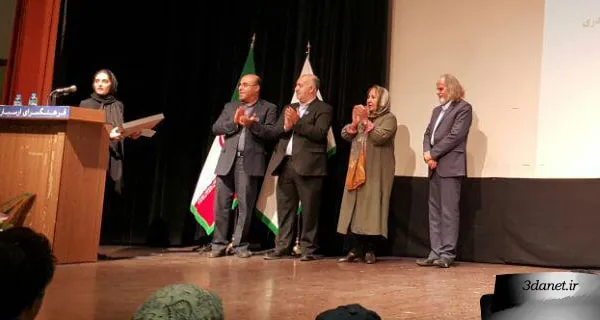
Mostafa Malekian – 11 March 2017
Dar al-Ekram Cultural Gathering
.
.



Discussion1 comments
سلام بسیا عالی